

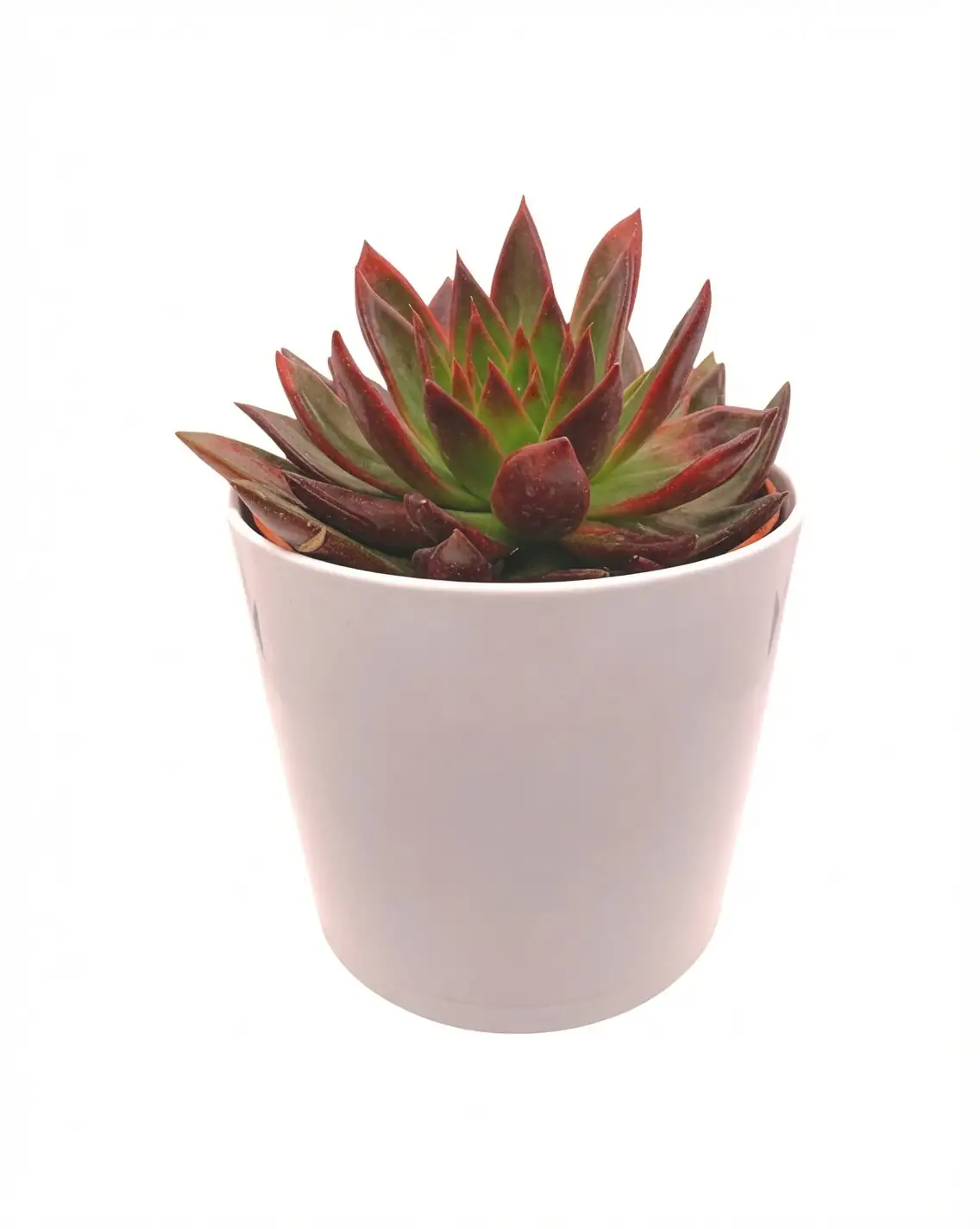
If a houseplant could wear lipstick, Echeveria ‘Red Taurus’ would swipe on the richest burgundy it could find. This clump-forming succulent stacks its leaves into tight, symmetrical rosettes that glow deep wine-red in strong light, then hoists candy-colored flowers on tall stalks in summer. Beyond the drama, though, it’s a master of desert survival tricks—complete with night-breathing metabolism and a clever color-change act when evenings turn cool.
Meet ‘Red Taurus’ at a glance
- Identity: Echeveria ‘Red Taurus’ (Crassulaceae), a horticultural cultivar often sold simply as “Red Taurus”
- Look: Compact, tight rosettes in deep burgundy to wine-red; gradually clusters by producing offsets
- Size: Rosettes about 8–15 cm (3–6 in) wide; plants 10–20 cm (4–8 in) tall
- Summer show: Upright flowering stems 20–40 cm (8–16 in) tipped with bicolored red-and-yellow blooms
- Roots: The genus Echeveria hails mainly from Mexico and Central America; this particular plant is of garden origin
Quirk 1: The skyscraper bloom strategy
Ever wondered why a low, ground-hugging rosette sends up a surprisingly tall flower stalk? That “periscope” is a pollinator magnet.
How tall stalks give flowers a lift
- Above-the-rosette visibility: Elevating blooms clears the leafy “umbrella,” making color and scent easier for pollinators to spot from a distance.
- Cleaner landings: Raising flowers reduces clutter from overlapping leaves, giving bees—and sometimes hummingbirds in warm regions—fuss-free access.
- Pest and moisture advantages: Keeping delicate blooms away from soil splash and dense foliage can limit fungal issues and help flowers last longer.
Bicolored beacons: red and yellow
‘Red Taurus’ tops those stems with red-and-yellow, tubular flowers—high-contrast signals that read loud and clear in the pollinator world. Each stalk carries a string of blossoms that open in sequence, stretching out the buffet across summer.
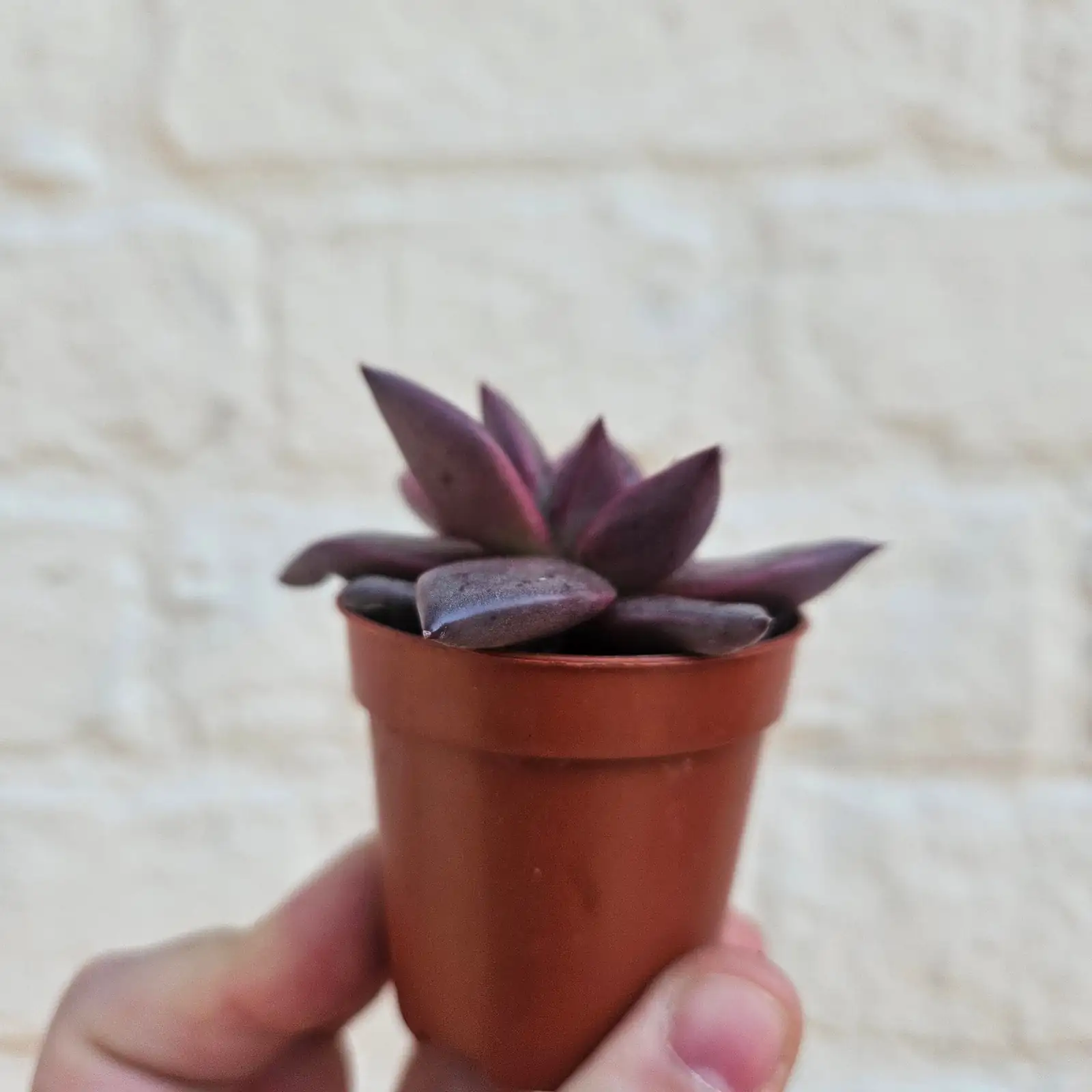
Myth-bust: “Flowering means it will die”
Not here. Unlike monocarpic succulents (think many agaves) that bloom once and bow out, Echeveria are polycarpic. The rosette keeps living and can bloom again in future seasons. After the show, simply snip spent stalks so the plant can refocus on growth.
Quirk 2: CAM—your succulent’s night-breathing superpower
‘Red Taurus’ practices CAM (Crassulacean Acid Metabolism), a drought-defense strategy with a time twist.
How CAM works (the short, cool version)
- Night shift: Stomata (leaf pores) open in the cooler, darker hours to take in CO₂, storing it as organic acids.
- Daylock: Stomata close in daylight to conserve water, while the plant uses that stored CO₂ to photosynthesize.
- Result: Minimal daytime water loss and a plant that shrugs off dry spells far better than thirstier houseplants.
Why this matters for your care
- Watering rhythm: Let the soil go bone-dry between soakings—especially since daytime stomata stay closed. Overwatering is the real risk.
- Airflow helps: Good ventilation supports healthy gas exchange and discourages rot in tight rosettes.
Quirk 3: Why cool nights paint those leaves wine-red
If you’ve noticed the foliage deepening from burgundy to a sultry, wine-red after a breezy evening outdoors, you’re seeing plant chemistry at play.
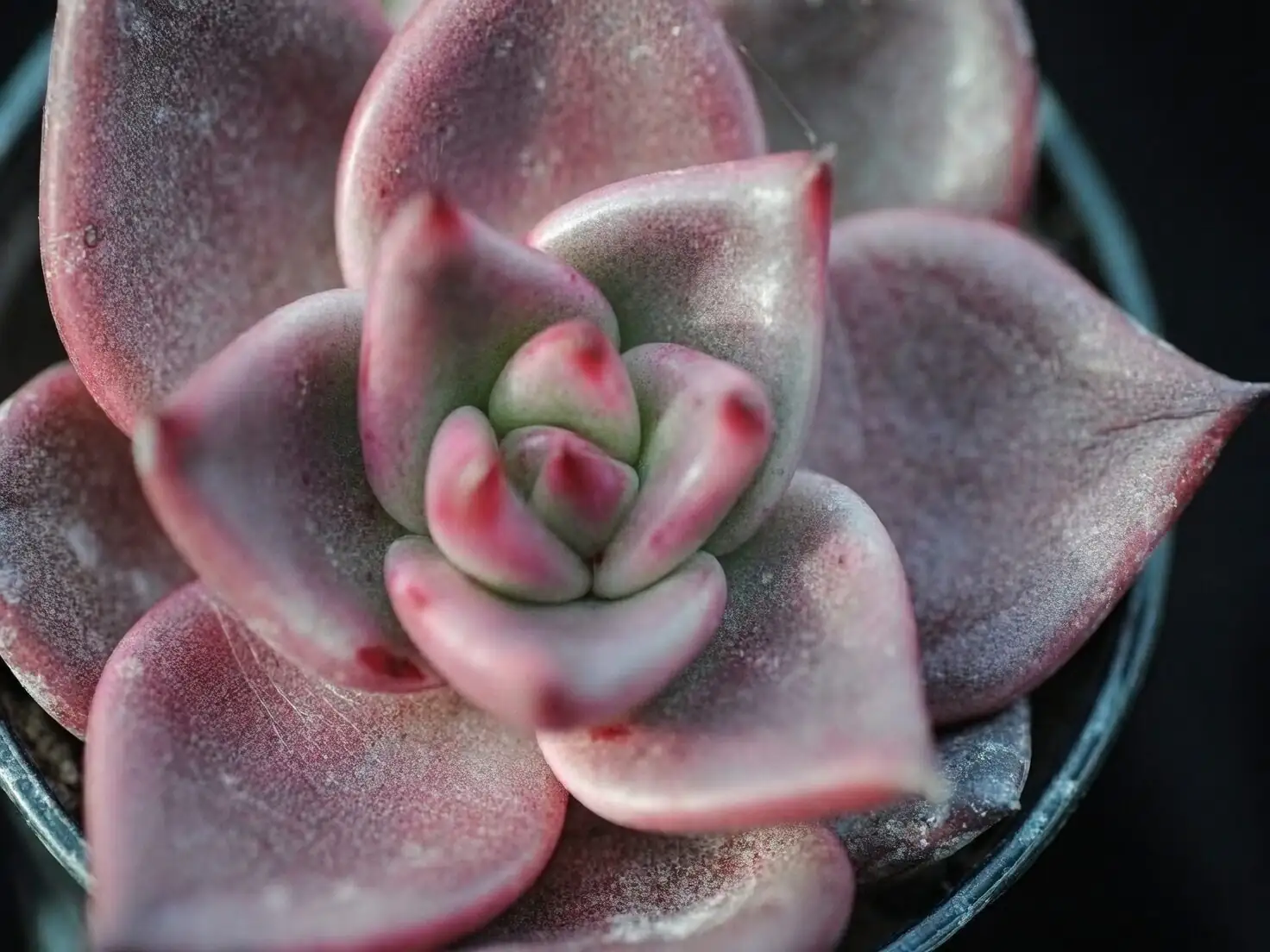
The color story: anthocyanins as sunscreen (and sweater)
- Strong light + cool nights stimulate anthocyanin pigments, which tint leaves red to burgundy.
- These pigments act like sunglasses, shielding tissues from intense sun, and may help buffer temperature swings.
- In softer light or warm nights, chlorophyll takes center stage and leaves can shift greener—still handsome, just less dramatic.
How to coax the richest reds
- Light: Give 4–6+ hours of direct sun. In very hot climates, provide light afternoon shade to avoid scorching.
- Seasonal swing: Safely expose plants to bright days and cooler nights in spring–fall. Bring them in before cold bites—protect from frost and aim to keep above 0–5°C (32–41°F).
- Patience and consistency: Color often intensifies gradually when conditions are right.
Care cheat sheet for the best color and blooms
- Sunlight: Bright light to full sun; increase exposure gradually to prevent sunburn.
- Water: Thorough soak, then wait until the mix is completely dry. Spring–summer: often every 7–14 days; winter: every 3–4 weeks or less.
- Soil: Very fast-draining succulent/cactus mix with pumice or perlite.
- Temperature: Thrives at 15–27°C (59–81°F). Not frost-hardy; typically outdoor-year-round only in USDA Zone 10–11.
- Feeding: Lightly in spring–summer with a diluted (1/4–1/2 strength) succulent fertilizer every 4–6 weeks; skip in winter.
- Grooming: Pluck dry lower leaves and cut off spent flowering stems. If rot appears, trim back to healthy tissue.
- Pests: Watch for mealybugs in leaf axils, aphids on flower stalks, and spider mites in hot, dry spells. Treat with insecticidal soap or isopropyl alcohol swabs and boost airflow.
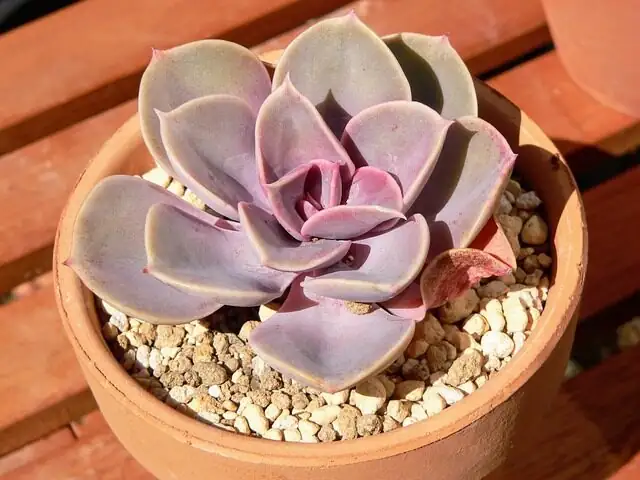
Propagation play
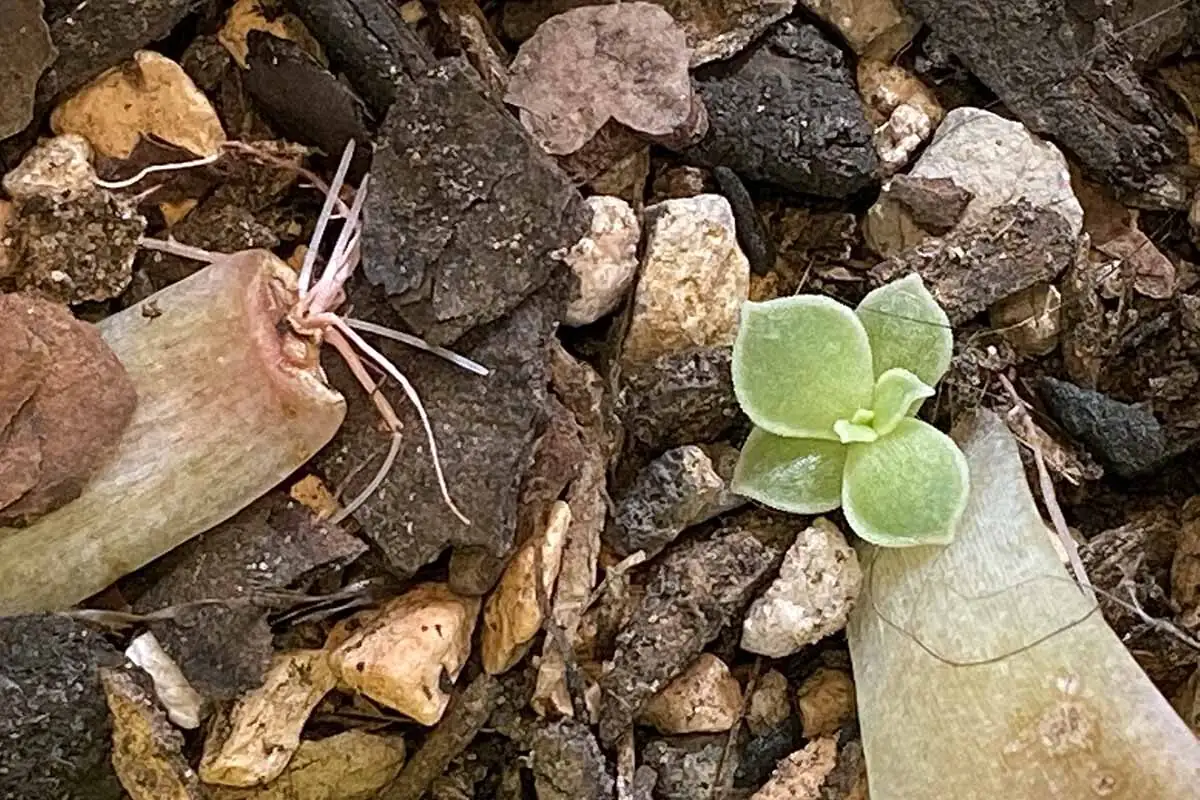
- Offsets: Gently separate and reroot pups to build your own ruby-red constellation.
- Leaf cuttings: Let the cut edge callus 2–5 days, set on a dry, gritty mix, then mist sparingly once roots appear.
Fun, fast fixes to common hiccups
- Leaves turning green? It needs more light—and often benefits from cooler nights. Increase sun exposure slowly.
- Rosette stretching tall and loose? That’s etiolation from low light. Move to a brighter spot; you can behead and reroot to restore symmetry.
- Center rot? Usually water trapped in the crown or soil staying wet. Water at the soil line, use a gritty mix, and let the pot dry fully.
Flower language and symbolism (the real backstory)
Traditional floriography rarely mentions succulents, but modern plant culture has given Echeveria its own “language.” ‘Red Taurus’ often symbolizes endurance and self-reliance—tough-but-beautiful energy that mirrors its CAM survival skills and drought poise. Rather than Victorian code, think contemporary meaning: a living reminder to conserve resources, thrive under pressure, and still throw a fabulous summer bloom party.
Where to place your crimson rosette
- Indoors: A sunny windowsill with excellent airflow or under strong grow lights.
- Outdoors (warm seasons): A bright balcony, patio, or rock-garden display. Bring indoors before cold weather returns.
A last, lovely quirk
Those tall, upright stems hoisting red-and-yellow bells aren’t just photogenic—they’re a strategy perfected by a desert native turned garden jewel. Give ‘Red Taurus’ bright days, cool nights, and a good drink only after a thorough dry-down, and it will repay you with sculptural rosettes, dazzling color, and skyward sparks of summer bloom. Non-toxic to people and pets (though nibbling can still cause an upset tummy), it’s a resilient showstopper with science—and style—on its side.