

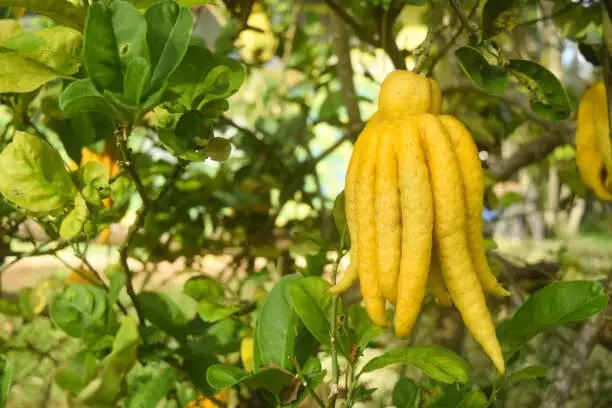
It’s hard not to smile when a fruit seems to wave at you. Buddha’s Hand Citron—Citrus medica var. sarcodactylis—looks like a golden hand frozen mid-blessing, its fragrant “fingers” splayed or clasped in sculptural poise. That uncanny shape, paired with a room‑filling perfume, is exactly why the plant grew a rich “flower language” in East Asia: a vocabulary of blessings, long life, and good fortune that still speaks powerfully every Lunar New Year.
Meet Buddha’s Hand Citron (Citrus medica var. sarcodactylis)
- Family and form: A citrus in the Rutaceae family, typically grown as an evergreen, woody shrub with dense, glossy leaves and sweetly fragrant blossoms.
- The famous fruit: Bright yellow and wildly aromatic, with segmented “fingers” that recall a hand. It’s prized more for scent and sculpture than juice; the rind is the culinary treasure.
- Best as a potted star: Commonly kept around 60–150 cm (2–5 ft) when container-grown—perfect for winter display in bright, cool interiors.
- Deep roots: Long cultivated in China as an ornamental and aromatic citrus, originating from tropical regions of China and India.
How a fruit acquired a “flower language”
In East Asian culture, 花语 (huāyǔ)—often translated as “flower language”—extends beyond blossoms to any plant with potent symbolic cues. Buddha’s Hand earned its meanings through four intertwined threads: shape, scent and ritual use, sound (wordplay), and season.
1) The hand that blesses: mudras and temple offerings
The fruit’s fingers naturally arrange into gestures that echo Buddhist mudras:
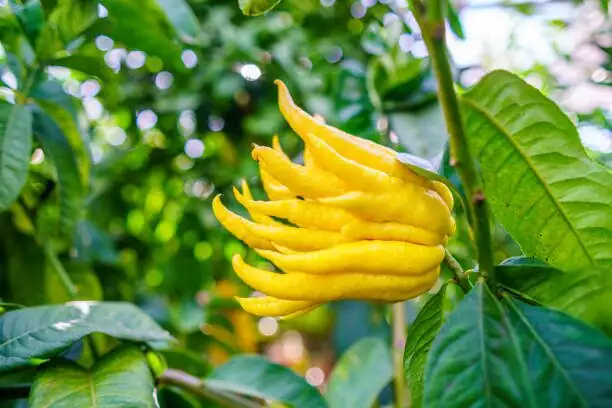
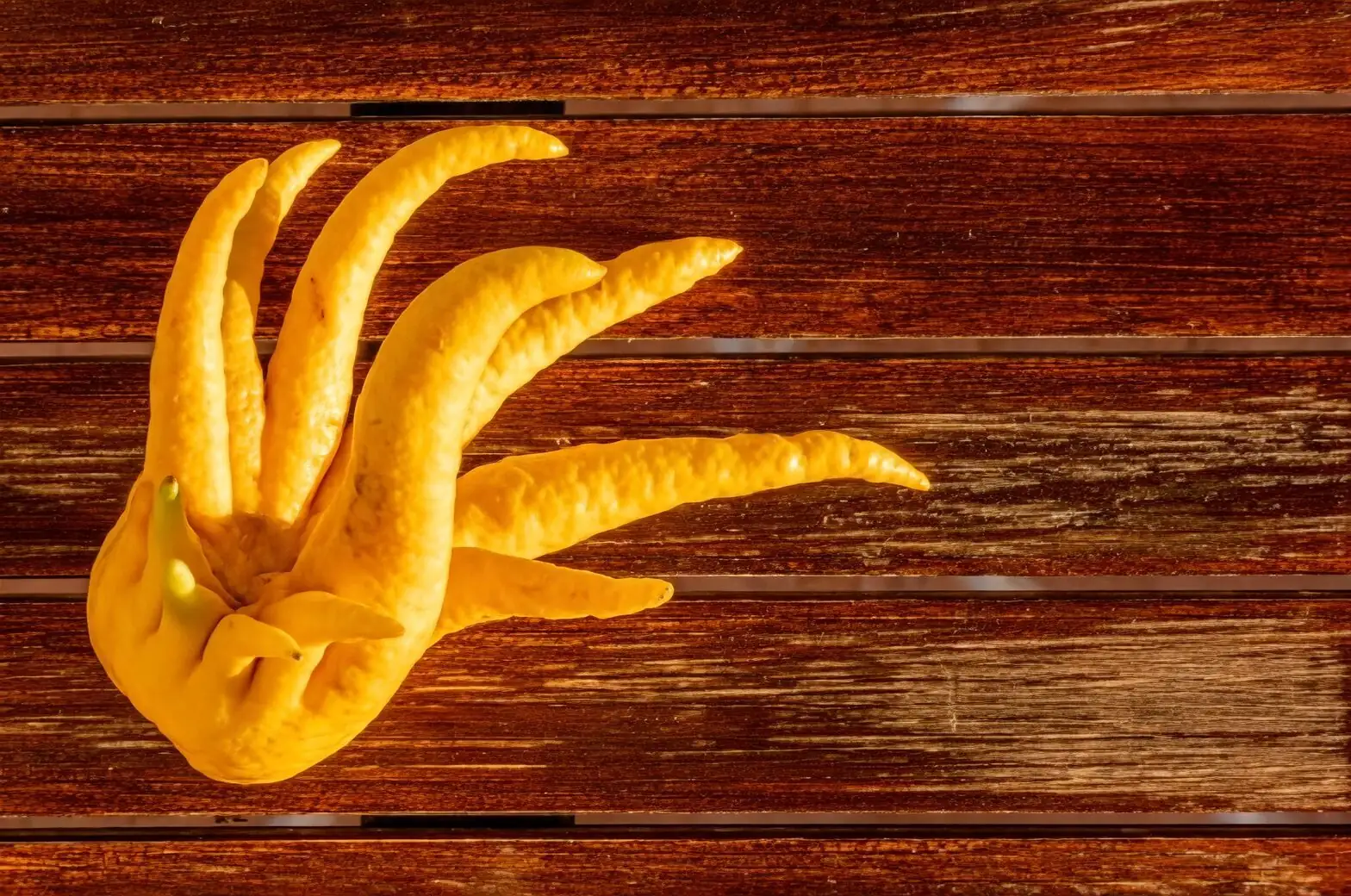
- Open-hand types evoke the varada mudra, the act of bestowing blessings and generosity.
- More closed or clasped forms suggest prayerful devotion.
For centuries, the fruit’s powerful perfume and reverent silhouette made it a favored temple offering. Placed before a Buddha image, it “offers” fragrance—considered a pure, subtle gift—while silently mimicking a blessing hand.
2) Wordplay that wishes you well
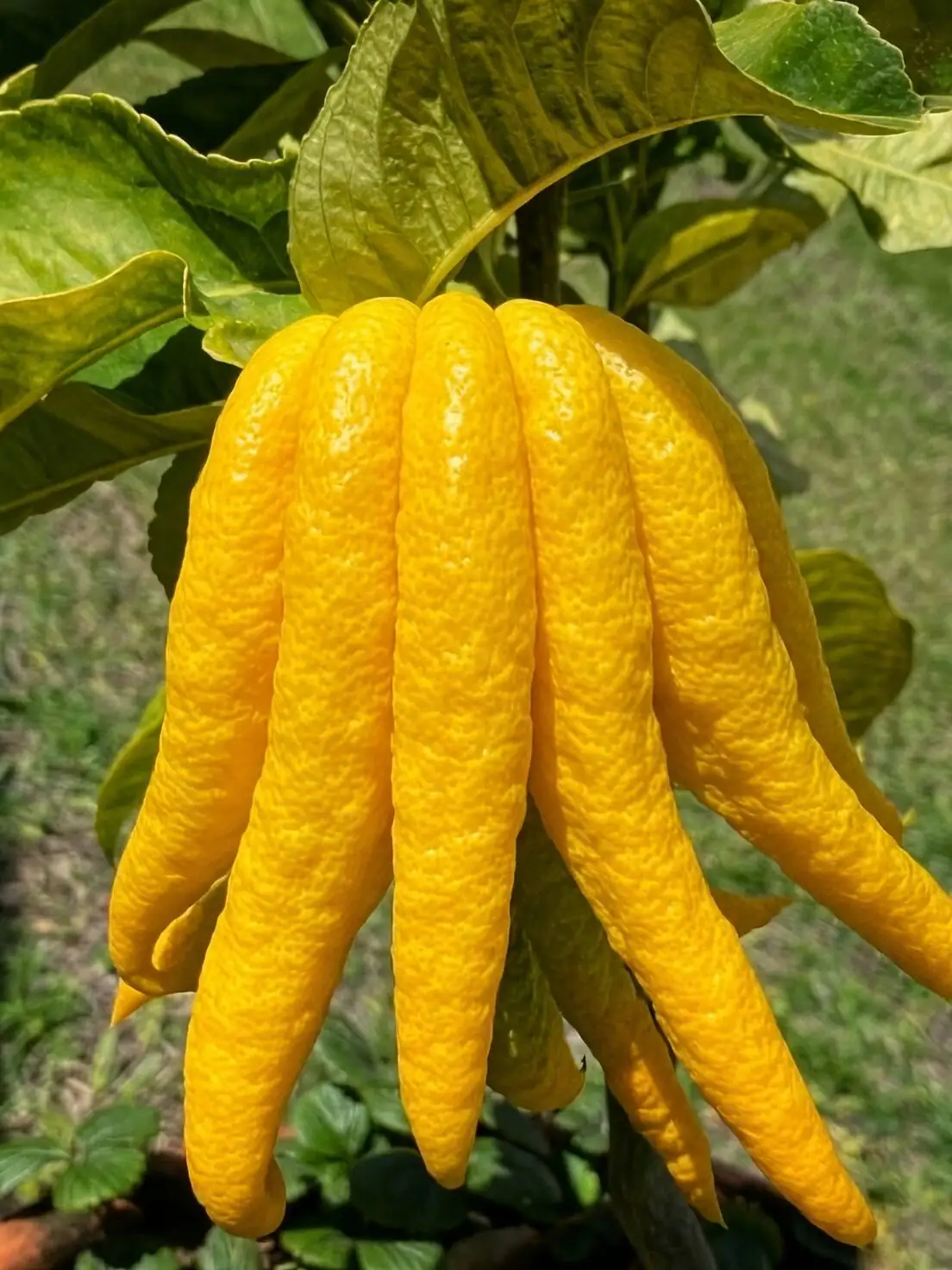
In Chinese, the fruit is called 佛手 (Fóshǒu), “Buddha’s hand.” Spoken aloud, it brushes against the auspicious phrase 福寿 (Fúshòu), “good fortune and longevity.” That near-homophone made it a natural emblem to gift or display when you want to wish someone lasting luck and a long, healthy life.
3) The season of gold: a Lunar New Year centerpiece
Buddha’s Hand shines brightest in winter—just when homes are dressed for the New Year. Its:
- Golden color nods to wealth and prosperity.
- Lasting perfume lends the festive air of freshness and purity.
- Evergreen leaves promise durability and staying power.
No wonder it rose to fame as a classic New Year potted display: a living sculpture that literally “holds” blessings for the year ahead.
4) From altar to entryway: a feng shui charm
As temple traditions met domestic decor, Buddha’s Hand slipped easily into feng shui practice. Its hand‑like form feels welcoming at an entry, its fragrance “clears the air,” and its golden fruit reads as prosperity. Displayed in a bright, respectful spot, it’s said to invite auspicious qi and spread benevolence through the home. While the beliefs are cultural rather than scientific, the effect is undeniably uplifting.
What its symbols mean today
- Blessings: The mudra‑like fruit “offers” goodwill. Its gently radiant scent is the kind of gift that softens a room without a word.
- Longevity: Evergreen foliage suggests endurance; the fruit often holds for weeks on the plant and even perfumes a room on its own—a quiet metaphor for life that lasts and lingers.
- Good fortune: Golden color, holiday timing, and the near‑homophone with “fortune and longevity” make it a ready emblem of prosperity.
Styling your Buddha’s Hand for Lunar New Year
Think of it as a living sculpture. A few thoughtful choices will make its symbolism sing.
- Choose well
- Pick a balanced, well-shaped plant with deep green leaves.
- Look for intact fruits, evenly yellow and strongly fragrant.
- Where to place it
- Indoors in winter: a bright, cool spot around 5–12°C (41–54°F) helps hold fruit and reduces stress.
- A console near the entry, a living room sideboard, or beside a home altar feels both welcoming and serene.
- Give it bright light; shield from harsh midday rays behind glass.
- How to style it
- Let one to a few showy fruits take center stage. Fewer, larger “hands” read as intentional and elegant, like curated sculpture.
- Complement with simple ceramics or red/gold New Year accents that echo its auspicious palette.
Care tips to keep it lush and fruiting
This citrus is warmth-loving but sensitive to waterlogging. A few rules of thumb make all the difference.
- Light and temperature
- Bright light with some direct sun; provide light midday shade in intense summer sun.
- Active growth thrives at 22–28°C (72–82°F). Protect from cold below about 4°C (39°F).
- For winter display, cool and bright is best; avoid prolonged indoor lows below 8°C (46°F) or highs above 35°C (95°F).
- Watering: the golden rule
- Water thoroughly, then wait until the top layer just begins to dry.
- Keep evenly moist in the growing season, never soggy. In winter, let it dry a bit more between waterings.
- While carrying fruit, be extra strict: no standing water in the saucer.
- Soil and potting
- Use a fertile, free‑draining, slightly acidic mix (loam + leaf mold/compost + coarse sand).
- Repot about every 2 years in early spring; refresh the mix and lightly prune to rebalance the top after root work.
- Feeding rhythm
- Year 1 after purchase or repot: skip fertilizer.
- Year 2: feed about every 2 weeks during active growth.
- From Year 3: pause feeding at flower bud stage; resume weekly after fruit set with a citrus or balanced fertilizer including micronutrients.
- Pruning and fruit quality
- Intermittent flowering is normal. Thin some spring flowers and keep more of the summer bloom/fruit for better quality.
- For show-stopping fruit, aim for about one fruit per branch and remove extras to prevent crowding and stress.
- In early spring, remove weak or crowded shoots while preserving short fruiting spurs; in summer, prune lightly for shape and airflow.
- Health and safety
- Watch for aphids and scale; treat early with citrus‑safe soap or horticultural oil and improve airflow to prevent sooty mold.
- Generally non‑toxic; the rind is commonly used in food. Citrus oils can irritate sensitive skin—wash after handling if needed.
From temple gift to modern icon: a short cultural timeline
- Long cultivation in China: prized for perfume and form; a memorable gift plant as much as a horticultural curiosity.
- Ritual significance: offered at temples and home altars, where fragrance and gesture do the “speaking.”
- New Year favorite: evergreen leaves and golden winter fruit align perfectly with seasonal hopes for prosperity and long life.
- Contemporary design star: a photogenic, sculptural citrus now styled on sideboards and windowsills—proof that auspicious can also be effortlessly chic.
When the celebration ends: savor the aroma
The rind is where the magic is. After enjoying it as decor:
- Zest or slice the peel to scent a room naturally.
- Candy the peel or use it to flavor preserves and drinks—the fragrance is both classic and surprising.

Quick facts to share
- The fruit naturally forms “fingers,” making it look like a yellow hand—sometimes open, sometimes prayerfully closed.
- A single ripe fruit can perfume a room for days.
- It’s grown more for fragrance and show than for juice; the rind is the culinary star.
In the end, Buddha’s Hand is plant poetry you can smell: a fragrant, golden “mudra” that blesses the room, keeps its color through the coldest months, and carries an age‑old promise—may blessings be generous, may life be long, and may good fortune find its way to your door.