

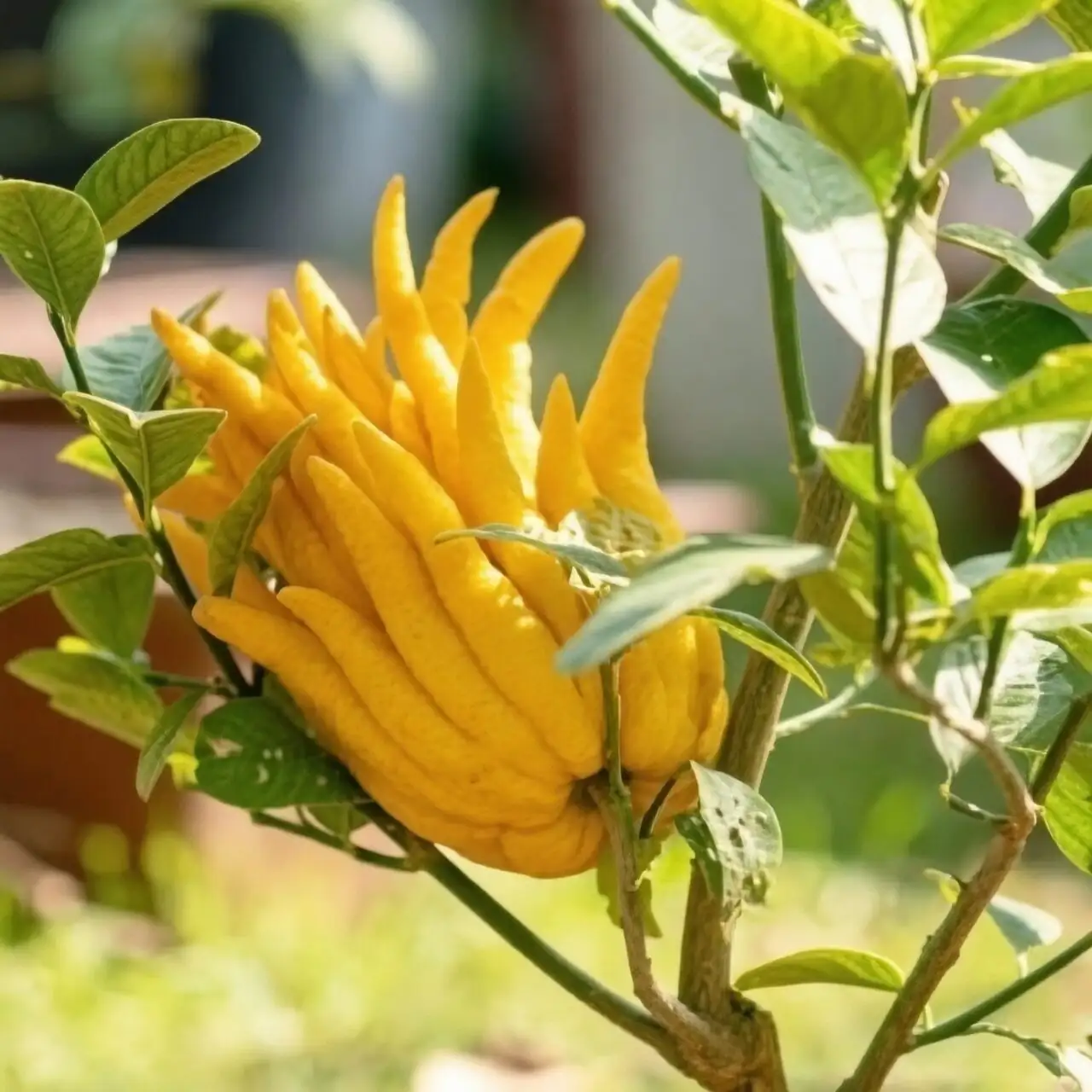
The first time you meet Citrus medica var. sarcodactylis, it rarely stays anonymous. It doesn’t whisper “citrus” so much as wave—splaying bright yellow “fingers” that perfume the air with a lemon-lavender halo. Known as Buddha’s Hand Citron, this evergreen showstopper has moved through centuries and across continents not by juice (there’s hardly any), but by sheer charisma: a sculptural fruit, an altar offering, and a rind that can launch a thousand sweets.
From twin homelands to temple halls
Native to the tropical regions of China and India, Buddha’s Hand took root early as a plant of ceremony and scent. Carried along trade and pilgrimage routes, it soon appeared in Chinese courtyards and temple precincts. There it met its destiny as an offering—arranged with reverence, its fingers cupped like a gesture of blessing. In Chinese, it’s called 佛手 (Fóshǒu), a name whose sound echoes “福寿” (fúshòu), blessings and longevity—exactly what people hoped to invite into the home.

- A cultural emblem: In East Asia, the fruit became shorthand for auspiciousness, good fortune, and long life.
- A seasonal star: As winter gathered, potted plants heavy with glowing fruit moved indoors to brighten cool rooms and scent the air—an enduring tradition for the Lunar New Year.
Gardens of East Asia: the living sculpture
Buddha’s Hand is an evergreen citrus in the Rutaceae family, grown more for fragrance and form than for juice. As a container plant, it’s typically kept around 60–150 cm (2–5 ft) tall, carefully pruned to frame the fruit like a living ikebana arrangement.
- Growth habit: An evergreen, woody shrub with irregular branching; gardeners often train it to a balanced silhouette that cradles the fruit.
- Foliage and flowers: Deep green, glossy leaves set off waves of sweetly fragrant blossoms. In warm conditions it flowers intermittently, with main flushes in spring and summer—each bloom a promise of another eccentric hand to come.
A fruit of perfume, not pulp
Unlike oranges or lemons, the Buddha’s Hand citron is almost all rind and pith—no messy segments, very little (if any) juice. The reward is in the peel: a thick, highly aromatic flavedo saturated with essential oils that can scent a room for days.
- Shape-shifting hands: Fingers may curl inward like a closed palm or reach outward in exuberant salute. Either way, the aroma is beguiling—bright citrus with floral whispers.
- Room perfume: One ripe fruit in a bowl can replace a bouquet, its fragrance softening the mood of an entryway, kitchen, or meditation space.
The rind that conquered global kitchens
From Chinese preserves to modern pâtisserie, the rind is the treasure. Chefs and home cooks value it for transforming sugar, spirits, and simple syrups into something almost ceremonial.
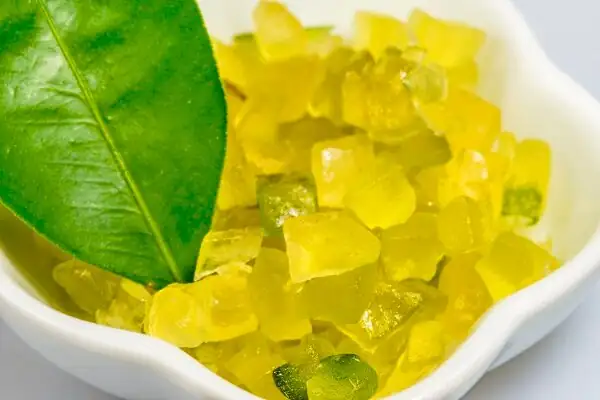
- Candied peel and preserves: Classic across East and West. The thick rind candies beautifully; the mild, spongy pith often candies along with it, yielding jewel-like bites for biscotti, panforte, fruitcakes, and festive cookies.
- Infusions: Slip peels into vodka or gin; steep in syrups for cocktails and sparkling water; tuck zest into teas.
- Aromatic pantry staples: Blitz zest with sugar or salt to make citrus rubs for seafood, roast vegetables, and shaved fennel salads.
- Sauces and sweets: Macerate slivers in honey; fold into custards or panna cotta; spotlight in marmalades (often paired with juicier citrus to balance texture).
Tip: There’s little to no pulp, so think “flavor extractor,” not “eating out of hand.”
How to grow your own Buddha’s Hand Citron
Treat it like a beloved guest who likes bright light, steady warmth, and a well-drained seat.

- Sunlight: Bright light with some direct sun. Not shade-tolerant. In harsh midsummer sun, offer light noon shade to prevent leaf scorch.
- Temperature: Thrives at 22–28°C (72–82°F). Cold damage below ~4°C (39°F). For winter display, aim for a bright, cool spot at 5–12°C (41–54°F). Avoid prolonged indoor lows below 8°C (46°F) or highs above 35°C (95°F).
- Humidity: Moderate is fine. In dry, heated rooms, a little extra humidity helps reduce leaf drop.
- Soil: Fertile, slightly acidic, and free-draining. A loam-based mix with compost/leaf mold plus coarse sand is ideal. This species is sensitive to waterlogging—never let the pot sit in water.
- Watering: Water thoroughly, then wait until the top layer is nearly dry. Keep lightly, consistently moist in active growth; avoid missed waterings in summer. In winter, water more sparingly. While carrying fruit, reduce watering and be strict about no standing water to prevent leaf/fruit drop.
- Hardiness and placement: Frost-tender. Best as a container citrus unless you live in a truly frost-free climate. Summer outdoors in bright light with airflow; winter indoors at 5–12°C near a bright east/south window or in a cool sunroom.
Flowering, fruiting, and pruning wisdom
- Bloom rhythm: Intermittent in warm conditions, with big pushes in spring and summer.
- Fruit quality: Thin spring flowers and keep more summer bloom for better fruit. For show-quality results, aim for about one fruit per branch and remove extras.
- Pruning:
- Early spring (before new growth): Remove overly vigorous shoots, crowded growth, and weak branches; preserve short fruiting spurs.
- Summer: Light shaping for airflow and to spotlight developing fruit.
- Autumn: Keep strong autumn shoots; they often become next year’s fruiting wood.
Feeding, repotting, and an easy calendar
- Fertilization:
- Year 1 after potting: Skip feeding.
- Year 2: Feed about every 2 weeks during active growth with a citrus or balanced fertilizer that includes micronutrients.
- Year 3 onward: Pause when flower buds appear; once fruit sets, feed about weekly.
- Repotting: Every ~2 years in early spring into a slightly acidic, free-draining mix. After any root reduction, lightly prune top growth to rebalance.
- Seasonal notes:
- Spring: Repot if due; prune before bud break; maximize light.
- Summer: Provide light midday shade in extreme sun; don’t allow drought; prune lightly for shape.
- Autumn: Preserve healthy autumn shoots; keep in bright light.
- Winter: Peak ornamental season; move indoors to a bright, cool spot; water sparingly and avoid waterlogging—especially while fruiting.
Propagation (for the adventurous)
- Cuttings (June–July): Take 10–12 cm firm shoots from the previous season’s growth; root in sandy medium. Roots in ~30–35 days; new shoots in ~60–70 days.
- Grafting (March–April): Use citron or lemon rootstock; 6–8 cm scions with 2–3 buds. Keep humid; new growth often appears in ~40–50 days.
- Air layering (May–July): On vigorous branches; roots in ~30–40 days; detach and pot after ~50–60 days.
Buying tips
Choose a plant with:
- A balanced, well-pruned framework and deep green, glossy leaves
- Intact fruits that are evenly yellow and intensely fragrant
Pests, health, and handling
- Common pests: Aphids and scale. Their honeydew can invite sooty mold. Improve airflow, thin dense growth, and treat early with horticultural oil or soap (follow labels—especially important if you’ll use the rind). Copper-based products are sometimes used where fungal issues arise.
- Safety: Generally considered non-toxic; the rind is commonly used in food. Citrus oils can irritate sensitive skin. Curious pets that chew foliage may experience mild stomach upset—best to keep the plant out of nibbling range.
Flower language and the meaning behind the “hand”
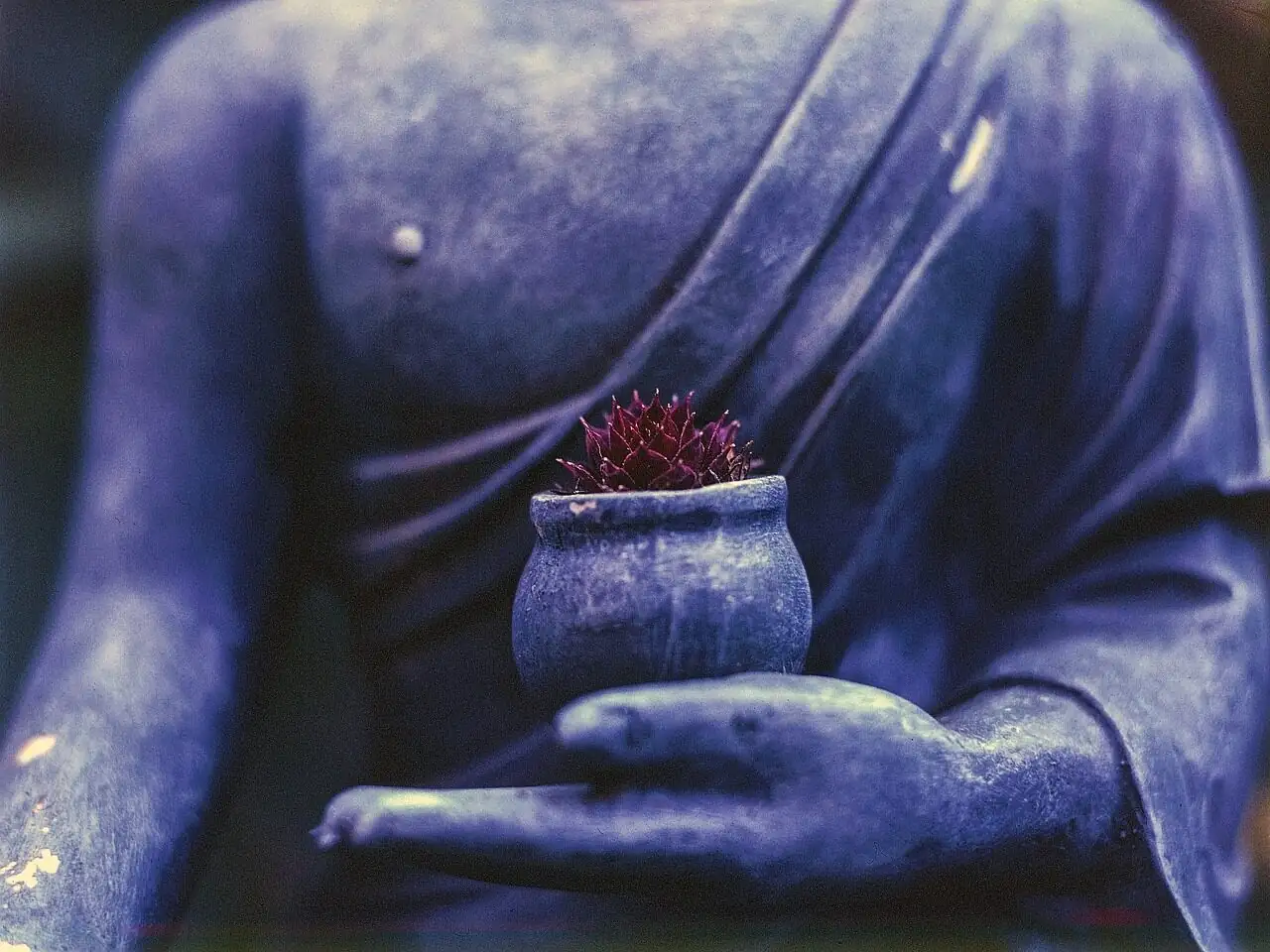
Why does Buddha’s Hand carry such weight in symbolism? Beyond the name, the fruit’s forms echo gesture. A closed hand suggests prayer or containment—keeping blessings close—while an open hand suggests generosity, offering fortune outward. In Chinese tradition, its name (佛手, Fóshǒu) resonates with “福寿,” blessings and longevity, a poetic pun that ripples through New Year displays, temple offerings, and household altars. In that sense, the fruit doesn’t just represent good luck; it’s a wish made visible and fragrant.
From temples to trendsetting kitchens
Today, Buddha’s Hand moves with equal grace from East Asian courtyards to global markets and restaurant kitchens. You’ll spot it glowing in winter produce displays, perfuming pastry kitchens, sneaking into cocktail syrups, and anchoring windowsills as a sculptural houseplant. Its journey—from tropical China and India through temple halls, into gardens and festival tables, and onward to modern preserves—has always hinged on the same two gifts: form and fragrance.
And that is the charm of Citrus medica var. sarcodactylis. It doesn’t ask to be peeled and eaten by the wedge. It asks to be welcomed, admired, and invited to season the air—and the sweets—of any home that could use a little more blessing.