

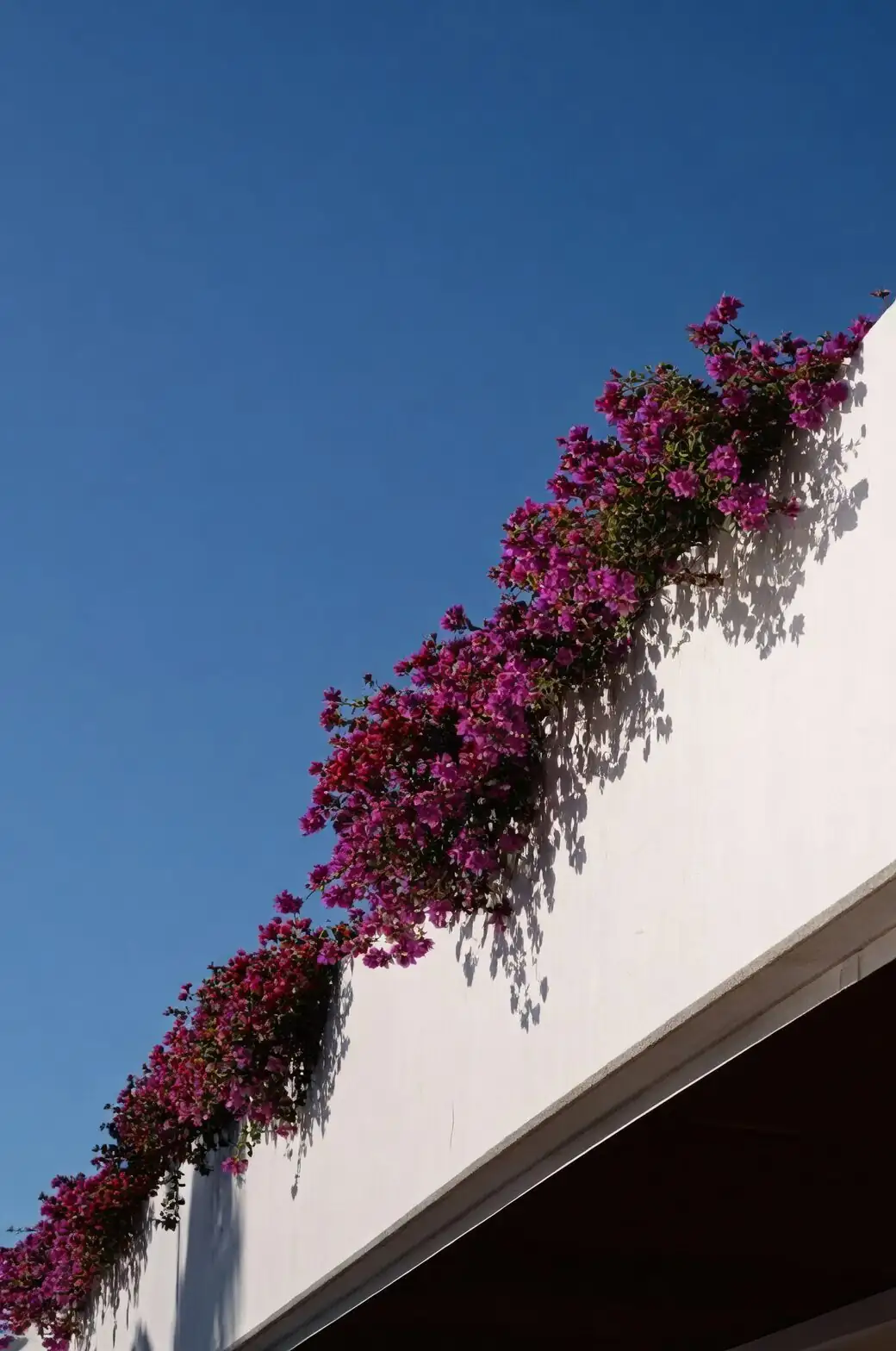
Imagine opening your balcony door to a living tapestry that throws confetti-bright color across a sun-warmed wall. That’s Bougainvillea glabra—and its riotous hybrids such as Bougainvillea × buttiana—doing what they do best: turning simple supports into showpiece sculpture. With a few smart training moves, even a small patio can host a compact espalier or an arch that explodes with color.
Below, a design-forward playbook for sun-facing walls, the pros and cons of wire grids versus bamboo hoops, tie-in methods that work, and pattern ideas scaled for tight spaces and entryways.
Find the wall that makes bougainvillea bloom hard
Bougainvillea is a sun-lover and a heat-lover. Pick the right backdrop and the plant does the rest.
- Sun orientation: Aim for 6+ hours of direct sun daily; bright south- or west-facing exposures are prime. Less light = leggier growth and fewer bracts.
- Warmth and thermal mass: Brick, stucco, stone, or painted masonry that soaks up day heat and releases it at night keeps blooms cycling longer.
- Air + space: Leave a little breathing room between plant and wall for airflow. In-ground, set plants 15–25 cm off the wall; in containers, park the pot a hand’s width out from the surface.
- Cold reality: Not frost-hardy. In cool climates, grow in containers so you can overwinter above about 7–10°C (45–50°F) indoors in the brightest window or sunroom you have.
Wire grids vs. bamboo hoops: which support suits your style?
Think of your support as the picture frame—choose it for the lines you want to draw.
Wire grids: crisp, modern, endlessly patternable
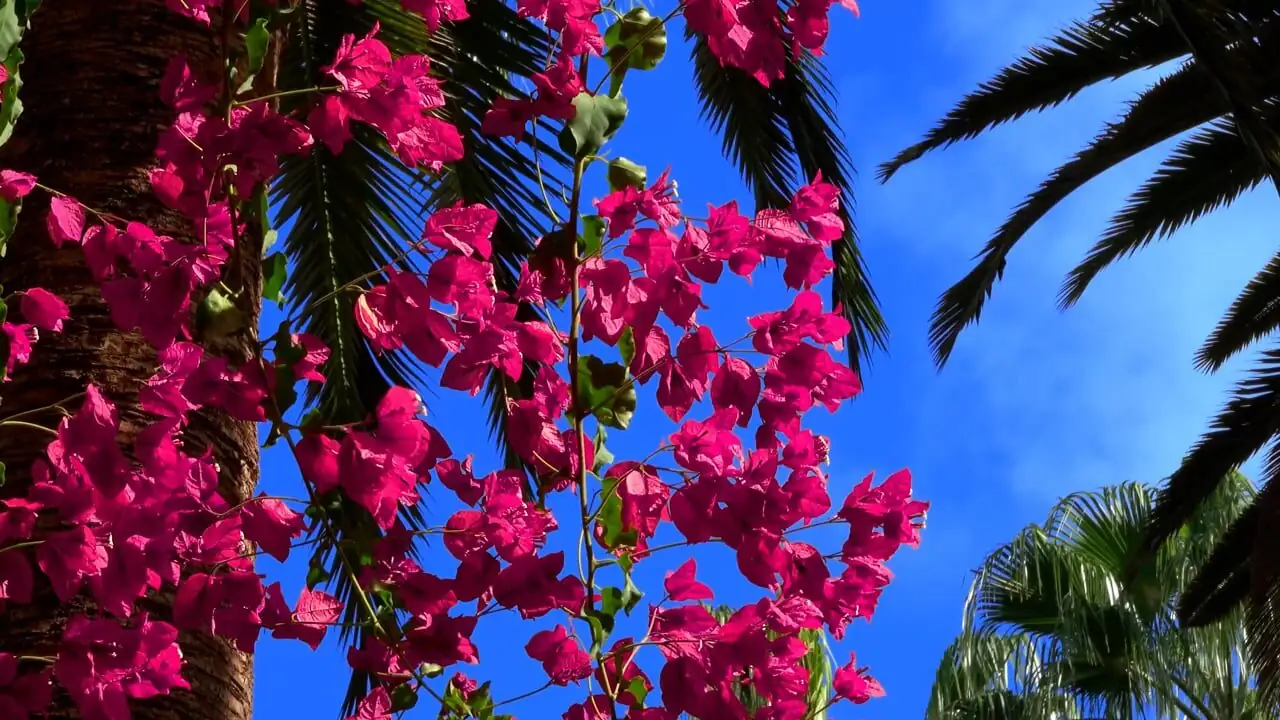
- Best for: Diamond lattices, chevrons, candelabras, “pixel” grids, and tight, flat espaliers.
- Hardware: Stainless-steel or coated wire with wall anchors and eyelets; add turnbuckles for tension. Renters or clean facades can use stick-on “no-nail” trellis pads rated for outdoor use on smooth surfaces.
- Grid spacing: 20–30 cm squares handle bougainvillea’s vigor while staying compact on balconies.
- Pros: Slim profile, precise geometry, easy to extend as vines grow.
- Watch-outs: Plan for heat expansion and re-tension yearly; avoid cheap ties that cut into stems.
Bamboo hoops/canes: soft curves and organic character
- Best for: Arches, fans, halo hoops, and gentle scallops over doors and window bays.
- Build ideas:
- Single halo: One or two nested hoops tied to a container stake for a compact “crown.”
- Fan frame: 3–5 canes spread like a hand fan from a central stake.
- Arch kit: Two tall hoops in matching pots, their tips bound together to meet over an entry.
- Pros: Lightweight, quick to reconfigure, warm aesthetic that flatters papery bracts.
- Watch-outs: Replace weathered canes periodically; anchor well in windy sites.
Hybrid systems: best of both worlds
- Run a wire “spine” up the wall and attach bamboo ribs for fan or palm-frond patterns—or flank a wire grid with a hoop crown to soften a rectilinear wall.
Tie-in methods bougainvillea actually tolerates
Thorns plus papery bracts call for gentle control and regular edits.
- Tie materials that work:
- Soft rubber plant ties, horticultural Velcro, stretchy grafting tape, or fabric-covered wire.
- Use a loose figure-eight tie so stems don’t chafe. Check twice a season and loosen if needed.
- Direct the energy:
- Let main leaders “run” to your outer frame before tipping; pinch overly long side shoots to encourage branching and later bracts.
- Fanning shoots closer to horizontal often coaxes more flowering spurs.
- Training-stage bloom hack (optional): If you’re building structure in year one, snip off early buds so energy goes to framework. Once the shape is set, let the color show.
- Safety: Wear gloves and eye protection—sap can irritate skin/eyes and thorns scratch.
Compact pattern ideas for balconies and patios
Each design below fits a typical balcony wall or privacy panel and keeps maintenance manageable.
1) Fan espalier (soft, airy, high-impact)
- Support: 3–5 bamboo canes or wires radiating from a low central point.
- Steps:
- Select 3–5 strong leaders; spread them like ribs of a fan and tie loosely.
- Pinch side shoots every 20–30 cm to create short flowering spurs.
- Keep the base uncluttered for a sculptural “stem” effect in containers.
2) Diamond lattice (classic “wow” on modern facades)
- Support: Wire grid set on a diagonal (20–25 cm between intersections).
- Steps:
- Train two opposing leaders in a V; weave new shoots alternately left and right.
- Tie at intersections and tip-prune once each rhombus fills to spark side shoots.
- Maintain clean negative space between diamonds for graphic pop.
3) Candelabra (architectural and tidy)
- Support: One vertical wire “trunk” with 3–4 pairs of horizontal “arms.”
- Steps:
- Choose the strongest cane as your trunk; tie to the vertical.
- Every 25–30 cm, select two laterals as an “arm pair” and train them level.
- Keep laterals short and spur-pruned to bloom; extend the trunk only as high as needed.
4) Chevron or herringbone (dynamic on narrow walls)
- Support: Two sets of parallel diagonals meeting at a centerline.
- Steps:
- Send leaders up-left and up-right to establish the angle.
- Fill with alternating laterals, trimming tips where they meet the boundary.
- This pattern reads “fast”—perfect for small spaces that want energy.
5) Palm-frond/pinnate (botanical flourish)
- Support: One central spine with short, angled “leaflets” every 20–25 cm.
- Steps:
- Keep the central leader strong; cut side shoots to 10–20 cm spurs along both sides.
- Great for accent columns and balcony posts.
Entryway arches that explode with color
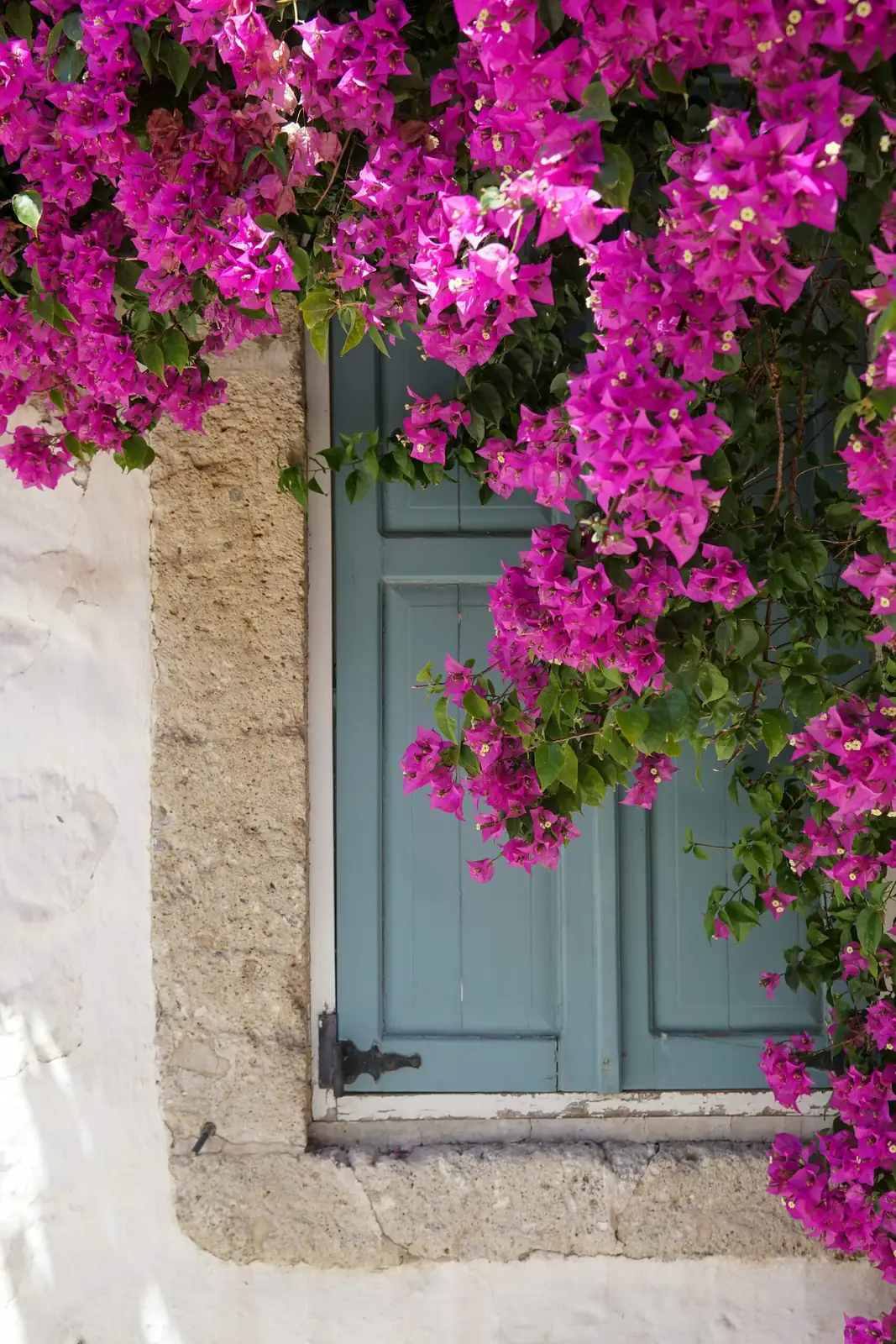
A living arch turns a threshold into a celebration—but keep it friendly to faces and door swings.
- Two-pot arch method:
- Containers: Two sturdy, heavy pots (bougainvillea likes to be slightly root-bound; don’t over-pot). Use a fast-draining mix with added coarse grit or sand.
- Frame: Insert tall bamboo hoops or a metal arch into each pot; lash the tops together.
- Planting: One bougainvillea per pot. Let a main leader from each side run up and across; interweave at the crown.
- Clearances: Keep the lower 1.8–2 m of the arch pruned tight so thorns don’t snag passersby.
- Wall-to-post rainbow:
- Fix a gentle hoop from a sunny wall to a freestanding post; train leaders up and over to create a color “bridge” to your entry.
- Color tip: Choose cultivars with saturated bracts and position the arch where sun hits the crown longest—bracts glow when backlit.
The balcony blueprint: simple care that fuels design
These are the behind-the-scenes habits that make the front-of-house spectacle happen.
Light and placement
- Sunniest spot you have outdoors (balcony, patio, warm wall). Indoors off-season, a bright south- or west-facing window/sunroom.
Watering rhythm
- Spring–early autumn: Water deeply, then let excess drain. Water again only when the top layer dries and the mix heads toward “nearly dry”—never constantly wet.
- Bloom nudge: A brief, controlled “dry-down” can trigger bud formation. Don’t allow severe wilting.
- Winter: Bright, coolish, and much drier; water sparingly once the mix has dried more thoroughly.
Feeding for color
- During growth, feed regularly but keep nitrogen modest.
- Option A: Monthly with a balanced-to-bloom formula leaning higher in potassium (e.g., bloom-type ratios).
- Option B: Every 2 weeks with a balanced liquid; every third feed switch to a higher-potassium bloom fertilizer.
- Peak color booster: A one-time monopotassium phosphate feed can intensify bracts.
- Less is more: Excess nitrogen = lots of leaves, fewer bracts.
Pruning and training calendar
- Spring–summer: Tie in new growth; pinch overly long shoots to branch. Let primary leaders reach your frame before tipping.
- After flowering: Light shape-up; remove dead/weak stems; tidy side shoots.
- Autumn: Prune side shoots to keep outlines crisp; slightly reduce watering to encourage flowering.
- Older plants: Occasional harder rejuvenation pruning restores vigor—skip during peak bloom.
Pots and repotting
- Slightly root-restricted plants often bloom better. Step up only one size at a time.
- Young plants: Repot about every 2 years.
- Mature: Top-dress in spring instead of frequent repotting.
Quick troubleshooting
- Lots of leaves, few bracts?
- Move to stronger sun.
- Let the mix dry more between waterings.
- Shift to higher-potassium, bloom-leaning feeding and rein in nitrogen.
- Leaf/bract drop?
- Commonly from overwatering, low light, or abrupt moves. Improve drainage and light; avoid soggy soil.
- Pests indoors/outdoors:
- Watch for spider mites (dry air), mealybugs, scale, aphids on new tips, caterpillars. Improve airflow; treat with horticultural oil or insecticidal soap per label.
- Cold snap coming?
- Move containers to shelter; overwinter above 7–10°C (45–50°F) with maximum light.
Design micro-moves that make a big difference
- Staggered tie points: Alternate left-right ties every 20–30 cm to distribute load and create subtle, wavy drape.
- Negative space is a feature: Resist filling every gap; contrast makes color pop.
- Backlight your bracts: Place trellises where late-afternoon sun passes through the papery bracts—the glow is electric.
- Color choreography: On larger spans, plant two complementary cultivars and interlace them for a gradient.
Safety and placement notes
- Thorns and irritant sap: Wear gloves/eye protection when pruning or training; keep away from kids and pets.
- Entry etiquette: Keep thorny bits trimmed above shoulder height around doors and narrow walkways.
A brief note on symbolism (and what those “petals” really are)
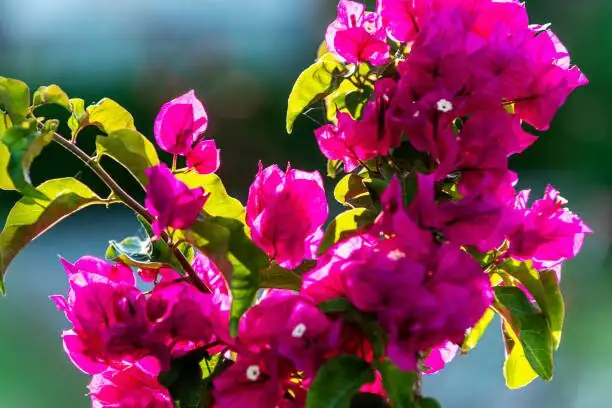
The flamboyant display comes from papery bracts—modified leaves—cradling tiny creamy-white true flowers. In many places bougainvillea reads as a banner of welcome, celebration, and passionate color. That “flower language” grew less from Victorian codes and more from lived experience: in warm towns, bougainvillea greets you at gates, courtyards, and balconies, turning arrivals into events. Train yours over an entry or across a balcony rail, and you’ll feel exactly why.
—
Bougainvillea glabra and its showy hybrids reward design-minded gardeners: give them a sun-drenched wall, a smartly chosen frame—wire for precision, bamboo for poetry—gentle tie-ins, and a light hand with water and nitrogen. In return, you’ll get a compact, sculptural vine that paints your balcony or entryway with months of saturated color.