

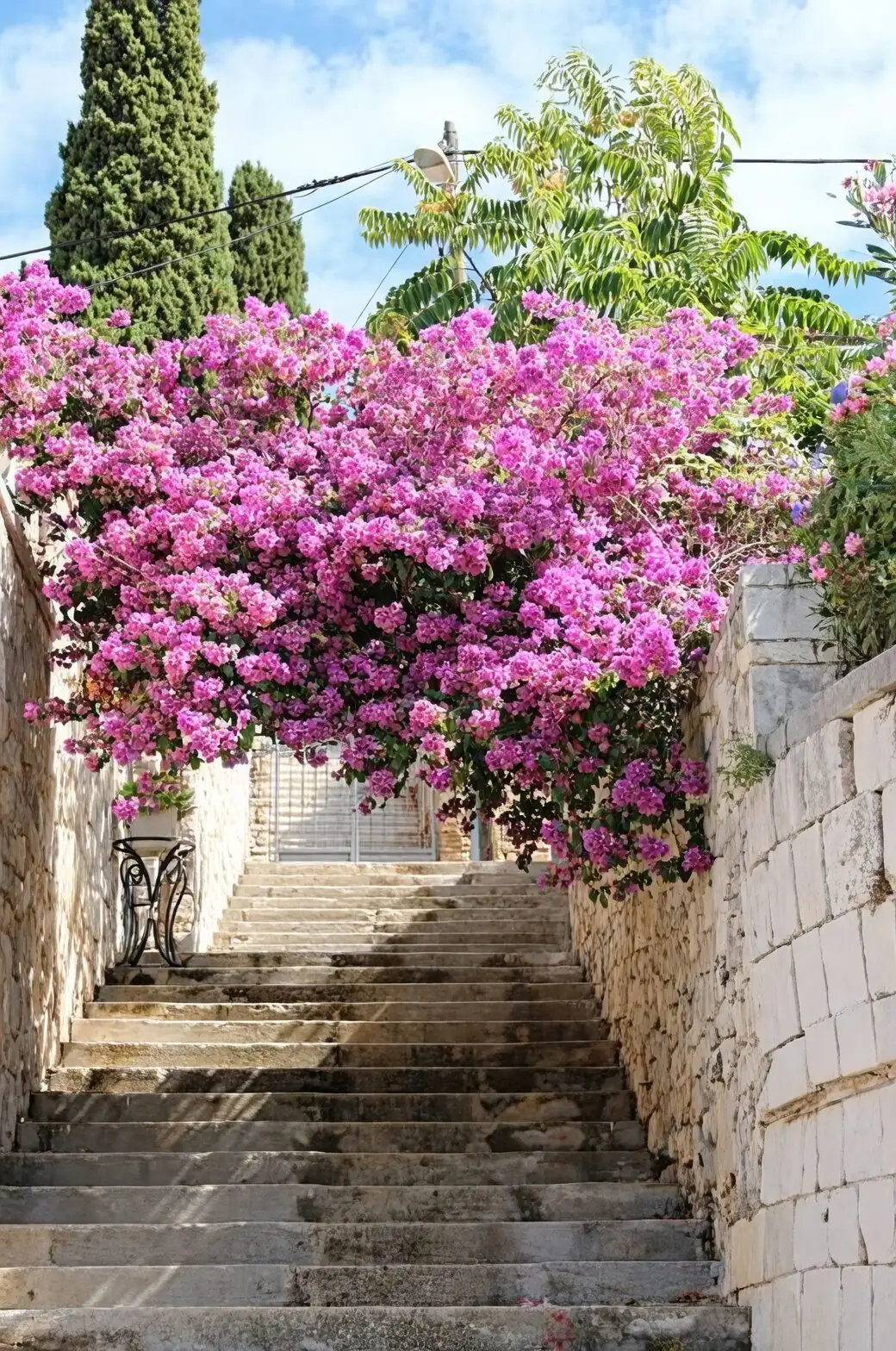
The first thing you notice isn’t a flower at all. It’s a rush of color—papery, flame-bright bracts pouring over a doorway, draping a terrace, lighting a street like confetti caught in a warm breeze. Bougainvillea glabra—and the exuberant garden hybrids such as Bougainvillea × buttiana—have taught entire regions to read a living, blooming welcome sign. In floriography and in Chinese huayu (花语), these vines speak a language of tenacity, passion, and open-armed hospitality.
Bougainvillea at a glance
- Scientific center stage: Bougainvillea glabra (plus many popular hybrids, including B. × buttiana)
- Family: Nyctaginaceae
- Origins: Brazil, South America; now a global garden staple
- What you’re really seeing: vividly colored bracts (not petals) surrounding tiny, creamy-white true flowers
- Habit: sun-loving, woody, often thorny climber—glorious trained over arches, trellises, and warm walls
- Personality: heat tolerant, long-blooming, drama-forward
Where the story begins: from Brazil to the world
Named for the French navigator Louis Antoine de Bougainville, this South American native won hearts not with delicate blooms, but with stamina and spectacle. In warm, bright climates (and sun-blessed balconies), bougainvillea blooms in repeated waves from spring through autumn, sometimes nearly year-round. Its resilience—thriving in strong sun, with sharp drainage and sensible watering—gave rise to a universal read on its character: a plant that persists, then celebrates.
What do those “flowers” say? How a flower language takes root
Flower language often grows from lived experience. With bougainvillea, horticulture and symbolism are woven tight:
- The botany: papery bracts blaze for months, outshining the shy, true flowers tucked within.
- The habit: a woody, thorny vine that scrambles and climbs, trained to frame doorways and streetfronts.
- The care: full sun and leaner watering regimes encourage bract-heavy displays; drought resilience is part of its charm.
From these facts, cultures have read meanings: lasting passion (long displays), tenacity (thrives where lesser plants fade), and welcome (a cascade of color greeting guests).
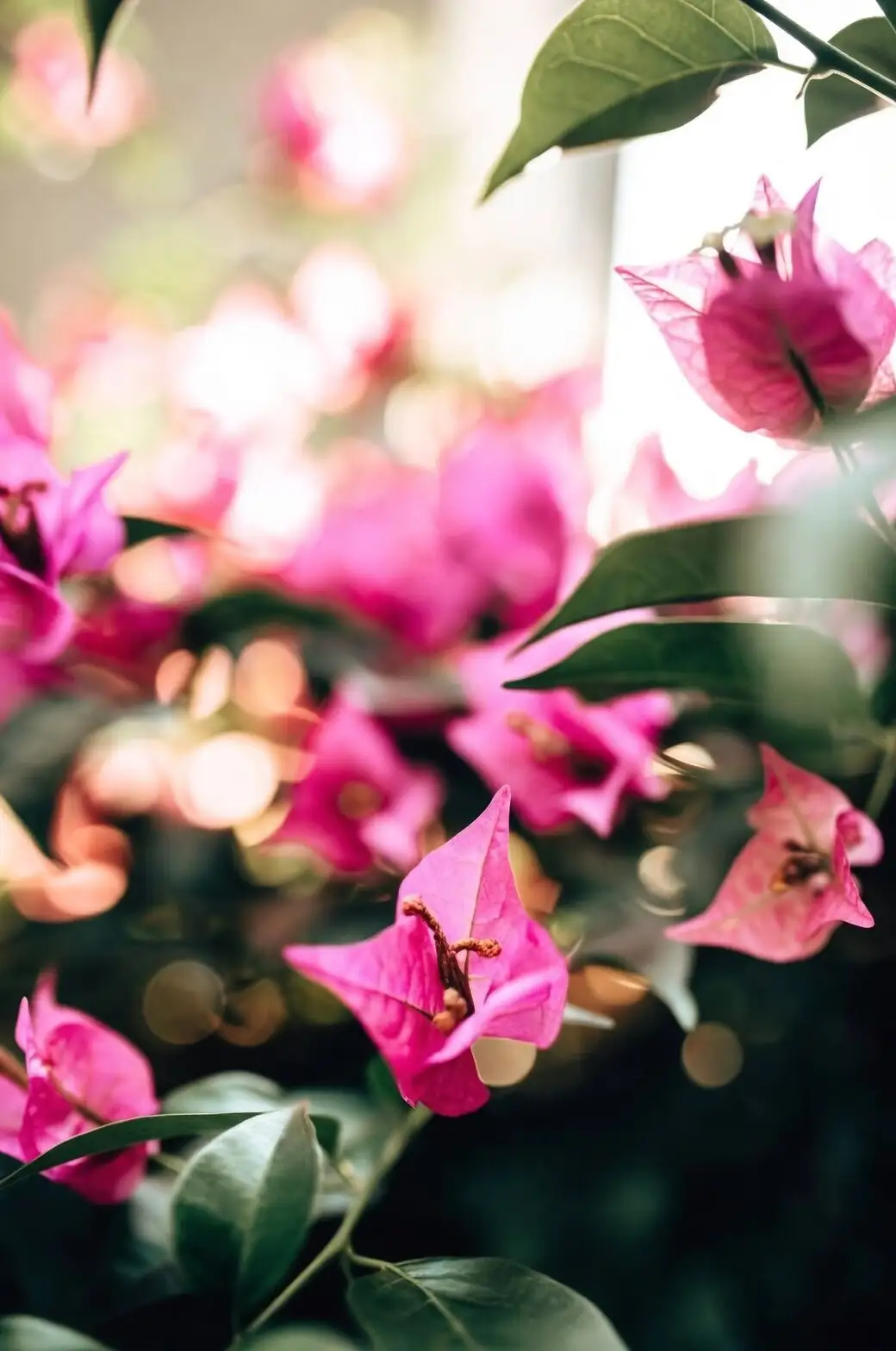
Bougainvillea in Chinese huayu (花语): tenacity and passion
In Chinese, bougainvillea is known as 三角梅 (sān jiǎo méi)—a nod to its triangular bracts. Its flower language emphasizes:
- Tenacity and perseverance: a sun-hungry, drought-tolerant climber that keeps performing when conditions are tough.
- Passion and vitality: bracts ignite in reds, pinks, and magentas—fiery tones linked to ardor and thriving energy.
Gifting notes in Chinese contexts
- Best occasions: graduations, business openings, new homes—moments that honor grit and rising momentum.
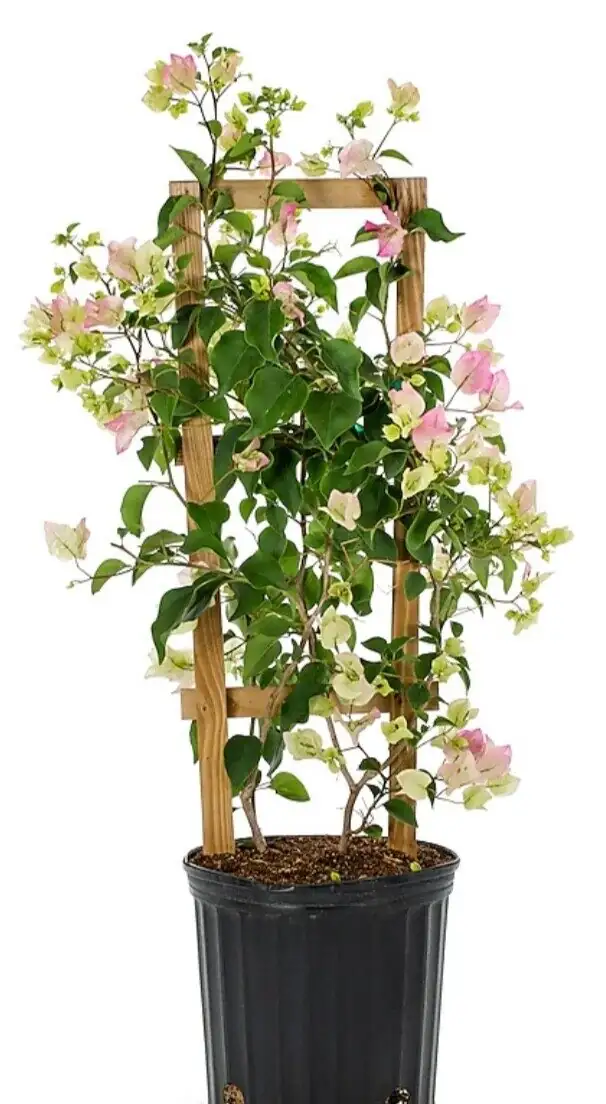
- Forms to give: a compact, trellised plant or a bonsai-style specimen symbolizes strength with grace.
- Color cues:
- Red/magenta: bold passion, success, auspicious energy
- Pink: affection, encouragement
- White: sincerity, blessings for a fresh start
- A practical kindness: include a care tag—“Full sun (4–6+ hours), water deeply then allow partial drying”—so the symbolism endures as long as the bracts do.
Around the Mediterranean: a living welcome over arches and alleys
From sunstruck villages to seaside towns, bougainvillea is the art of hospitality made botanical. Trained over pergolas and portals, it shades doorways and beckons visitors inside.
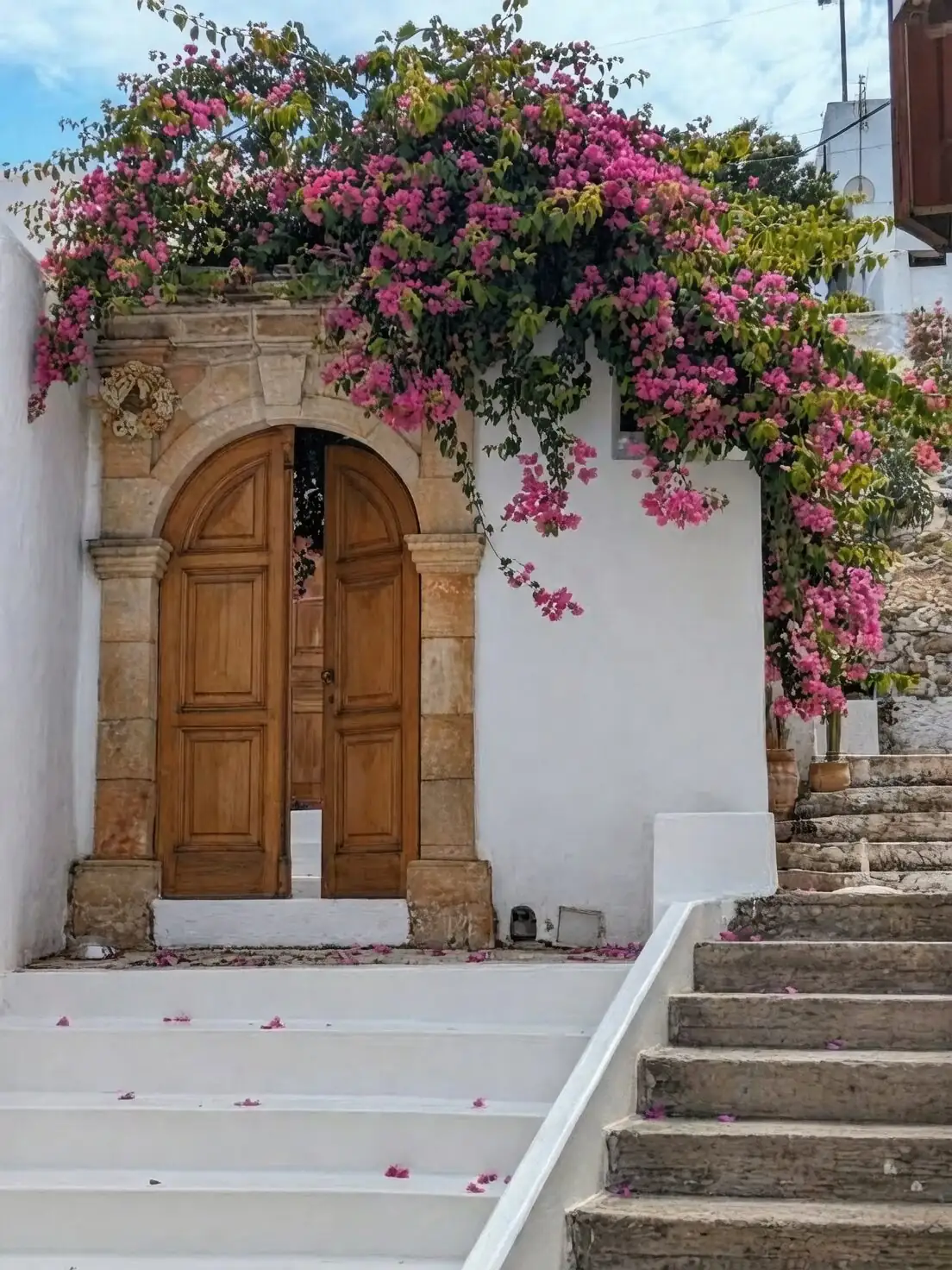
- Social symbolism: warmth, celebration, and neighborly openness—like hanging a bright banner for guests.
- Weddings and feasts: potted standards flanking a church door, trellised cascades over reception arches—a visual promise of joyful gatherings.
- Gifting notes:
- Housewarmings: orange or coral cultivars feel especially festive; white for clean-slate beginnings.
- Thank-you for hosts: a compact vine on a hoop or trellis delivers beauty without taking over small patios.
Across Latin America: fiesta colors and a “bienvenidos” embrace
Rooted in South America and woven into Latin life, bougainvillea often marks thresholds—courtyards, verandas, garden gates—spaces where welcome matters.
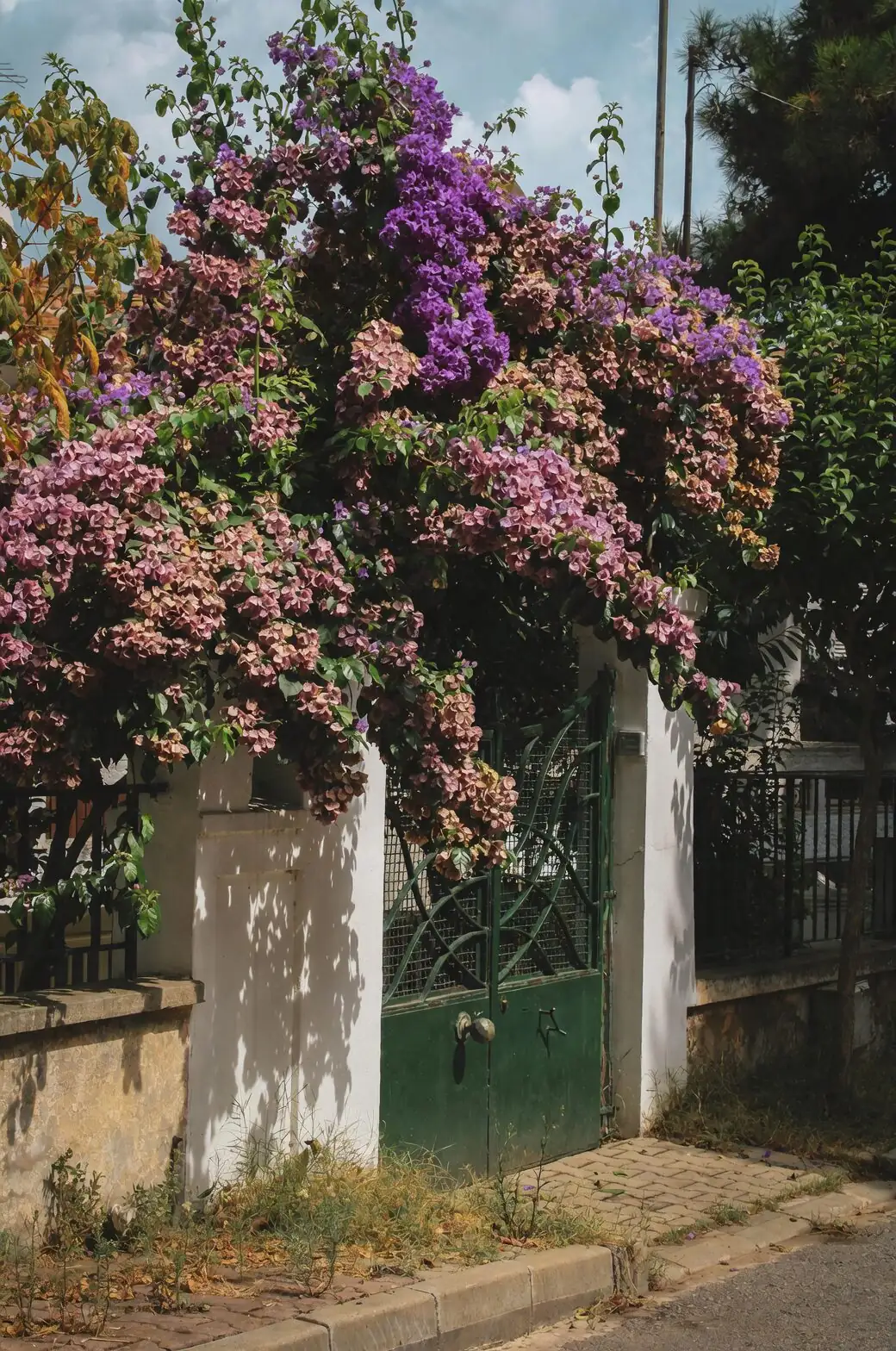
- Social symbolism: hospitality and celebration; a spot of shade and color for every visitor.
- Weddings and community parties: arches dripping with bracts transform streets into festival aisles.
- Folklore footnote: in some communities, thorny vines are regarded as protective screens—beauty with a watchful edge.
- Gifting notes:
- For weddings: white (sincerity) or pink (joy and affection); magenta for a high-spirited celebration
- For new ventures: stronger hues (red, magenta) nod to drive and staying power
Color nuances: a quick guide to “reading” a bougainvillea
Bougainvillea doesn’t follow strict global rules, but these widely shared reads harmonize with its character:
- Red and deep magenta: passionate love, bold ambition, auspicious success
- Pink: affectionate warmth, friendship, encouragement
- Orange/coral/copper: festivity, hospitality, “welcome to your new home”
- Purple: creative energy, admiration, a touch of the regal
- White: sincerity, simplicity, new beginnings and weddings
- Variegated or bi-toned bracts: playfulness, artistry, a spirit of celebration
Choose the plant form to match the message
- Hoop or trellis-trained vine: a ready-made doorway accent—perfect for “welcome” symbolism
- Compact bush or bonsai-style standard: poise and perseverance in a smaller footprint
- Hanging basket in warm climates: a cheerful cascade for patios and pergolas
Why bougainvillea speaks so convincingly
- Long-running displays: bracts can color a scene for months, echoing steadfast love and sustained effort.
- Sun-seeking nature: it needs strong light—like passion that thrives out in the open.
- Lean-water logic: water deeply, then allow partial drying—a metaphor for resilience through cycles.
How to gift bougainvillea beautifully (and set it up to thrive)
- Pick a healthy plant: firm green leaves, no sour soil smell, no pests; if in bloom, aim for about one-third to half the bracts already open with plenty of buds.
- Include a placement note: “Sunniest spot possible—ideally 6+ hours of direct sun.”
- Share simple care: “Water deeply, then let the mix head toward nearly dry before the next soak. Avoid constant dampness.”
- Offer a training tip: “Tie new shoots to the hoop or trellis to build that arching, welcoming shape.”
- Mind the details: thorns and sap can irritate—gift with a pair of lightweight gloves or a charming plant sleeve.
- Seasonal savvy: in cooler regions, present it as a sunny-window or conservatory star; it’s not frost-hardy.
Etiquette and symbolism fine print
- Space matters: a sprawling climber is a joy on a terrace but a trial in low light—choose size accordingly.
- Tone your color: red/magenta for fiery declarations, pink/white for gentle blessings; orange for parties and housewarmings.
- Hospitality cue: gifting a trellised bougainvillea to hang near an entry subtly says, “May every guest feel welcome here.”
A living legend, still writing itself
From Brazilian origins to global doorways, bougainvillea has become the plant equivalent of a fanfare. Its bracts mimic paper flags and festival bunting; its woody frame holds fast through heat and drought. Whether you read it in Chinese huayu as tenacity and passion or in Mediterranean and Latin American streetscapes as a bloom-lit “come in,” the message is clear: bloom bravely, welcome warmly.
Practical side note for the curious
- Sunlight: full sun is non-negotiable for the best bract show.
- Training: tie stems to arches, wires, or a hoop to sculpt that postcard cascade.
- Bloom boosters: avoid excess nitrogen; favor balanced-to-blooming feeds with a tilt toward potassium.
- Safety: low-to-moderate concern—sap may irritate skin/eyes, and thorns can injure. Keep away from children and pets; wear gloves when pruning.
In other words, bougainvillea doesn’t just decorate a threshold—it becomes the threshold’s voice. Plant it, gift it, train it into an arch, and let its months-long fanfare speak of tenacity, passion, and the kind of hospitality that turns a house into a haven.