

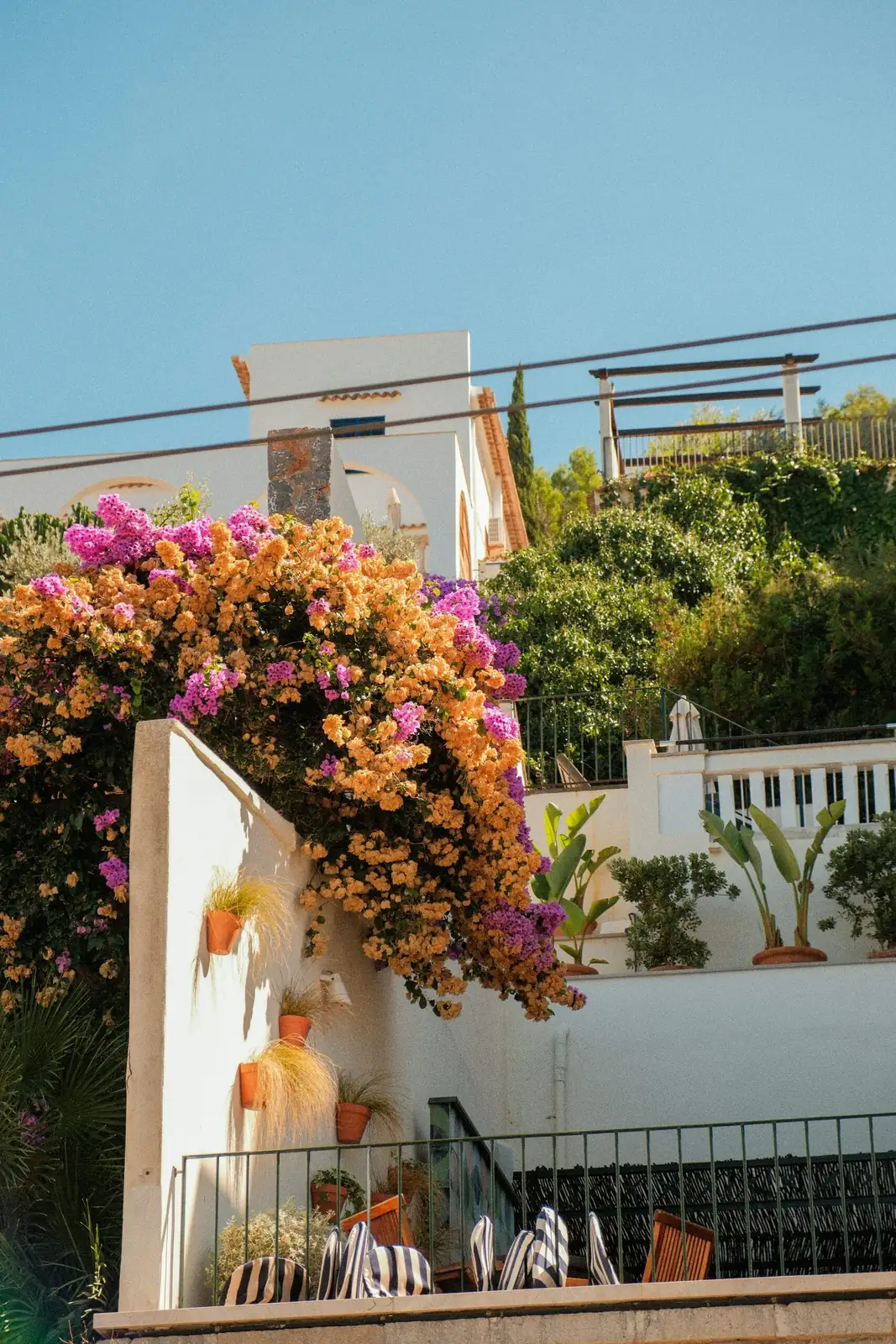
If your bougainvillea is dropping its papery color, stretching into green noodles, or stubbornly staying green, don’t panic. Bougainvillea glabra and its showy hybrids like Bougainvillea × buttiana are drama queens with simple needs: hard sun, sharp drainage, and lean feeding. Use the quick diagnoses below to course-correct fast—and get back to that waterfall of color.
Fast diagnoses (and fixes) for the three most common complaints
1) Bract/leaf drop
Likely causes (often more than one):
- Recent move, repot, or temperature dip: transitional shock. Keep in strong sun, avoid heavy watering while it re-roots, and protect from chills and drafts.
- Overwatering or poor drainage: pot feels heavy, mix stays wet, leaves yellow or soften, stems may blacken near the base.
- Fix: Let the mix dry toward “nearly dry” before you water again. Ensure large drainage holes; never leave the pot standing in a saucer of water.
- Low light: growth weakens, internodes stretch, older leaves/bracts shed.
- Fix: 6+ hours of direct sun (outdoors) or the brightest south/west window or sunroom (indoors).
- Ethylene exposure indoors: keep away from ripening fruit and vegetables.
- Pests: spider mites, mealybugs, scale can trigger drop.
- Fix: Inspect closely and treat promptly (see Pest Playbook).
2) Leggy, thin growth
- Not enough direct sun: the #1 reason. Move to full sun (aim for 4–6+ hours; 6+ is ideal).
- Excess nitrogen: pushes leaves and stems instead of bracts.
- Fix: Switch to a bloom-leaning plan higher in potassium (K). Ease up on nitrogen.
- Overpotting: a big, wet mix plus extra nitrogen = lanky growth.
- Fix: Slightly root-restrict bougainvillea; step up only one pot size at a time.
- No pinching/training: unpinched tips race away.
- Fix: Pinch soft tips and tie stems to trellis/hoop/wires to branch and compact the plant.
3) Stalled blooms (green but not colorful)
- Insufficient sun: move to your sunniest spot.
- Constant moisture: let the top layer dry and the mix head toward “nearly dry” between deep waterings.
- High-nitrogen fertilizer: swap to balanced-to-blooming, leaning higher in K.
- Pot too roomy: slightly pot-bound plants often flower better.
- Season: bloom cycles peak spring–autumn; in very bright, frost-free conditions, cycles can repeat much of the year.
Sun, soil, water: fast fundamentals
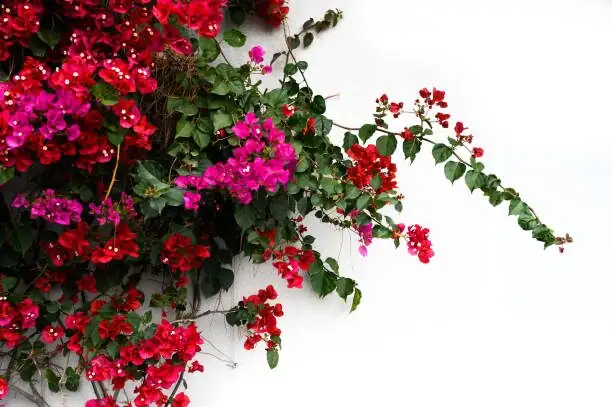
- Sunlight: full sun is non-negotiable for color. Outdoors, choose a warm, bright wall, balcony, or patio. Indoors, a south or west window/sunroom.
- Soil/mix: fast-draining and airy. Use quality potting mix amended with coarse sand/grit or similar drainage material. Big drainage holes are a must.
- Watering rhythm: water deeply, then let excess drain. Rewater only when the surface has dried and the mix is trending toward “nearly dry.” In autumn, a slight reduction can nudge bud set; in winter, keep much drier.
- Temperature: prefers warmth—about 15–30°C (59–86°F). Protect from frost; overwinter above ~7–10°C (45–50°F). Flowering is best when consistently above 15°C (59°F).
- Airflow: bright and breezy beats dim and stagnant. Good air cuts leaf issues and pest pressure.
Feeding without fueling fluff
- Growing season plan:
- Option A: Feed monthly with a balanced-to-blooming fertilizer leaning higher in potassium (for example, a bloom-type ratio such as 15-15-30).
- Option B: Feed every 2 weeks with a balanced liquid; every third feeding, switch to a higher-K bloom formula.
- Peak bloom booster: a one-time dose of monopotassium phosphate can intensify bract color.
- Golden rule: too much nitrogen = lots of leaves, fewer bracts. Don’t overdo it.
Root rot triage (when things smell sour and stems sulk)
Symptoms: soil stays wet, plant wilts despite moisture, leaves yellow/drop, stems blacken at the base, roots look brown/mushy and may smell sour.
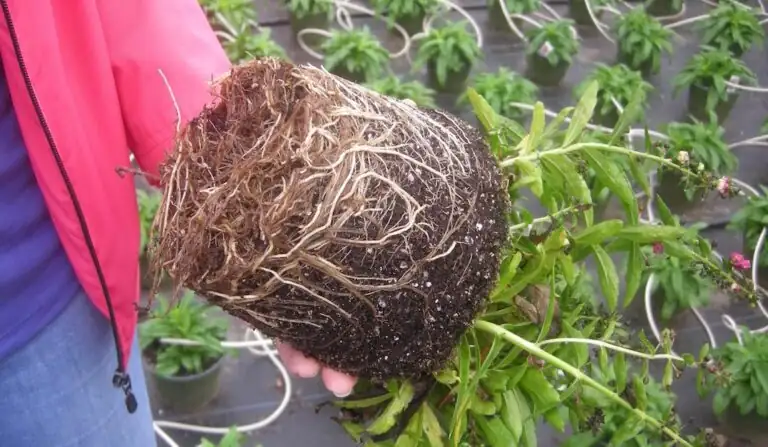
- Step 1: Unpot gently. Rinse soil away and inspect roots.
- Step 2: Trim mushy/dark roots back to firm, white/tan tissue with sterilized shears.
- Step 3: Repot into a fresh, sharply draining mix and a pot just big enough for the remaining root ball. Strong drainage holes are non-negotiable.
- Step 4: Place bright but avoid scorch for a week. Water lightly at first; allow generous drying between waterings. Skip fertilizer for 3–4 weeks.
- Step 5: Improve airflow. A small fan on low (not blasting) can help indoors.
Pest playbook: spider mites, mealybugs, and scale
General rules
- Isolate infested plants.
- Rinse first: a firm shower (undersides too) removes mites, mealy fluff, honeydew, and sooty mold.
- Treat in the cool of morning/evening and test-spray a small area first. Avoid applying oils/soaps to heat-stressed foliage or in full, hot sun.
- Repeat: most pests require 2–3+ rounds at 7–10 day intervals to catch hatchlings.
- Airflow matters: bright, moving air discourages outbreaks. Indoors, very dry air invites spider mites.
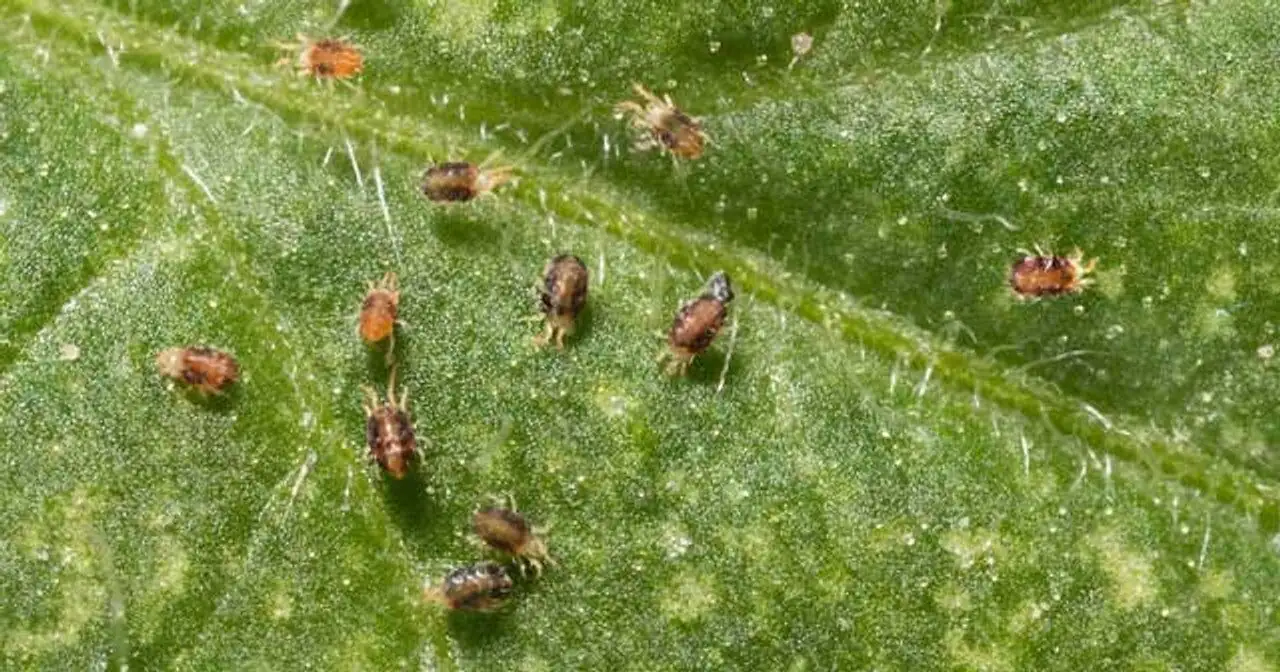
Spider mites (stippling, fine webbing, leaves look dusty)
- Now: Hose the plant thoroughly, focusing on undersides.
- Treat: Use horticultural oil (per label, often ~1–2% solution) or insecticidal soap. Coat leaf undersides and stems until they glisten.
- Prevent: Keep foliage dust-free, ensure good light, and avoid bone-dry, stagnant rooms.
Mealybugs (cottony tufts in nodes/roots, sticky honeydew)
- Now: Dab visible clusters with cotton swabs dipped in isopropyl alcohol, then rinse plant.
- Treat: Follow with insecticidal soap or horticultural oil, repeating weekly until no new mealybugs appear.
- Don’t forget ants: they “farm” honeydew insects. Manage ant trails to reduce reinfestation.
Scale (hard/shell-like bumps on stems/leaves, sticky honeydew)
- Now: Gently scrape off individual scales; prune heavily infested twigs.
- Treat: Apply horticultural oil to smother crawlers and remaining adults; repeat at 7–10 day intervals.
- Clean-up: Wash off sooty mold after honeydew is under control.
Indoors note: Avoid using conventional chemical pesticides inside the home. Stick to labeled horticultural oils and insecticidal soaps and follow local directions carefully.
Pruning, training, and shaping color
- Pinch tips of overly long, soft shoots to encourage branching and later flowering on new growth.
- Prune to shape after a bloom flush; remove dead, weak, or crossing wood.
- Train: tie stems to trellises, hoops, wires, fences, or a warm wall for a sculpted cascade.
- Older, woody plants: a periodic harder rejuvenation prune can restore vigor. Avoid heavy cuts during peak bloom if you want to keep the show.
Pots, size, and placement
- Size: with support outdoors in warm climates, expect about 1.5–6 m (5–20 ft); in containers with training, around 1.5 m × 1.5 m (5 ft × 5 ft) is common.
- Potting: bougainvillea blooms better a bit root-restricted. Step up gradually; mature plants often just need spring top-dressing.
- Hardiness: best outdoors year-round in USDA Zones 10–11 (some protected warm Zone 9 spots can work).
A seasonal cheat-sheet
- Spring–early autumn: maximum sun; deep water, then allow partial drying; feed as scheduled; tie in new growth.
- Autumn: trim side shoots after flowering; slightly reduce watering to encourage the next color cycle.
- Winter: keep very bright and above 7–10°C (45–50°F); water sparingly—allow more drying between waterings.
Safety
Low-to-moderate concern: the sap can irritate skin/eyes and ingestion may upset the stomach. Thorns can snag. Wear gloves when pruning/training and keep away from children and pets.
A little backstory and “flower language”
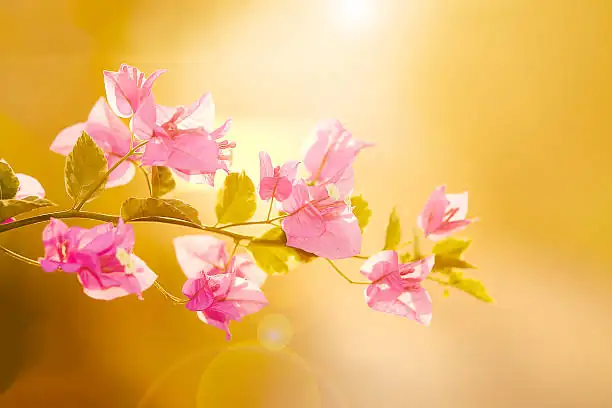
Named for the French navigator Louis Antoine de Bougainville, this South American native (and its many South American–derived garden hybrids) has become a global emblem of warm welcomes. Those vivid “petals” are really bracts—papery modified leaves that frame tiny, pale to creamy-white true flowers. In the informal “flower language,” bougainvillea often stands for celebration, passion, and hospitality—fitting for a plant that throws confetti for months on end. While such symbolism is cultural rather than botanical, it captures the spirit of a vine that turns a simple wall or balcony into a festival.
Quick FAQ
- Lush leaves but few bracts? Move to stronger sun, let the mix dry more between deep waterings, and shift to a higher-potassium feeding plan.
- Can it live indoors year-round? Yes—if you have direct sun (south/west exposure) and keep it drier in winter. Without real sun, expect legginess and poor bloom.
- Does it need a big pot? Usually not. Slightly pot-bound plants tend to bloom better; upsize slowly and focus on excellent drainage.
Give bougainvillea fierce light, lean water, and just-right feeding, and it will repay you with months of papery color—no drama, all fiesta.