

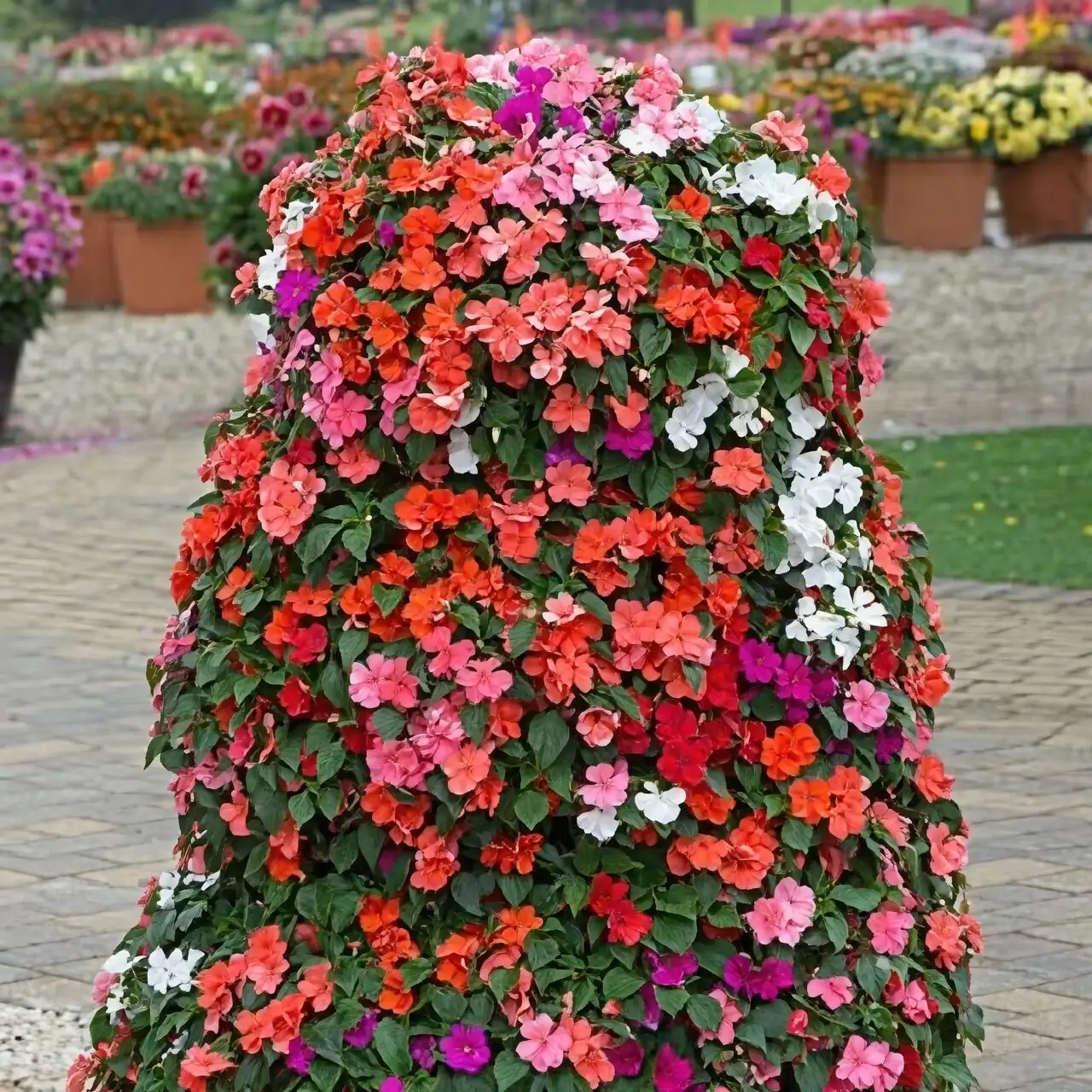
When the mercury surges past 30°C (86°F), Busy Lizzie (Impatiens walleriana) goes from “blooming its heart out” to “I need a siesta.” Buds stall or drop, petals spot, and leaves sulk. The fix isn’t complicated, but timing and technique matter. Here’s your friendly, field-tested survival plan built around four moves that keep flowers coming: temporary shade cloth, early-morning watering, light pruning, and pausing the feed.
Meet Busy Lizzie: Made for color, not for scorch
- Botanical personality: A compact, mounding, slightly trailing bloomer with glossy green leaves and juicy, semi-translucent stems. Perfect for window boxes, hanging baskets, and bright porches.
- Light sweet spot: Bright filtered light or morning sun with protection from intense midday/afternoon rays. In very bright spots, 40–50% shade prevents scorch.
- Temperature truths: Loves 17–20°C (63–68°F). Prolonged heat above 30°C (86°F) commonly triggers bud/flower drop.
- Moisture mantra: Keep the mix “moist like a wrung sponge”—rich, free-draining, and never swampy. Water at soil level to keep those petals pristine.
The 30°C+ survival protocol (the four pillars)
1) Throw temporary shade: 40–50% cloth
Why it works
- Reduces light intensity just enough to stop leaf scorch and bud abortion while preserving photosynthesis.
- Properly set up, shade cloth can lower canopy temps and cut water loss, easing stress in heat spikes.
How to rig it fast
- Outdoors: Stretch 40–50% shade cloth above plants, leaving a 15–30 cm air gap for cooling airflow. Anchor to balcony rails, pergolas, or simple bamboo stakes; binder clips are your best friend.
- Hanging baskets/window boxes: Drape cloth as a “sail” that blocks midday/afternoon sun but allows morning light. Even a west-facing screen for the hottest hours helps.
- Indoors: A bright window still too intense? Add a sheer curtain or reposition to bright, indirect light.
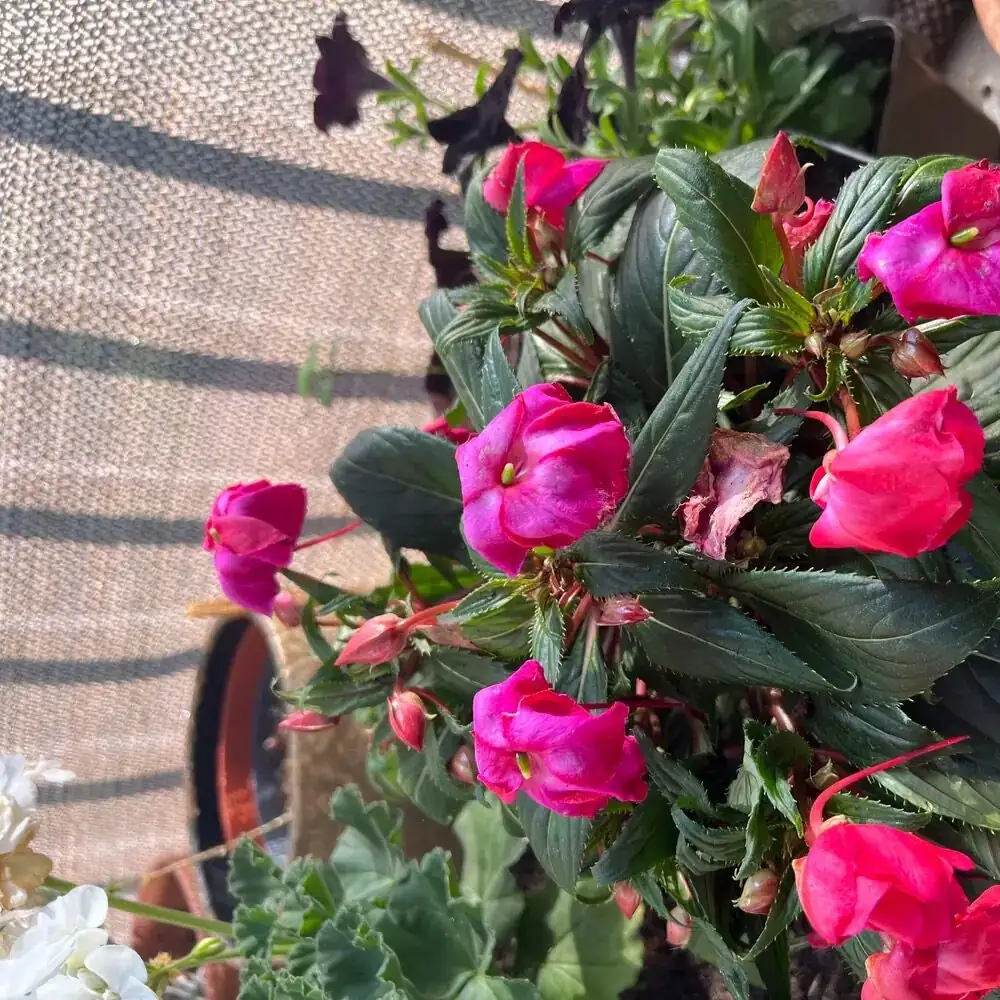
Pro tips
- Keep the cloth off foliage (contact traps heat and moisture).
- Watch plant posture: if stems start stretching noticeably, reduce shade; if leaves pale or crisp at the margins, increase shade.
- Maintain good airflow—stagnant, humid pockets invite gray mold.
2) Water early in the morning (and keep petals dry)
What to do
- Water at soil level at dawn or early morning so plants spend the day fully hydrated.
- Saturate the root zone evenly until a little drains from the pot; then empty saucers after 10–15 minutes.
- In hanging baskets, check daily in heat waves. If the top 2–3 cm of mix is dry by mid-afternoon and the evening will be hot, give a modest top-up—still at soil level, avoiding the blooms.
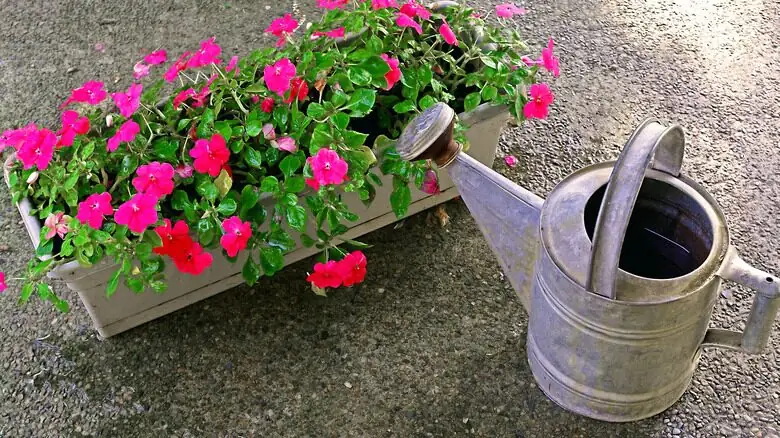
Why timing matters
- Early watering reduces midday wilt and stress-driven bud drop, and leaves dry in daylight—discouraging fungal issues.
- Avoid overhead splashing: wet petals spot easily and can host gray mold.
Signs to watch
- Underwatered: Limp leaves that recover overnight, dry top layer, light pot weight.
- Overwatered: Chronically wet, sour-smelling mix; yellowing leaves; sluggish growth. Improve drainage and spacing.
3) Light pruning to reset and cool
- Pinch soft tips lightly to encourage branching and a bushier, self-shading canopy.
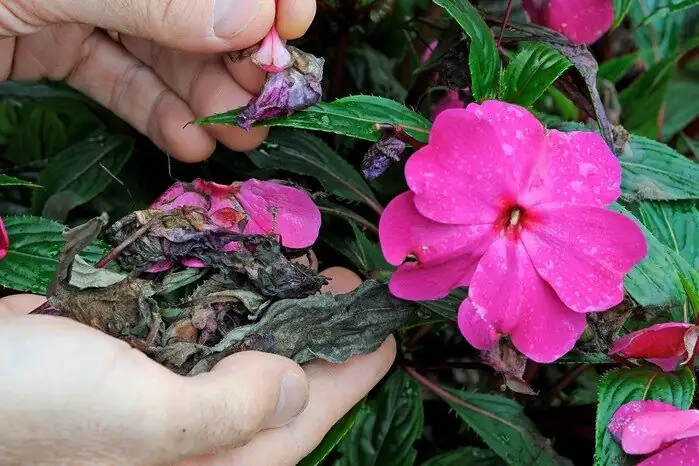
- Remove spent blooms and any soft, damaged, or diseased growth promptly—this improves airflow and reduces disease pressure.
- Avoid hard cuts in a heat spike; think “refresh,” not “renovate.”
4) Pause the feed during the heat
- At sustained 30°C+ (86°F), stop or significantly reduce fertilizer. Roots absorb salts poorly under heat stress, and feeding can push tender growth that aborts.
- If you’ve been feeding regularly, flush the pot once with plain water to dilute built-up salts.
- Resume balanced feeding about every two weeks only after temperatures settle back into the mid-20s°C and plants show steady new growth. During heavy bloom (in normal temps), a couple of bloom-boost feeds are fine.
Microclimate hacks that make a big difference
- Trade afternoon blaze for morning rays: Slide containers to spots with bright filtered light and morning sun only.
- Bounce light, not heat: Light-colored pots and a thin layer of fine bark or coco chips on the soil surface keep roots cooler and moisture steadier.
- Give them space: Stagger pots so leaves don’t constantly touch; it improves airflow and cuts disease.
- Keep blooms dry: Always water the mix, not the flowers. Petal-splashing = spotting and faster fade.
- Avoid heat mirrors: Move away from south/west-facing walls, metal railings, or reflective glass that radiate extra heat.
Troubleshooting heat-wave symptoms
- Buds dropping before opening
- Likely cause: Heat stress (>30°C), strong midday sun, or erratic moisture.
- Fix: Add 40–50% shade, water early and evenly, pause feeding.
- Leaves yellowing and dropping
- Likely cause: Temperature extremes, drought/overwater cycles, low light over time, or pests (spider mites thrive in hot, dry air).
- Fix: Stabilize water, improve light to bright filtered, check undersides for mites/whiteflies/aphids; treat with insecticidal soap or horticultural oil in the cool of the day and repeat as labeled.
- Midday wilt that recovers by evening
- Plant is transpiring faster than roots can keep up. Strengthen morning watering, add shade cloth, and ensure the potting mix drains well yet holds moisture “like a wrung sponge.”
- Petal spotting or gray fuzz
- Splashing plus stagnant air. Water at soil level, remove affected blooms, increase airflow, and avoid crowding.
After the heat breaks: bounce-back routine
- Ease off the shade: Step down from 50% to 40%, then back to bright filtered light over 7–10 days to prevent shock.
- Resume feeding: Once nights cool and new growth is steady, return to a balanced feed every two weeks. Add 2–3 bloom-focused feeds during peak flowering—avoiding any new hot spell.
- Shape and refresh: Pinch lightly to re-compact stretched stems; continue deadheading for a parade of new buds.
- Take cuttings (optional): Tip cuttings root readily in warm, bright-but-gentle conditions if you want instant backups.
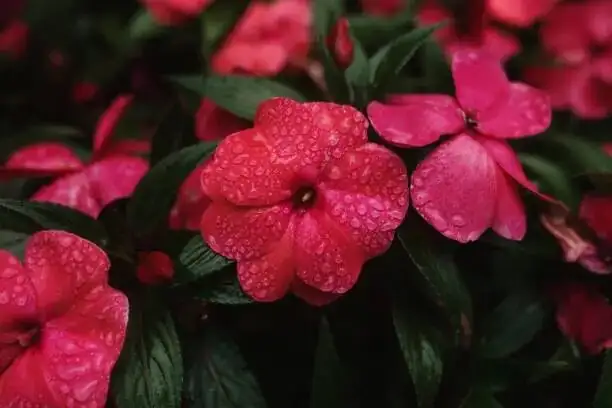
Quick safety and health watchlist
- Pests: Aphids, spider mites, whiteflies. Inspect undersides regularly. Treat early with insecticidal soap or horticultural oil; repeat as directed.
- Diseases: Leaf spot, gray mold, stem/root rot—usually from wet foliage and poor ventilation. Keep petals dry, improve airflow, and remove affected parts promptly.
- Cold sensitivity: Keep above 10°C (50°F); ideally 12°C+ right after purchase. It’s frost-tender outdoors except in warm zones.
Light, but not low-light
Impatiens walleriana will flower in shade, but it looks its best in bright filtered light or morning sun with protection from harsh midday/afternoon rays. In dim corners it stretches and loses fullness; in blasting sun it scorches and drops buds. Temporary 40–50% shade is the sweet, movable middle ground during heat waves.
Symbolism, briefly (flower “language” with a wink)
Busy Lizzie is often linked with cheerful, lively energy—easy to believe when it’s smothered in blooms for months. The name “impatiens” nods to its spring-loaded seed pods that pop at a touch, a Victorian-era curiosity that helped seed the plant’s “bustling” reputation. Modern “flower language” isn’t a strict science, but if any plant says “joyful bustle at home,” this one does.
Heat-wave checklist (pin it by the door)
- Drape 40–50% shade cloth with an air gap and good airflow.
- Water early at soil level; keep mix evenly moist, blooms dry.
- Lightly pinch and deadhead; remove soft/diseased tissue.
- Pause fertilizer until temps ease; flush salts if needed.
- Scout for mites/whiteflies; treat early.
- Keep containers out of radiating afternoon heat.
Treat these steps like a short-term summer siesta plan. With a bit of filtered light, dawn drinks, and a feeding pause, your impatiens will ride out the heat—and get right back to that “busy” bloom show once the weather plays nice.