

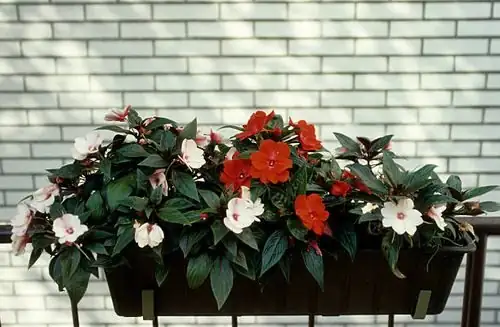
Busy Lizzie loves a good rhythm. Get her water right, and those glossy leaves and nonstop blooms will spill over your containers like confetti—without the drama of petal spots or mid-summer sulks. Here’s a practical, container-focused watering plan for Impatiens walleriana that uses the wrung-sponge test as your daily compass, plus smart tweaks for heat waves and bloom-perfect technique at soil level.
Meet Impatiens walleriana (Busy Lizzie)
- Native to tropical East Africa, this compact, mounding charmer thrives in bright filtered light or partial shade. Morning sun is fine; protect from harsh midday/afternoon rays.
- Ideal temps: happiest around 17–20°C (63–68°F). Keep it above 10°C (50°F) in winter; prolonged heat above 30°C (86°F) often triggers bud and flower drop.
- Perfect for containers, window boxes, and hanging baskets. Expect 20–45 cm (8–18 in) tall and wide; many baskets are planted with three young plants for a full, cascading show.
The wrung-sponge rule: your container-watering compass
Impatiens adore even moisture—never soggy, never bone dry. Think of the potting mix as a sponge:
- What “wrung sponge” feels like: damp through and through, but when you press, it doesn’t ooze water.
- How to test:
- Finger test: press 3–5 cm (1–2 in) into the mix. It should feel cool and evenly moist, not soupy and not dusty.
- Lift test: learn your pot’s “just watered” weight vs. “needs water” weight.
- Visual/texture cues: surface can look slightly matte but should not pull away from the pot’s edges.
- If it’s drier than a wrung sponge, water. If it’s wetter, wait and improve airflow.

Bonus: Build a mix that naturally holds that sweet-spot moisture. Use a rich, well-drained potting blend based on peat or coco coir (or leaf mold), plus fertile loam and coarse sand/perlite for drainage.
Season-by-season watering rhythm for containers
Use the wrung-sponge test first. Then let this schedule guide your week.
Spring
- Typical rhythm: about 2 times per week.
- Temperatures are friendly, light is bright-but-gentle, and growth ramps up. Don’t let the root zone swing from soggy to bone-dry as plants establish.
- After bringing plants home, keep them warm (ideally above 12°C/54°F) and bright; avoid cold snaps that cause yellowing and drop.
Summer
- Rhythm: water as needed—sometimes daily in hot, breezy weather—yet never keep the mix constantly saturated.
- Heat-wave play (see more below): check moisture early each morning; water thoroughly when the top layer begins to dry. If a basket wilts by late afternoon, a second, smaller soil-level drink is fine.
- Shade from harsh midday sun. Sustained heat above 30°C (86°F) often causes bud/flower drop—steady moisture and gentler light help.
Autumn
- Rhythm: usually every 2–3 days.
- Cooler nights slow evaporation. Keep moisture even as flowering continues; avoid late-evening soaking that leaves the root zone cold and wet for long stretches.
Winter (indoors or frost-free settings)
- Rhythm: about once per week; even less if growth slows and light is low.
- Keep above 10°C (50°F), ideally 12–16°C (54–61°F) for a happier, tidier plant. Maintain bright filtered light and moderate humidity (around 50%+). Never let pots sit in water.
What changes the rhythm?
- Pot size/material: small or terracotta pots dry faster than large or plastic ones.
- Mix and drainage: more perlite drains quicker; peat/coco holds longer.
- Exposure: wind, bright edges of a balcony, and hanging height can all speed drying.
- Plant fullness: a lush, flowering basket drinks more than a newly potted single plant.
Step-by-step: water at soil level to keep petals pristine
Impatiens petals mark easily when splashed—keep the blooms dry to avoid spotting and gray mold.
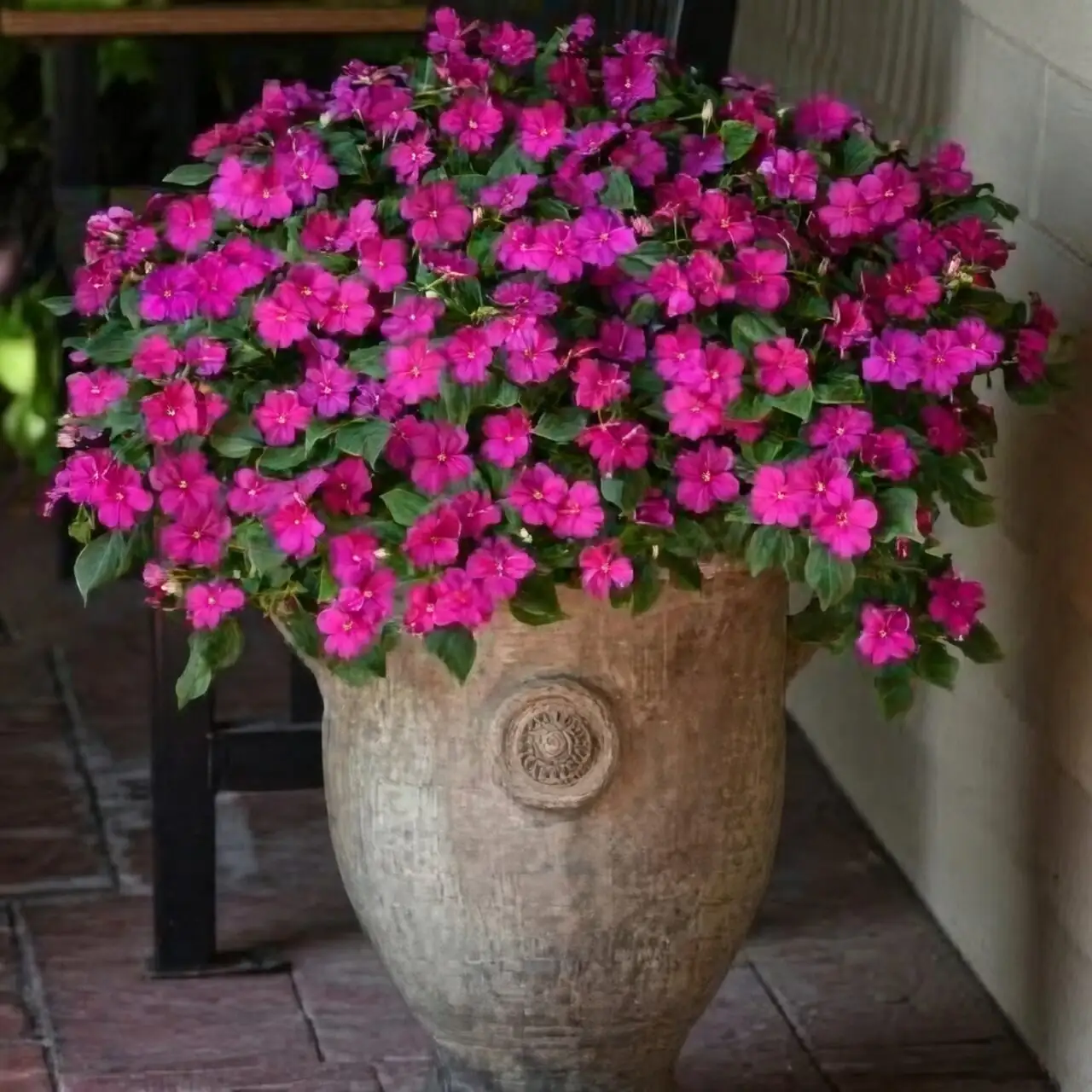
- Tools: a long-spout watering can or watering wand with a gentle flow.
- Method:
- Lift the foliage slightly and slide the spout under the canopy, aiming at the potting mix—not the leaves or flowers.
- Water slowly around the root zone in a circle, letting the mix absorb without runoff.
- Continue until you see a steady trickle from the drainage holes.
- Empty saucers after 10–15 minutes; never leave roots standing in water.
- Hanging baskets: tuck the spout near the rim where stems trail—pour slowly to prevent splash-back onto petals.
- Stray droplets on blooms? Gently shake foliage or let a fan’s soft breeze dry them quickly.
Heat-wave playbook: keep cool, keep blooming
When the forecast spikes, your goal is “cool roots, moist mix, gentle light.”

- Early-morning watering: saturate the root zone before heat builds.
- A light late-day top-up: only if the plant is wilting and the top few centimeters are dry. Still water at soil level.
- Add bright shade: 40–50% shade cloth or move to morning sun only.
- Improve airflow: a gentle breeze reduces fungal pressure when humidity is high.
- Insulate roots: a thin top-dress of fine bark or coco fiber on the soil surface slows evaporation in baskets.
- Ease the workload: reduce fertilizer during extreme heat to minimize stress.
Avoiding common watering pitfalls
- Overwatering signs:
- Persistently wet, sour-smelling mix; yellowing leaves; limp, pale growth; increased leaf spot or gray mold.
- Fix: let the mix dry to “wrung sponge,” improve drainage/airflow, and recheck pot holes aren’t blocked.
- Underwatering signs:
- Midday flagging that doesn’t bounce back by evening, crisp leaf edges, bud drop.
- Fix: deeper, more thorough soaks; upgrade to a moisture-retentive mix and increase watering frequency.
- Petal spotting and gray mold:
- Primary culprits: wet blooms, splashing, stagnant air.
- Prevention: water at soil level, deadhead spent flowers, space baskets for airflow, and avoid cold, soggy nights.
Feeding, potting mix, and containers that make watering easier
- Mix recipe: peat or coco coir (or leaf mold) + fertile loam + coarse sand/perlite. Aim for “moist like a wrung sponge,” not swampy.
- Containers: always use drainage holes. Single plants do well in ~10 cm (4 in) pots; baskets/pots of 12–15 cm (4.7–5.9 in) look lush with three young plants.
- Repot when roots fill the pot and water runs through too quickly (a sign the mix can’t hold enough moisture).
- Feeding rhythm: from March–October, apply a balanced fertilizer about every 2 weeks. During heavy bloom, 2–3 applications of a bloom-boost formula (higher P/K) help. Reduce feeding in extreme heat; stop in winter if growth pauses.
Quick troubleshooting (water-related)
- Leaves turning yellow and dropping?
- Check temperature stress (too cold or too hot), watering swings (drought or soggy), low light, or pests like spider mites. Keep evenly moist, warm, and bright—but not in harsh sun.
- Buds or flowers dropping?
- Often heat above 30°C (86°F) or inconsistent moisture. Move to bright filtered light, keep the root zone evenly moist, and keep petals dry.
- Seedlings or cuttings?
- They resent drying out. Keep the medium consistently damp (wrung sponge), warm, and well aerated.
A note on symbolism
Busy Lizzie is widely associated with cheerful, lively energy—an easy leap when a small plant can flower almost continuously in the right light. Unlike formal, ancient “flower languages,” this symbolism is a modern, observational one: the plant looks happy and busy with color, so it has come to represent a bustling, upbeat home.
Speedy checklist
- Light: bright filtered or partial shade; shelter from harsh midday/afternoon sun.
- Temperature: best 17–20°C (63–68°F); keep above 10°C (50°F). Expect bud drop in prolonged heat above 30°C (86°F).
- Watering:
- Spring: ~2× weekly.
- Summer: as needed; sometimes daily in heat, but never waterlogged.
- Autumn: every 2–3 days.
- Winter: about weekly, less if growth slows.
- Always use the wrung-sponge test and water at soil level.
- Air and humidity: moderate humidity with good airflow; avoid stagnant, wet foliage.
- Grooming: remove spent blooms; pinch once at ~10 cm (4 in) to encourage branching.
Nail the wrung-sponge feel, keep petals dry, and Busy Lizzie will return the favor with months of lush, spot-free color.