


If you’ve ever parked a Busy Lizzie (Impatiens walleriana) on a porch and wondered why one plant stays plump and bursting with color while another turns lanky and shy with blooms, here’s the secret: placement is everything. Think of this plant as a shade-dweller that loves a little gentle spotlight—morning sun or bright, filtered light—while ducking out of harsh midday rays. Get that balance right and it will flower like it means it.
Below is a practical, balcony-to-window guide to nail that morning-sun/bright-filtered-light sweet spot, when to add 40–50% shade, and how to use leaf compactness vs. stretch as your built-in light meter.
The light sweet spot (and why it works)
- Ideal recipe: gentle morning sun plus bright filtered light the rest of the day.
- What to avoid: intense midday/afternoon sun that can scorch leaves and push buds to drop in heat.
- When to add shade: in very bright outdoor sites (open south- or west-facing spots, reflective courtyards, glass-heavy balconies), give about 40–50% shade to soften intensity and prevent scorch.
- Why this matters: with good light and even moisture, Busy Lizzies stay dense and glossy; in dim corners they stretch, lose fullness, and bloom less.
Hand-shadow test:

- Crisp, well-defined shadow on your hand = too intense unless it’s early morning. Add 40–50% shade.
- Soft-edged shadow = bright filtered light. Perfect.
- Faint or no shadow = likely too dim for strong flowering.
Tip: Indoors, light drops fast with distance. Moving the pot just 30–60 cm (1–2 ft) closer to the window can double its usable light.
Balcony, porch, and window placements that just work
East-facing (the easy win)
- Outdoors: 2–4 hours of morning sun is prime. Usually no shade cloth needed.
- If summer mornings run hot and blooms or leaf edges crisp, add a 40%–50% shade panel from 9–11 a.m.
- Indoors at an east window: place right at or within 30–60 cm (1–2 ft) of the glass with a sheer only if the window is a true furnace.
South-facing
- Outdoors: strongest light. Hang or set back from the edge, and install 40–50% shade for the 11 a.m.–4 p.m. window (a pergola slat, shade sail, or lattice works).
- Indoors: keep right at the window but diffuse midday with a sheer curtain or blinds. Warm glass can intensify heat—watch for bud drop in heat waves.
West-facing
- Outdoors: hot afternoon sun is the stress test. Use 40–50% shade from roughly 1–5 p.m. Tuck behind railings, a taller companion plant, or a canvas shade.
- Indoors: use a sheer during the afternoon or pull the pot 30–90 cm (1–3 ft) back if leaves feel hot at touch.
North-facing
- Outdoors: bright, open north is fine. Under deep overhangs, it’s often too dim—scoot plants to the edge to catch sky-brightness.
- Indoors: a big, unobstructed north window can work; deeper rooms cause stretch. Aim for the sill, not the coffee table across the room.
Under cover and hanging spots
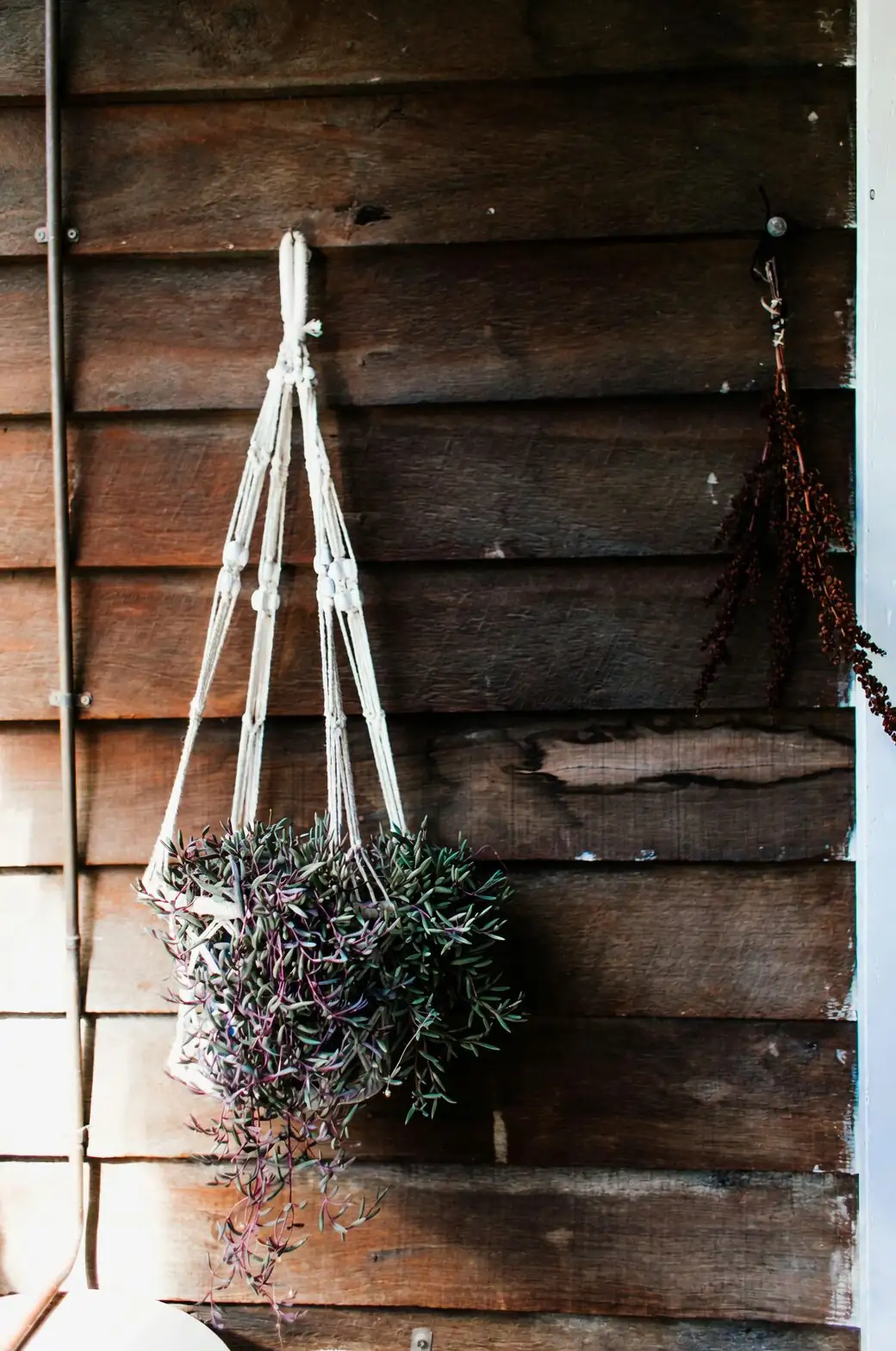
- Eaves and porch roofs block overhead sun (good) but can make corners too dark. Center your basket where sky view is widest.
- Hanging baskets benefit from bright, lateral light: suspend slightly forward of the roofline for that soft, all-day glow.
Window boxes and mixed containers
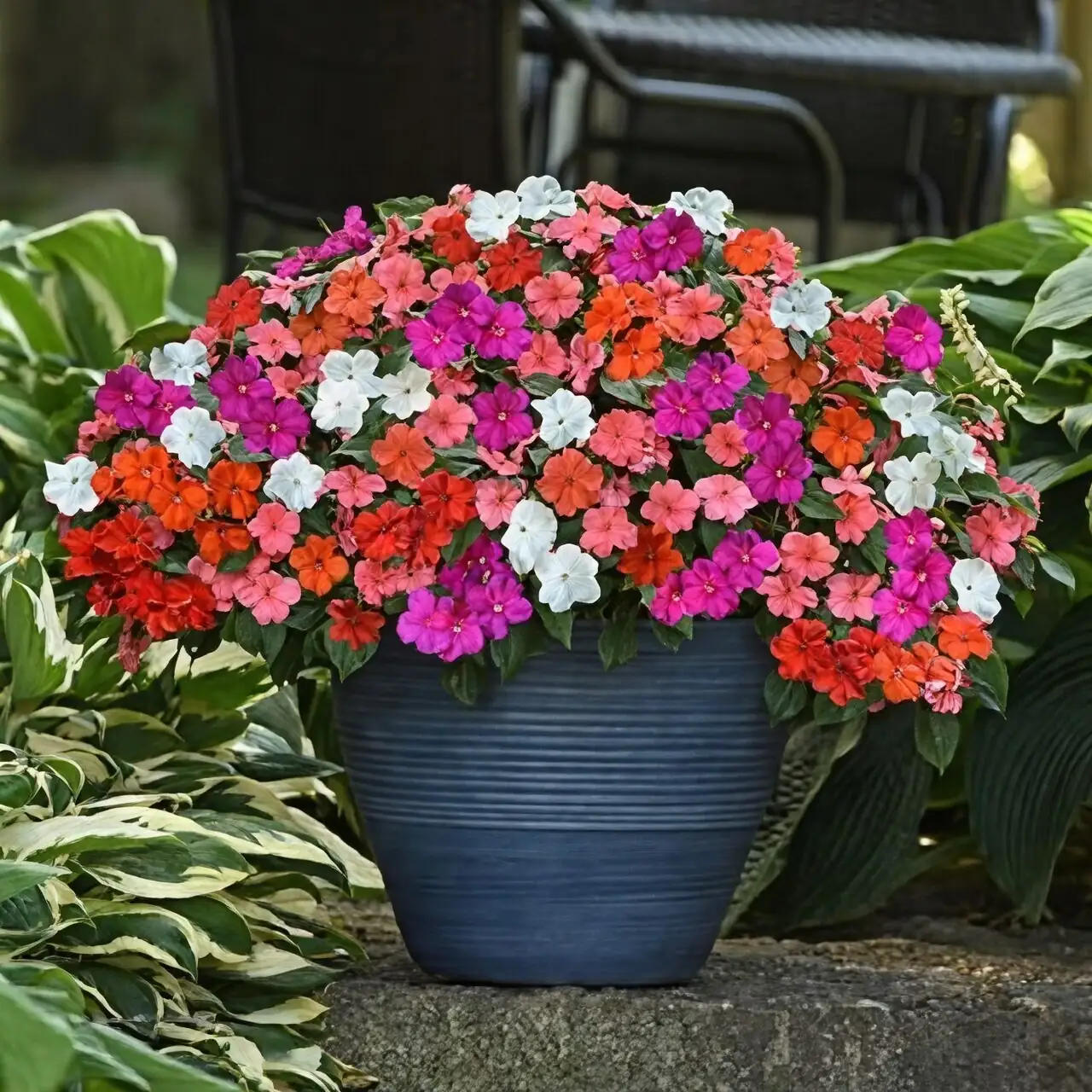
- Window boxes on east and bright north façades are near-ideal.
- South/west exposures: line the rim with a 40–50% shade strip (bamboo blind, lattice, or removable sail) to temper afternoon rays.
- For instantly full displays, plant 3 young Busy Lizzies per 12–15 cm (4.7–5.9 in) basket/box section.
Your plant is the light meter: read leaf compactness vs. stretch
Signs you’ve nailed it (keep doing this)
- Compact, mounded silhouette with short internodes (leaf joints close together).
- Dense, glossy, bright-green leaves; steady bud set and flowers across the canopy.
- Stems arch gently and spill without becoming stringy.
Too little light (move brighter)
- Stretched stems with wide gaps between leaves; plant leans toward the window.
- Leaves get larger and thinner with long petioles; bloom count drops.
- Fix: slide closer to light, shift to an east exposure, or remove obstructions. Once growth tightens, pinch tips lightly to re-densify.
Too much light or heat (add 40–50% shade)
- Scorched or bleached leaf edges; petals look faded or crisp.
- Midday wilting even when soil is moist; buds abort during hot spells.
- Fix: provide 40–50% shade between late morning and late afternoon, water early (keep soil moist like a wrung sponge), and boost airflow.
Pro tip: If blooms look spotted or ragged but leaves are fine, you may be wetting petals. Water at soil level to keep flowers pristine and reduce gray mold.
Simple ways to make “bright filtered light”
- Shade cloth: choose 40–50% knitted cloth for hot south/west faces; mount so it screens the high sun arc (midday to mid-afternoon).
- Lattice or slats: a pergola, reed screen, or balcony trellis creates dappled patterns plants love.
- Sheer curtains or blinds: perfect for south/west windows between 11 a.m. and 4 p.m.
- Living filters: taller, airy plants (ferns, bamboo, palms) can soften sun without plunging the impatiens into deep shade.
- Light boosters for dim spots: position near pale walls, reflective paving, or a white backdrop to bounce extra brightness.
Seasonal placement playbook
- Spring
- Harden off outdoor plants gradually: begin in bright shade, introduce short morning sun sessions over a week.
- Target that morning-sun + filtered-light combo straight away.
- Summer
- Heat above 30°C (86°F) can trigger bud/flower drop. Increase shade to 40–50% in bright sites, and prioritize airflow.
- Water early and evenly; avoid soggy soil. Consider a brief afternoon siesta in deeper shade during heat waves.
- Autumn
- As sun softens, you can remove or reduce shade. Flowering often rebounds beautifully with cooler days.
- Winter
- Frost tender: move indoors before temps dip near 10°C (50°F). Keep it warm (above 12°C/54°F helps it settle; above 16°C/61°F can keep blooms coming) in the brightest window you have.
Quick placement recipes (copy/paste success)
- East balcony with open sky
- Place at the rail for 2–4 hours of morning sun. No cloth unless blooms crisp—then add 40% shade for the first hours.
- Blazing south porch
- Hang 30–60 cm (1–2 ft) back from the edge. Install 40–50% shade for midday/afternoon. Water at soil level; keep blooms dry.
- Hot west window indoors
- Park at the sill with a sheer from 1–5 p.m., or move the pot 30–60 cm (1–2 ft) back. Watch buds during heat spikes.
- Deep north porch under a roof
- Shift the box/basket outward to increase sky exposure; remove unnecessary shade. If stems stretch after 2–3 weeks, move to an east edge.
Care that supports good light placement
- Water: keep evenly moist, never waterlogged. Early morning is best; avoid splashing petals.
- Feeding: March–October, feed every 2 weeks with a balanced fertilizer; reduce during extreme heat; pause in winter if growth slows.
- Airflow and humidity: aim for a warm, moderately humid space with good air movement. Stagnant, damp air + wet foliage = fungal trouble.
- Pinching: a light pinch at about 10 cm (4 in) tall encourages that bushy, flower-packed dome.
Troubleshooting in 20 seconds
- Yellowing, leaf drop: check temps (keep warm), even moisture, and brighten the spot; inspect for pests.
- Fewer flowers, lanky stems: too dim—move closer to morning sun or a brighter window.
- Petal spotting, ragged blooms: avoid overhead watering; keep flowers dry.
- Wilting at midday despite moist soil: heat/light stress—add 40–50% shade and improve airflow.
A note on look-alikes
You’ll often see closely related New Guinea impatiens and modern hybrids sold alongside Busy Lizzie. They share the “bloom like crazy” vibe but can differ slightly in sun tolerance. Use this guide as your baseline for Impatiens walleriana; if you’re growing a sun-tolerant hybrid, you can cautiously test a bit more light—still protecting from harsh midday heat.
Dial in that gentle morning glow, add 40–50% shade where afternoons bite, and let the plant’s own posture—compact or stretched—tell you when you’ve hit the mark. Do that, and your Busy Lizzie will stay, well, busy with color for months.