


If your Anthurium andraeanum could write a to‑do list, it would pin it to the fridge by season. This rainforest beauty—better known as Flamingo Flower, Laceleaf, Painter’s Palette, or Tailflower—thrives on rhythm: brighter days mean more blooms; cooler months call for gentler care. Use this seasonal checklist to keep those glossy hearts and waxy spathes shining, and to nail the right moment to repot or divide.
Meet the Flamingo Flower
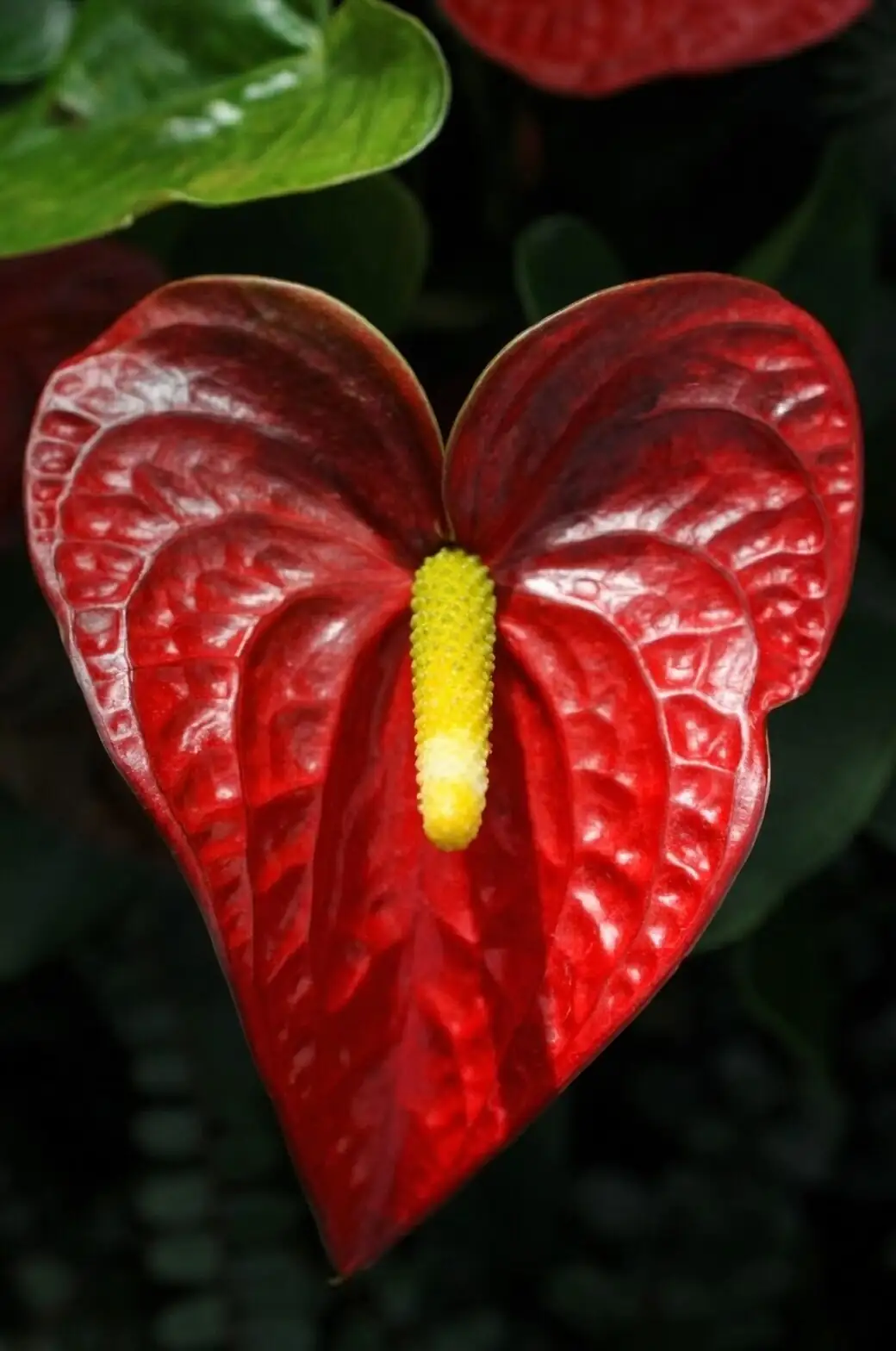
- What you see: deep green, glossy, heart‑ to arrow‑shaped leaves, and long‑lasting, lacquered “blooms.” The colorful part is a spathe (red, pink, white, burgundy, green, or bicolor) embracing a finger‑like spadix where the true, tiny flowers live.
- Indoor size: commonly 30–60 cm tall and wide (12–24 in). Many home specimens settle around 45 × 30 cm (18 × 12 in).
- Habit: upright, clump‑forming, evergreen perennial; can sprout aerial roots with age.
- Best home: bright, filtered light; warm temps; steady humidity. It can flower on and off year‑round indoors, most strongly from spring through summer.
A Seasonal Checklist for Peak Performance
Spring: The Boost
Think reset and renew—more light, fresh energy, and the start of regular feeding.
- Light
- Move near an east window or bright north window; a few feet back from south/west with a sheer curtain is perfect.
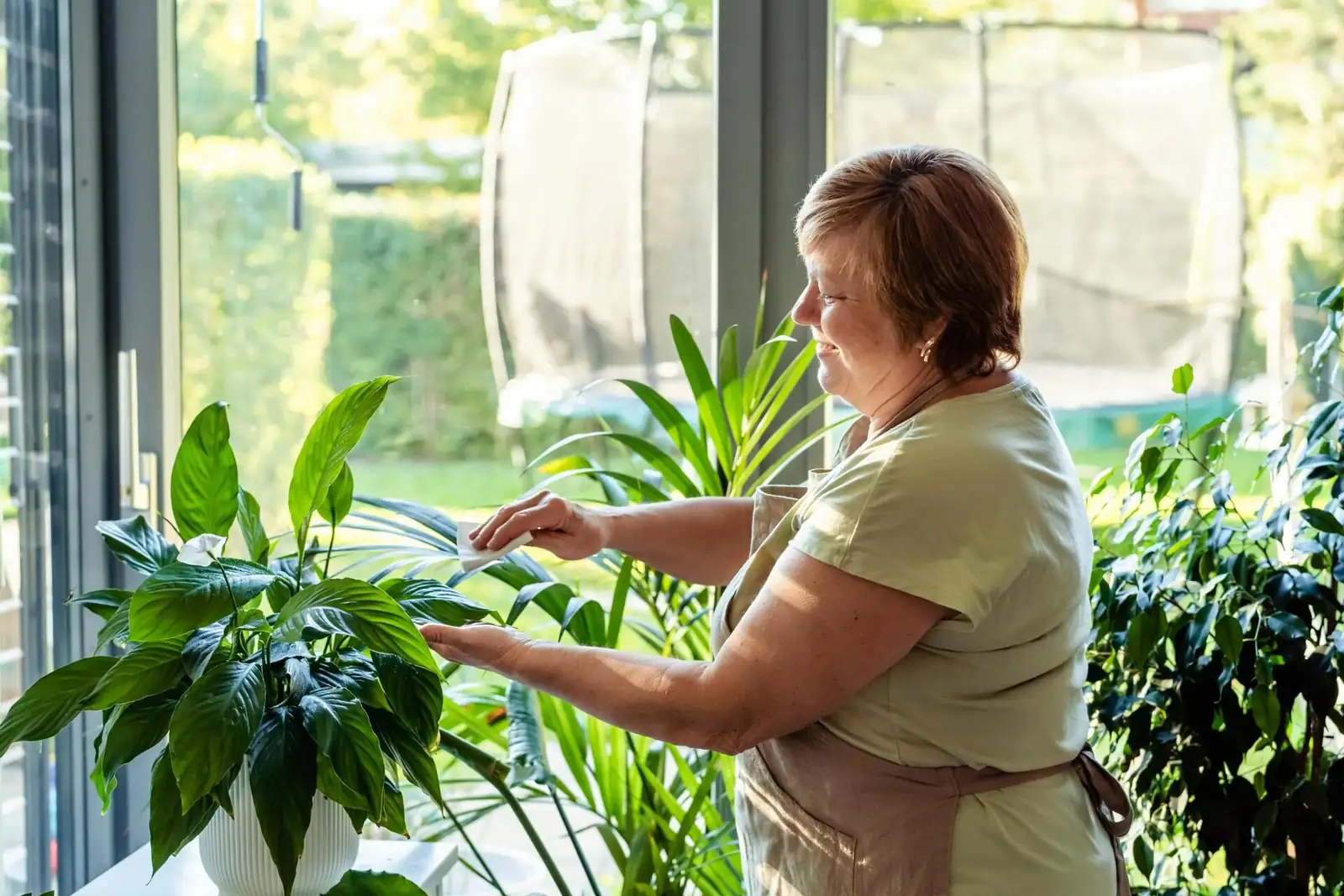
- Clean leaves with a damp cloth so they can sip every photon.
- Water
- Check often as days lengthen. Water when the top 2–3 cm (about 1 in) is just dry; then drench and drain fully.
- Water during the warm part of the day (roughly 9 a.m.–4 p.m.) to avoid cold stress.
- Feed
- Begin a every‑2‑weeks routine with a dilute, higher‑potassium liquid fertilizer (for example, 20‑8‑20) at half strength to support blooming.
- Humidity and airflow
- Aim for 50–60%+ humidity with a pebble tray or humidifier; keep gentle airflow to deter fungal issues.
- Grooming
- Snip spent spathes and yellowing or crowded leaves at the base with clean scissors to redirect energy to new growth.
- Repot or divide?
- Check roots: are they circling, protruding from drains, or is the plant drying extremely fast? If yes, spring is prime time to repot or divide (details below).
Summer: Bloom Care in the Heat
This is showtime. Keep fuel and comfort steady to power long‑lasting spathes.
- Light
- Very bright, indirect light drives blooms. Shield from harsh midday sun to prevent bleaching or scorch.
- Water
- Warm rooms dry pots faster; many plants need water every few days (often every 2–3 days in hot weather). Always judge by the mix: water when the top 2–3 cm dries.
- Feed
- Continue dilute feeding every 2 weeks. Miss a feeding before a heat wave if the mix is drying ultra‑fast—roots prefer air as much as nutrients.
- Heat and humidity
- Ideal growth happens around 20–30°C (68–86°F). Keep it above 15°C (59°F) at night; protect from blasts of hot, dry air.
- Humidity 50–60%+ is your friend—pair it with airflow to avoid inflorescence rot.
- Bloom TLC
- Rotate the pot weekly for even growth. Stake stems lightly if they lean. Deadhead spent spathes to cue more buds.
- Pest patrol
- Thrips, spider mites, mealybugs, and scale love summer. Inspect undersides weekly; treat early with insecticidal soap or horticultural oil.
Autumn: The Gentle Slowdown
Light dips; growth eases. Keep conditions stable while you taper inputs.
- Light
- Edge the plant closer to bright windows and keep sheer curtains clean. Every lux counts now.
- Water
- Lengthen intervals slightly, but never let the root ball go bone‑dry. Still use the top‑2–3‑cm‑dry rule.
- Feed
- Reduce feeding to monthly, then pause as winter settles in.
- Housekeeping
- Remove tired leaves and any spent spathes. Check the crown and surface for crowded aerial roots; top‑dress with a little damp sphagnum if they’re desiccating.
- Health check
- Shorter days and cooler rooms can invite fungal leaf spots if foliage stays wet. Avoid evening misting and keep air moving.
Winter: Light Hacks and Cozy Care
The plant rests, but doesn’t want to shiver or starve.
- Light hacks
- Park it in your brightest spot: an east window is golden; a bright north window also works.
- Use a sheer‑filtered south/west exposure if that’s your only bright option.
- Dust leaves monthly; rotate the pot. Consider a small LED grow light 10–12 hours a day if rooms are dim.
- Warmth and drafts
- Keep above 15°C (59°F); below ~13°C (55°F) chilling damage can occur and flowering may stall.
- No cold windowpanes or heater blasts; steady is best.
- Water
- Space out waterings, but don’t let it fully dry. Water midday when the pot is slightly warm to the touch.
- Feeding
- Mostly pause. Resume regular feeding in spring when growth picks up.
- Bloom support
- Brighter winter light can prevent a total bloom pause. If spathes fade, remove them to tidy the plant and cue new cycles.
The Right Moment to Repot or Divide
Signs it’s time
- Roots circle the pot, bulge the nursery liner, or poke from drainage holes.
- The mix dries rapidly within a day or two despite normal conditions.
- Growth and flowering slow even though light and feeding are good.
- The crown sits too deep, or aerial roots are searching far beyond the pot rim.
When
- Best in spring, or early summer at the latest, every 2–3 years for most plants.
How to repot
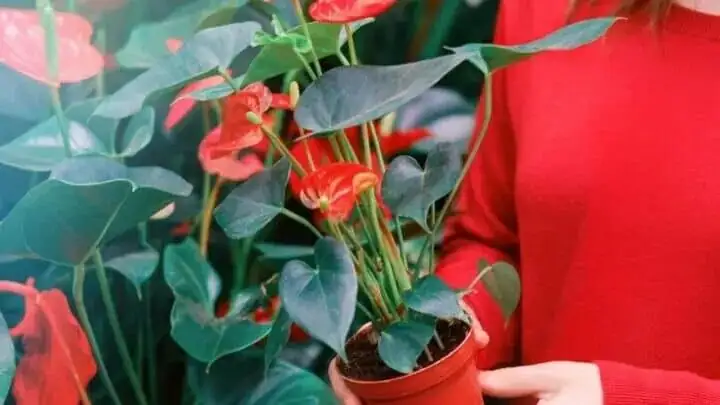
- Pot size: typically move up just one size (for example, 12.5 → 15 cm / 5 → 6 in). Mature clumps may use 15–25 cm (6–10 in).
- Mix: a rich, airy aroid blend—think bark + coco coir/peat + perlite. A practical route is 1:1 multipurpose potting mix and a chunky orchid/bark mix.
- Depth: keep the crown at or slightly above the mix surface. Let aerial roots sit near the top; you can top‑dress them with a little moss.
- Water and aftercare: water through, drain well, then resume normal care in bright, indirect light.
How to divide (most reliable home method)
- Select a clump with its own roots and at least 3 leaves.
- Tease sections apart gently; trim mushy roots.
- Pot each division in the same airy mix; keep warm (around 20–30°C / 68–86°F) and evenly moist—not soggy.
- After new roots establish (often in 20–30 days), begin light, dilute feeding.
Note: Advanced growers can root stem sections with nodes and aerial roots in moist sphagnum or a chunky mix, but division is simpler and more dependable.
Placement Sweet Spots
- A bright bathroom with a window is ideal: humidity plus filtered light.
- Near an east‑facing window, or a few feet back from bright south/west light with a sheer curtain.
- Indoors only unless you live in a frost‑free climate (roughly USDA 11–12).
Watering, Light, and Feeding—Quick Rules of Thumb
- Light: bright, indirect is the engine of bloom. Too little = fewer flowers; too much harsh sun = bleached or scorched leaves.
- Water: let the top 2–3 cm (about 1 in) dry, then water thoroughly; never leave it sitting in water. In heat, that might mean every 2–3 days; in winter, much less.
- Feeding: every 2 weeks in spring–summer with dilute liquid fertilizer, leaning higher in potassium (e.g., 20‑8‑20). Reduce in autumn; pause in winter.
Troubleshooting at a Glance
- Yellowing leaves: usually overwatering or poor drainage. Improve airflow and substrate; allow the top inch to dry.
- Brown tips or edges: low humidity, salt buildup, or cold drafts. Rinse the pot through occasionally and boost humidity with a pebble tray or humidifier.
- No blooms: increase bright, indirect light; keep warm; resume a potassium‑leaning feed in the growing season.
- Bleached patches: too much direct sun—filter with a sheer curtain.
- Spots or rot on inflorescences: reduce late‑day misting, improve airflow, and remove affected parts. Treat early if needed.
Pests to watch: spider mites, mealybugs, scale, thrips. Treat promptly with insecticidal soap or horticultural oil; repeat per label. Fungal issues (leaf spot, anthracnose, root rot) thrive in soggy, stagnant conditions—use a chunky mix, water wisely, and keep air moving.
Try This: Water Culture (Hydro)
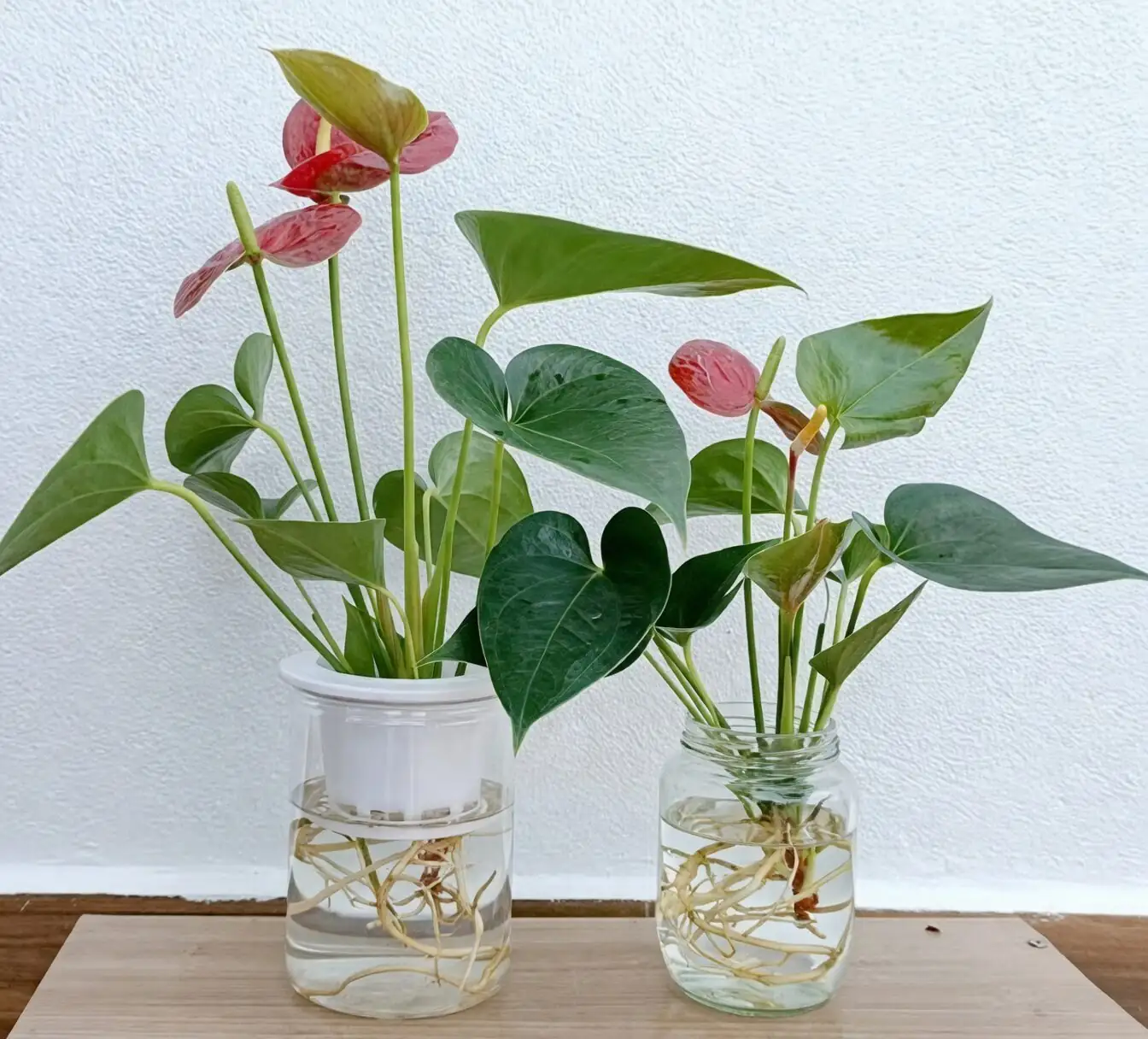
Yes, Flamingo Flower can be grown in water.
- Rinse all potting mix from the roots.
- Set only the lower roots in water—do not submerge the crown.
- Change water weekly; add a light hydroponic nutrient.
- Keep warm (about 20–30°C / 68–86°F) and trim any rotting roots.
Cut‑flower bonus: harvested spathes last weeks. Recut stems and refresh the vase water weekly for longest life.
Safety Note
Like many aroids, it’s toxic if chewed due to insoluble calcium oxalate crystals. Keep away from pets and children; sap may irritate skin. Wash hands after pruning.
Flower Language and Meaning—Beyond the Gloss
Flamingo Flower is often gifted as a symbol of hospitality, warmth, confidence, and lasting love. Why these themes?
- Hospitality: those bold, open spathes are a visual “welcome,” which is why you’ll see them in hotel lobbies and reception desks—long‑lasting color that greets guests for weeks.
- Lasting love: the spathes endure far longer than typical petals, echoing commitment. The heart‑shaped leaves reinforce the message.
- Confidence: the plant doesn’t whisper; it declares itself with lacquered color and upright poise.
As with most “flower language,” this symbolism blends modern design culture with older floriography habits: rather than a strict Victorian code, the meanings here are rooted in the plant’s longevity, heart‑like shapes, and its frequent use as a welcoming accent.
—
With a seasonal cadence—spring boost, summer bloom care, autumn slowdown, winter light hacks—and timely repotting or division, Anthurium andraeanum rewards you with glossy foliage and near‑year‑round color. Treat it like a tropical guest who loves bright conversation, warm rooms, and a glass of water always at hand.