

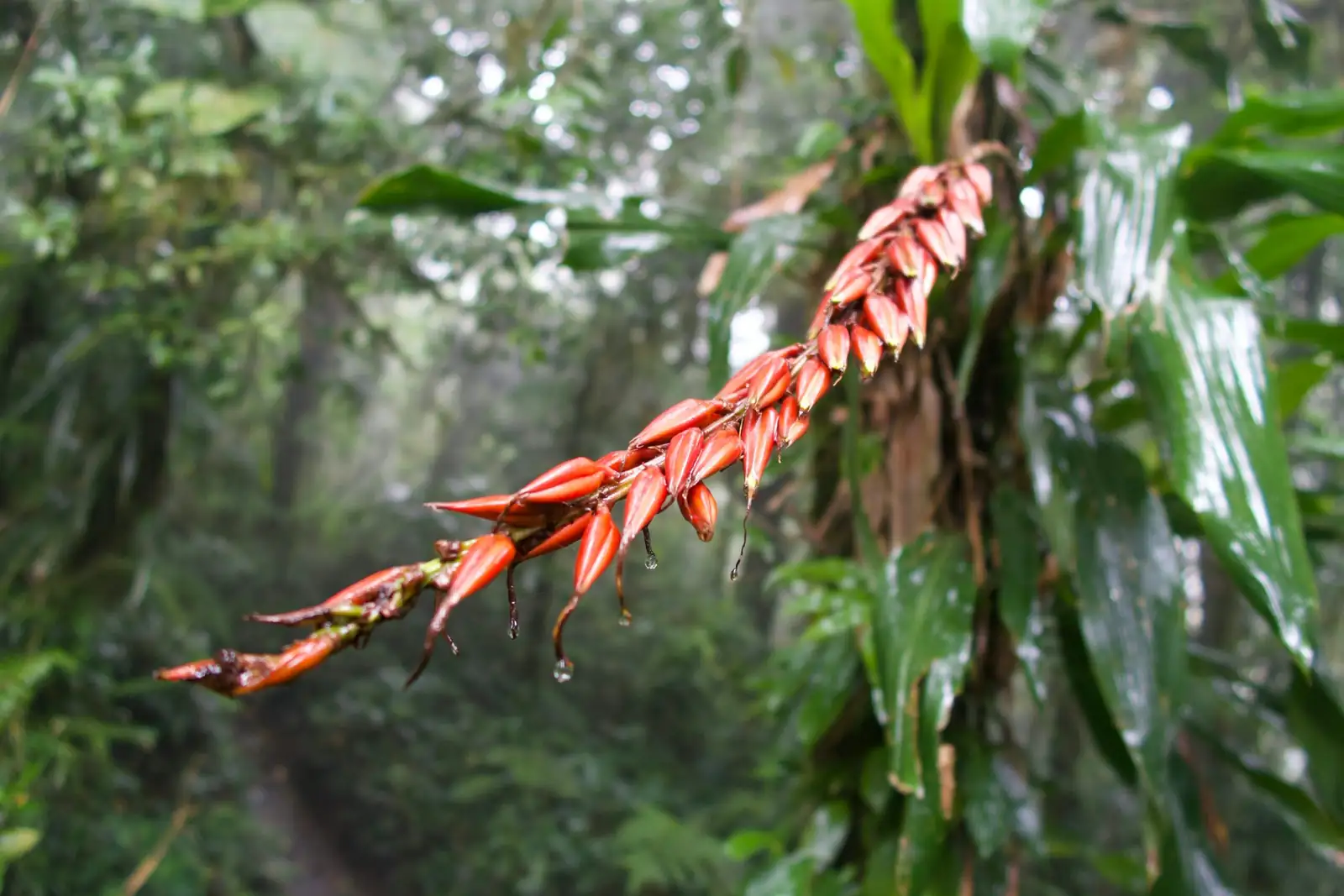
It begins in the cool mist under Andean canopies, where rain beads on glossy leaves and roots reach not for soil but for bark and moss. Perched on tree limbs in Colombia and Ecuador, Anthurium andraeanum—better known as Flamingo Flower, Tailflower, Painter’s Palette, or Laceleaf—learned the art of living aloft. That treetop childhood shaped everything we love about it today: heart- to arrow-shaped leaves that gleam, waxy “blooms” that hold their color for weeks, and a temperament that prefers warmth, gentle light, and air around the roots. From cloud forest epiphyte to global houseplant icon and cut-flower star, this is a plant with quite a passport.
Born in the Mist: Origins in Colombia and Ecuador
Imagine the understory of tropical South America—humid, dappled, and alive with birdsong. That’s home for Anthurium andraeanum. Rather than rooting in dense forest soils, it often settles into bark crevices and mossy pockets on trunks and branches as an epiphyte, where:
- Aerial roots sip moisture from humid air and frequent rains.
- Filtered light flickers through the canopy (never harsh, midday sun).
- Temperatures are consistently warm and frost is unheard of.
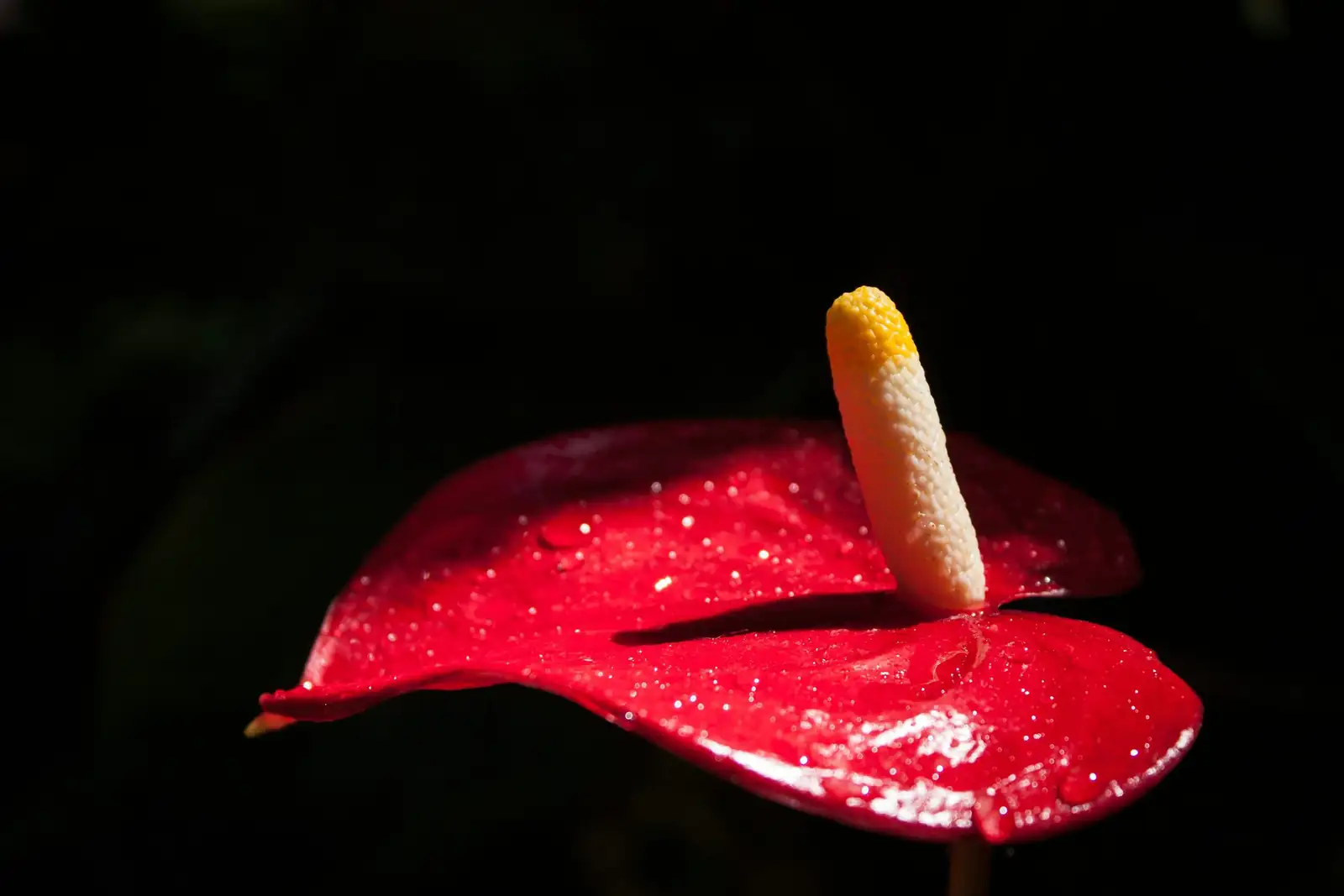
Its “flower” is a botanical sleight of hand. The showy part is a spathe—a glossy, waxy, modified leaf in red, pink, white, deep burgundy, or even green and bi-colors. At its center rises the spadix, a finger-like column packed with tiny true flowers that mature over time. Together, spathe and spadix can stay handsome for many weeks—part of the reason this species became one of the world’s most important tropical cut flowers.
From Treetops to Tabletops: The Epiphyte’s Secret to Thriving Indoors
Bring an epiphyte home and you bring its preferences, too. Mimic the canopy and Anthurium andraeanum will reward you by blooming on and off almost year-round.
- Light: Bright, indirect light or light shade. Morning sun is fine; protect from strong midday rays that can scorch.
- Warmth: Best at about 20–30°C (68–86°F), and happy indoors around 16–24°C (61–75°F). Keep it above 15°C (59°F); below about 13°C (55°F) growth and flowers falter.
- Humidity: Moderate to high is ideal—aim for 50–60%+ with good airflow.
- Potting mix: Think treetop—airy and chunky. Try bark + coco coir/peat + perlite, or a 1:1 blend of potting mix and orchid/bark mix. Let roots breathe; never let them sit waterlogged.
- Watering: Evenly moist, not soggy. Water when the top 2–3 cm (about 1 in) dries, then drench and drain. In hot weather this can be every 2–3 days; in winter, less.
- Size at home: Typically 30–60 cm tall and wide (12–24 in). Many potted plants average around 45 × 30 cm (18 × 12 in), depending on cultivar and care.
Clump-forming and evergreen, this species develops a short stem over time and may push out wandering aerial roots—an endearing reminder of its life in the trees.
Ticket to Stardom: How a Forest Epiphyte Became a World Celebrity
In the late 19th and early 20th centuries, explorers and growers ferried tropical treasures to glasshouses and botanic gardens. Flamingo Flower’s sheen and stamina turned heads quickly. Its spathes lasted not just days but weeks, and plants kept producing more with steady warmth and filtered light. Growers realized they were holding a florist’s dream.
Hello, Hawaii!
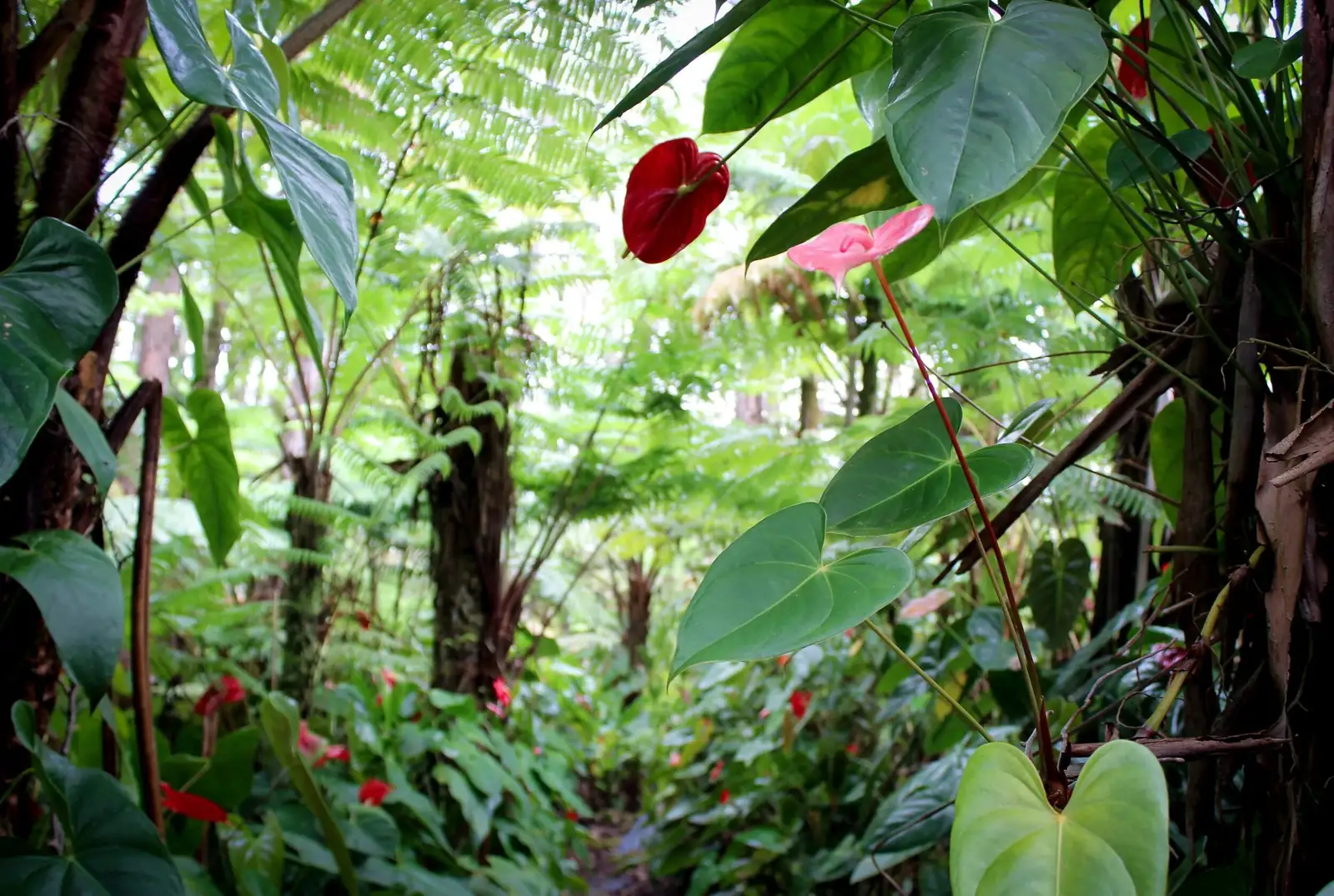
By the mid-20th century, Hawaii helped transform Anthurium into a household name. Warm, humid trade winds and shaded structures were a perfect stand‑in for the forest canopy. Growers refined cultivation, selected for richer colors and sturdier spathes, and sent long-lasting stems across oceans. Those glossy hearts started gracing lobbies, weddings, and coffee tables worldwide, their journey stamped with a big aloha.
Today, Anthurium andraeanum is cultivated on every continent where greenhouses and warm interiors can mimic its equatorial ease—equally at home in a modern loft or a tropical bouquet.
The Look: Painter’s Palette Up Close
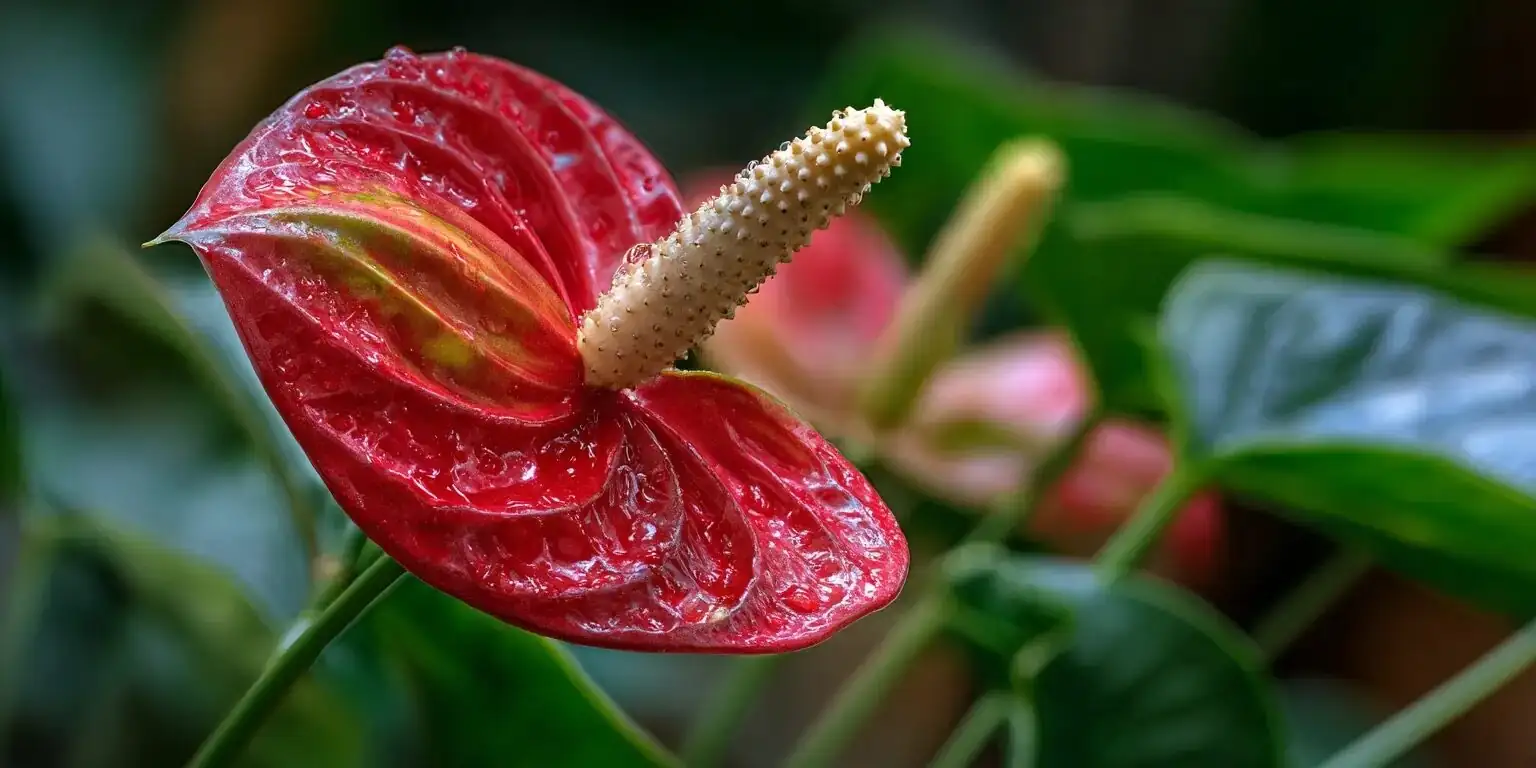
- Foliage: Deep green, glossy leaves, heart- to arrow-shaped, on upright petioles. Remove older yellowing leaves for a tidy, airy clump.
- Spathe and spadix: Waxy spathes in red, pink, white, deep burgundy, and sometimes green or bi-colors. Spadices vary too—white, green, pink, red-brown, pale purple, or even two-toned. Indoors, flowering can continue through much of the year with the right light and warmth.
Your At-Home Canopy: Care, Simplified
- Placement: Near a bright east window; bright north is fine; or a few feet back from south/west with a sheer curtain. A bright bathroom can be ideal.
- Water: Let the top 2–3 cm (about 1 in) dry slightly; water thoroughly and drain. Avoid drought and avoid soggy soil—both stress bloom production.
- Humidity: Pebble trays, a room humidifier, or group plants. Mist lightly if desired, but not late in the day; use non-chlorinated water if possible.
- Feeding: Spring–summer, feed every 2 weeks with a diluted liquid fertilizer—balanced to bloom-leaning (for example, a higher-potassium 20‑8‑20) at half strength. Reduce in autumn–winter.
- Pruning: Snip spent spathes and yellowed or damaged leaves at the base with clean scissors to refresh the display and encourage new growth.
- Repotting: Every 2–3 years, or when root-bound. Common pot sizes are 12.5–20 cm (5–8 in); keep the crown at or slightly above the mix. Top-dress exposed aerial roots with a little moss.
- Propagation: Easiest by division when repotting—separate an offset with its own roots (ideally at least 3 leaves). More advanced growers can root stem sections with nodes and aerial roots in moist sphagnum or an airy mix; expect new roots in about 20–30 days.
- Outdoors: Frost tender. Only suitable year-round outside in very warm climates (roughly USDA Zone 11–12).
Can it grow in water?
Yes—this epiphyte adapts well to hydroponic life.
- Rinse off all potting mix.
- Sit only the lower roots in water; don’t submerge the crown.
- Change water weekly; add a light hydroponic nutrient.
- Keep warm (about 20–30°C / 68–86°F) and trim any soft, rotting roots.
Troubleshooting: From Yellow Leaves to Shy Blooms
- Yellowing foliage? Most often overwatering or poor drainage. Let the top layer dry slightly and ensure a chunky, free‑draining mix.
- Fewer flowers in winter? Light and temperature dip. Move to brighter indirect light and keep above 15°C (59°F).
- Pests: Spider mites, mealybugs, scale, thrips may appear in dry or stagnant air. Treat early with insecticidal soap or horticultural oil and improve airflow.
- Diseases: Root rot and fungal issues (leaf spot, anthracnose, inflorescence rot) are aggravated by soggy mix and wet leaves at night. Use a well‑aerated medium, water earlier in the day, and keep leaves dry in the evening.
Safety First
Flamingo Flower is toxic if chewed due to insoluble calcium oxalate crystals. It can irritate mouths and throats of pets and people and may irritate skin. Keep out of reach of children and animals, and wear gloves if you have sensitive skin.
Flower Language: Why It Means What It Means
Anthurium’s symbolic meanings—hospitality, warmth, confidence, and lasting love—flow from both form and behavior rather than ancient lore.
- Hospitality and warmth: Tropical hotels and homes have long welcomed guests with bold anthurium arrangements; the open, heart-like spathe reads like a vibrant invitation.
- Confidence: The plant stands upright with a glossy, almost lacquered sheen—unapologetically bold on a desk or entry table.
- Lasting love: Spathes hold for weeks and plants rebloom with steady care, making “enduring affection” a natural interpretation rather than a mythic assignment.
These meanings aren’t tied to one historic tradition; they’re modern, design-minded readings of a plant that performs with poise.
Fast Facts to Share
- That “flower” is a spathe; the real flowers are the tiny ones studding the spadix.
- In steady warmth, humidity, and bright indirect light, anthuriums can flower on and off most of the year indoors.
- Because spathes last so long, Anthurium andraeanum ranks among the world’s top tropical cut flowers.
From Colombian and Ecuadorian treetops to Hawaiian shade houses and your windowsill, Flamingo Flower has always thrived where life is warm, bright, and a little bit dewy. Give it a slice of that canopy, and it will paint your room with glossy hearts—again and again.