

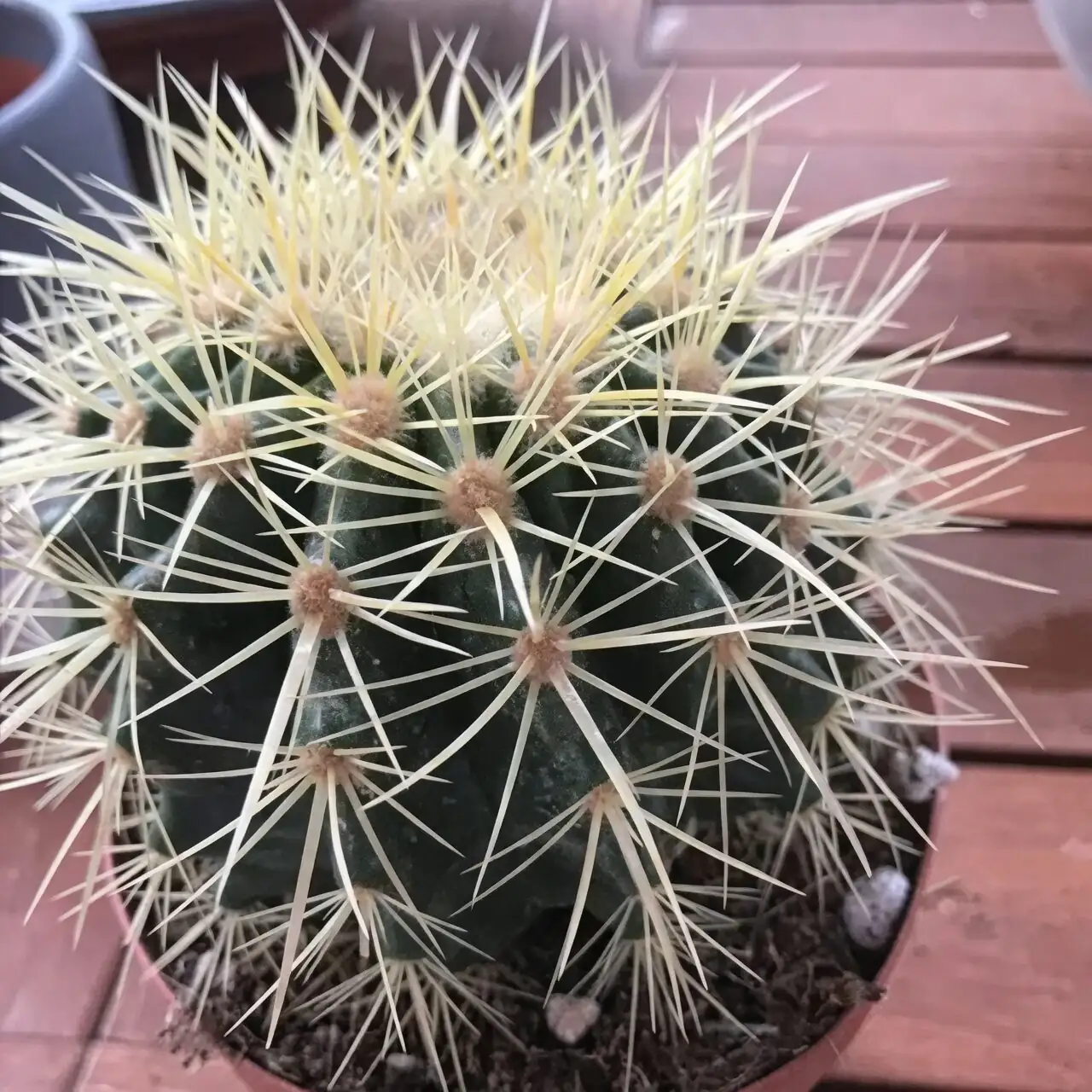
If a plant could wear armor, Echinocactus grusonii would stride in gleaming gold. The Golden Barrel Cactus is equal parts sculpture and survivor—bold, spherical, and spined to the nines. With a little planning, you can enjoy its sunny symmetry without a single prick. Here’s your safety-first guide to living beautifully (and painlessly) with this icon.
Meet the Golden Barrel, safely
- Botanical name: Echinocactus grusonii
- Family: Cactaceae
- Origins: Central Mexico (sunny, arid slopes and airy highlands)
- Look: Bright-green, strongly ribbed globe wrapped in dense, golden-yellow spines; older plants may produce offsets (“pups”)
- Size in cultivation: Typically 30–90 cm (12–35 in) tall and wide over time; commonly grown in 12–40 cm (4.7–15.7 in) pots
- Personality: Slow, steady, and long-lived with the right light and a dry-leaning routine
Mature plants can crown themselves with small, yellow flowers in a ring near the top in summer—like a sunburst tiara for those who wait.
The golden rules of spine-safe living
Think of this plant as a gorgeous hedgehog: admire, don’t cuddle. A few simple systems make all the difference.
Handle like a pro: gloves, tongs, and newspaper wraps
- Gloves: Choose thick leather or heavy-duty gardening gloves with long cuffs. Avoid thin fabric gloves—spines will punch through.
- Tongs: Use kitchen or BBQ tongs wrapped in a layer of soft cloth or tape to prevent scuffing spines and skin.
- Newspaper/wrap technique:
- Fold several sheets of newspaper into a long, wide belt.
- Gently cinch it around the cactus body to lift and steady.
- For larger plants, use a doubled bath towel or a corrugated cardboard “collar.”
- One hand on the pot, not the plant: Always lift from the container whenever possible.
Secure pots and smart placement
- Weight matters: Use a heavy, wide-based pot (ceramic or thick terracotta) to resist tipping. Drainage holes are nonnegotiable.
- Stabilize the setup: Add a top-dressing of coarse gravel to discourage splashing onto the crown, and use pot feet or a stable saucer that won’t skid.
- Placement:
- Sunny windowsills or bright balconies with airflow are perfect.
- Keep it out of traffic lanes, near desk edges, or beside armrests.
- Elevate away from curious pets and small hands; a console, plant stand with a lip, or deep windowsill works well.
- Move with intention: Clear the path, brace the pot with both hands, and wear gloves—even for quick adjustments.
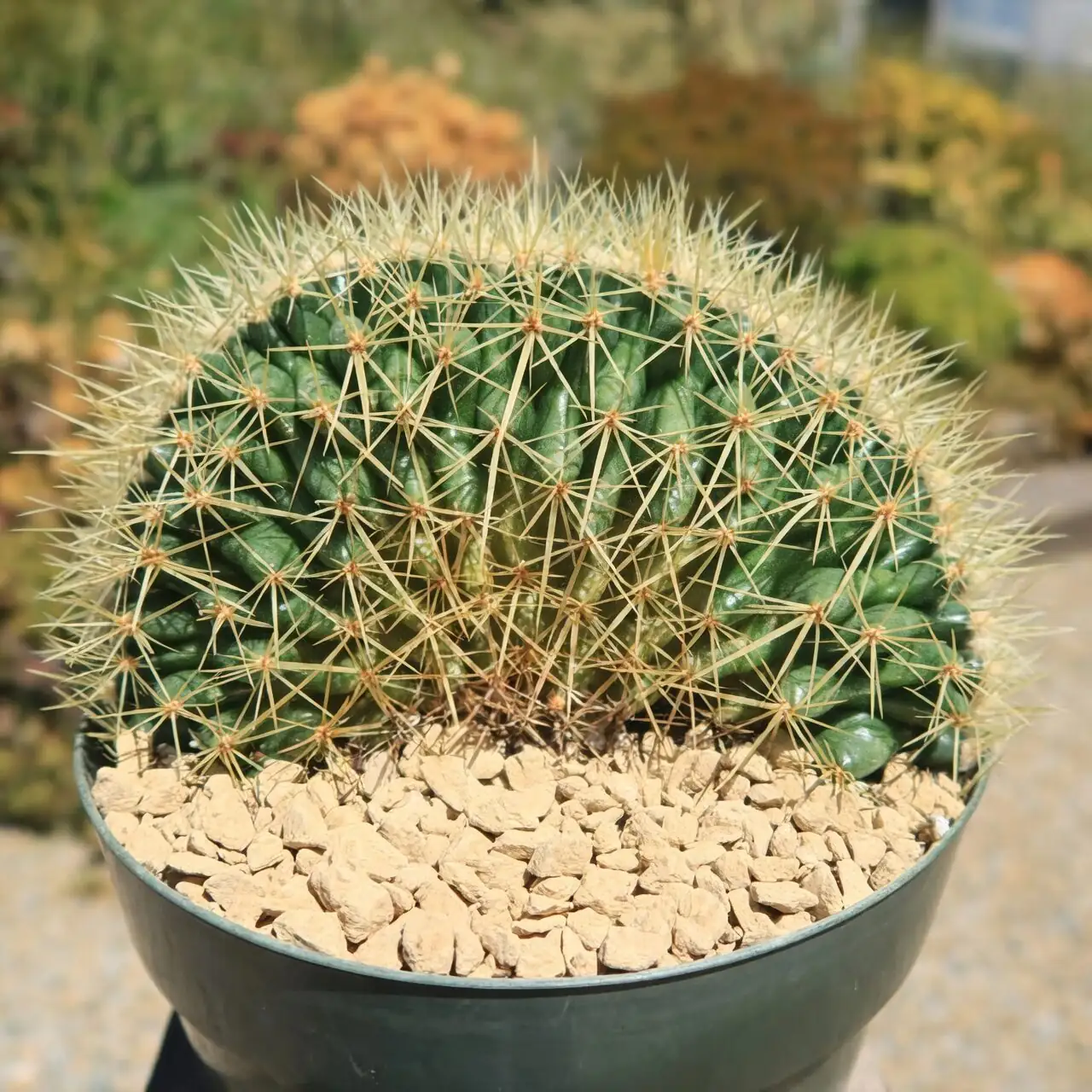
After repotting, drought is your friend
Repotting creates tiny root wounds that need to callus before they meet moisture.
- Repot in spring into a very free-draining cactus mix.
- Then wait: Keep completely dry for several days (often about a week if cool) before the first watering to reduce rot risk.
Light, warmth, and air: comfort without scorch
- Sunlight: Bright light to full sun is best. Indoors, aim for a south- or east-facing window.
- Acclimation: Increase sun gradually; in very intense midsummer sun behind glass, offer brief, light shade if the skin looks stressed.
- Temperature: Best around 13–24°C (55–75°F); winter above 8°C (46°F) and kept dry. Protect from frost.
- Humidity: Prefers dry air; average indoor humidity is fine. If the room is extremely dry, lightly mist the air nearby (not the plant body) and keep air moving.
Potting mix and container: build a drought-ready home
- Mix recipe: Loam-based potting soil or loamy garden soil + leaf mold/compost, amended heavily with coarse sand/grit for fast drainage. Use any organic richness sparingly.
- Pot choice:
- Wide, heavy container with large drainage holes.
- Size to the root ball—don’t overpot.
- Top-dress: A layer of coarse grit/stone keeps the crown drier and looks sharp.
Watering without worry (and without rot)
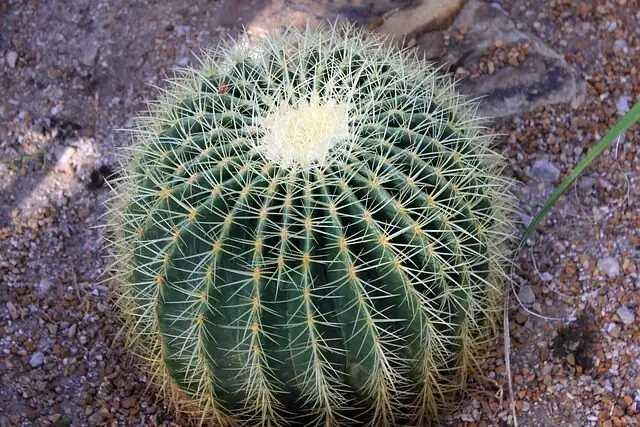
Adopt the “thorough then dry” rhythm and avoid pouring water onto the crown.
- Spring: About every 2 weeks in many homes—only after the mix has dried well.
- Summer: Often about once per week in warm, very bright conditions; still let the mix dry fully between waterings.
- Autumn: Taper as growth slows.
- Winter: Keep almost completely dry; if kept cool, stop watering until warmth and light return.
- Never let the pot sit in water; empty saucers promptly.
Fertilize lightly in the growing season about once per month with a cactus or low-nitrogen formula (e.g., 15-15-30) at half strength. Do not feed in winter.
Repotting, step by step (zero-prick edition)
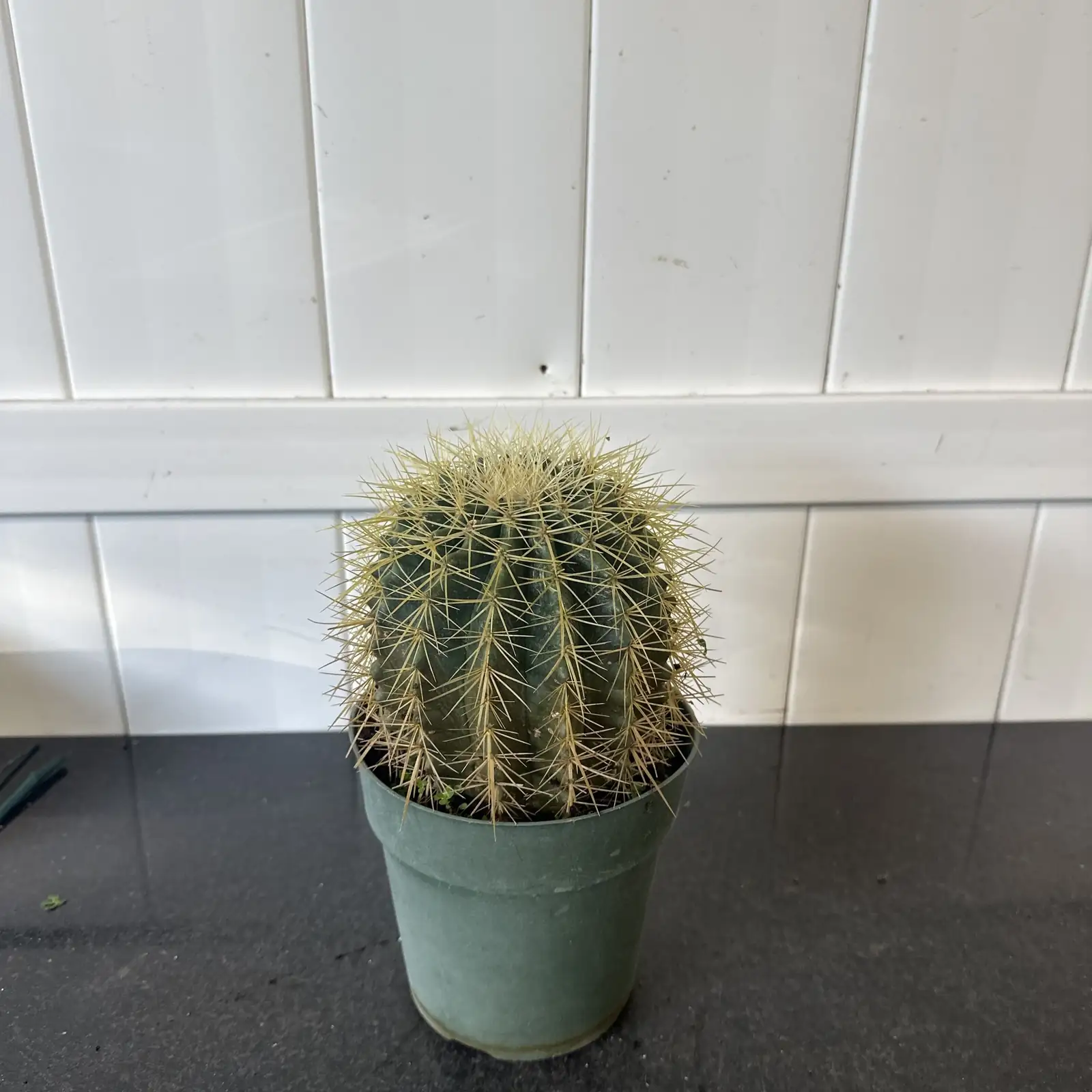
- Gear up: Thick gloves, padded tongs, folded newspaper/towel, and a tarp for easy cleanup.
- Pre-dry: Let the plant’s mix dry out a bit—drier roots are less fragile.
- Unpot: Grip the pot (not the plant), tip gently, and guide with your wrapped newspaper belt.
- Root check: Trim overly long or damaged roots with a sterile tool; shake out old compacted soil.
- Rehome: Set into fresh, gritty mix at the same depth; keep the crown above the soil line.
- Patience: Keep dry for several days so cuts can callus, then resume careful watering.
Pest and problem patrol
- Usual suspects: Spider mites, mealybugs, and scale. Treat early with insecticidal soap or horticultural oil and isolate affected plants.
- Rot and fungi: Most often from excess moisture in cool conditions. Improve drainage, increase airflow, remove any affected tissue, and use an appropriate fungicide if needed.
Kid, pet, and passerby safety
- Non-toxic, but very spiny: Punctures are the real risk.
- Create a “no-bump zone”: Keep out of reach and away from narrow walkways.
- First aid: If a spine pricks skin, wash, disinfect, and remove fragments with tweezers. For many tiny spine tips, a thin layer of white glue can help lift them once dry.
Light, growth, and those golden spines
- Color cue: Spines glow richest in strong light; prolonged low light dulls color and can stretch growth.
- Growth style: Slow and steady; typically solitary for years, then may offset with age.
- Blooms: Small, yellow, and typically appear on well-established plants in summer.
Propagation options (for the patiently curious)
- Offsets: Detach when about 1–2 cm across; let the cut callus, then root in a gritty mix. Warm conditions often root in 20–30 days.
- Seed: Best sprouting at 20–24°C (68–75°F), often in about 20–25 days. Sow on the surface with a light cover.
- Grafting: May–July is prime time; unions typically heal in 3–4 weeks.
Hydroponic note (advanced and riskier)
Growing a Golden Barrel in water can be done—but rot risk rises without rigorous hygiene and aeration.
- Clean soil from roots completely and stabilize the plant.
- Keep roughly half the roots in water.
- Change water weekly in summer, monthly in winter; clean the container each time.
- Add a small amount of nutrient solution during changes and monitor closely.
Quick placement planner
- Best spots: Sunny windowsill, bright office, sunroom, balcony, or porch with airflow.
- Watch-outs: Extreme midday heat behind glass (acclimate or give brief light shade), dim corners, wobbly stands, and narrow ledges.
Symbolism and story
The Golden Barrel is widely gifted as a symbol of resilience, endurance, and protective strength—like a steadfast friend in a golden coat of mail. In modern “flower language” terms, it stands for toughness and steadfastness rather than sweetness; its formidable spines underline the message that good boundaries protect what’s precious. Native to central Mexico and now beloved worldwide, it’s an icon of arid landscapes and bright interiors alike.
Safety-first care checklist
- Thick gloves + padded tongs + folded newspaper when handling
- Heavy, stable pot with excellent drainage
- Gritty, fast-draining mix; crown kept high and dry
- Bright light to full sun with gradual acclimation
- Water thoroughly only after the mix dries; keep nearly dry in winter
- Post-repot drought for several days before the first watering
- Place out of traffic flow and out of reach of kids/pets
- Monitor for pests; prioritize airflow to prevent rot
Treat your Echinocactus grusonii like a sun-loving sculpture: give it light, space, and respect for its armor. Do that, and you’ll enjoy a lifetime of golden glow—no bandages required.