

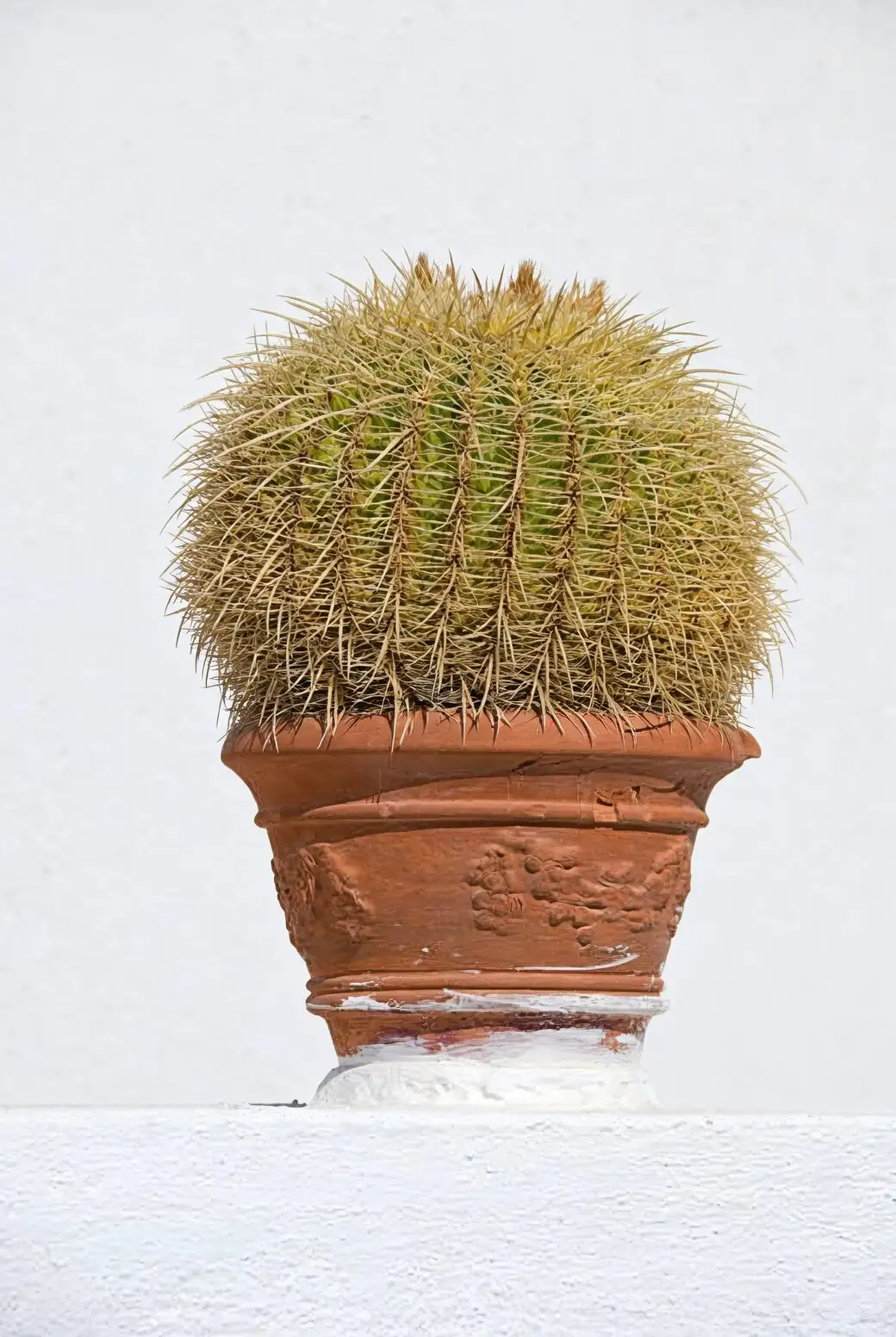
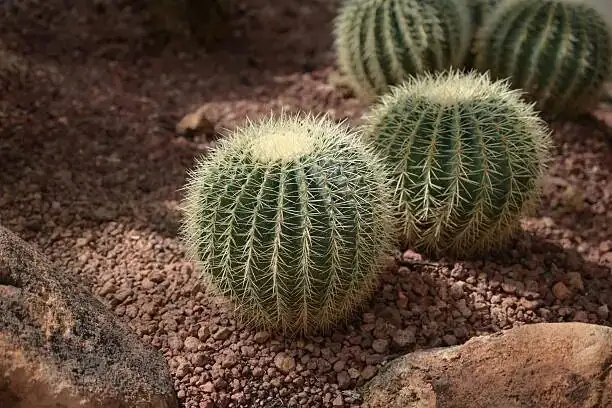
Golden barrel cactus is the botanical equivalent of a spotlight-stealing sculpture—clean geometry, radiant spines, and a presence that can anchor a whole room or patio. Design it well, and Echinocactus grusonii becomes a glowing orb of texture and shadow that looks curated, not just collected. Here’s how to style it like a pro—with pots that elevate, top-dressings that finish the look, light that sculpts the ribs, and groupings that are dramatic yet safe.
Read the Plant Like an Object of Design
- Form: Globose to short-barrel, strongly ribbed, bright green body wrapped in dense, golden-yellow spines.
- Scale: In time, a statement plant—often 30–90 cm (12–35 in) tall and wide. Most potted specimens sit comfortably in 12–40 cm (4.7–15.7 in) diameter containers.
- Growth mood: Slow, architectural, usually solitary; older plants may produce offsets (“pups”) and eventually clump.
- Lighting truth: Bright light to full sun keeps the color vivid and the shape tight. Prolonged low light leads to stretched growth and dull spines—say goodbye to that perfect globe.
Style It with Light: Shape-Carving Illumination
Think like a lighting designer. Those ribs and spines throw the most dramatic shadows when the light’s at an angle.
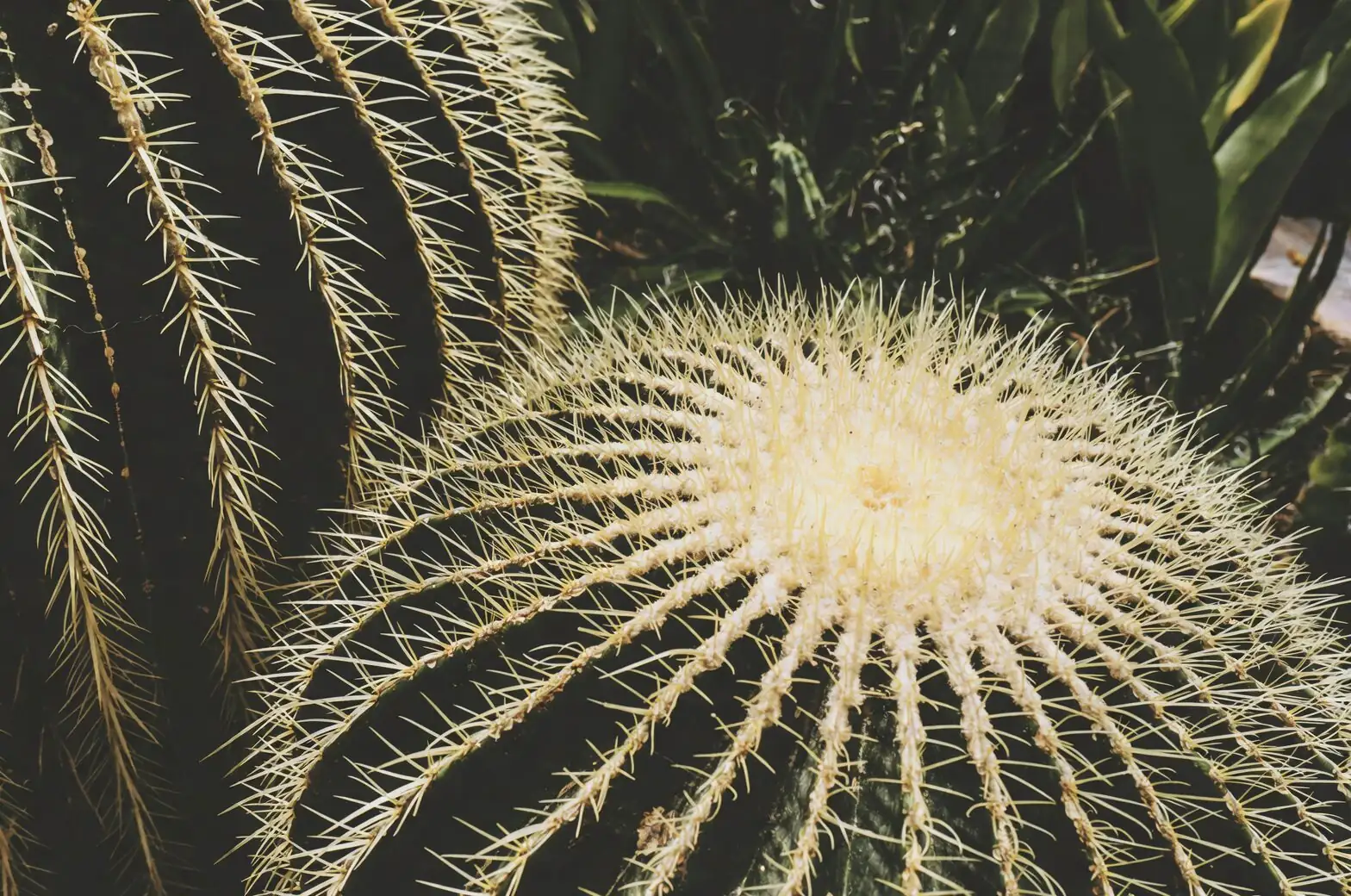
- Best indoor placement: South- or east-facing windows. East light brings gentle morning highlights; south serves strong, all-day brightness.
- Angle for drama: Place the plant slightly off-center to the window so morning or late-afternoon rays rake across the ribs, amplifying texture. A white wall or light floor nearby will bounce light back and keep the crown bright.
- Acclimate, don’t blast: If you’re moving it into stronger sun, increase exposure over 1–2 weeks. Behind hot glass in midsummer, a sheer curtain during peak hours can prevent scorch.
- Rotate to perfect: Turn the pot 15–30 degrees every couple of weeks during active growth to maintain symmetry and avoid leaning.
- Avoid the fade: Long stints in dim corners dull the gold and elongate the stem—keep it bright or move it.
Pots That Make It Pop
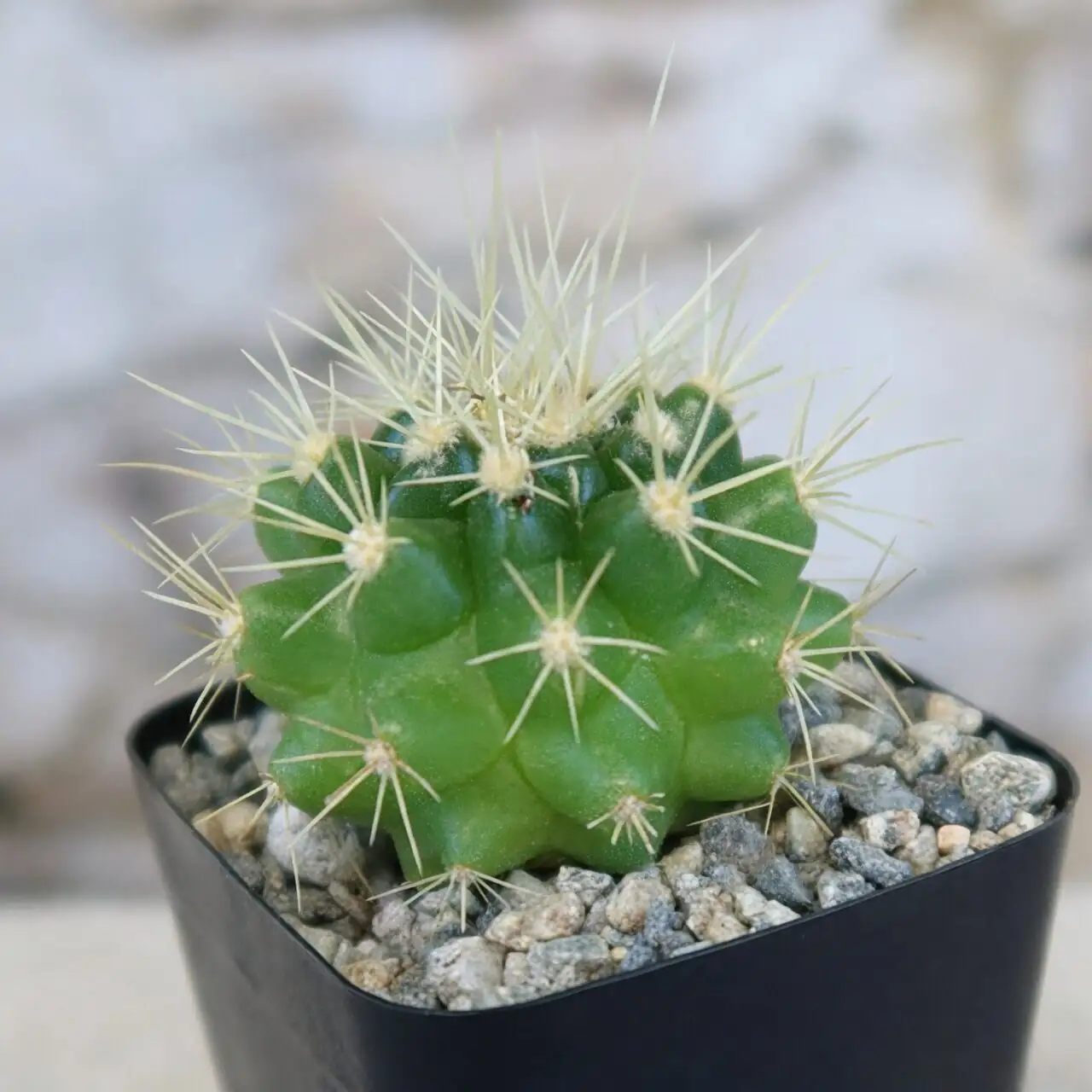
Your container is the frame for your living sculpture. Choose for stability, drainage, and color contrast.
- Size and structure
- Use a pot sized to the root system (not vastly oversized) with excellent drainage. Heavy pots prevent tipping—key for a spiny, top-heavy globe.
- Typical pot diameters: 12–40 cm (4.7–15.7 in) for common home specimens.
- Materials that work
- Raw terracotta: Breathable, keeps roots airy, pairs well with golden spines and sandy top-dressings.
- Matte charcoal or black fiberstone/concrete: High-contrast gallery look that intensifies the gold.
- Satin white or ivory ceramic: Clean, luminous, and show-ready.
- Shapes and proportions
- Low, wide bowls emphasize the orb and invite negative space.
- Straight-sided cylinders read more modern and pedestal-like.
- Avoid deep, narrow pots that bury the sphere visually and slow drying.
- Soil (the hidden hero)
- Use a very free-draining cactus mix: loam-based soil amended heavily with coarse sand/grit. Avoid heavy, water-retentive mixes; add organic matter only sparingly.
The Polished Finish: Gravel Top-Dressings
A crisp top-dressing is the difference between “potted plant” and “designed vignette.”
- Design-forward favorites
- White marble chips: Gallery-bright contrast; stunningly clean with matte black pots.
- Decomposed granite or pale quartz gravel: Natural desert vibe; subtle, timeless.
- Black lava or basalt: Dramatic stage-lighting for the golden spines.
- Warm sand/ochre pea gravel: Tones with terracotta and sunlit interiors.
- Practical tips
- Keep gravel away from the crown—leave a narrow, bare buffer so water never pools against it.
- Choose mineral top-dressings only (no bark or organic mulch).
- Medium particle size (3–8 mm) looks refined and dries quickly.
Grouping with Other Cacti—Bold, Cohesive, and Safe
Golden barrel is a natural focal point. Build around it without cluttering the silhouette.
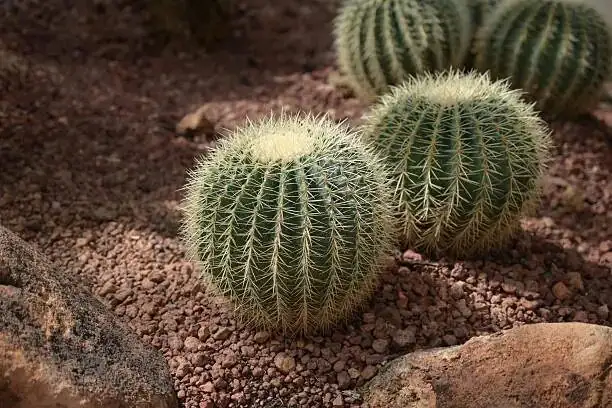
Companions that complement
- Columnar accent: Blue-tinged pillars (e.g., blue cereus types) or upright, fine-spined cacti for height contrast.
- Counterpoint globes: Smaller globose cacti (e.g., Mammillaria species) echo the form at different scales.
- Architectural succulents: Place a strong, sculptural companion nearby (e.g., an agave in a separate pot) for a rhythm of spines and planes. Keep watering needs similar and pots separate for precision care.
Composition tricks
- Work in odd numbers: One golden barrel + two contrasting forms feels balanced but dynamic.
- Stagger the heights: Pedestals or low stands create a tiered, gallery-like display.
- Leave negative space: Give the barrel breathing room so the orb reads clearly from multiple angles.
- Airflow matters: Maintain gaps between pots; this reduces rot and keeps the crown dry after watering.
Safety by design
- Spines are sharp. Place displays away from walkways, sofa arms, kids’ play zones, and pet perches.
- Use weight and width: Heavy pots and sturdy stands prevent tip-overs.
- Elevate with intent: On consoles or shelves, set it toward the back, buffered by decor that subtly guides hands away.
- Handling: Thick gloves, folded newspaper “tongs,” or actual tongs. Avoid grabbing the body.
Keep the Silhouette Bright and Bold (Care that Supports Design)
- Sunlight: Bright light to full sun. Indoors, south or east windows are ideal. Offer brief light shade only if scorching occurs after a light jump or in intense midsummer heat behind glass.
- Watering: The golden rule—water thoroughly only after the mix dries well.
- Spring: About every 2 weeks for many homes.
- Summer: Often weekly in warm, very bright conditions—but only after drying; never let the pot sit in water.
- Autumn: Taper as growth slows.
- Winter: Keep almost completely dry; if kept cool, stop watering until warmth and light return.
- Pro tip: Avoid pouring water onto the crown/body; water the soil line.
- Feeding: During active growth, feed monthly with a cactus or low-nitrogen fertilizer (e.g., 15-15-30) at half strength. No feeding in winter.
- Temperature: Best around 13–24°C (55–75°F). Protect from frost; keep above about 8°C (46°F) in winter.
- Humidity and airflow: Prefers dry air. Ventilation keeps rot and pests at bay.
- Repotting: Every ~2 years in spring, or when rootbound. Let root cuts callus by keeping the plant dry for several days post-repot.
- Grooming for perfection: Remove pups if they crowd the main globe. Use a soft brush to dust spines, enhancing the sheen.
Quick Styling Recipes
1) Gallery Glow
- Pot: Matte black cylinder, just wider than the root ball.
- Top-dressing: White marble chips.
- Light: South window, slight off-angle for rib shadows; rotate monthly.
- Companions: One slim blue columnar cactus on a taller pedestal to the side.
2) Desert Modern Trio
- Pot: Low terracotta bowl.
- Top-dressing: Decomposed granite, warm ochre tone.
- Light: Bright east window, morning sun for sparkle.
- Companions: Two smaller globose cacti in matching bowls; stagger heights on minimal stands.
3) Soft Minimalist
- Pot: Satin white ceramic, straight-sided.
- Top-dressing: Pale quartz gravel.
- Light: Bright room with a reflected-light wall; no harsh midday through glass.
- Companion: Single sculptural agave in a separate white pot, placed farther back for safe clearance.
4) Balcony Statement
- Pot: Heavy concrete planter for wind stability.
- Top-dressing: Black lava for drama.
- Light: Full sun with light midday screening during extreme heat; great airflow.
- Companions: Sparse—let the golden barrel own the space; add a single boulder or driftwood for scale.
Troubleshooting Style Spoilers
- Dull or darker spines: Not enough light. Move to a brighter spot and acclimate gradually.
- Lopsided or elongated growth: Increase light and rotate periodically. Avoid prolonged shade.
- Scorch (bleached or brown patches): Too much sudden sun/heat behind glass—add temporary sheer shade and improve airflow.
- Pests (spider mites, mealybugs, scale): Isolate, increase airflow and light, treat with insecticidal soap or horticultural oil; resume your dry-between-waterings routine.
- Rot risk: Cool + wet = trouble. Keep winter dry, never let water pool at the crown, and ensure gritty drainage.
A Note on Flowers and Patience
Mature plants may ring the crown with small yellow flowers in warm, bright summers. It’s a slow-burn reward—often years to decades in the making—but worth the wait on a well-sited, healthy specimen.
Meaning, Mood, and Giftability
Golden barrel cactus carries a modern “flower language” of resilience, endurance, and protective strength—less folklore, more the collective intuition of design lovers and desk dwellers who prize its toughness and armor of gold. It’s an iconic gift for new beginnings and challenging seasons: a bright orb that says “stay strong”—with a reminder to handle with care.
Design it with intention—pot, gravel, and light working together—and your Echinocactus grusonii won’t just survive. It will command the room, catching sun on its spines like a piece of living architecture.