

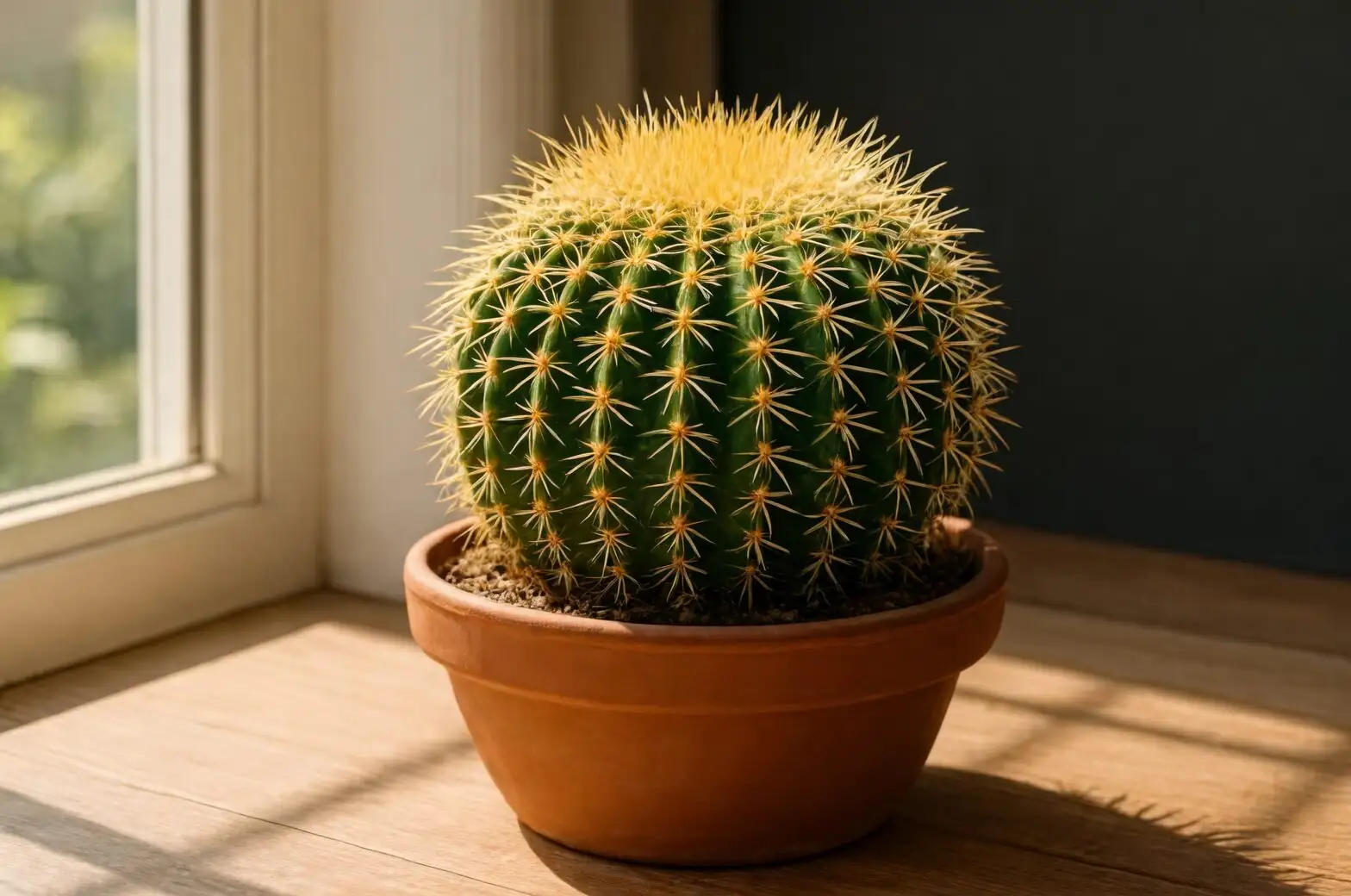
If your Golden Barrel Cactus (Echinocactus grusonii) suddenly looks less golden, a little lopsided, or mushy at the crown, don’t panic—you’re not losing your touch. This is a plant that rewards bright light, warm days, and a dry-leaning routine, and most problems trace back to a few fixable missteps. Here’s a field-tested troubleshooting toolkit for the three big issues—dull spines, etiolation, and crown rot—plus clear, step-by-step pest control for mealybugs, spider mites, and scale, with prevention strategies to keep that perfect globe shining for years.
Know your Golden Barrel at a glance (the baseline that prevents 90% of problems)
- Light: Bright light to full sun. Indoors, a south- or east-facing window is ideal. In very intense midsummer sun behind glass, acclimate and offer temporary light shade if scorching starts.
- Water: Water thoroughly only after the mix dries out well. Spring roughly every 2 weeks; summer often weekly in warm, very bright conditions; autumn taper; winter keep almost dry—if kept cool, stop watering until warmth/light return. Never let the pot sit in water and avoid pouring water onto the crown/body.
- Soil: Very free-draining cactus mix: loam-based potting soil plus leaf mold/compost, amended heavily with coarse sand/grit. Avoid heavy or water-retentive mixes.
- Temperature: Best growth 13–24°C (55–75°F). Keep above ~8°C (46°F) in winter and protect from frost.
- Feeding: During active growth, feed about monthly with a cactus or low-nitrogen formula at half strength. No fertilizer in winter.
- Airflow & Humidity: Prefers dry air and good ventilation. If air is extremely dry, lightly mist the air around (not the plant body).
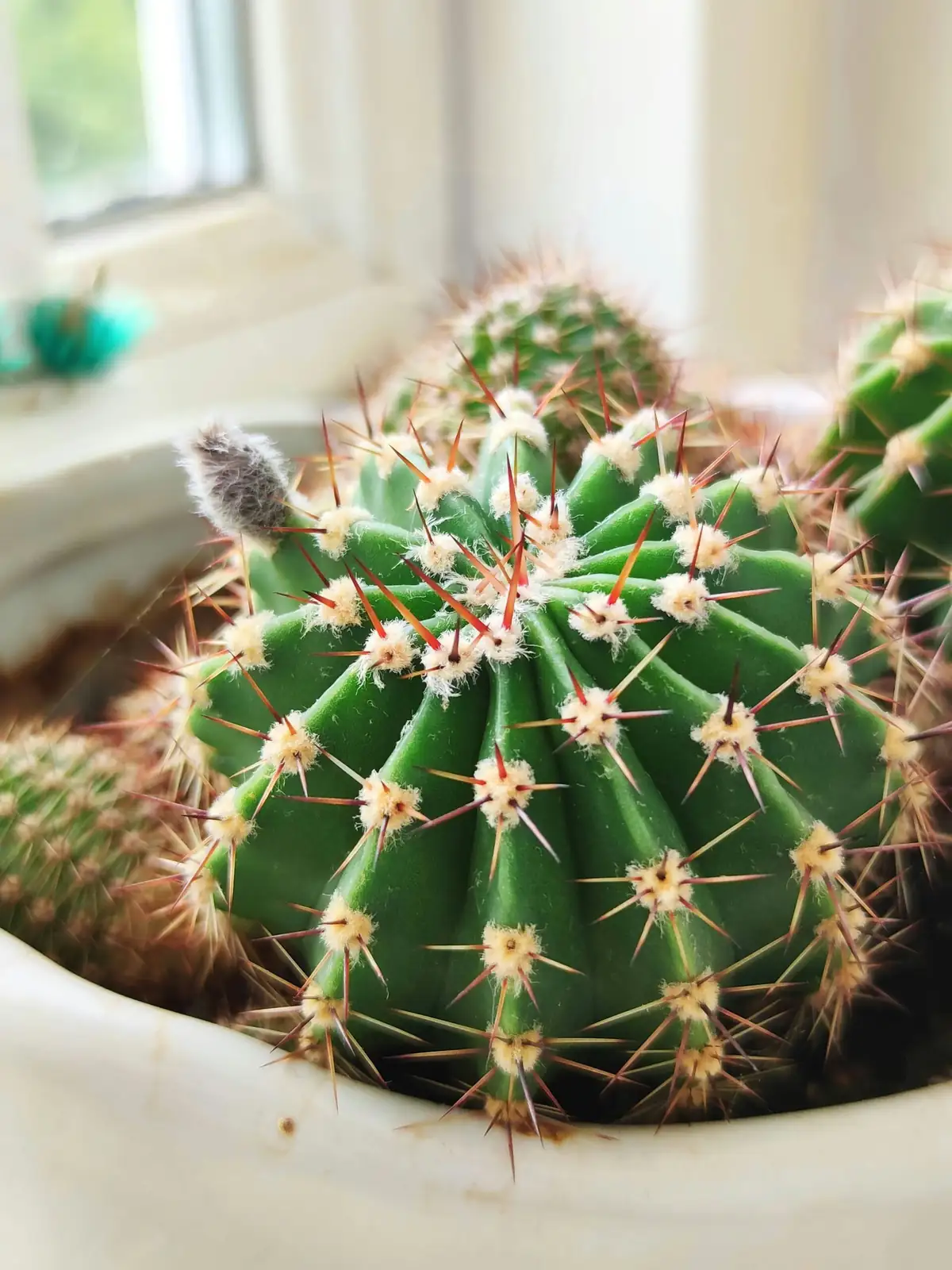
Troubleshooting the “big three”
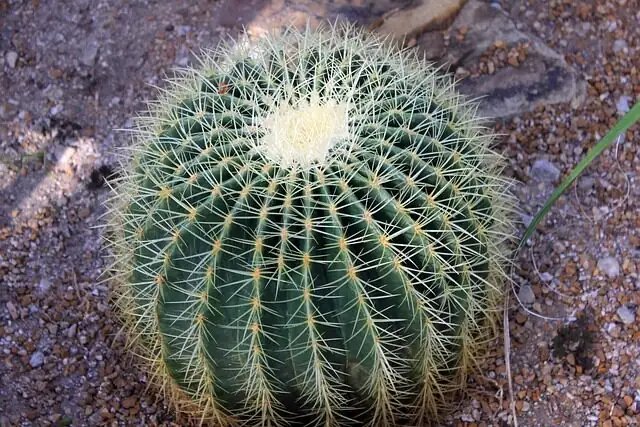
1) Dull, darker, or less golden spines
- What you’ll notice
- Spines fade from vivid gold to straw or dull tan.
- New growth lacks luster; overall effect looks “flat.”
- Why it happens
- Insufficient light is the top cause. Prolonged low light also invites stretched growth.
- Dust on spines can mute their color.
- Fix it now
- Move to a brighter exposure (south or east window). Acclimate over 1–2 weeks if stepping up to direct sun, and provide brief light shade during extreme midsummer heat behind glass if needed.
- Gently dust spines with a soft, dry brush to restore sparkle.
- Resume a steady, dry-between-waterings rhythm; soggy mix weakens vigor (and color).
- Feed lightly once a month in spring–summer with a low-nitrogen cactus fertilizer at half strength.
- Prevent it
- Rotate the pot a quarter turn weekly for even light.
- Keep the surface clean and airy; a thin mineral top-dressing (grit) helps keep the crown dry and neat.
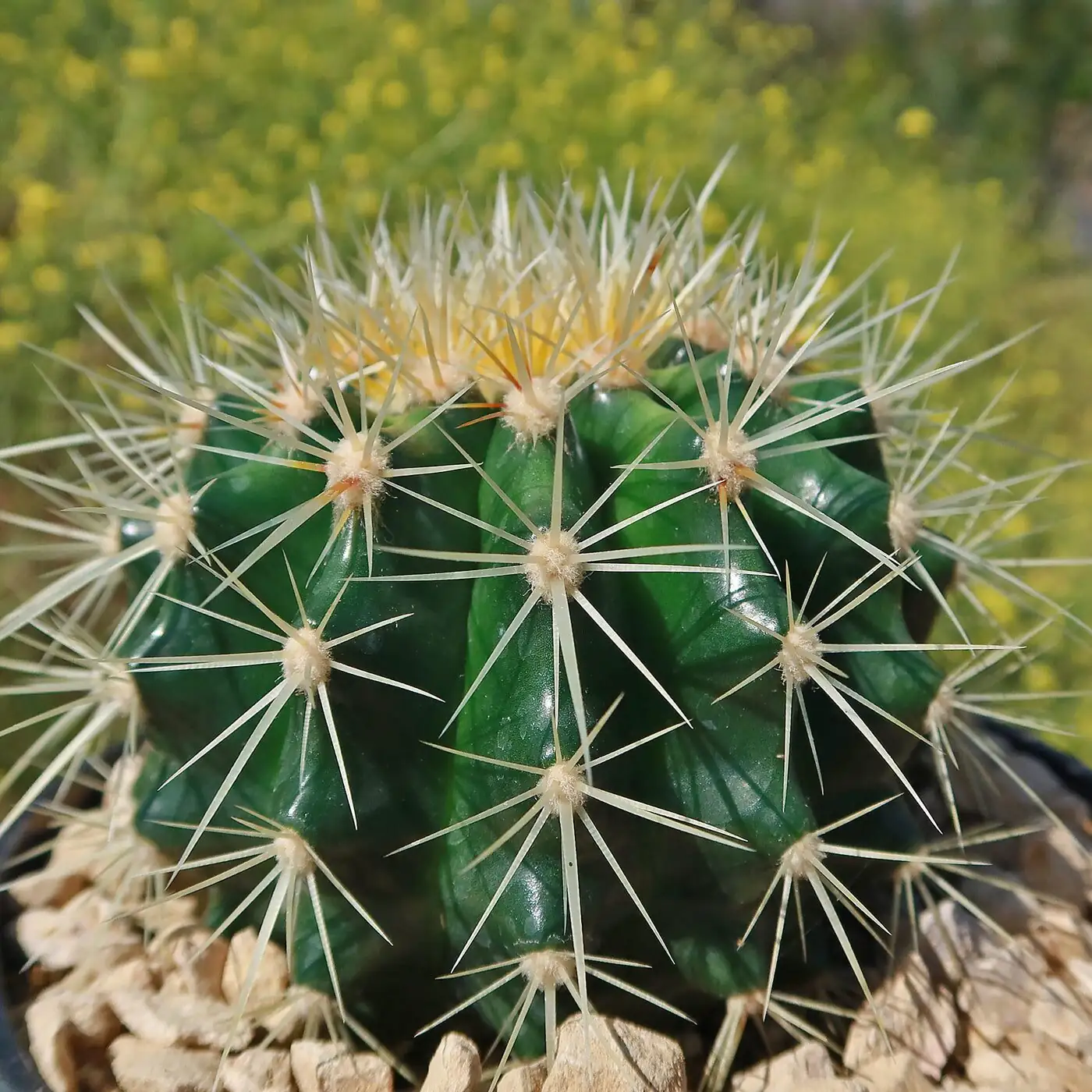
2) Etiolation (stretching, leaning, paler spines)
- What you’ll notice
- The globe elongates, ribs look farther apart, spines get sparser or finer.
- Plant may lean toward the window.
- Why it happens
- Prolonged low light.
- Winter growth encouraged by warmth plus watering when light is weak.
- Course-correct
- Give brighter light immediately, with a short acclimation to stronger sun.
- In winter, keep bright, cooler (above ~8–13°C / 46–55°F), and dry—this halts weak, stretched growth.
- Verify the mix is gritty and fast-draining; repot in spring if needed.
- Rotation helps maintain symmetry. Note: already-stretched sections won’t shrink, but future growth can be compact again.
- Prevent it
- Don’t water or feed through a dim, cool winter. Wait for warmth and strong light to resume.
3) Crown rot (soft, sunken, or blackened apex)
- Red flags
- Soft, discolored, or foul-smelling tissue at the crown; collapse of new growth.
- Common triggers
- Water sitting in the crown.
- Overwatering in cool conditions or in a heavy mix.
- Immediate triage (act now)
- Move the plant to a warm, bright, airy spot.
- Unpot and inspect. With a clean, sterile blade, remove all soft/brown tissue until only healthy, firm tissue remains.
- Let wounds dry/callus in bright, indirect light with airflow.
- Keep the plant drier. Use a suitable fungicide if needed, following label directions.
- Repot into fresh, very free-draining cactus mix. Do not water for several days after repotting.
- Long-term prevention
- Water the soil line, not the crown. After watering, tip the pot briefly to ensure no water pools at the apex.
- Use a gritty top-dressing to keep the crown dry and clean.
- Maintain strong light, warm temps, and ventilation.
Pests: identify, eliminate, prevent
Mealybugs (including root mealybugs)
- ID
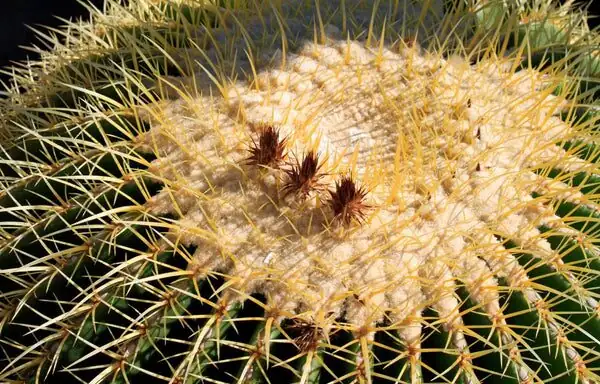
- White, cottony clusters tucked into areoles and rib creases; sticky residue may appear.
- Root mealybugs look like white, cottony dust on roots and in the soil.
- Step-by-step control
- Isolate the plant.
- Dry-clean: use a soft brush or tweezers to remove visible clusters.
- Treat the plant: spray thoroughly with insecticidal soap or a horticultural oil, reaching into crevices and around areoles. Apply in the evening and keep out of strong sun until dry.
- If root mealybugs are suspected, unpot, wash all soil from roots, discard old mix, and lightly treat roots with insecticidal soap. Let dry before repotting into fresh, sterile, gritty mix.
- Repeat treatments every 7–10 days for 3–4 cycles to catch hatchlings.
- Prevention pointers
- Quarantine new plants for a few weeks and inspect under the spines and around the crown.
- Keep the mix mineral and well-drained; avoid excess fertilizer that encourages soft growth.
Spider mites
- ID
- Fine webbing near the crown or between spines; tiny “dust” that moves; stippled or rusty patches on the epidermis.
- Step-by-step control
- Isolate and improve airflow.
- Gently dust the plant with a soft brush to dislodge debris.
- Spray the entire surface (including the crown area and rib grooves) with insecticidal soap or horticultural oil. Apply in the evening; avoid strong sun until dry.
- Repeat every 7–10 days for 3–4 rounds.
- Prevention
- Bright light and steady vigor deter outbreaks.
- Extremely arid, stagnant air favors mites—keep ventilation moving. If your indoor air is very dry, lightly humidify the space around the plant (not the plant body) and avoid heat blasts.
Scale insects
- ID
- Small, dome-like or cottony shells affixed to stem; they scrape off with a fingernail, toothpick, or tweezers.
- Step-by-step control
- Isolate the plant.
- Manually remove each scale you can see.
- Spray with horticultural oil to smother crawlers; coat all surfaces and crevices. Keep out of direct sun until dry.
- Repeat every 7–10 days for 3–4 cycles.
- Prevention
- Inspect regularly, especially along ribs and around the crown.
- Maintain strong light and airflow; clean up spent flowers or debris where pests hide.
Year-round prevention checklist
- Quarantine: Keep new arrivals separate 2–4 weeks; inspect weekly.
- Light: Prioritize a south or bright east window; acclimate before strong sun.
- Water: “Less is more.” Water only after the mix is dry; never soak a cool plant. Avoid wetting the crown.
- Soil & pot: Ultra-draining gritty mix; pot with generous drainage. Heavy pots help prevent tipping.
- Airflow: Bright, airy placement; don’t crowd plants.
- Cleanliness: Brush away dust, remove dead debris, sanitize tools between plants.
- Feeding: Light, monthly, low-nitrogen during active growth; skip in winter.
- Repotting: About every 2 years in spring; keep dry several days after repotting so roots can callus.
- Safety: Spines are sharp—handle with thick gloves, folded newspaper, or tongs.
Quick seasonal playbook
- Spring
- Increase light exposure and watering gradually.
- Resume monthly feeding.
- Repot if rootbound; refresh gritty mix.
- Summer
- Water more frequently but only after the mix is dry; never let the pot sit in water.
- In extreme heat behind glass, offer light, temporary shade if you see scorch while acclimating.
- Good airflow is essential.
- Autumn
- Taper watering; stop feeding as growth slows.
- Winter
- Keep bright, cool, and dry. If cool, don’t water until days lengthen and warmth returns.
- This “rest” prevents etiolation and reduces rot risk.
A final word of encouragement
Golden Barrel Cactus is a symbol of resilience, endurance, and protective strength—and it lives up to the billing. Keep the light high, the soil gritty, and the watering sparse, and it will reward you with decades of slow, sculptural growth and a glowing crown of golden spines. With the toolkit above, you’re equipped to handle dull color, stretching, rot scares, and the most common pests—so your plant remains a sunlit, architectural standout on any bright sill or patio.