

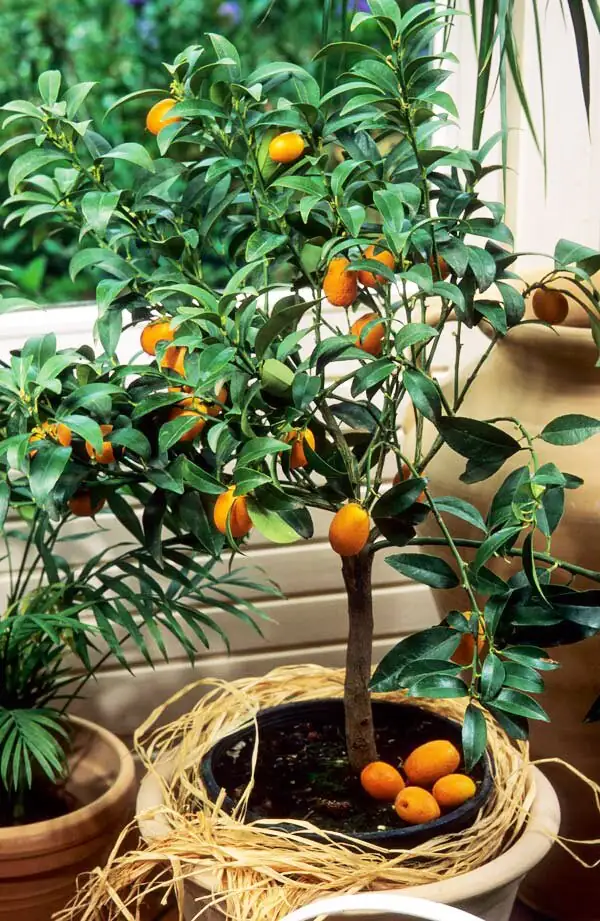
Imagine a small, glossy-crowned citrus that behaves like a bonsai you can snack on. That’s Citrus japonica—kumquat—an evergreen charmer whose golden-orange fruits ripen right as winter festivities begin. Shape it right, and you’ll trade lanky shoots for a compact canopy that carries a heavy crop through autumn and winter. The secret? A simple 3-branch framework, timely pinching, and saying no to weak autumn growth so energy goes where it counts: dense foliage and fruit.
Meet Citrus japonica (Kumquat)
Kumquat is a classic container citrus from China, prized for:
- Evergreen polish: neat, glossy deep-green leaves on a naturally bushy plant.
- Winter dazzle: fragrant spring–summer blossoms are followed by abundant oval fruits that color and persist autumn into winter (often mid-winter).
- Bite-sized joy: the peel is sweet, the flesh tangy—eat it whole for the perfect sweet-tart pop.
Also known as Fortunella japonica (older name), Nagami kumquat, or Oval kumquat, it thrives in bright light, loves warmth, and shines as a festive display plant—especially around Lunar New Year.
Shape for Success: Build the 3-Branch Framework
A well-shaped kumquat isn’t an accident; it’s a little choreography with shears and fingertips.
Why three primary branches?
- Balance and strength: three evenly spaced scaffold branches share the fruit load and resist toppling in pots.
- Light and airflow: an airy, triangular skeleton floods the interior with light, ripening fruit evenly.
- Fruiting wood factory: controlled framework + regular pinching = short, well-lit laterals that flower and fruit reliably.
When to start
- Early spring, before the main growth flush. First, remove any lingering fruits from the winter display; this resets the plant’s energy for spring structure and new buds.
- This is also the easiest moment to repot (about every two years) into a fresh, free-draining citrus mix if needed.
Step-by-step: establishing the scaffold
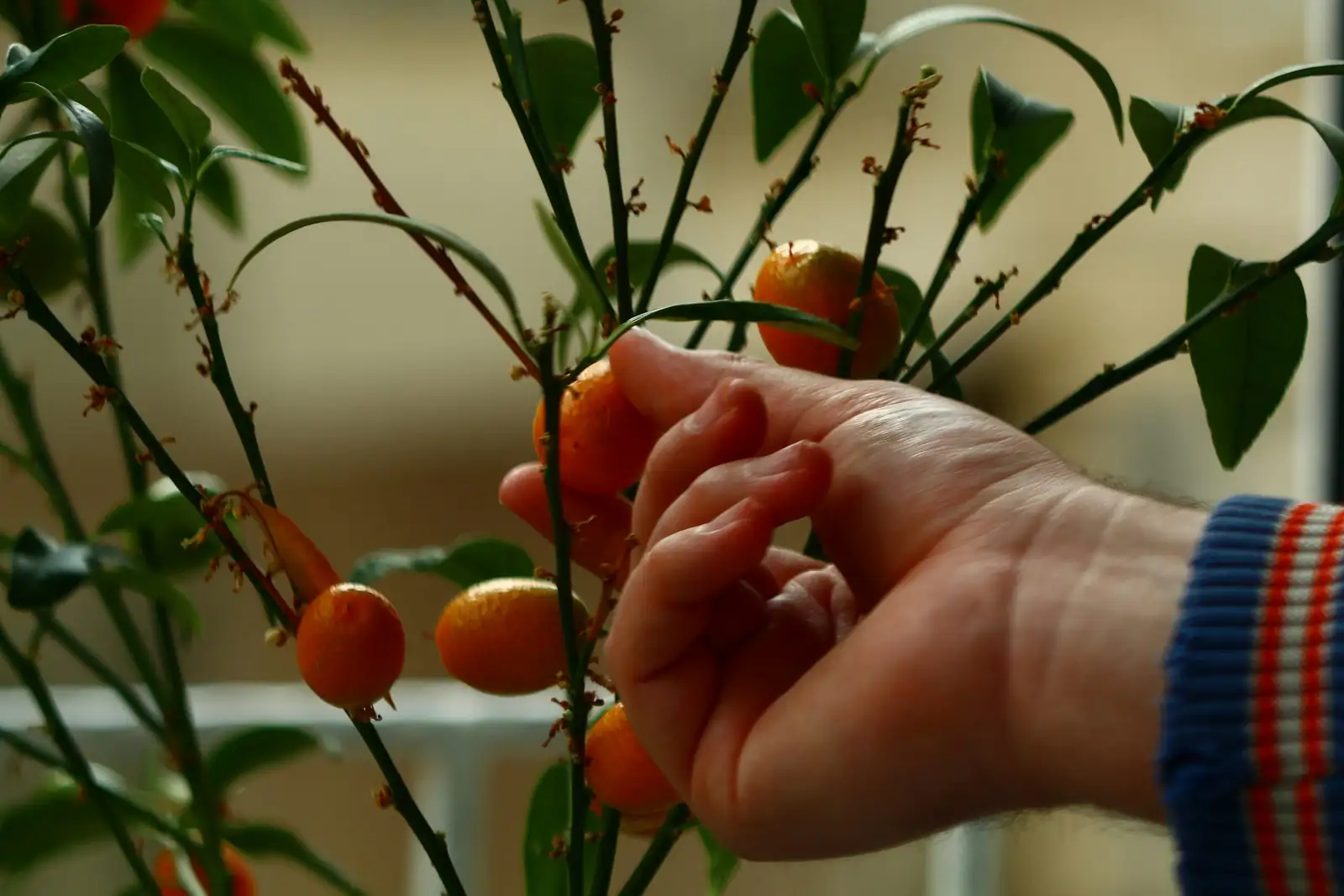
- Choose your leaders
- Select three strong, well-spaced shoots radiating around the stem (roughly 120° apart) at the height you want your canopy to begin.
- Head back to wake strong buds
- Shorten each chosen branch, keeping 3–4 plump buds near the base of each. These buds will push sturdy secondary growth perfect for fruiting spurs.
- Remove the rest
- Cut out crowded, crossing, weak, or inward shoots. Remove basal suckers and any dead or damaged wood.
- Set the angles
- If needed, gently tie young branches to hold a natural spread (about 45–60° from vertical). This angle promotes fruitful side-branching.
- Keep it clean
- Use sharp, sanitized tools; make smooth cuts that heal quickly.
Pinching that pays: timing and technique
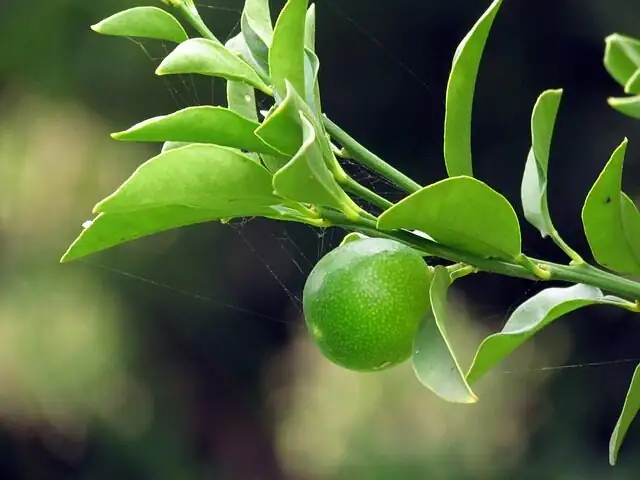
Pinching directs energy from length to density, turning soft shoots into compact, fruitful wood.
- First pinch: when a new shoot reaches about 20 cm (8 in), nip the soft tip.
- Second pinch: once the regrowth on that shoot has produced 5–6 leaves, pinch again.
- Continue through the main growing season to build a tiered, twiggy canopy. Each pinch multiplies side-branches—more short wood where flowers form.
Tip: Feed lightly after pinching to support bud break without pushing overly lush, floppy growth.
The autumn dilemma: what to keep, what to cut
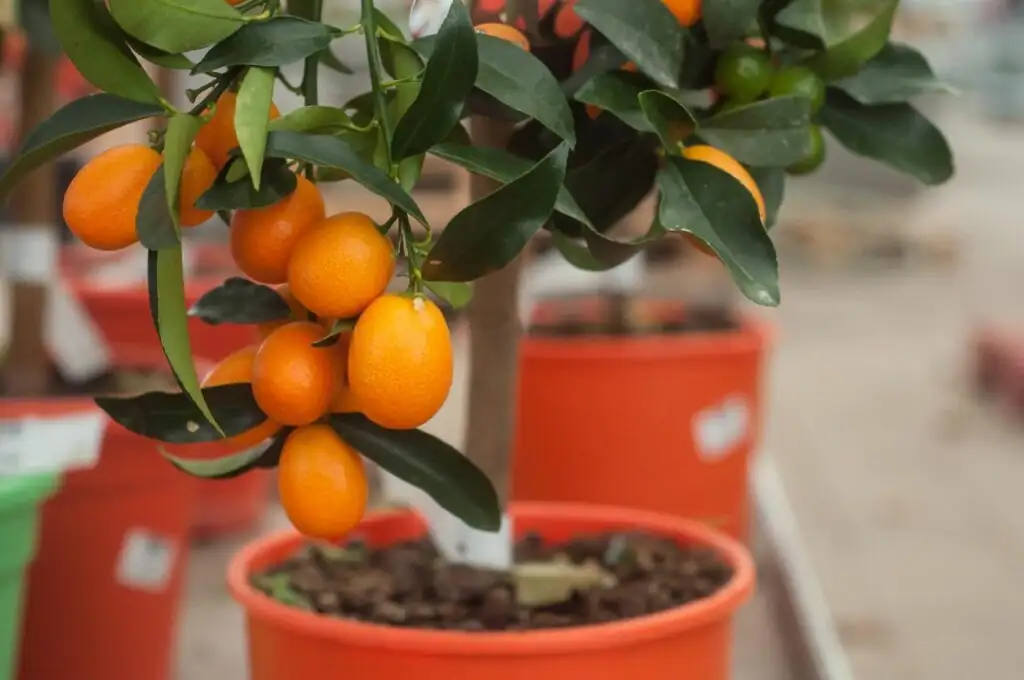
Late-season “bonus” shoots can be tempting—but they often steal from your winter fruit.
- Remove weak, spindly autumn shoots promptly, especially those shaded inside the canopy or pointing straight up. These rarely harden in time and siphon carbohydrates.
- Keep only well-placed, sturdy laterals that help fill minor gaps; otherwise, favor fruit and leaf density you already have.
- As nights cool, minimize big cuts—save structural pruning for early spring. Autumn is for selective thinning so energy flows to coloring fruit.
A Season-Smart Care Plan (that supercharges shaping)
Your pruning shines brightest when paired with care that cues flowering and protects fruit.
Light and placement
- Bright light to full sun. A sunny east- or south-facing window, balcony, patio, or conservatory is ideal.
- In very hot weather, shield leaves and young fruit from harsh midday sun to prevent scorch.
Watering rhythm
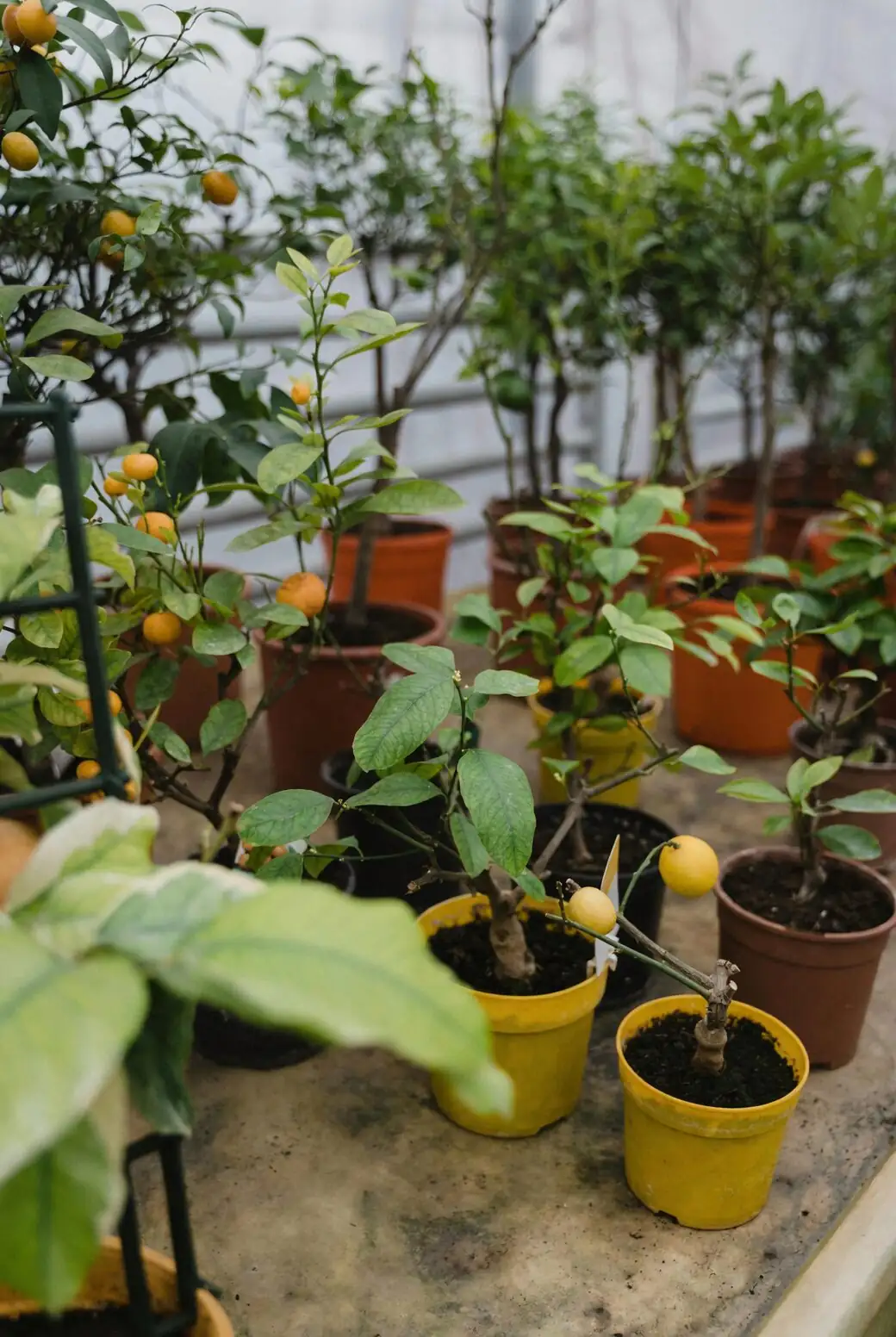
- Keep soil evenly moist in active growth—never waterlogged, never bone-dry.
- Early summer trick: a brief, controlled dry-down helps halt soft, leafy growth and nudges flower-bud formation. Resume normal watering as buds swell and pale.
- Autumn and winter: consistency is king. Avoid dramatic dry–wet swings that cause fruit drop. Keep the mix slightly drier in winter, with maximum light.
Feeding for flowers and fruit
- Spring (as buds break): feed about every 2 weeks.
- Late summer to early autumn: stronger pre-bloom feed to support flowering and set.
- Fruit enlargement: feed roughly every 10 days, favoring higher phosphorus and potassium to color and size fruit.
- Stop feeding as fruits reach full color and begin to ripen. Resume next growth cycle.
Temperature and humidity
- Best growth: 20–25°C (68–77°F).
- Winter minimums for potted plants: keep above 7°C (45°F). Frost can damage foliage and fruit; prolonged freezing is not tolerated. In sheltered ground, brief dips to about -2°C (28°F) may be survived, but protection is wise.
- Enjoys moderate humidity; mist lightly or use a humidity tray indoors, especially during flowering and fruit display.
Soil and repotting
- Use a fertile, airy, free-draining citrus mix—think loam/compost with peat/coir and coarse sand for drainage.
- Repot every ~2 years, typically into a pot around 20–25 cm (8–10 in) for display plants; size up only as needed to avoid prolonged wet soil.
- After the winter display, remove remaining fruit in early spring, then repot. Keep as much of the root ball intact as possible to reduce stress.
Pruning and Pinching: a Quick Yearly Calendar
- Early spring
- Remove lingering fruits; repot if needed.
- Build/refresh the 3-branch framework; keep 3–4 plump buds per primary. Clean out dead/weak wood.
- Spring
- Start feeding; begin pinching new shoots at ~20 cm, then again after 5–6 leaves.
- Early summer
- Apply brief, controlled dry-down to encourage flower-bud formation; then return to normal watering.
- Late summer–early autumn
- Pre-bloom feed; continue light pinching if shoots are still elongating.
- Autumn–winter
- Thin out weak, out-of-season shoots so resources go to fruit and dense foliage.
- Keep light high, moisture steady, and protect from cold and drafts. Avoid heavy pruning now.
Troubleshooting Shape and Fruit Set
- Lanky, sparse growth
- Increase light; pinch on schedule (20 cm, then 5–6 leaves). Ensure you maintained only three main scaffold branches.
- Fruit drop
- Usually from moisture swings, low light, or cold, wet soil. Stabilize watering; boost light; keep roots snug and not soggy.
- Few flowers
- Ensure strong sun, use the early-summer dry-down, and avoid excessive nitrogen. Indoors, hand-pollinate blossoms for better set.
- Pests/disease watch
- Spider mites and scale are common; treat early with horticultural oil or insecticidal soap.
- Prevent leaf-spotting diseases with good airflow and by avoiding late-day wet foliage. Where permitted, copper-based preventives are traditional; follow local labels.
Harvest, Taste, and Festive Meaning
- How to enjoy
- Eat whole—sweet peel meets tangy flesh for a balanced, mouthwatering bite. Also superb candied or in preserves.
- Seasonal symbolism
- Kumquat’s clusters of golden fruits have long symbolized prosperity and good fortune in Chinese New Year tradition. Think of each radiant fruit as a tiny “gold ingot” inviting abundance into the home.
- A note on “flower language” (花语)
- While Western-style “flower language” is a Victorian invention, kumquat’s meaning springs from East Asian seasonal culture: color, timing, and abundance. Its winter ripening, coin-like glow, and doorway displays translate into a living emblem of wealth and auspicious beginnings—less coded message, more cultural celebration.
Fast Facts for Success
- Species: Citrus japonica (aka kumquat; older name Fortunella japonica)
- Habit: Evergreen, compact, highly responsive to pruning and pinching
- Framework: Maintain three strong scaffold branches
- Pinching: At ~20 cm (8 in), then again after 5–6 leaves
- Autumn shoots: Remove weak, out-of-season growth to favor dense foliage and heavy winter fruiting
- Light/Temp: Bright sun; best at 20–25°C (68–77°F); keep potted plants >7°C (45°F) in winter
- Water/Feed: Even moisture; brief early-summer dry-down to set buds; feed regularly, shift to higher P/K during fruit sizing
- Indoor tip: Hand-pollinate blossoms for a bumper crop
Shape with intention, pinch with precision, and be ruthless with flimsy autumn growth. Do that, and your kumquat will repay you with a tight, glossy canopy and a luminous cascade of winter fruit—just when you crave brightness most.