

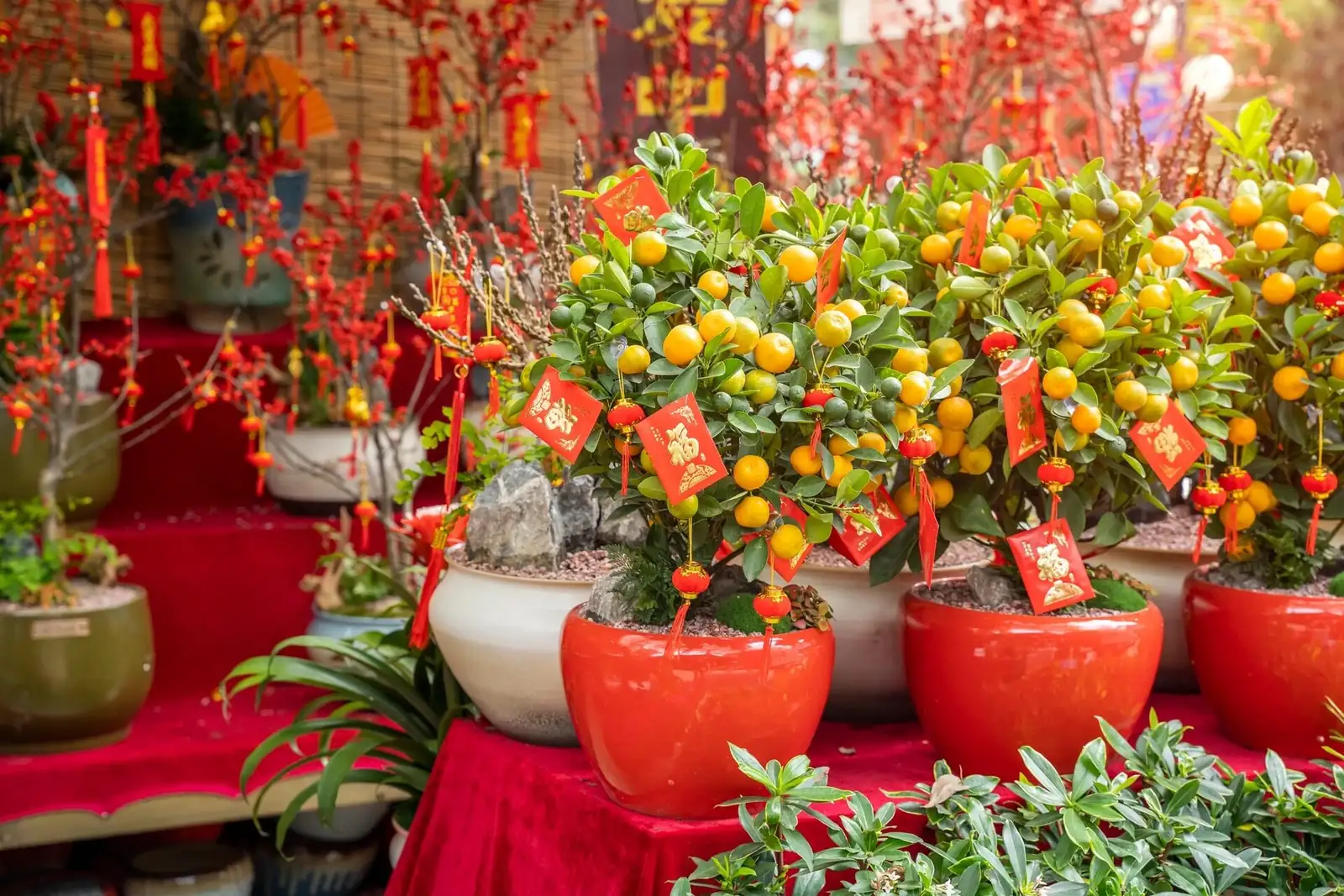
Open the door at Lunar New Year and you’ll often find two tiny “trees” glowing like bowls of coins. Those are kumquats—Citrus japonica—small evergreen citrus that ripen right on cue for the festival. Beyond their cheerful color and candy-sized fruit, kumquats carry a rich huayu (flower language) built from color, character, and Cantonese wordplay. In short: they speak prosperity.
The huayu of kumquats: gold you can grow
In Chinese, kumquat is commonly written as 金橘 (literally “golden orange”). You’ll also see the variant 金桔 on holiday banners and market signs. That first character, 金, means “gold”—a perfect match to the fruit’s gilded skin and the season’s wish for wealth.
The second character is where the luck multiplies:
- 桔 is visually anchored by the component 吉 (“auspicious, lucky”), turning a wood-radical character into a little “good-luck tree.”
- In Cantonese, the pronunciation of 桔 (gat1) is a near twin to 吉 (gat1), sealing the pun.
- Put together, 金桔 reads as “gold” plus “good fortune”—golden luck.
This is classic Chinese huayu at work. Meanings don’t arise only from blossoms or scent; they grow from color, sound, and script. Kumquats check every box: golden hue, evergreen vitality, and a name that literally looks and sounds like luck.
The Cantonese wordplay that made it stick
In Cantonese-speaking regions—Guangzhou, Hong Kong, Macau—kumquats are everywhere at New Year. The homophones do the heavy lifting:
- 金 (gam1) = gold
- 桔/吉 (gat1) = luck
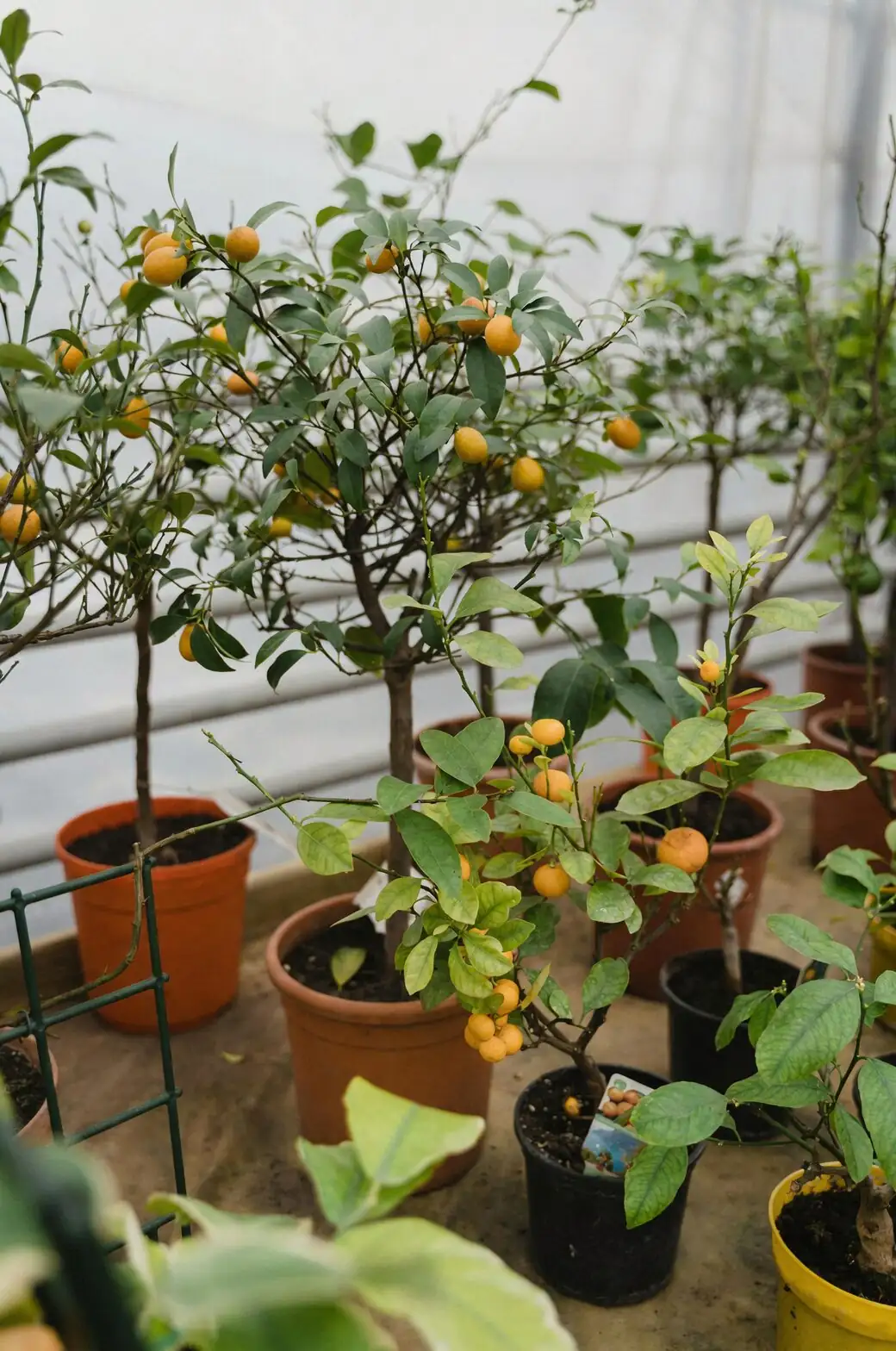
A potted kumquat, gam1-gat1, sounds like “golden luck.” Place two by the doorway and you’ve doubled the wish. Their coinlike fruits, glossy leaves, and compact symmetry finish the picture: wealth arriving, luck enduring, and a household well-tended.
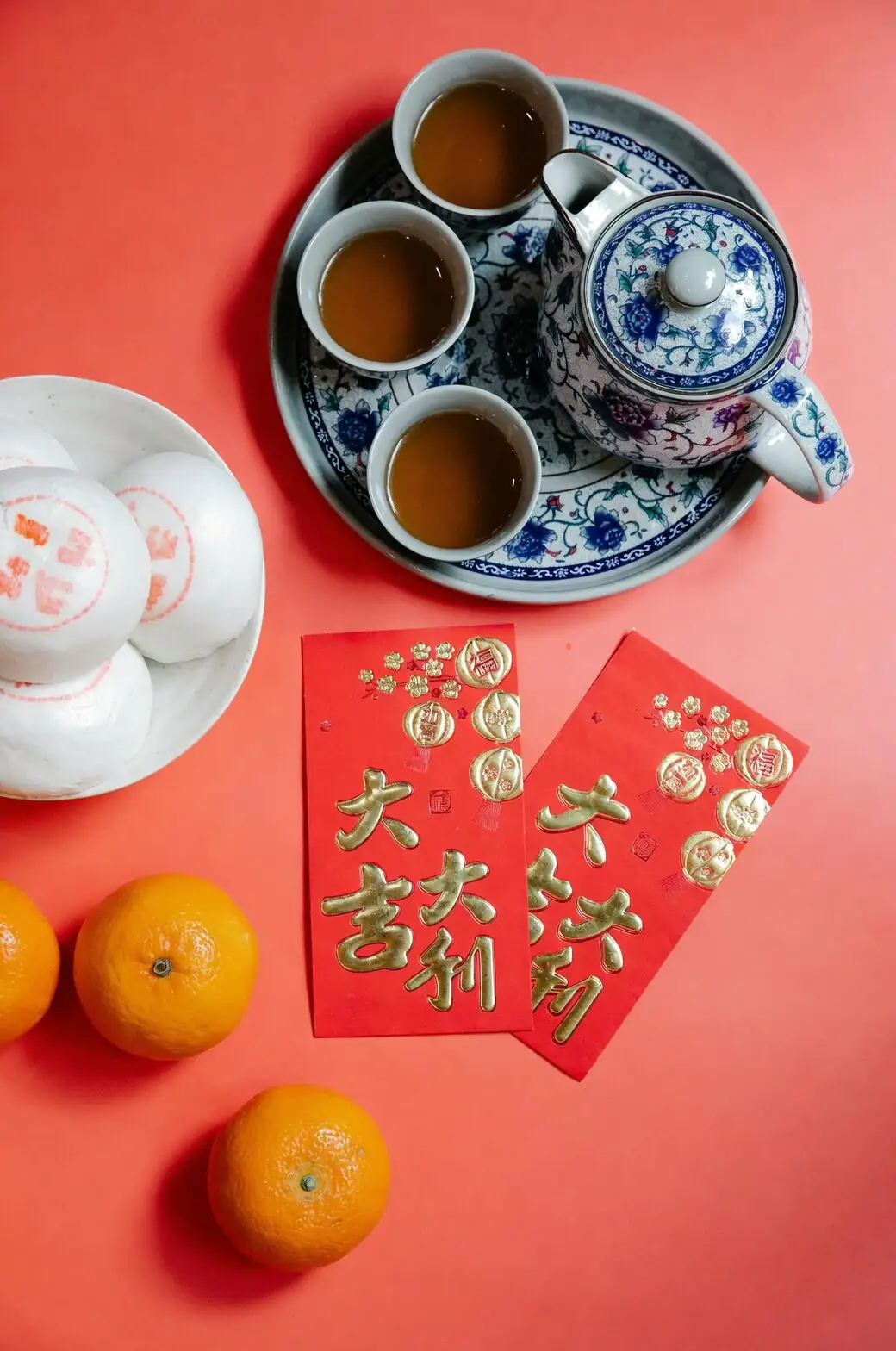
You’ll often see the plants dressed for the season—tied with red ribbon, dotted with red envelopes, or paired with spring couplets that promise 大吉大利 (“great fortune and great profit”). It’s a visual and verbal chorus of prosperity.
From flower markets to doorways: how the meaning spread
Kumquats ripen in late autumn to winter—perfect timing for the Spring Festival. Growers long ago learned to shape tidy, fruit-laden specimens for the season, and New Year flower markets turned them into must-have décor. From the bustling 年宵 (year-end) fairs in Cantonese cities, this symbolism traveled:
- Into southern Chinese homes and businesses, flanking entryways and reception desks
- Across Southeast Asia and into overseas Chinatowns, where storefronts glow with “gold”
- Into modern interiors—sunny windows, balconies, and patios—where kumquats bring a festival feel in a compact pot
The practice endures because it is practical as well as poetic: a living plant that looks splendid for weeks, echoes the season’s wishes, and—unlike cut flowers—keeps giving.
A quick botanical portrait of Citrus japonica
- Name: Citrus japonica (you may still see the older Fortunella on plant tags)
- Family/Genus: Rutaceae, Citrus
- Origin: China
- Habit: Compact, evergreen shrub or small tree; naturally bushy and very amenable to pruning
- Foliage: Dense, glossy, deep green
- Flowers: Small, starry white blossoms with a sweet fragrance (spring–summer)
- Fruit: Abundant, oval golden-orange kumquats that color from autumn into winter—often right through Lunar New Year
- Taste: Uniquely eaten whole—sweet peel balances tangy flesh
That seasonal rhythm—flowers in warm months, fruit at winter’s doorstep—is exactly why kumquats became a New Year classic.
Choosing and staging your “golden luck”
When you shop:
- Look for a balanced, compact canopy with evenly distributed, brightly colored fruit.
- Skip plants that look freshly potted into loose, fluffy mix; they often shed leaves and fruit soon after purchase.
- For classic doorway displays, many homes choose paired pots around 20–25 cm (8–10 in) in diameter—proportioned, portable, and easy to place.
To stage the symbolism:
- Flank the entry with two plants to “welcome fortune.”
- Dress lightly with red ribbon or a few red envelopes; let the fruit be the star.
- Indoors, give them the brightest spot you have—an east- or south-facing window is ideal.
Keep the fortune glowing: simple care that makes a big difference
Light and placement
- Bright light to full sun gives the best fruiting and color. In very hot weather, shield leaves and young fruits from harsh midday sun.
Water and humidity
- Aim for steady, even moisture; avoid dramatic swings between very dry and very wet, which commonly trigger fruit drop.
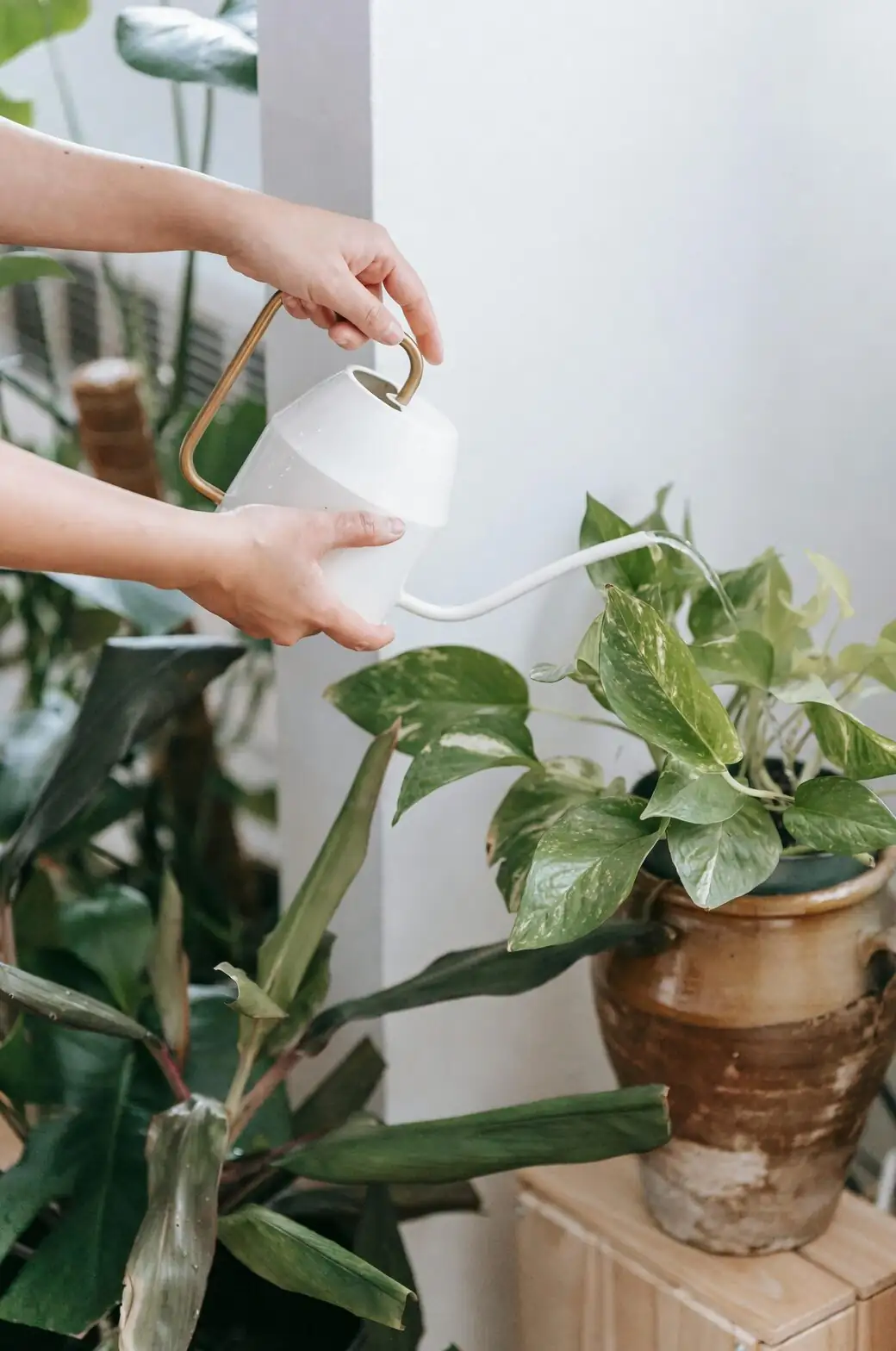
- Indoors, the air can be dry—occasional misting or a humidity tray helps.
- In winter display season, keep the mix slightly on the drier side and the light as strong as possible.
Temperature
- Best growth: 20–25°C (68–77°F). Keep above 7°C (45°F) in winter. Avoid frost.
Feeding, pruning, and timing
- Feed regularly once new growth starts; shift to higher phosphorus/potassium as fruits size, and stop as fruits fully color.
- Prune in early spring to maintain 3 strong framework branches; pinch new shoots for a compact canopy and future fruiting wood.
- Grower’s trick: a brief, controlled early-summer dry-down can encourage flower-bud formation—then resume normal watering as buds swell.
- If indoors during bloom, a bit of hand-pollination can boost fruit set.
Pests and peace of mind
- Watch for scale and spider mites; treat early with horticultural oil or insecticidal soap.
- Fruits are edible; citrus oils can mildly irritate sensitive skin—just rinse after handling.
Why kumquats keep winning hearts
- They wear their promise: clusters of golden fruits that all but spell out “golden luck.”
- They’re living décor that fits entryways, balconies, and bright windows with equal grace.
- They’re delicious—pop one whole and taste the season in a single bite.
- They’re steeped in language and lore: an evergreen lesson in how color, character, and sound root cultural meaning.
The deeper message in their huayu
Kumquats remind us that Chinese flower language is as much about wit as it is about petals. A plant becomes a blessing through the shimmer of gold, the evergreen promise of continuity, and a clever turn of phonetics that folds 吉 (luck) right into its name. Place two by your door, and you don’t just decorate a home—you invite prosperity to cross the threshold, fruit by gleaming fruit.