

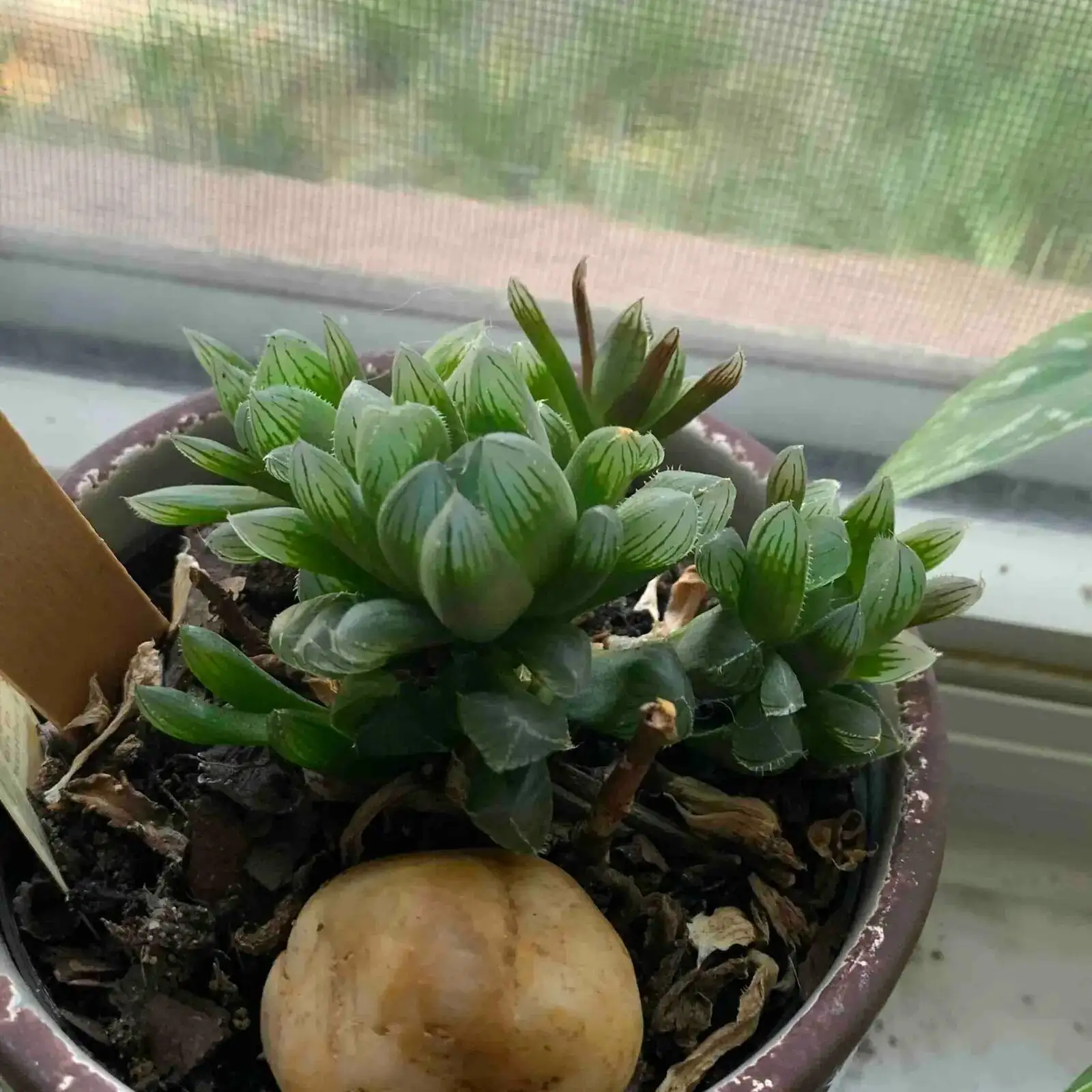
Imagine a tiny constellation on your windowsill: a cluster of crystal-tipped leaves, each one catching the light and quietly glowing. That’s Haworthia cooperi—Cooper’s haworthia, also called Crystal or Window Haworthia—a petite South African succulent whose “leaf windows” have inspired a very modern language of meaning: clarity, steadiness, and focused energy.
While there’s no classical Victorian floriography for this species, today’s succulent lovers and feng shui enthusiasts read its drought resilience and light-collecting windows as a perfect emblem for study desks, first days at new jobs, and thoughtful recovery gifts. Here’s how those meanings took shape—and how to place and care for yours so the symbolism and the plant both thrive.
Meet Cooper’s Haworthia (Haworthia cooperi)
- Origin: Southern Africa (especially the Eastern Cape of South Africa)
- Family/Genus: Asphodelaceae, Haworthia
- Nicknames: Crystal Haworthia, Window Haworthia, 玉露 (in Chinese)
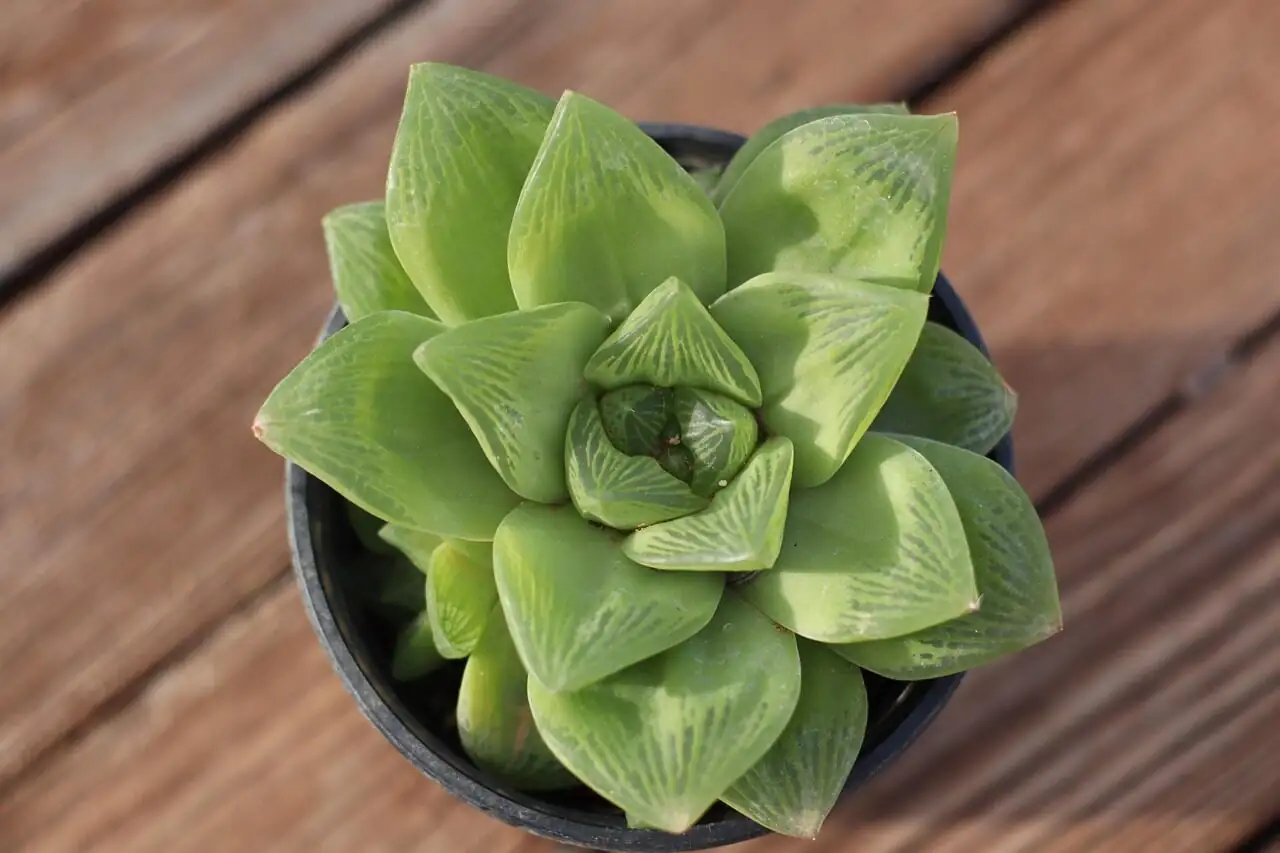
- Look and size: A compact rosette, typically around 10 cm (4 in) across, with thick, fleshy, light-to-medium green leaves patterned by fine, darker veins. The leaf tips are translucent “windows” that seem to glow in bright, filtered light.
- Flowers: A slender stalk with small, pale tubular flowers in spring—modest compared to the foliage.
- Habit: Slow, clump-forming; offsets gradually to form tidy colonies.
No old-school florigraphy? Here’s how new meanings bloomed
Victorian flower-language dictionaries focused on showy garden blooms. In contrast, Haworthia cooperi entered global cultivation much later and gained prominence with the modern succulent boom. As minimalist interiors and desk-friendly plants rose in popularity, people began reading the plant’s traits—especially its drought tolerance and luminous leaf windows—through contemporary lenses: wellness, work-life focus, and feng shui.
“Windows” of clarity
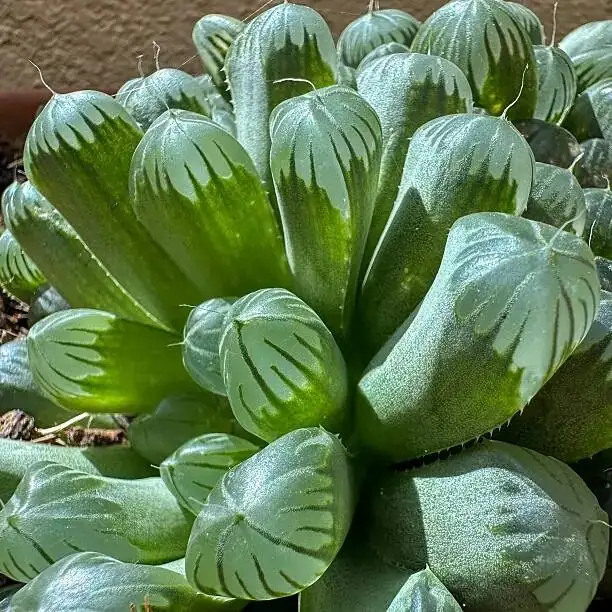
Those translucent leaf tips evolved to channel light deeper into the plant—an elegant survival strategy in bright, dry habitats. Modern eyes see more than adaptation: a living metaphor for mental clarity and insight. On a study desk, H. cooperi becomes a quiet reminder to let in light—focus, see through noise, and keep thinking crystalline.
Steadiness without drama
H. cooperi thrives on bright, indirect light and measured watering. It stays compact, grows slowly, and forgives the occasional missed drink. That calm persistence reads as steadiness—an ideal wish for someone starting a new role, changing routines, or recuperating: progress, patiently and surely.
Focused energy, softly held
In feng shui, plants can guide the flow of qi. Where spiny cacti feel defensive, Haworthia’s smooth, rounded rosette gathers and refines energy without aggression. The plant’s form suggests concentration rather than scatter—excellent for work zones where you want alertness without edge.
How these meanings took root in culture
- The succulent wave: From the 2010s onward, small succulents became icons of achievable care—“I can keep this alive”—and, by extension, resilience.
- The home desk era: Remote work and compact living elevated plants that fit beside a laptop, prompting new rituals: a cup of tea, a lamp, and a small “window plant” focusing the mind.
- Feng shui crossovers: Modern guides often place succulents for prosperity or well-being. For H. cooperi in particular, people prize the way it “gathers light,” interpreting that as gathering insight, opportunity, and calm.
Tip for placement with intention:
- East (health/family) can symbolize renewal and steady growth.
- Southeast (wealth) is often chosen for plans and ambitions.
- Whatever the intention, prioritize horticultural reality: bright, filtered light first, symbolism second.
Where to place yours—for meaning and for health
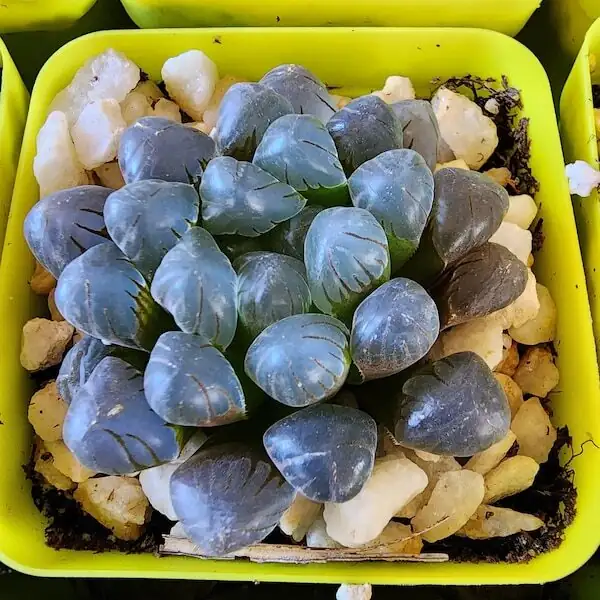
- Study desk or exam corner: An east-facing window with gentle morning sun is ideal. Keep the rosette just out of harsh midday rays to avoid scorch. Rotate a quarter-turn weekly for even growth.
- First-day-at-work gift: A bright, indirect-lit shelf or a lightly shaded south-facing window. Pair the plant with a card about “clarity and steady focus.”
- Recovery nook: A bedside table or sideboard near bright, filtered light. Simplicity is the point—no fussy schedules, just water when dry and enjoy the glow.
Bonus feng shui touches:
- Grouping in threes can feel especially auspicious for momentum and harmony.
- Choose a pot color that echoes your intention—calming neutrals for focus, gentle green for renewal—while ensuring it has drainage.
Quick care that reinforces the message
Light
- Best: Bright, filtered light to partial shade.
- Avoid: Harsh, direct midday sun—those windows are delicate and can scorch.
Water
- Water thoroughly only after the potting mix is dry.
- Spring and autumn (active growth): often about once weekly indoors, then adjust to your conditions.
- Hot midsummer rest: water much less to prevent rot.
- Winter: keep above 5°C (41°F) and water very sparingly.
Soil and pot
- Use a gritty, fast-draining succulent mix—cactus soil amended with coarse sand, pumice, or grit.
- Shallow roots prefer a pot with good drainage; avoid deeply oversized containers.
Temperature and humidity
- Ideal 18–22°C (64–72°F). Protect from cold and frost.
- Prefers dry to average humidity; never let water sit in the rosette.
Feeding
- During active growth, feed monthly with a diluted balanced or low-nitrogen succulent fertilizer. Keep fertilizer solution out of leaf bases.
Repotting and pruning
- Repot as needed, often in spring if the clump fills its pot (12–15 cm/4.7–5.9 in suits many mature clumps).
- Tidy away shriveled lower leaves and old roots. You can cut off the flower stalk if you want the rosette to conserve energy.
Propagation
- Offsets (pups) are easiest: separate in spring, let cuts callus, then pot into gritty mix and water lightly.
- Leaf cuttings can work in late spring to early summer if well callused.
- Seeds are possible indoors in spring; steady warmth and bright light help germination.
Common pitfalls and pests
- Overwatering is the main hazard—root and crown rot follow lingering moisture.
- Too much direct sun bleaches or scorches leaves.
- Watch for mealybugs or whitefly; treat promptly with appropriate controls and keep air moving.
Safety
- Generally considered non-toxic to people and pets; still, discourage nibbling to avoid mild stomach upset.
Buying and gifting guide
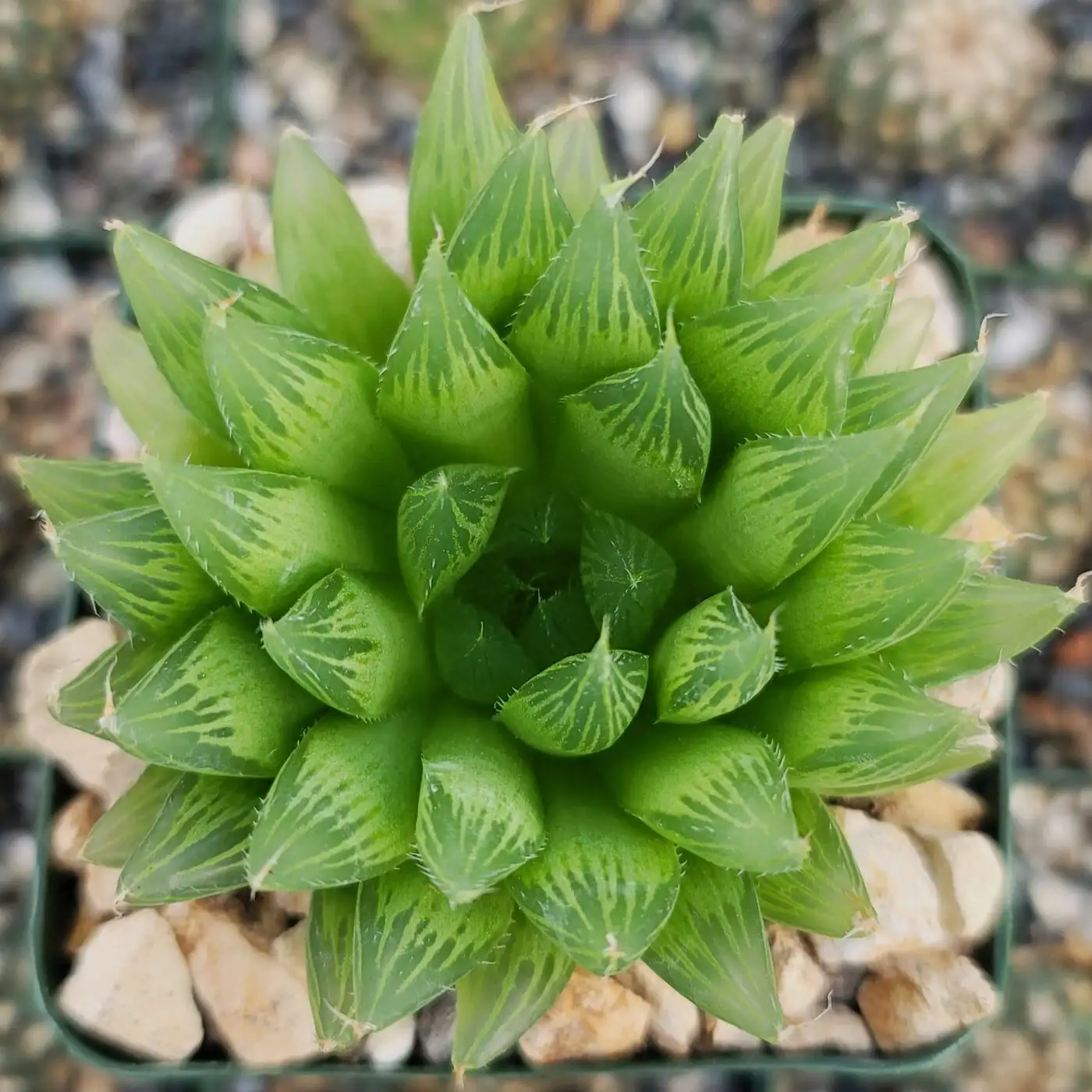
- Choose a sturdy, symmetrical rosette about 10 cm (4 in) across.
- Leaves should be firm, plump, and glassy at the tips—no soft spots, rot, or brown scorch.
- Include a minimalist care note: “Bright, filtered light. Water only when dry.” The message alone can ease a beginner’s mind.
Flower language (花语), reinterpreted for a windowed succulent
Classical floriography never codified Haworthia cooperi, and its spring flowers are modest. Modern “花语” in succulent communities emerges instead from the foliage and lifestyle fit:
- Clarity: the leaf windows that gather light.
- Quiet determination: a compact plant that endures with little fuss.
- Focused calm: energy drawn inward rather than flung outward—perfect for studying, planning, and healing.
These meanings aren’t ancient edicts; they’re living interpretations shaped by how we use and appreciate the plant today.
Fun facts worth sharing
- Those translucent tips are true “leaf windows,” channeling light deeper into the leaf—an adaptation shared by several South African succulents.
- It often looks its best slightly pot-bound, as long as drainage is excellent.
- Given time, H. cooperi will make offsets—turn one meaningful plant into a little community you can share.
A short blessing for your gift tag
May your days be clear as crystal windows,
your steps steady, your focus bright.
Haworthia cooperi brings the shimmer of clarity and the comfort of calm persistence to small spaces and big moments alike. Place it where light is kind, water only when dry, and let its soft glow remind you: see clearly, move steadily, and keep going.