

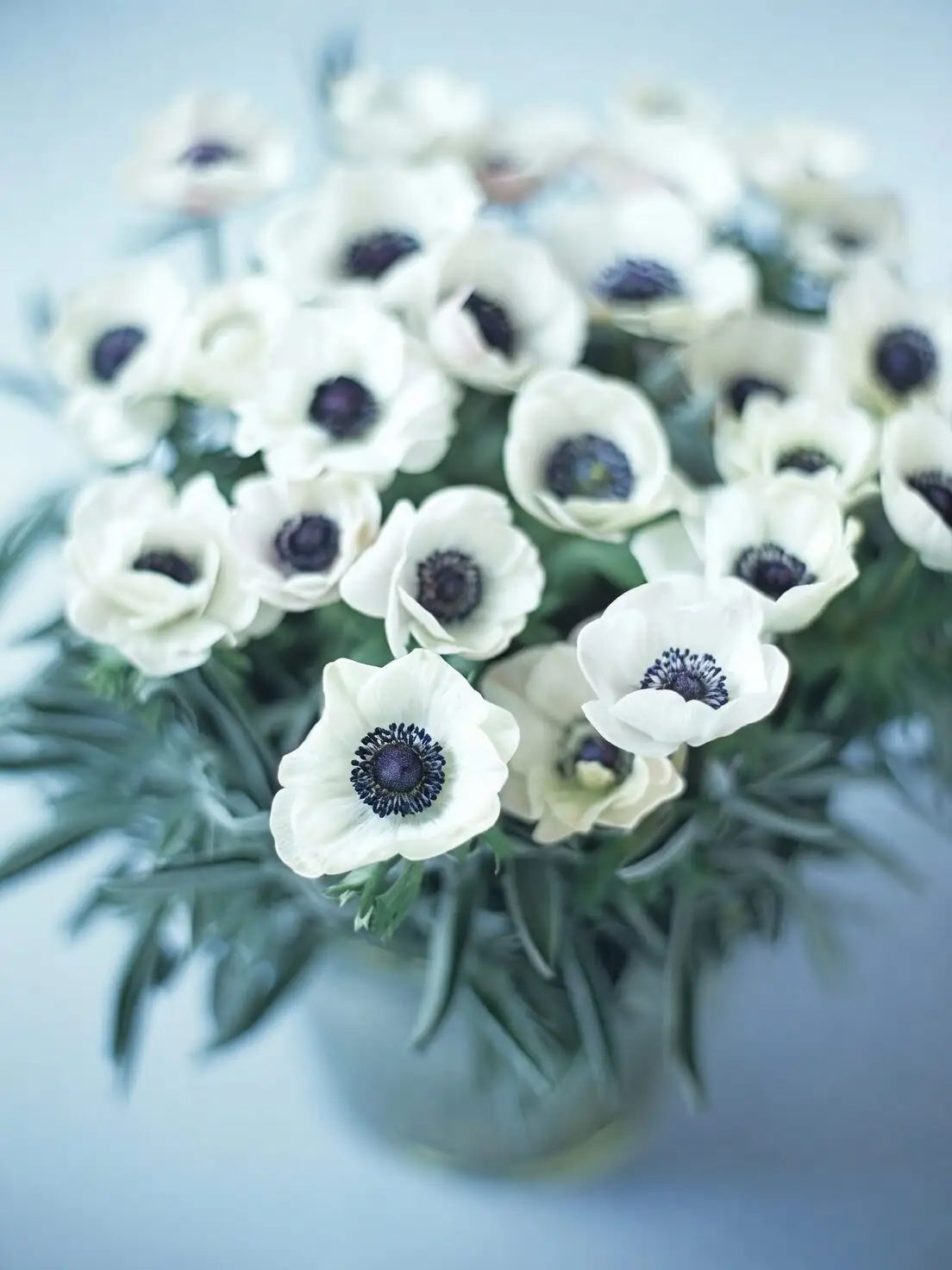
Poppy anemones—those vivid, paper-petaled “windflowers” with dark, dramatic eyes—have a way of looking right back at you from the vase. They’re spring’s showstoppers, and with a few smart cut-flower tactics, you can turn their fleeting flush into a longer, lovelier performance. Think of it as stage management for blooms: perfect timing, cool hydration, zero ethylene drama (that fruit bowl is the villain here), and savvy handling when daffodils enter the scene.
Meet Anemone coronaria, the spring head-turner
- Also known as Poppy Anemone, Crown Anemone, and “windflower”
- Cool-season, tuberous perennial with poppy-like blooms in red, pink, purple, blue, and white
- Origin: Mediterranean coastal regions
- Best growth in bright light and cool temperatures (about 15–20°C / 59–68°F)
- A celebrated cut flower that’s highly sensitive to ethylene gas—keep stems away from ripening fruit and other ethylene sources
Harvest timing: cut when petals just lift
The number-one factor in vase life is the harvest stage. With anemones, precision pays.
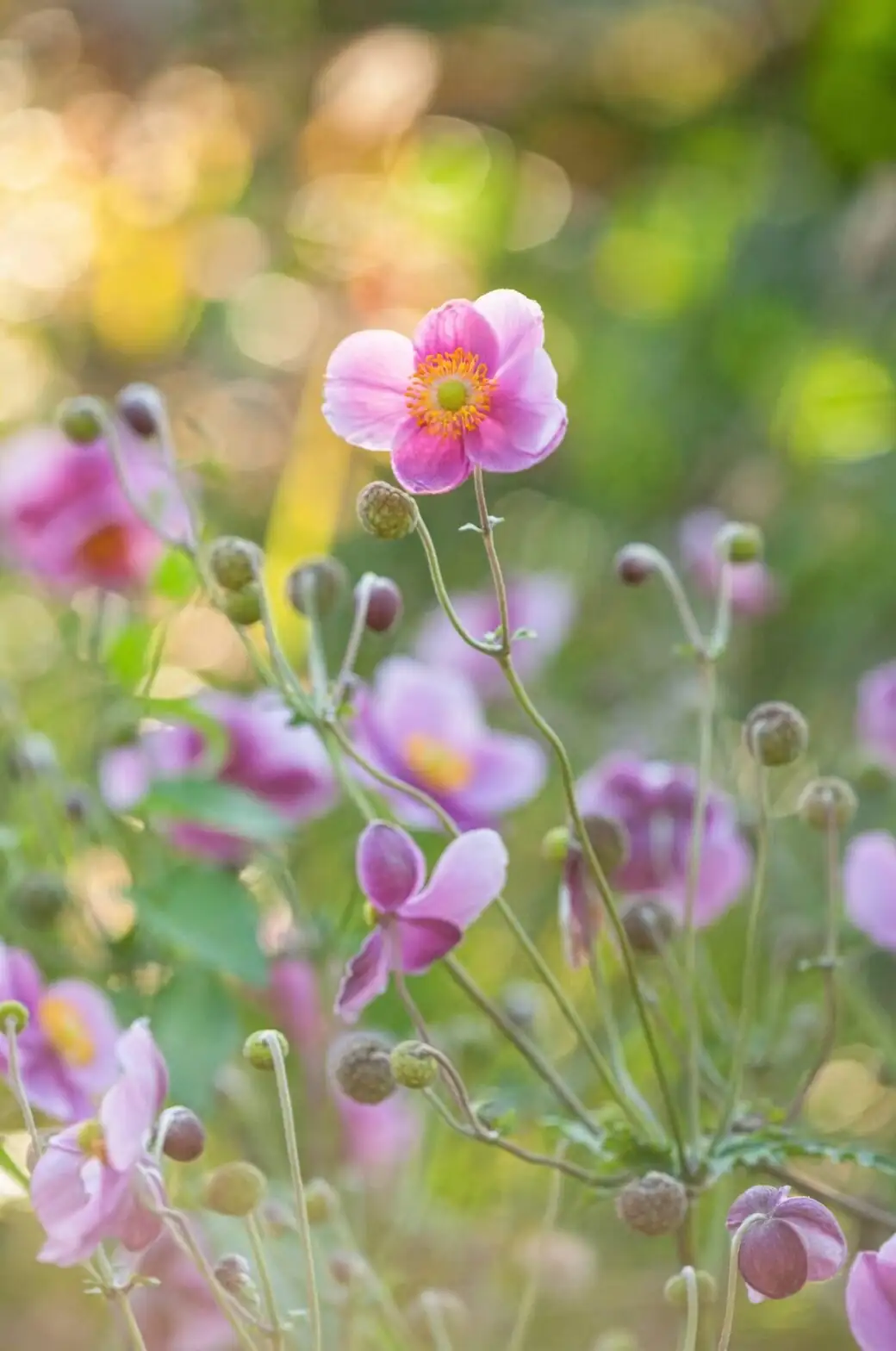
- Cut at the “first-open” stage: when the petals are just lifting from the center and the disc is visible, but the flower isn’t flat-out open yet.
- Harvest early in the day, when stems are turgid.
- Use clean, sharp pruners; recut stems at a slight angle to maximize uptake.
- Avoid bruising the velvety petals; even small dings can invite Botrytis (gray mold).
Why this timing works:
- Too tight, and the flower may stall.
- Too open, and the show is already half over.
- “Petals lifting” is the sweet spot for both expansion in the vase and longevity.
Cool hydration is your superpower
Give stems a calm, cool “spa” the moment they come indoors.
First hour, best hour
- Strip any foliage that would sit below the waterline to prevent bacterial growth.
- Place stems into cool, clean water with a quality cut-flower food.
- Keep them upright while hydrating; anemone stems can curve if laid on their sides.
- For professional-level conditioning, 1–3°C (34–38°F) storage after initial hydration helps harden flowers and improve vase life. At home, a cool room works—just avoid kitchen fridges that share space with produce.
Vase setup and daily care
- Use a squeaky-clean vase (avoid galvanized metal containers).
- Refresh water and flower food daily or every other day; recut stems 0.5–1 cm each time.
- Display cool: bright indirect light is lovely, but avoid direct sun, heaters, and drafts.
- Expect “sleep and wake” behavior—blooms may close in cool, dark rooms and open again in brighter, warmer daytime conditions.
Ethylene: the invisible vase-life thief
Anemone coronaria is ethylene sensitive. Even low exposure can cause petal shatter and a rapid fade.
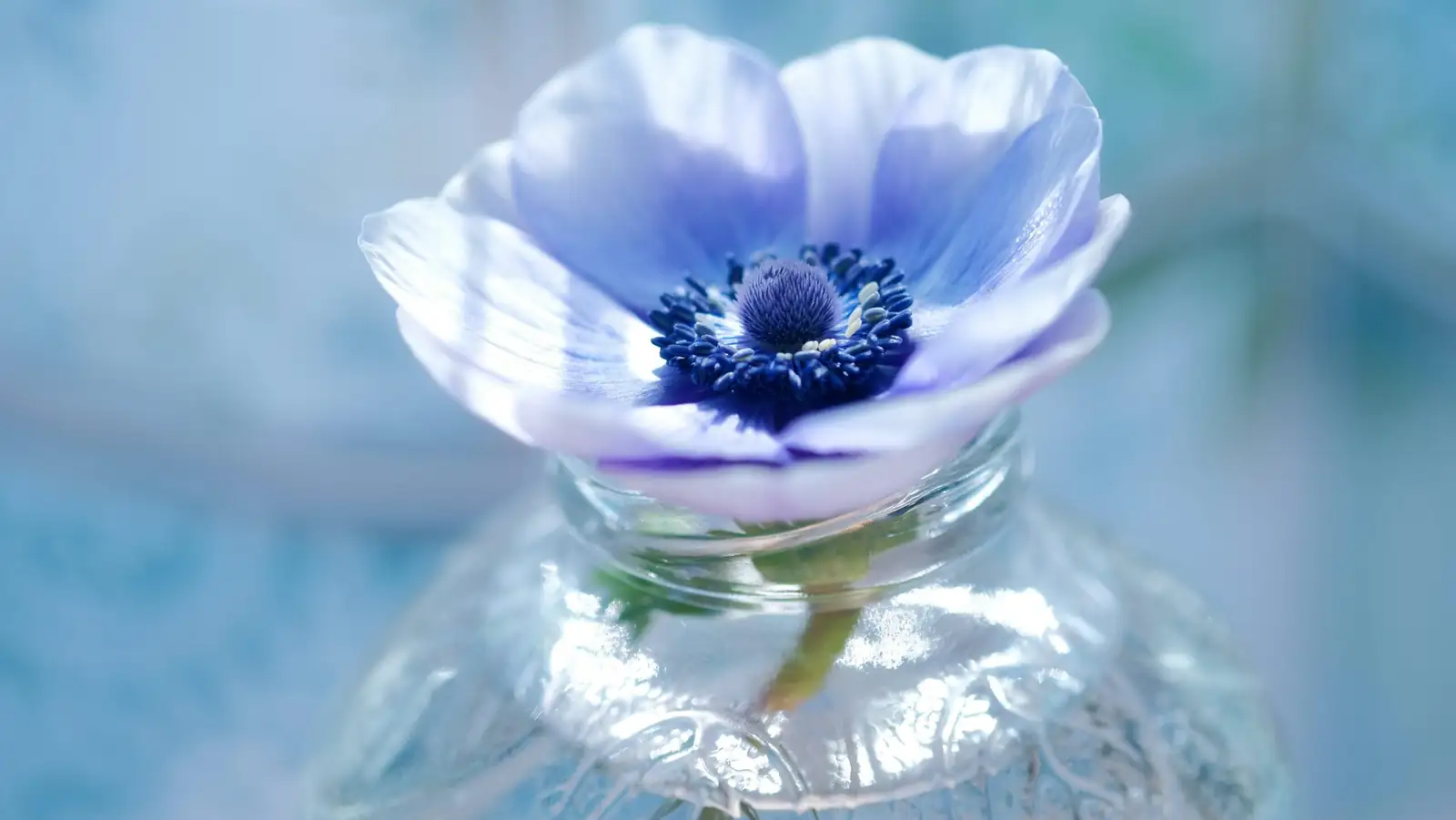
Keep your blooms far from:
- Ripening fruit (bananas, apples, avocados, tomatoes—your fruit bowl is a no-go)
- Exhaust fumes and cigarette smoke
- Wilting flowers and decaying leaves in mixed arrangements
Pro tip for pros: Ethylene-inhibiting treatments at the farm or shop level can be game-changing. For home arrangers, strict avoidance of ethylene sources is the gold standard.
The daffodil dilemma: when Narcissus sap meets anemone stems
Daffodils exude a mucilaginous sap that can soften and clog anemone stems—dramatically shortening their vase life.
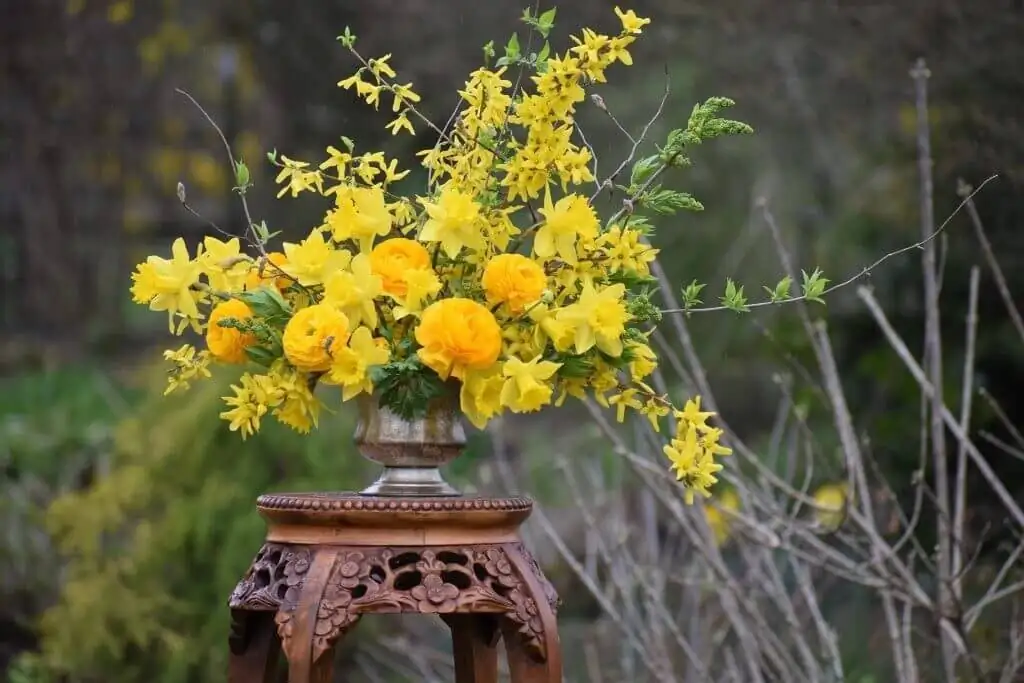
- Best practice: Don’t mix freshly cut daffodils with anemones in the same vase.
- If you must combine them:
1) Condition daffodils alone in cool water for 6–12 hours until sap flow subsides.
2) Rinse daffodil stems; do not recut them before placing into the mixed arrangement (recutting restarts sap flow).
3) Keep water impeccably clean and change it frequently.
4) Even with conditioning, expect some risk—monitor your anemones closely.
Fast checklist: maximize vase life
- Harvest at “petals just lifting” stage.
- Hydrate promptly in cool water with flower food; keep stems upright.
- Sanitize everything—vase, tools, buckets.
- Keep arrangements cool, bright (not hot/sunny), and draft-free.
- Change water and recut stems regularly.
- Evict ethylene: no fruit nearby, ever.
- Keep daffodils separate (or condition them first and avoid recutting).
Bonus pro tips
- Avoid softened water (excess salts can stress stems); use clean, fresh water.
- Remove spent blooms promptly; senescing flowers pump out ethylene.
- Support slender stems with a floral frog, grid, or chicken wire for airy, artful designs.
- Rotate stock first-in/first-out if you buy or harvest in batches.
Grow your own for endless spring bouquets
If you love arranging, growing anemones makes the magic repeatable.
Planting and culture
- Containers: Use a 12–15 cm (4.7–5.9 in) pot; plant 3 tubers about 1.5 cm (0.6 in) deep.
- Garden: Plant tubers 5–7 cm (2–2.8 in) deep in rich, sharply drained soil.
- Light: Full sun to bright light; part shade is fine, especially as weather warms.
- Water: Keep evenly moist during growth and bloom—never waterlogged.
- Feeding: Monthly, with a dilute balanced fertilizer; switch to a bloom-forward formula (around 15-15-30) when buds appear.
- Temperature sweet spot: 15–20°C (59–68°F). Summer heat prompts natural dormancy; water sparingly then.
- Pre-plant prep: Rehydrate tubers in water or damp sand for even sprouting; plant the pointed end down. In good conditions, new leaves can appear in about 20 days.
Flower language and lore: anticipation in full color
Often linked to anticipation and hopeful expectation, the anemone’s “windflower” moniker echoes its breezy, always-poised-to-open posture. Much of this symbolism traces to Victorian floriography and later popular gardening culture—charming rather than scientific—but it fits: these cool-season stars are among the first to color the year, promising spring even as the air still nips.
Safety and handling notes
- Like many Ranunculaceae, anemones can irritate the skin and are harmful if eaten. Wear gloves if you have sensitive skin, and keep stems away from pets and children.
- Watch for Botrytis and rust in damp, stagnant air; ensure good airflow and clean water.
Troubleshooting your vase
- Floppy stems? Recut and hydrate in cool water in a dim spot for a few hours.
- Flowers closing? Normal in cool or dark rooms; they’ll usually reopen in brighter conditions.
- Petal shatter or rapid collapse? Likely ethylene exposure—move arrangements away from fruit and replace compromised stems.
- Cloudy water or a sour smell? Wash the vase, recut stems, refresh water and food immediately.
With the right harvest moment, a cool head, and an ethylene-free setup, Anemone coronaria rewards you with days of gaze-worthy color—proof that a little science behind the scenes makes romance in the vase last longer. And if daffodils try to crash the party? Keep them in their own dressing room first. Your windflowers will thank you.