

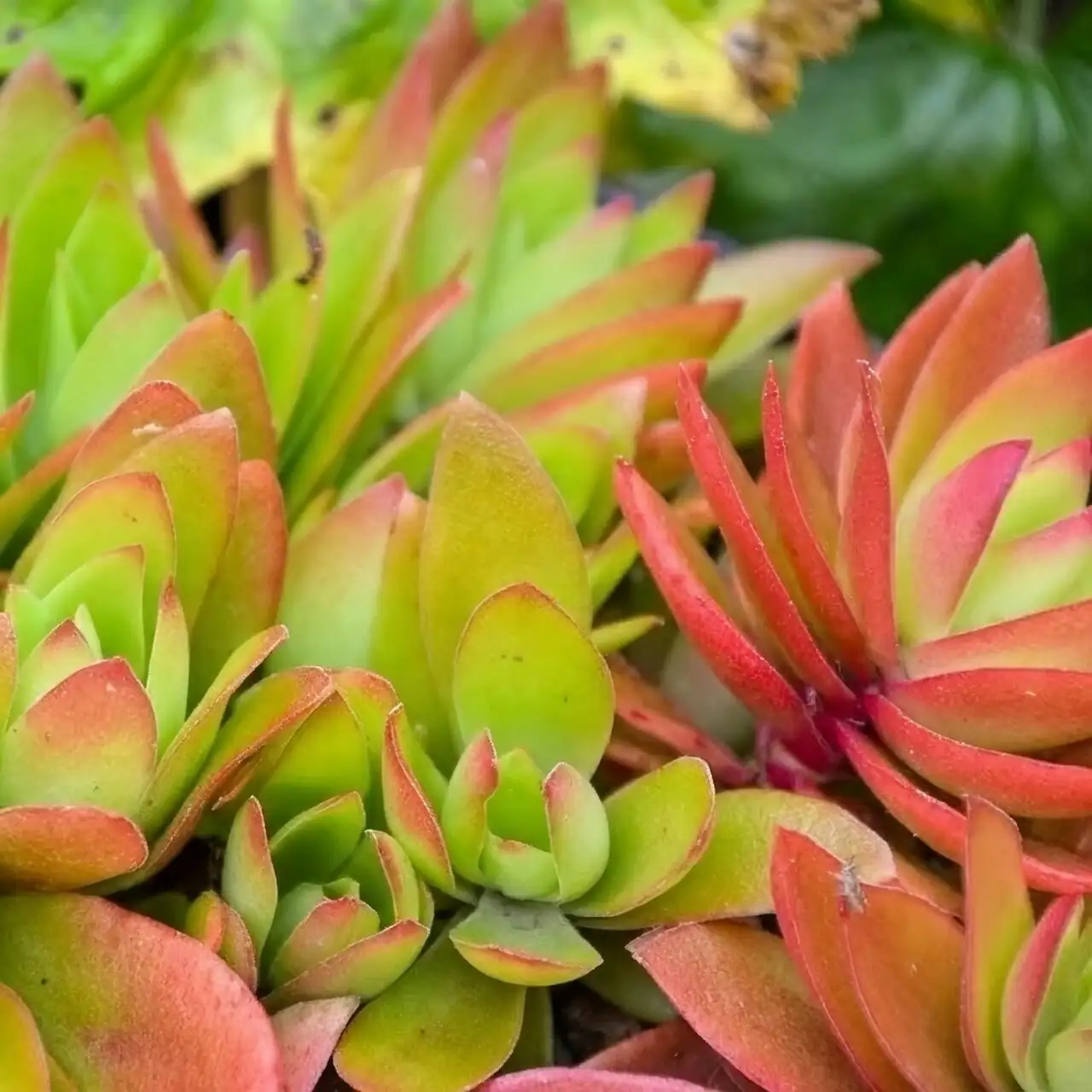
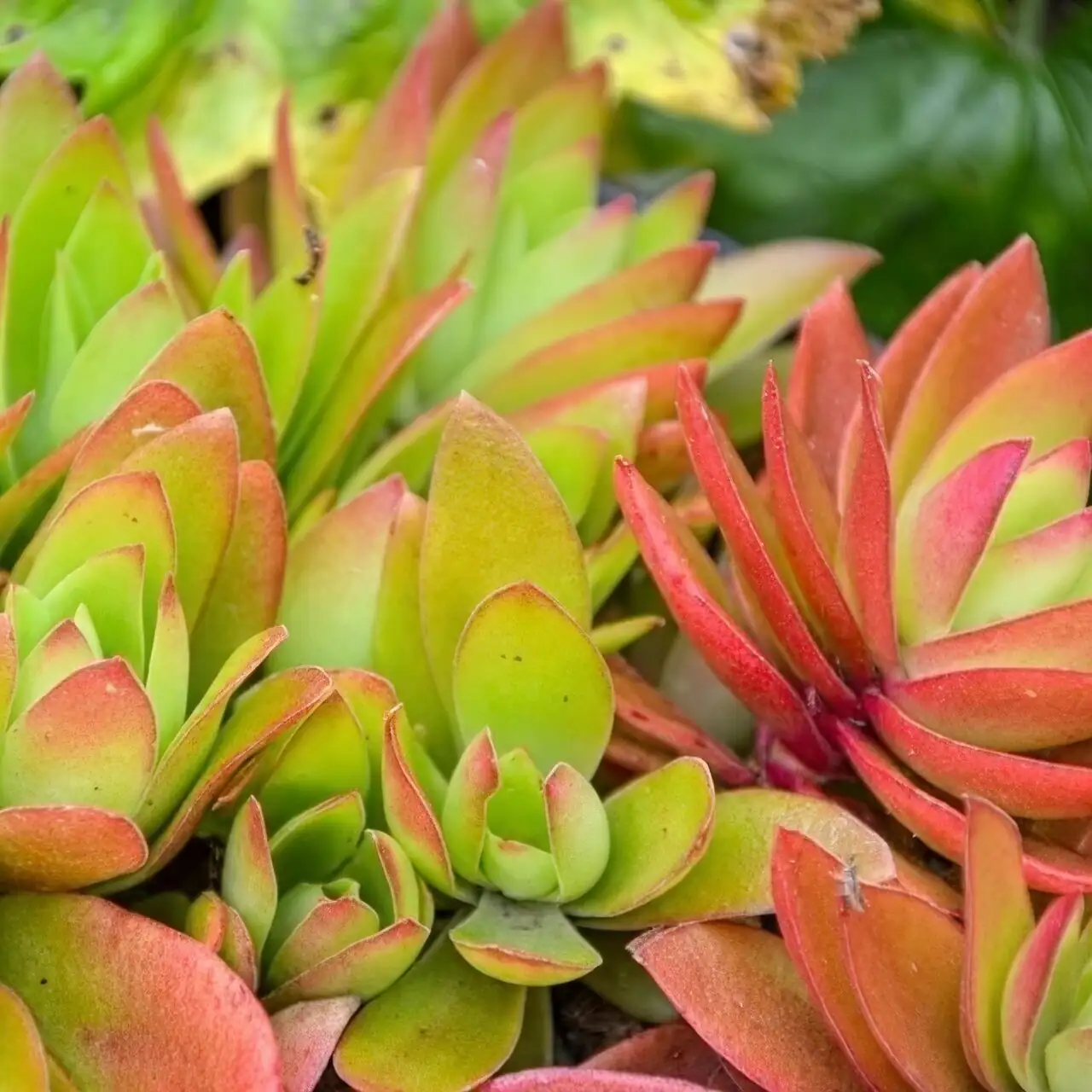
Picture a tiny bonfire made of leaves. In spring and summer, Crassula capitella ‘Campfire’ is a neat stack of cool gray‑green blades. Then autumn flips a switch: with brighter light and crisp nights, those stacks ignite into orange‑red and vivid scarlet. Here’s the fun science behind that glow—and how to coax top color without tipping your plant into distress.
Meet your “Campfire” companion
- What it is: Crassula capitella ‘Campfire’ (aka Campfire Crassula, Campfire Plant, Red Pagoda, Red Pagoda Crassula) in the Crassulaceae family
- Origin: A cultivated selection; the species parent is native to southern Africa
- Look and size: Dense, opposite, fleshy leaves stacked along stems for a pagoda‑like, architectural vibe. Typically 10–30 cm (4–12 in) tall and 20–60 cm (8–24 in) wide in containers over time. Young, compact plants around 5 cm (2 in) are ideal for small pots.
- Habit: Low, branching succulent; upright to spreading at first, then slightly creeping or trailing as it matures
- Flowers: Small, starry clusters, white to pale pink on mature plants—most often in autumn
- Personality: Drought tolerant, sun seeking, frost tender, and a champion of seasonal color
Why ‘Campfire’ turns flame-red: the science made simple
Pigment power: sunscreen and “antifreeze”

- Bright light pushes the plant to make protective pigments—anthocyanins (reds/violets) and carotenoids (yellows/oranges/reds). Think of them as living sunscreen that absorbs excess light energy.
- Cool nights turbocharge this response. As days shorten and temperatures drop, chlorophyll production eases, revealing carotenoids, while anthocyanin synthesis revs up—so the greens step back and the warm tones step forward.
- The best reds show up when two switches are on: strong light + a noticeable day–night temperature difference (the classic bright, cool autumn/winter recipe).
The “Goldilocks” color equation
- Light: Enough direct sun to nudge pigment, not so much all at once that leaves scorch.
- Temperature: Warm days within 18–24°C (64–75°F) plus cooler nights safely above 8°C (46°F).
- Water: A drench‑and‑dry rhythm that avoids both soggy roots and extreme dehydration. You’re aiming for color from light and cool nights—not crisis mode from thirst.
Color without the collateral damage: your playbook
Light, step by step
- Indoors
- Give the brightest window you have; east or south is ideal.
- Rotate weekly for even blushing and compact growth.
- If your window is weak, pair it with a bright, full‑spectrum grow light set 6–12 inches above for 12–14 hours—then let cool night temps do their magic.
- Outdoors
- Acclimate gradually to sun over 10–14 days to avoid sunburn.
- In extreme heat, a touch of afternoon shade prevents scorch while still keeping pigment high.
- Good airflow is your friend; still, humid corners promote spotting and rot.
Cool nights, not cold nights
- Sweet spot: Days around 18–24°C (64–75°F) with nights dipping to 8–15°C (46–59°F).
- This plant is frost tender. Keep it above 8°C (46°F). If temperatures slide toward 5°C (41°F) or below, keep the mix dry and pause watering to reduce rot risk.
Watering for color, not crisis
- Use a “drench and dry” rhythm: water thoroughly, then wait until the mix is dry before you water again.
- Typical cadence (adjust for your conditions and pot size):
- Spring: about weekly if the mix dries fast
- Summer: often every 2–3 weeks; in heatwaves, many plants semi‑pause, so err drier unless it’s actively growing
- Autumn: light water when dry (often weekly in bright, mild weather)
- Winter: keep very bright and go sparse; if temps hover near/below 5°C (41°F), stop watering entirely
- Red flag: Black, soft leaves = rot from excess moisture or poor drainage.
Soil, pots, and airflow
- Use a very free‑draining cactus/succulent mix. Blend peat‑free potting mix with coarse sand/grit/perlite.
- Always choose pots with drainage holes; avoid heavy, water‑retentive soils.
- Keep foliage dry, provide ventilation, and never park the pot where rain can soak it.
Feeding that keeps color tidy
- During active growth, feed about monthly at low strength with a balanced‑to‑bloom‑leaning, lower‑nitrogen fertilizer (e.g., 15‑15‑30).
- Skip fertilizer in low‑light, cold winter periods.
Your seasonal color calendar
- Spring
- Repot and tidy; remove dead basal leaves and shorten long roots.
- Start acclimating to stronger light. Take tip cuttings if you want more plants.
- Water lightly as growth resumes.
- Summer
- Maintain strong light; introduce or increase sun gradually.
- In extreme heat, give a little afternoon shade to prevent scorch.
- Water only after the mix dries; spacing water to every 2–3 weeks is common.
- Fall
- This is peak color season and the likeliest bloom time.
- Keep it bright; enjoy the cool‑night blush. Water lightly when dry.
- Winter
- Keep very bright and above 8°C (46°F).
- Reduce watering sharply; if close to 5°C (41°F), keep the mix dry and stop watering.
Styling, shaping, and multiplying your flames
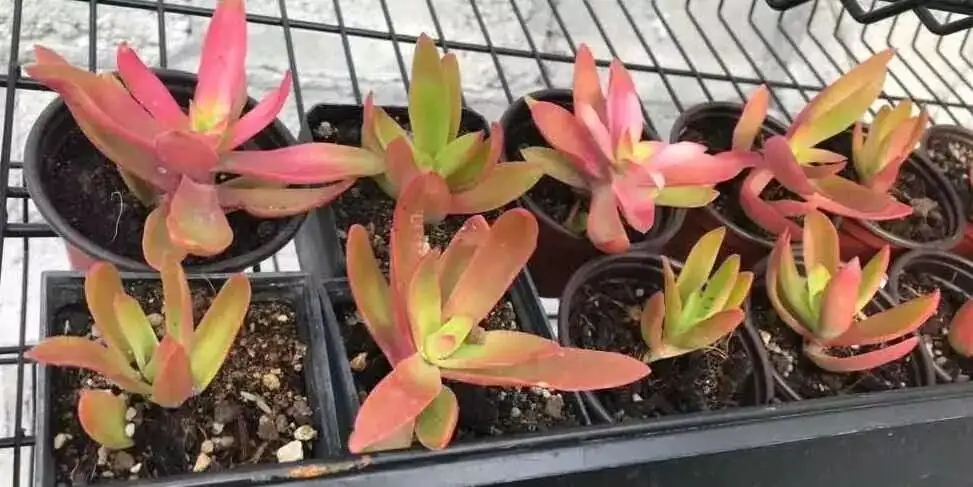
- Pruning: Pinch or trim leggy stems; the cut pieces make perfect propagation material.
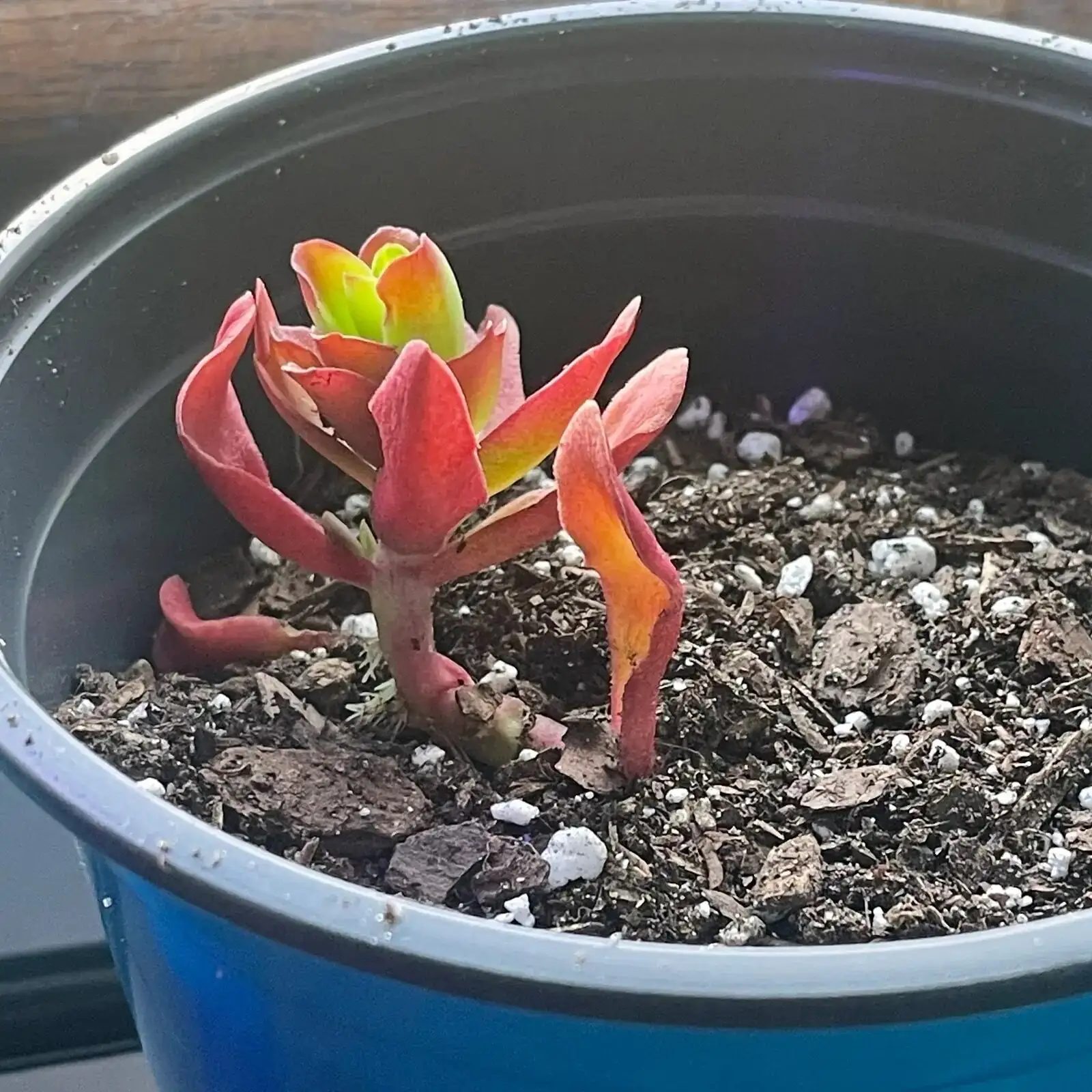
- Propagation: Take a firm tip cutting 3–6 cm (1.2–2.4 in) with ~6–7 leaves. Let it callus, then insert into a gritty, sandy medium. Keep warm and bright at 18–22°C (64–72°F); roots form in about 14–21 days.
- Repotting: Annually in early spring or when it outgrows its pot. A 10–12 cm (4–5 in) pot suits small plants; prioritize drainage.
Troubleshooting and plant health
- Rot and black, mushy leaves
- Cause: Overwatering, poor drainage, cool + wet conditions.
- Fix: Brighter light, better airflow, let the mix dry thoroughly, reduce watering, remove rot.
- Sunburn vs. a healthy blush
- Sunburn shows as beige, papery patches after sudden intense sun.
- A healthy blush is uniform orange‑red, starting at leaf margins inward.
- Prevention: Gradual sun acclimation; use light afternoon shade during heat spikes.
- Spots and rust
- Often from damp foliage and poor ventilation. Remove affected leaves, keep drier, improve airflow. Use an ornamental‑labeled fungicide if needed.
- Pests
- Watch for whitefly and scale. Wipe off early, then treat with insecticidal soap or horticultural oil; repeat per label.
Buying smart, settling in
- Choose compact, symmetrical plants with thick, tightly stacked leaves and firm stems.
- Avoid mushy bases, blackened roots, scars, or visible pests.
- After purchase, give bright light and airflow, keep it away from humid corners, and don’t let rain saturate the pot.
Safety, placement, and hardiness
- Toxicity: Not consistently documented for this cultivar, so treat as “do not eat.” Ingestion may cause mild stomach upset—keep away from kids and pets.
- Hardiness: Frost tender; roughly USDA Zones 10–11 for year‑round outdoor life.
- Best placements: Sunny windowsills, bright balconies, or right beside a floor‑to‑ceiling bright window. Avoid dim rooms and stuffy, poorly ventilated spots.
Quick FAQs
- How do I make Campfire Crassula turn red?
- Provide much brighter light (some direct sun) and cooler autumn/winter nights with a clear day–night temperature difference.
- Why are leaves turning black and soft?
- That’s usually rot from excess moisture or poor drainage—especially in cool, still air. Dry it out, improve airflow, brighten the light, and remove rot.
- Why did it go green indoors?
- Low light prompts more chlorophyll and less protective pigment. Move it to your brightest window or add a grow light.
- Can it handle frost?
- No. Keep it above 8°C (46°F); if near 5°C (41°F), keep the mix dry and pause watering.
Symbolism and the “flower language” angle
In modern houseplant culture, Campfire Crassula often symbolizes a “prosperous home,” passion, and boldness—fitting for a plant that kindles into scarlet in the cool season. Unlike traditional floral folklore, these meanings aren’t rooted in historical texts; they’ve grown from the plant’s striking seasonal display and its popularity in bright, welcoming spaces. As ever with symbolic plants: admire with your eyes, not your taste buds.
Final sparks
Coloring up ‘Campfire’ is less about courting hardship and more about dialing in nature’s cues: strong light, crisp nights, and a clean, quick‑draining root zone. Acclimate to sun, keep the air moving, water on a drench‑and‑dry rhythm, and stay clear of cold, wet conditions. Do that, and your little pagoda will light the dark months like a pocket‑sized bonfire—no drama required.