

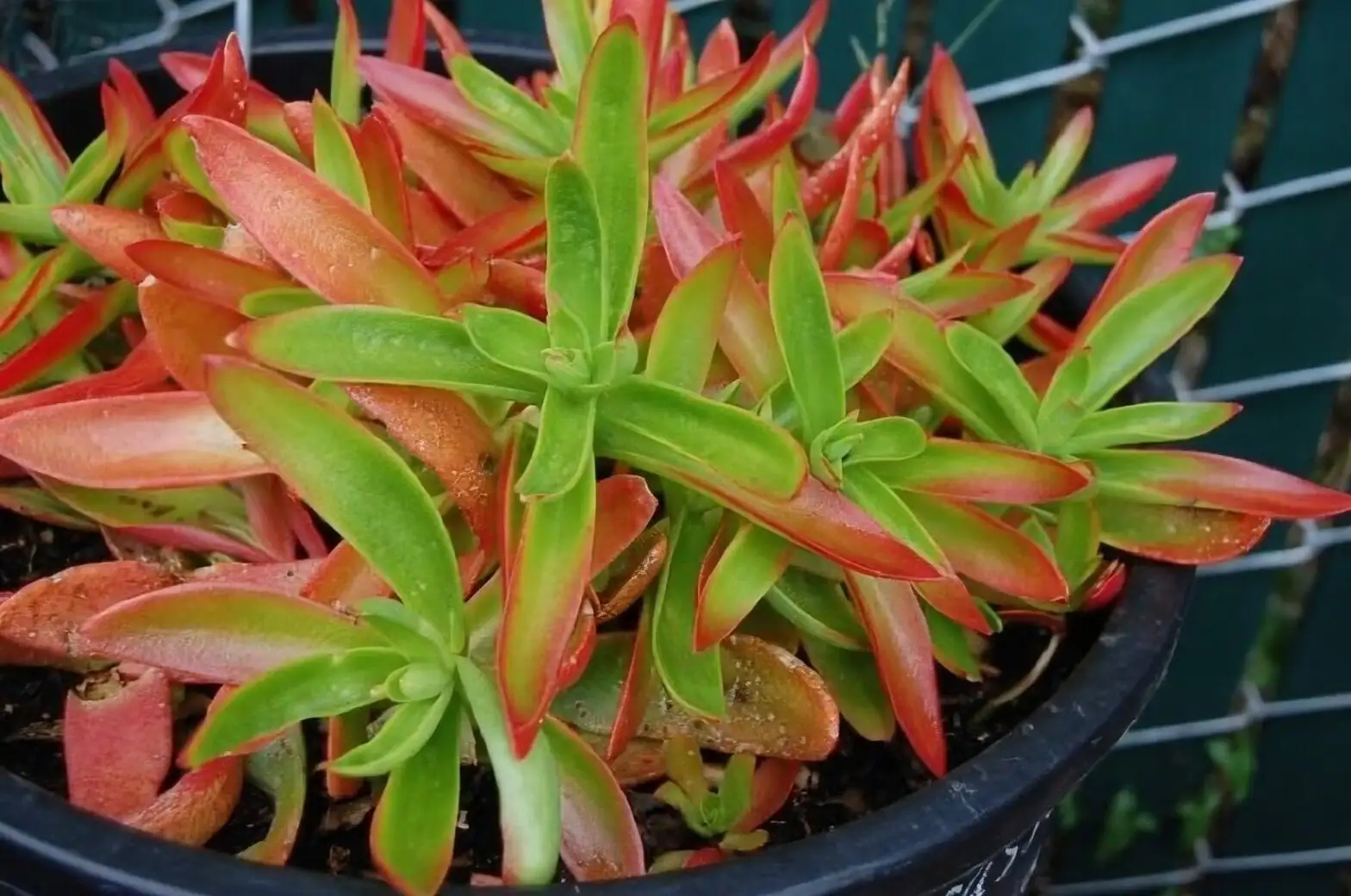
Picture a potful of tiny flames licking upward from the rim of a windowsill planter. That’s Crassula capitella ‘Campfire’—a compact succulent that blushes from gray‑green to ember-orange and scarlet as the year cools, turning everyday light into a seasonal light show.
From sun-baked veld to your balcony: the southern African backstory
Before it became the glowing cultivar many of us know by heart, the species Crassula capitella roamed widely across southern Africa. Think bright, open skies and lean, draining soils—landscapes that teach a plant to store water, hunker down through drought, and revel in sunshine.
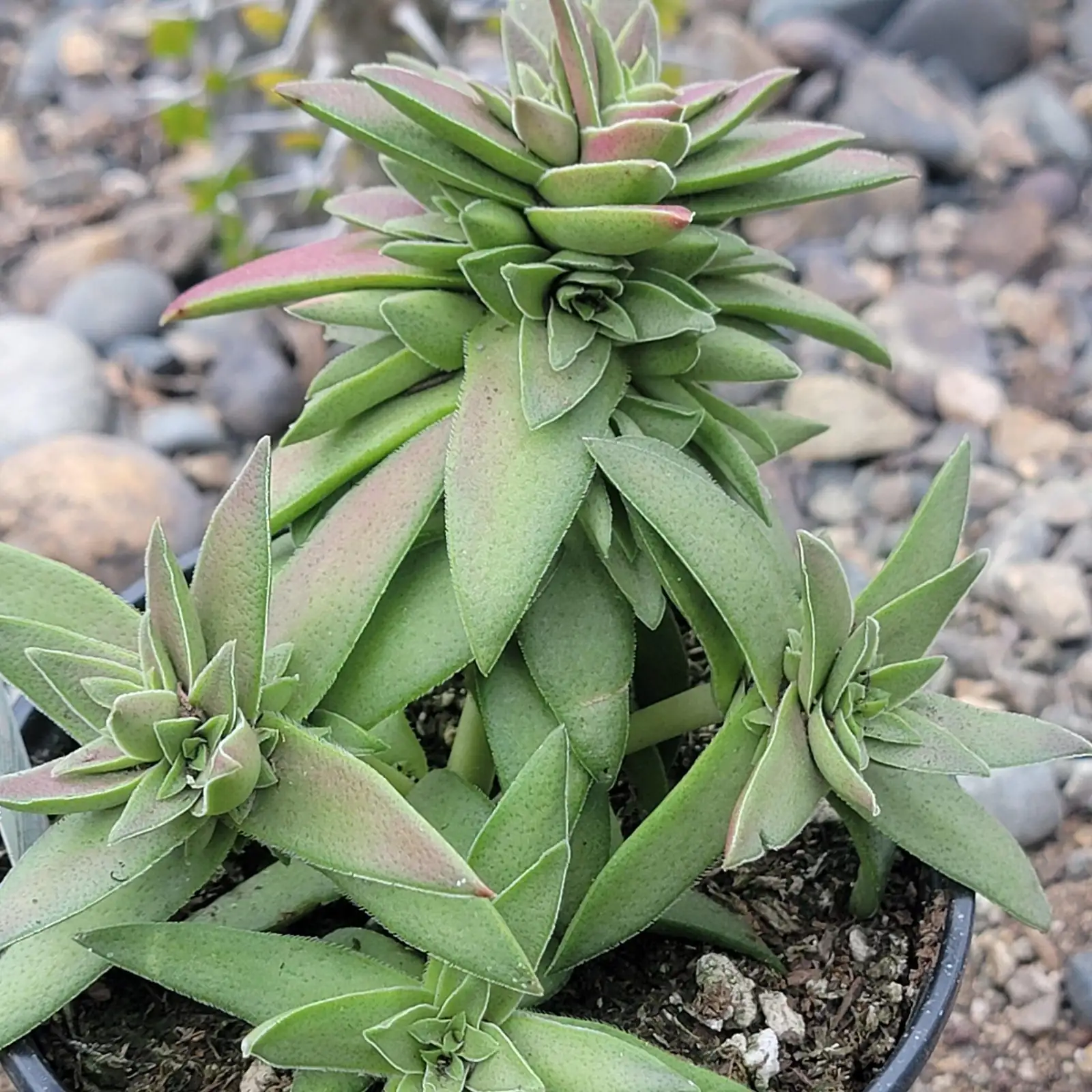
- Range and habitat: The wild species is native to southern Africa, appearing across South Africa and into neighboring Botswana and Namibia. It grows in rocky, sandy places that shed water quickly—perfect for a succulent with plump leaves and a can-do attitude.
- Built for brilliance: Across this range, plants respond to strong light and crisp day–night temperature swings by reddening—first at the leaf margins, then across the whole rosette. It’s a sun-signal written in pigment.
- What’s in a name? Crassula comes from the Latin crassus, meaning “thick,” a nod to the succulent leaves that store water for lean times.
Enter ‘Campfire’: a color-forward garden selection
Horticulturists and keen growers did what they do best: select. From the species’ naturally variable forms, they favored plants that turned vivid, reliably, and dramatically—then kept the shape tight and the habit container-friendly. The result is Crassula capitella ‘Campfire’, a cultivar chosen for bold, seasonal color.
Also known as Campfire Crassula, Campfire Plant, and often called Red Pagoda or Red Pagoda Crassula, ‘Campfire’ stacks its opposite leaves into sculptural tiers that look like a little pagoda set on a warm hearth.
- Size and habit: Typically 10–30 cm (4–12 in) tall and 20–60 cm (8–24 in) wide in containers over time. It starts upright-to-spreading, then trails and creeps slightly with age to form dense, mat-like clumps that can spill over the pot edge.
- The color story: In spring and summer, foliage reads gray‑green to fresh green. Come autumn and winter, with brighter light and cooler nights, the leaves ignite to orange‑red and vivid scarlet—hence the name “Campfire.”
How to spark the red: light and temperature secrets
Want maximum flame? Recreate the seasonal cues of its homeland.
- Give bright light to full sun. Indoors, park it at the brightest window you have (east or south is ideal).
- Encourage a day–night temperature difference. Cooler, bright autumn/winter conditions intensify red pigments.
- Acclimate gradually to stronger sun to prevent scorch, especially when moving outdoors.
Care cheat sheet (friendly, foolproof, and pot-friendly)
Light and placement
- Best color needs bright light to full sun.
- Indoors: sunny windowsill or beside a very bright floor-to-ceiling window.
- Outdoors: acclimate first; in extreme heat, add a touch of afternoon shade. Avoid rain-soaked corners.
Temperature and humidity
- Thrives at 18–24°C (64–75°F).
- Keep above 8°C (46°F) in winter. Not frost hardy; roughly USDA Zones 10–11 for year-round outdoor life.
- If temperatures hover near/below 5°C (41°F), keep the potting mix dry and pause watering to deter rot.
- Prefers dry air and airflow; persistently humid, still conditions invite disease.
Soil and potting
- Use a very free-draining cactus/succulent mix. Blend potting mix (ideally peat-free) with coarse sand/grit/perlite.
- Always choose a pot with drainage holes. Heavy, water-retentive soils are a fast track to rot.
Watering rhythm
- Embrace “drench and dry”: water thoroughly, then let the mix dry well before watering again.
- Spring (active growth): often about weekly if the mix is drying fast.
- Summer: commonly every 2–3 weeks; even less in heatwaves if the plant idles.
- Autumn: water lightly when dry (often weekly in bright, mild conditions).
- Winter: keep very bright and water sparingly; if near cold thresholds, stop watering.
- Black, soft leaves? That’s rot from excess moisture or poor drainage—act fast.
Feeding
- Feed about monthly in active growth with a diluted, lower-nitrogen fertilizer (e.g., 15‑15‑30 at low strength).
- Do not fertilize during cold, low-light winter stints.
Pruning, repotting, and propagation
- Spring cleanup: remove dead basal leaves, shorten overly long roots, and trim leggy stems.
- Repot annually in early spring or when crowded; 10–12 cm (4–5 in) pots suit small plants.
- Propagation: very easy by stem cuttings.
- Take 3–6 cm (1.2–2.4 in) tip cuttings with about 6–7 leaves.
- Let cut ends callus, then insert into a gritty, sandy medium.
- Keep warm and bright at 18–22°C (64–72°F); rooting usually in 14–21 days.
Flowers: the quiet flourish behind the flames
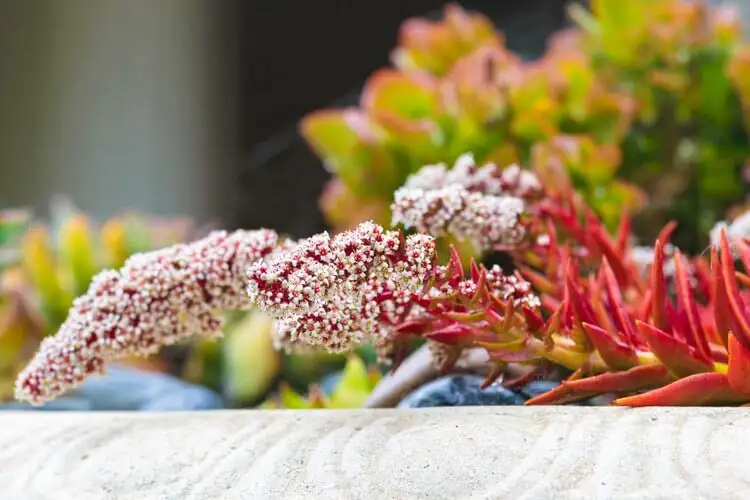
On mature plants, clusters of small, star-shaped blooms—white to pale pink—can appear. Blooming is variable, but in cultivation ‘Campfire’ most often flowers in autumn. The display is delicate, like a constellation above the embers of its red foliage.
Troubleshooting: keep the glow, skip the woes
- Rot and blackened leaves: Linked to overwatering, poor drainage, low light, or cold, damp conditions. Brighten light, improve airflow, dry the mix, and remove mushy tissue.
- Leaf spot or rust: More likely in still, humid air or on persistently wet foliage. Remove affected leaves, keep drier, boost ventilation; use ornamentals-labeled fungicides if needed.
- Pests: Watch for whitefly and scale. Treat early by wiping off pests and using insecticidal soap or horticultural oil, repeating as directed.
Buying smart: choose a plant that’s ready to glow
- Look for a compact, symmetrical plant with thick, tightly stacked opposite leaves and firm stems—often around 5 cm (2 in) tall or less for small containers.
- Avoid mushy bases, blackened/rotting roots, scars from damage, and visible pests.
- After bringing it home: give bright light and airflow, keep it out of humid corners, and don’t let rain saturate the pot.
A seasonal quick-guide
- Spring: repot, tidy, and take cuttings; water lightly as growth resumes.
- Summer: strong light; water only after drying; feed monthly; acclimate gradually and consider light afternoon shade in extreme sun/heat.
- Fall: best seasonal color and possible flowering; late fall is also prime time for cuttings.
- Winter: keep very bright and above 8°C (46°F); sharply reduce watering and lean dry—stop entirely if near/below 5°C (41°F).
Safety, symbolism, and uses
- Safety: Not consistently documented as toxic. Treat as “do not eat”—ingestion may cause mild stomach upset in pets or people.
- Symbolism: In modern houseplant lore, ‘Campfire’ leans into themes of a prosperous home, passion, and boldness. It’s easy to see why: a plant that reddens with brighter light and crisper nights feels like bottled courage and hearth-warmth. This isn’t an ancient flower language with strict rules; rather, it’s contemporary meaning inspired by its fiery winter glow and the broader “good fortune” aura often associated with Crassulas in home settings.
- Uses: A standout ornamental for bright windowsills, sunny balconies, and festive autumn/winter arrangements—especially where a ribbon of red will lift the whole scene.
Fun facts to fan the flames
- Many growers think of it as a “winter color” succulent because its brightest reds usually arrive in cool, bright seasons.
- The name ‘Campfire’ nods to its flame-like tones under high light and cool nights.
- It propagates so easily that one tidy-up trim can turn into a tray of new plants.
- Sun-lover though it is, it can sunburn if rushed into harsh light—slow and steady acclimation wins.
The living ember you can keep
Crassula capitella ‘Campfire’ brings a piece of southern Africa’s big-sky drama to a palm-sized pot, translating day–night swings and brilliant light into a rosy-orange beacon on your sill. Give it sun, give it drainage, give it a little cool—and watch the glow catch.