

At dusk, the Rattlesnake Plant bows. Each long, wavy leaf lifts like a pair of hands coming together—an everyday benediction that has earned Goeppertia insignis its place in the “prayer plant” circle of the Marantaceae. In a world rushing toward bright screens and louder rooms, this small, rainforest native brings a ritual of calm: open by day, gathered by night. No wonder it has become a quiet emblem for renewal in tranquil interiors.
Meet Goeppertia insignis, the Rattlesnake Plant
- Botanical identity: Goeppertia insignis (often still sold as Calathea insignis or “Rattlesnake Calathea”)
- Family: Marantaceae
- Origin: Native to Brazil
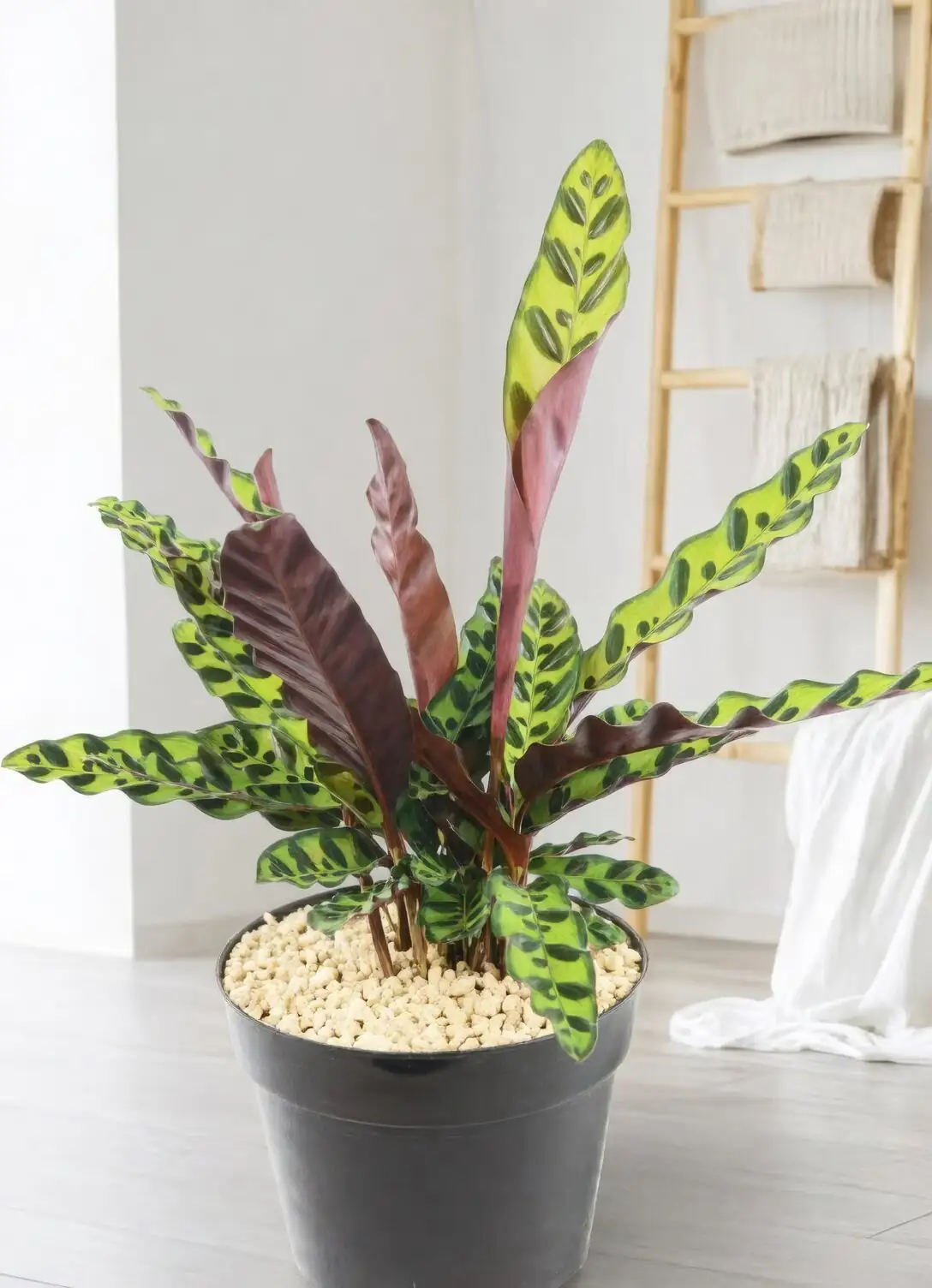
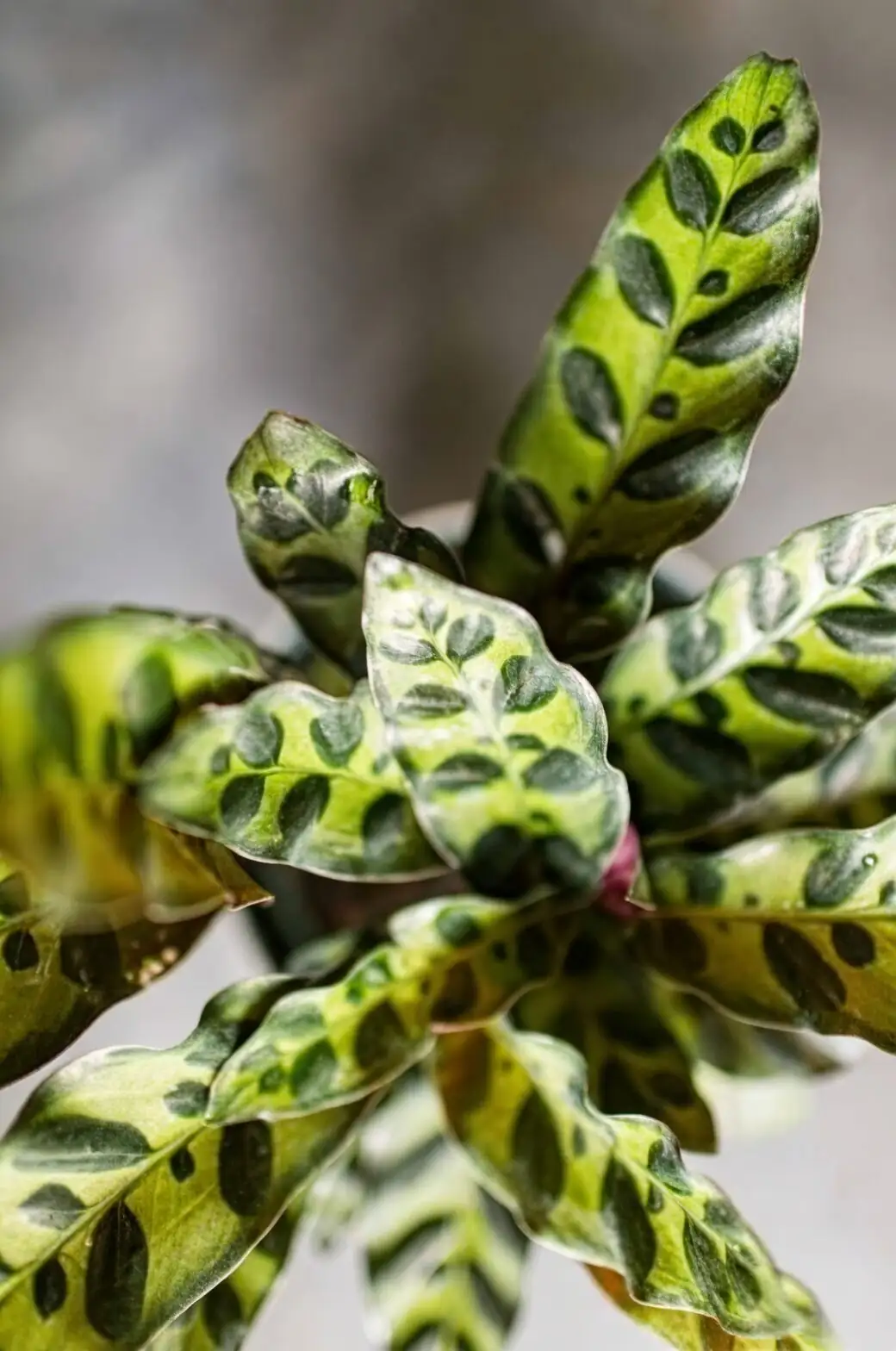
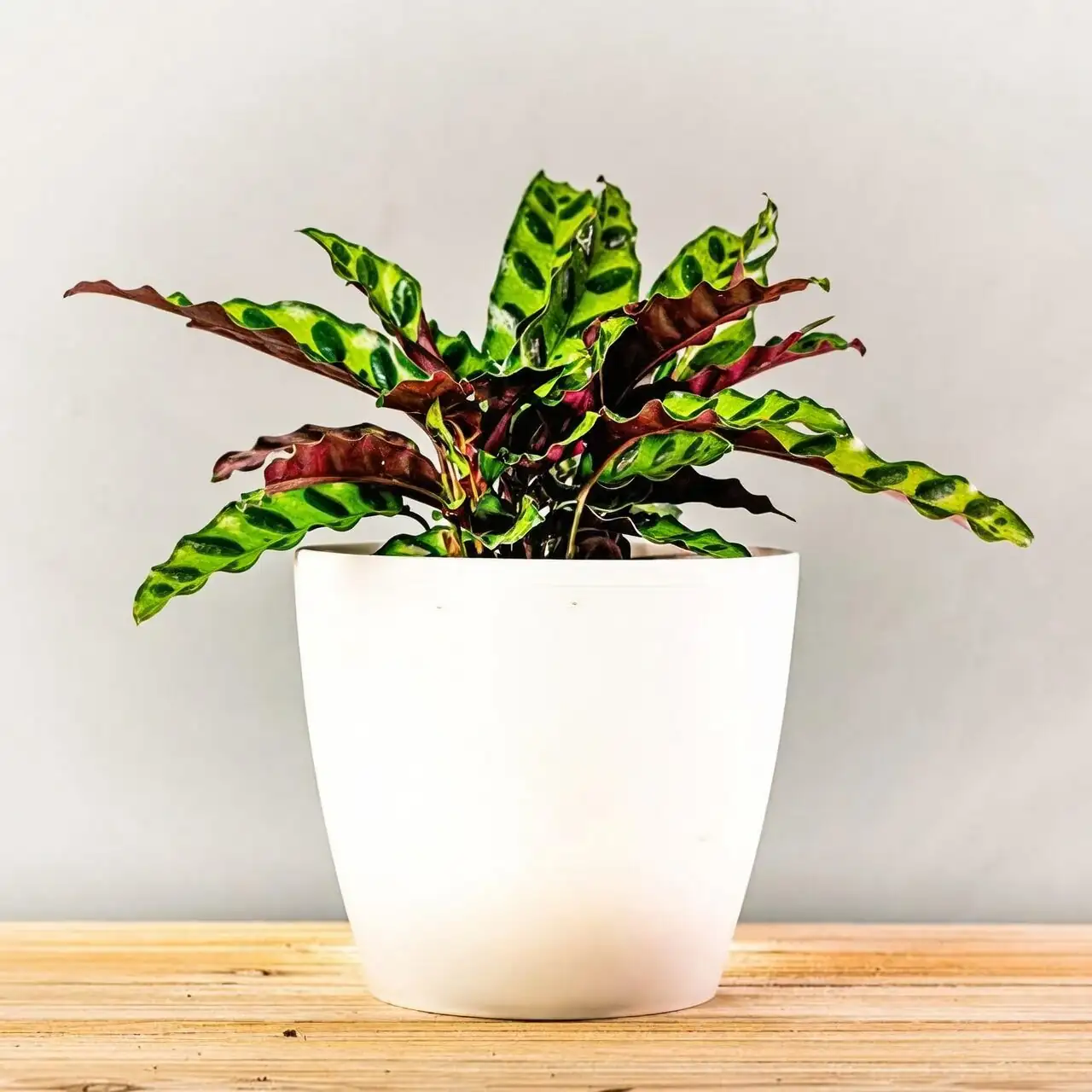
- Look: Long, lance-shaped leaves with rippling edges; snakeskin-like bands in yellow-green and deep green above; rich burgundy undersides below
- Habit and size: Upright to gently arching clumps, about 75 × 45 cm (30 × 18 in) as a houseplant
- Flowers: Rare indoors and modest—this species is grown almost entirely for its foliage
- Pet note: Generally considered non-toxic to cats and dogs
The nightly “prayer” is a natural circadian movement known as nyctinasty. Specialized joints at the base of each leaf act like tiny hinges, allowing the plant to raise and lower its foliage in response to light and darkness. The effect feels intentional—almost mindful—and that movement underpins much of the symbolism enthusiasts cherish.
When Leaves Tell Stories: Floriography for a Foliage Plant
Where the “flower language” comes from
Floriography—the language of flowers—flourished in 18th–19th century Europe and found parallels in Japanese hanakotoba. Bouquets became coded messages: a red chrysanthemum whispered love; a fern pledged shelter. Classic lists focused on cut blooms, but modern plant-lovers have extended the idea to living houseplants, reading pattern, posture, and habit for meaning. With “prayer plants,” it’s the movement itself that speaks.
A modern lexicon for Goeppertia insignis
Grounded in its daily rhythm and rainforest temperament, the Rattlesnake Plant has gathered contemporary meanings:
- Renewal and routine: Its day–night leaf cycle mirrors the human need for activity and rest—a cue to begin and end with intention.
- Calm and restoration: Thriving in warm, humid rooms, it embodies spa-like ease and the promise of steady care.
- Quiet strength: The bold, snakeskin pattern suggests resilience; the clumping habit reads as grounded and steady.
- Harmony at home: Leaves that gather each evening evoke unity and shared focus—perfect for meditation corners and low-stress bedrooms.
These interpretations aren’t Victorian canon; they’re a living, evolving “language of foliage” that resonates with today’s interiors and wellness culture.
Feng Shui Perspectives: Wood Element, East Light, and Gentle Qi
Within feng shui practice, prayer-plant kin are often read as Wood element enhancers—symbols of growth, momentum, and new beginnings. Many practitioners like to place them toward the East, an area associated with vitality and family life, where morning light is soft and restorative.
Consider these feng shui–aligned cues:
- Elemental fit: Wood element supports growth and development—ideal for studios, reading nooks, or a work desk where you want fresh ideas.
- Direction and light: East-facing, bright, filtered light suits both the symbolism and the plant’s real needs. North-facing windows with ample indirect light also work well.
- Vessel and color: Round or oval pots in green or earthy browns underscore Wood’s upward, living energy.
- Flow over force: Overcrowding a space with many tall, leafy plants can feel “over-wooded.” One well-grown Goeppertia insignis in clear view is more soothing than a jungle at your feet.
Good feng shui begins with good horticulture. Healthy leaves mean lively qi: place the plant away from harsh direct sun and from drafts or vents; keep its humidity steady so the energy it radiates is, too.
How Meaning Shaped Serene Interiors
Designers and home dwellers have leaned into this plant’s symbolism and behavior to craft rooms that exhale.
- Bathroom sanctuary: Warm showers lift humidity to rainforest levels, and the plant’s burgundy undersides glow in strong indirect light. The leaf-lifting at night pairs beautifully with wind-down rituals—candles, soft towels, slow breath.
- Bedroom calm: Near an east- or north-facing window with filtered light, its nightly “prayer” becomes a gentle signal to sleep. Low, indirect lamps highlight the leaf pattern without provoking glare.
- Meditation or yoga corner: A single clump on a low stand creates a living metronome—it opens with intention in the morning practice, gathers into stillness by dusk.
- Quiet office vignette: In bright, indirect light, its Wood energy hints at growth without the caffeinated edge of flashier plants. Think green-brown pottery, linen textures, and minimal clutter.
Care as Ritual (and the Secret to Good Qi)
Treat maintenance like a mindful practice—simple, consistent steps that reinforce the meanings you want the room to hold.
- Light: Bright, indirect light to light shade. Avoid harsh direct sun that can scorch or fade patterns.
- Temperature: 15–24°C (59–75°F); avoid prolonged dips below 13°C (55°F).
- Humidity: Aim for 50%+; bathrooms/kitchens are ideal. Pebble trays or a humidifier beat occasional misting.
- Watering: Spring–autumn, keep evenly moist but never soggy; water when the top 1–2 cm (0.4–0.8 in) begins to dry. In winter, let the surface dry a bit more. Rain or distilled water helps prevent brown tips from tap minerals.
- Soil: Airy, moisture-retentive mix—about 2 parts houseplant potting mix to 1 part perlite.
- Feeding: Every 2 weeks spring–autumn with a balanced liquid fertilizer at half strength; pause or reduce in winter.
- Grooming: Remove yellowing leaves at the base; trim brown tips for looks while addressing the cause (humidity, drafts, minerals).
- Repotting and propagation: Repot every 2–3 years in spring. Divide clumps during repotting to make new plants.
- Pests and pitfalls: Spider mites, mealybugs, or scale may appear in dry air; rinse leaves and use insecticidal soap or horticultural oil if needed. Ensure drainage to prevent root rot.
Note: Flowers are rare indoors and subdued; with this species, the foliage is the show—and the message.
Gifting the Plant that Says “Breathe”
Because it symbolizes renewal, calm, and steady growth, Goeppertia insignis is a heartfelt gift for:
- Housewarmings and new chapters
- Recovery and self-care milestones
- Therapists, yoga teachers, and spa owners
- Pet-friendly homes seeking serene greenery
Include a card that translates its “language”: May your days open with purpose, and your nights gather you back to rest.
Common Questions, Answered
- Why are the leaf edges browning? Usually low humidity or mineral-heavy tap water. Raise humidity above 50%, move it away from vents, and switch to rain or distilled water.
- Can it handle direct sun? Not well. Direct sun scorches and washes out the pattern. Bright, filtered light is best.
- Why do the leaves fold up at night? It’s nyctinasty—a natural, light-sensitive movement many Marantaceae display. Think of it as a daily breath in and out.
A Brief History and Names that Shape Meaning
Long known in the trade as a calathea, this plant is now placed in the genus Goeppertia, reflecting modern botanical classification of the Marantaceae family. The common name “Rattlesnake Plant” comes from its striking, banded leaves; the “prayer plant” association arises from its nightly leaf-lifting. Its Brazilian rainforest roots explain its love of warmth and humidity—and its success in steamy, spa-like rooms that echo its native understory.
Quick Styling Recipe for Symbolism-Forward Calm
- Pot: Round, ceramic, green or earthen tones; drainage hole essential.
- Placement: East or north window with bright, filtered light; away from drafts.
- Companions: Soft-textured ferns or other humidity-loving foliage; keep the vignette uncluttered.
- Ritual: Morning—wipe a leaf, check moisture; Evening—dim lights and watch the leaves rise.
- Message: Renewal, harmony, and quiet strength—spoken not in blooms, but in the mindful language of movement.
In a home that prizes serenity, Goeppertia insignis doesn’t shout its presence. It practices—a gentle opening, a gentle closing—until the room itself remembers how to breathe.