

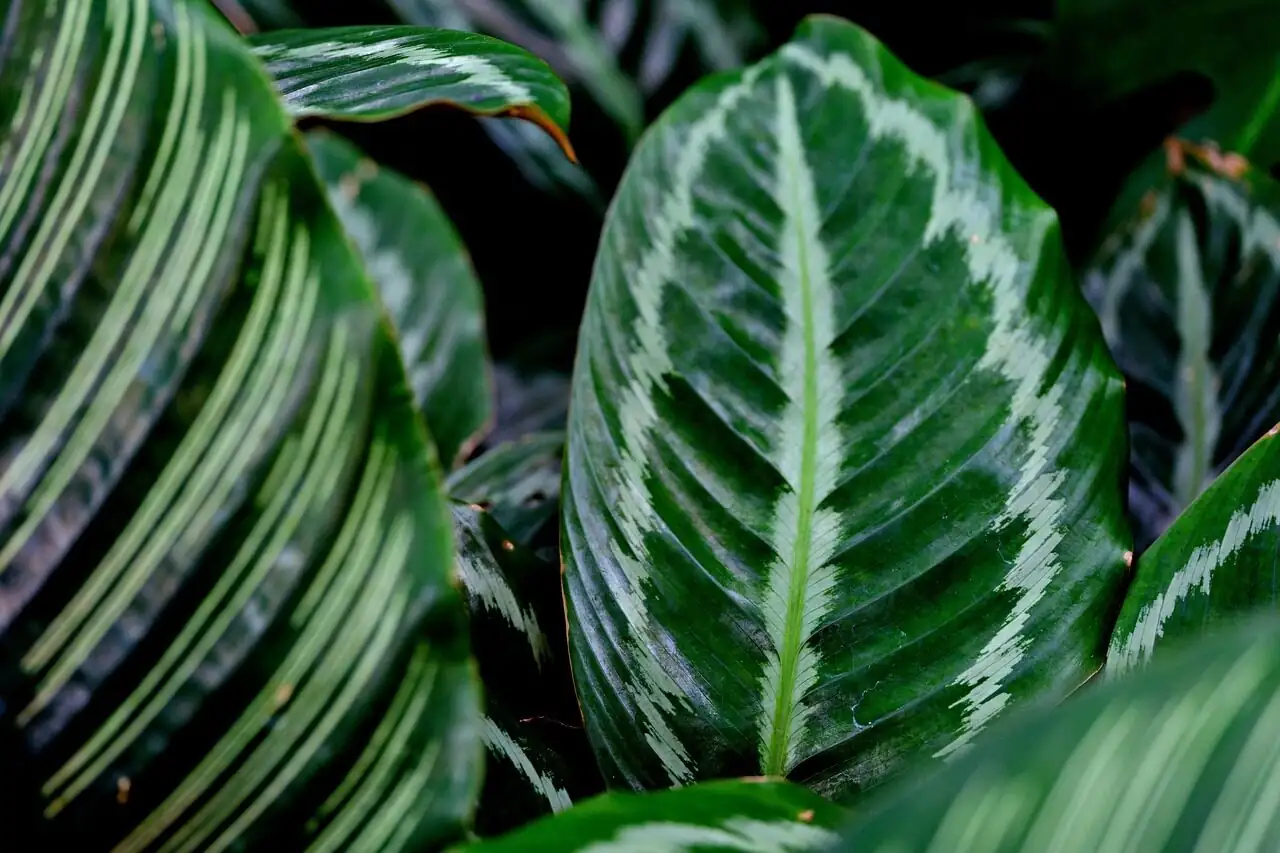
Step into a steamy Brazilian morning and you’ll find it: a clump of lance-shaped leaves, rippling like silk ribbons, upper surfaces painted in snakeskin greens, backs turned a rich burgundy. This is Goeppertia insignis—the beloved “rattlesnake plant”—and its story is as patterned as its foliage. For decades we called it a calathea. Today, we know better. Here’s the lively taxonomy tale of how a rainforest beauty reintroduced itself to science, plus the care tips that help it thrive at home.
A Rainforest Pattern-Maker from Brazil
Native to Brazil’s warm, wet tropics, Goeppertia insignis is adapted to life under a leafy canopy—where light is filtered, the air is humid, and the soil stays lightly moist. Indoors it forms upright-to-arching clumps, typically reaching about 75 × 45 cm (30 × 18 in). The leaves are long and lance-shaped with wavy edges; the tops feature yellow-green and deep green markings that suggest a rattlesnake’s patterning, while the undersides glow burgundy to wine-red.
- Family: Marantaceae (the prayer-plant family)
- Accepted scientific name: Goeppertia insignis
- Common names: Rattlesnake Plant, Rattlesnake Calathea
- Origin: Native to Brazil
- Habit: Clump-forming; foliage is the star (flowers indoors are small and uncommon)
Like many Marantaceae, the leaves subtly shift through the day—another reason the plant feels so alive in a room.
The Name Game: From “Calathea” to “Goeppertia”
If your plant tag still reads “Calathea,” you’re not wrong—you’re just living in the long, fascinating afterglow of an old name. The plant trade embraced Calathea for years, but modern taxonomy gave this species a new address.
A short timeline of the reclassification
- 1902: Described in horticultural circles as Maranta insignis (placing it with classic prayer plants).
- Mid-20th century: Swept into the broad, catch-all concept of Calathea and widely cultivated as Calathea lancifolia (and sometimes labeled Calathea insignis in the trade).
- 2012: Molecular studies shook the family tree, revealing that “Calathea” was a mixed bag that needed reorganizing to reflect true evolutionary relationships.
- 2017: The combination Goeppertia insignis was formally published, cementing the modern, accepted name within Goeppertia.
Why the change?
The plant didn’t change—our understanding did. DNA evidence clarified the boundaries in Marantaceae, moving many long-time “Calatheas” (this species included) into Goeppertia to keep genera monophyletic and meaningful.
Synonyms you’ll still see in shops and books
- Calathea lancifolia
- Goeppertia lancifolia
- Maranta insignis
- “Calathea insignis” (an older, problematic name that persists colloquially)
Translation: if you see any of these on a label, you’ve likely found Goeppertia insignis.
Form and Foliage: Why We Keep Staring
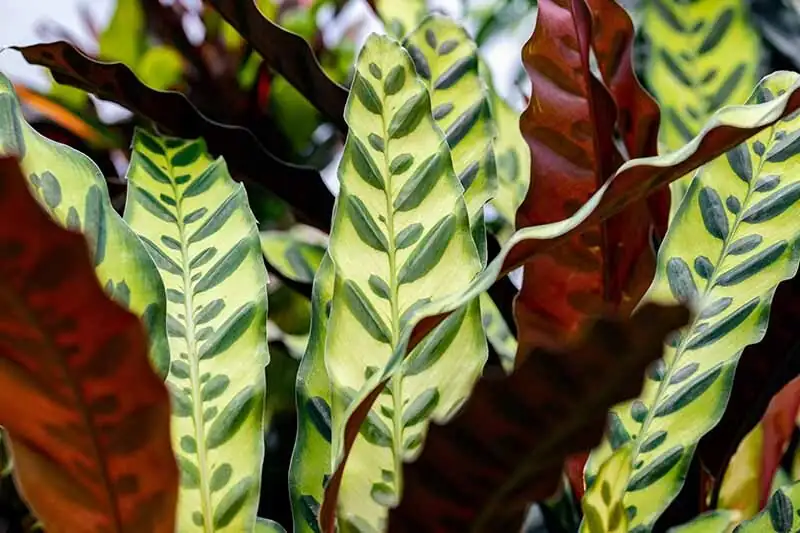
- Leaves: Long, lance-shaped, noticeably wavy margins
- Patterning: Light yellow-green ground with deep green “snakeskin” markings
- Undersides: Burgundy to wine-red—especially vivid in strong, indirect light
- Growth habit: Upright to gently arching, clump-forming
- Flowers: Rare indoors; small and nowhere near as showy as the leaves
- Size indoors: About 75 × 45 cm (30 × 18 in)
Care Cheat Sheet: Spa Vibes at Home
Think “warm rainforest nook,” not “sunny windowsill.”
Light
- Bright, indirect light to light shade
- Avoid harsh direct sun—it can scorch and fade the pattern
Temperature
- 15–24°C (59–75°F) year-round
- Avoid prolonged dips below ~13°C (55°F)
Humidity

- Moderate to high: aim for 50%+ (higher is even better)
- Best spots: naturally humid rooms like bathrooms and kitchens
- Boosters: pebble tray or humidifier; occasional misting helps briefly, but steady humidity works best
Watering
- Spring–autumn: keep the mix evenly moist, never soggy; water when the top 1–2 cm (0.4–0.8 in) begins to dry
- Winter: let the surface dry a bit more between waterings
- Use rainwater or distilled water when possible; mineral-heavy tap water often causes brown tips
Soil
- Moisture-retentive yet airy, free-draining mix
- Easy recipe: 2 parts quality houseplant mix to 1 part perlite (2:1)
Feeding
- Spring–autumn: every 2 weeks with a balanced liquid fertilizer at 1/2 strength
- Winter: reduce or pause if growth slows
Pruning, Repotting, Propagation
- Pruning: Remove yellow or damaged leaves at the base with clean scissors; trim brown tips for looks, then fix the cause (usually dry air, drafts, or minerals)
- Repotting: Every 2–3 years, or sooner if root-bound—spring is ideal
- Propagation: Best by division during repotting; separate healthy clumps with roots attached
Placement Ideas
- Bright bathrooms or kitchens are perfect
- Otherwise, near an east- or north-facing window with filtered light
- Keep away from cold drafts and strong airflow from vents
Outdoors? Only in the Toastiest Places
- Not frost-tolerant
- Suitable outdoors year-round only in very warm climates (approximately USDA Zone 11–12)
Troubleshooting and Health
- Brown leaf edges: Most often low humidity or mineral-heavy water. Raise humidity to 50%+, avoid vents/drafts, switch to rain/distilled water.
- Faded or scorched leaves: Too much direct sun; move to bright, filtered light.
- Pests: Spider mites, mealybugs, and scale may appear, especially in dry air. Rinse foliage, increase humidity, and treat with insecticidal soap or horticultural oil if needed.
- Diseases: Root rot can occur if the mix is dense or constantly wet—ensure drainage and let the top surface dry slightly between waterings.
Pet-Friendly Note
Generally considered non-toxic to cats and dogs. As with any houseplant, nibbling may still cause minor stomach upset.
The Mood It Brings: Symbolism and “Flower Language”
Modern interiors have unofficially cast Goeppertia insignis as a symbol of calm, renewal, and spa-like ease—probably because it thrives in warm, humid rooms and looks most luminous in soft, indirect light. If you’re seeking a deeper read, its daily rhythm of leaf postures—rising and resting—feels like a gentle cue for mindfulness: a reminder to reset, breathe, and begin again. While not a traditional “flower language” plant in the folkloric sense, its contemporary symbolism springs from how and where it thrives, and how it makes a space feel.
Quick FAQ
- Why are the leaf edges turning brown?
- Usually low humidity or mineral-heavy tap water. Push humidity to 50%+, steer clear of drafts, and water with rain or distilled water.
- Can it handle direct sun?
- Not well. Direct sun can scorch leaves and wash out the patterns. Bright, filtered light is best.
Fun Facts
- It’s still widely sold as a “calathea,” but the accepted name is Goeppertia insignis.
- Those deep burgundy undersides are a signature flourish in the Marantaceae family and look extra vivid in strong, indirect light.
A Final Word on the Label
Whether yours arrived as Calathea lancifolia or Goeppertia insignis, the plant itself hasn’t changed—only our map of its family tree has. Give it warmth, humidity, and gentle light, and it will repay you with a living tapestry of greens and burgundy that feels like a rainforest exhale.