

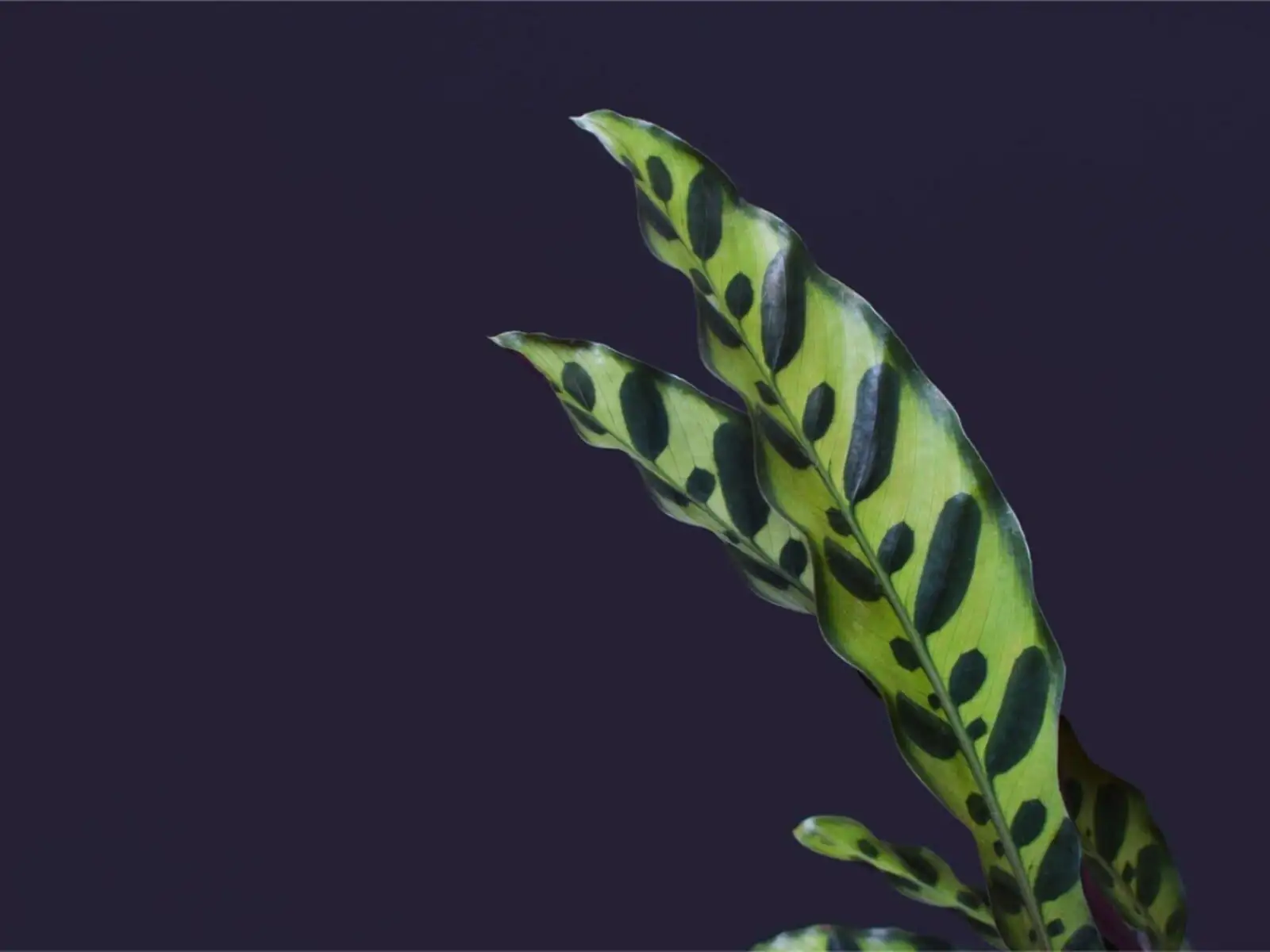
Picture a stripy, wavy-edged leaf unfolding at dawn like a silk fan, showing off bold, snakeskin markings and a wine-red underside. That’s Goeppertia insignis—still often sold as Calathea insignis or “Rattlesnake Plant”—and it will stay lush and vividly patterned when you get four levers right: light, water, humidity, and seasonal tweaks. Here’s how to dial them in with confidence.
Care at a glance
- Light: Bright, indirect to light shade; avoid harsh direct sun. East or north windows are prime.
- Water: Keep evenly moist spring–autumn; water when the top 1–2 cm (0.4–0.8 in) dries. Let the surface dry a bit more in winter.
- Humidity: Aim for 50%+; 60–70% keeps tips crisp and color saturated.
- Temperature: 15–24°C (59–75°F); avoid dips below ~13°C (55°F) and drafts.
- Soil: Moisture-retentive yet airy mix—about 2 parts quality potting mix to 1 part perlite.
- Feeding: Half-strength balanced liquid every 2 weeks spring–autumn; reduce or pause in winter.
- Size: Typically to 75 × 45 cm (30 × 18 in) indoors.
- Pet-safety: Generally considered non-toxic to cats and dogs.
Why it thrives in bathrooms and kitchens
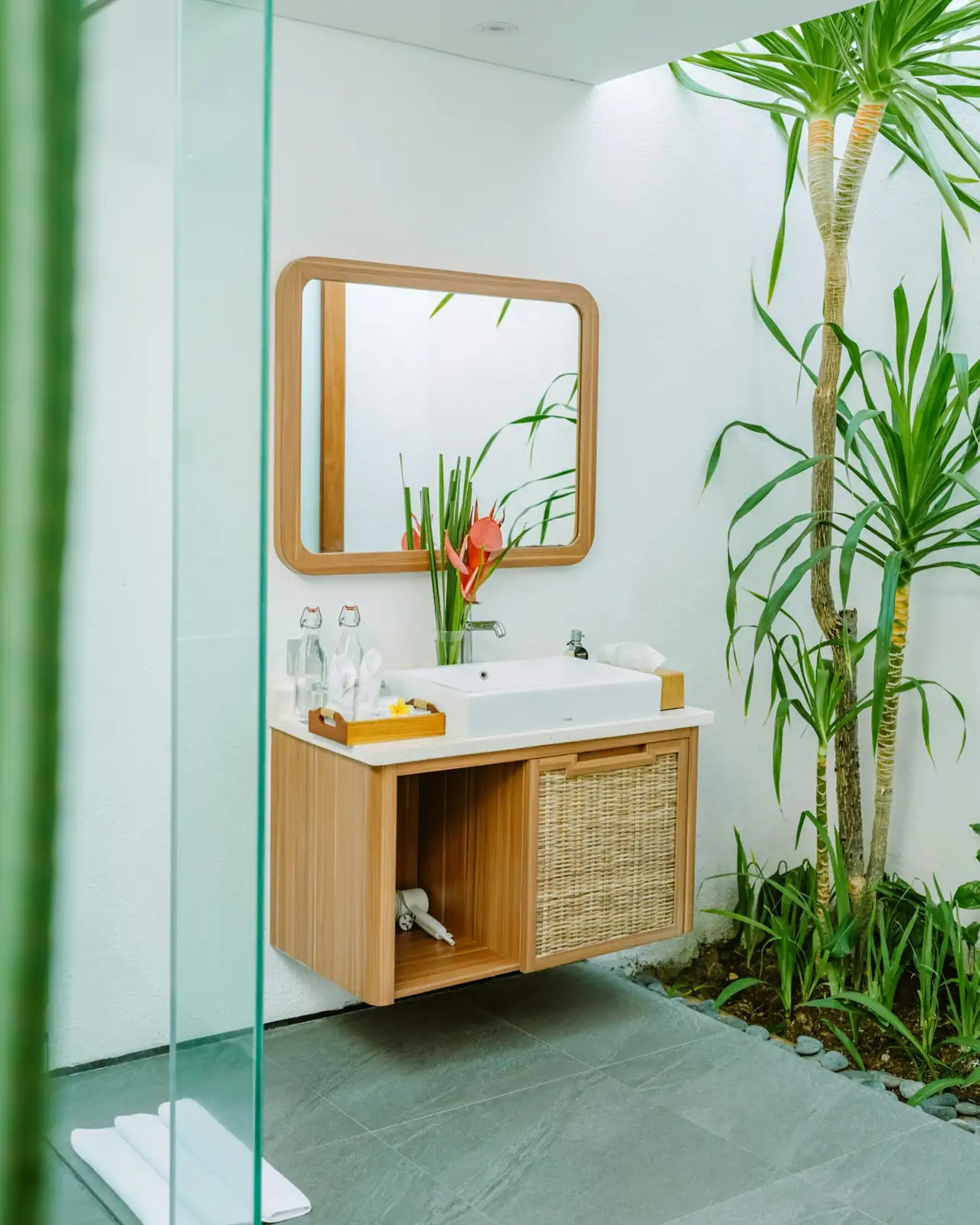
Native to Brazil’s warm, steamy rainforests, this clump-forming beauty loves consistent warmth, bright filtered light, and elevated humidity—the trio many bathrooms and kitchens naturally provide. In cozy conditions, expect upright-to-arching clumps of leaves that “pray” at night and relax by day.
Light that keeps patterns bold
- Best placements:
- East window: On the sill or within 0.5–1 m (1.5–3 ft) is ideal filtered brightness.
- North window: Close to the glass for ample indirect light.
- South or west window: Set back 1–2 m (3–6 ft) or use sheer curtains to diffuse. Avoid midday beams that can scorch or fade patterns.
- Read the leaves:
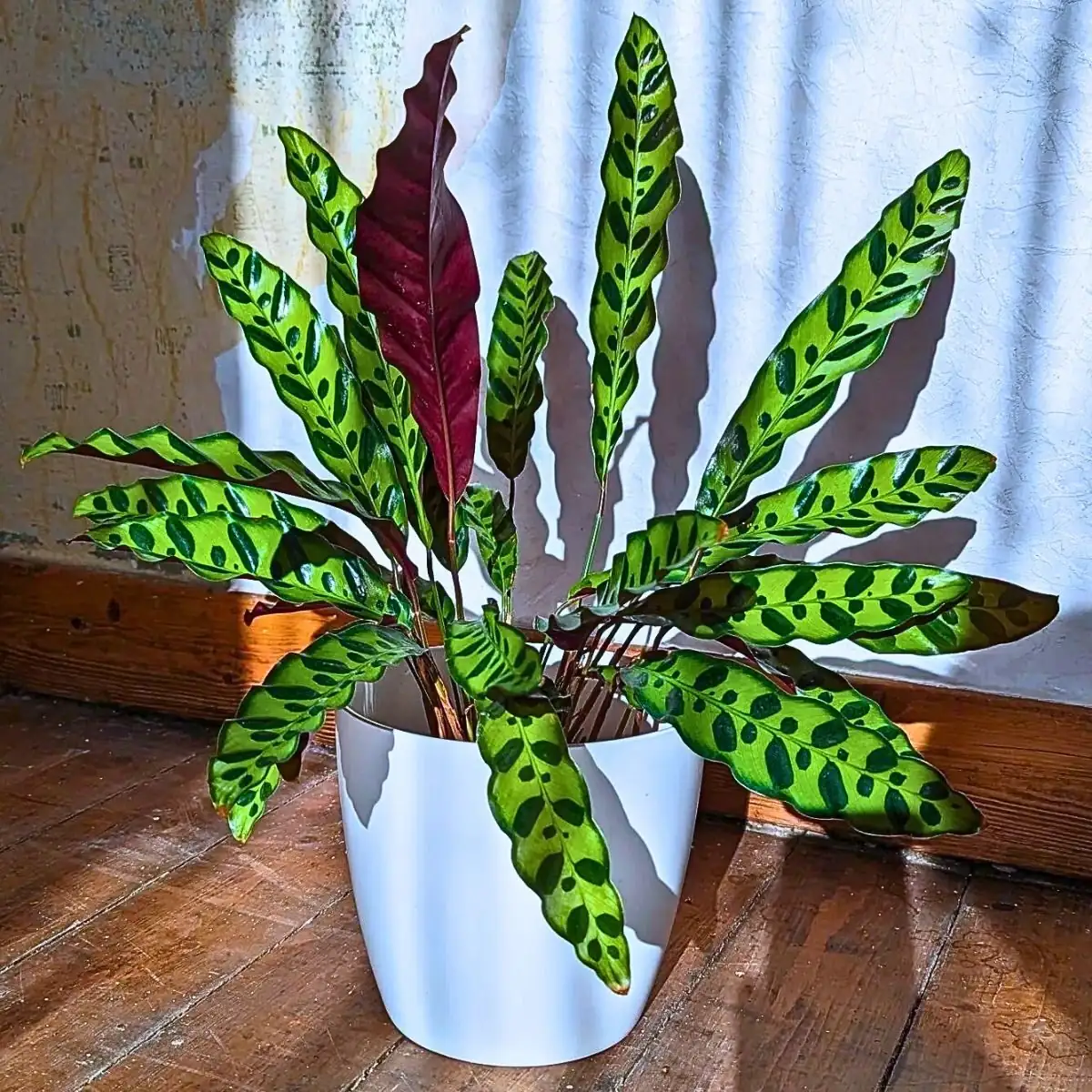
- Faded patterns or slow growth: Too dim—move closer to bright, indirect light.
- Washed-out patches, crispy edges: Too much direct sun—pull back or add a sheer.
- Petioles stretching and leaves smaller: Increase light (still filtered).
Watering: precise moisture without the guesswork
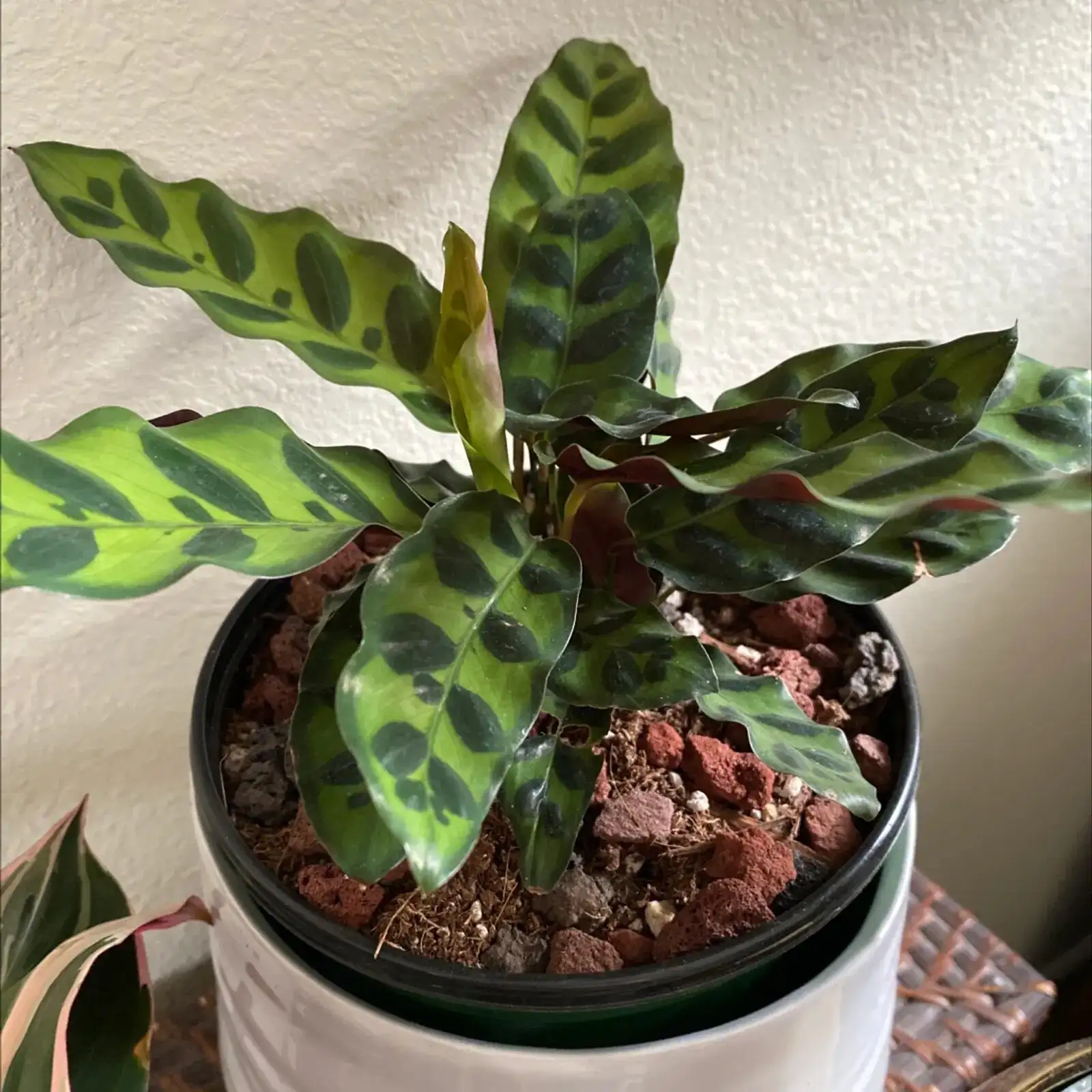
Your goal is a consistently moist, never-soggy root zone.
- The golden rule:
- Spring–autumn: Water when the top 1–2 cm (0.4–0.8 in) of mix is dry.
- Winter: Let the surface dry a bit more before watering.
- Interval cheat sheet (use the finger test first; adjust to your home):
- 12–15 cm (5–6 in) pot, bright-indirect light, 20–24°C, 50–60% RH:
- Spring–autumn: roughly every 5–7 days
- Winter: roughly every 7–10 days
- Larger pots or lower light: Intervals lengthen by 2–3 days.
- Warmer rooms, active growth, or very bright filtered light: Intervals may shorten.
- How to water well:
- Use room-temperature rainwater or distilled water when possible—hard tap water often causes brown tips.
- Water slowly until you see runoff; let excess drain fully. Never leave the pot standing in water.
- If you’ve let it go too dry, rewet gently in stages so the mix can drink evenly.
Humidity: the lushness lever
- Targets:
- Minimum: 50%
- Sweet spot: 60–70% for crisp margins and deep color
- Ways to get there:
- Humidifier on a daily schedule near the plant (most reliable).
- Pebble tray with water below the pot base.
- Group with other plants to create a microclimate.
- Place in a bright bathroom or kitchen where steam lifts RH.
- Misting is fleeting; helpful right after dusting leaves but not a substitute for ambient humidity.
- Low humidity symptoms:
- Browning tips/edges, leaf curl, spider mite flare-ups. Raise RH and review water quality.
Temperature and airflow
- Comfort zone: 15–24°C (59–75°F); keep it steady.
- Keep it away from cold drafts, heaters, and AC vents—sudden chills or hot air dehydrate leaves and fade color.
- Not frost-tolerant; outdoors only in very warm climates (about USDA Zones 11–12).
Soil and potting that prevent rot
- Mix: 2 parts quality indoor potting mix to 1 part perlite. You want moisture retention with plenty of air.
- Pot: Always choose one with drainage holes; avoid oversizing (too much cold, wet mix invites rot).
- Repotting: Every 2–3 years or when root-bound, ideally in spring. Refresh with the same airy blend.
Feeding for saturated color
- Spring–autumn: Half-strength balanced liquid fertilizer every 2 weeks.
- Winter: Reduce or pause if growth slows—no need to force-feed a resting plant.
- Tip: Rinse the pot through with plain water every few months to minimize fertilizer salt buildup.
Seasonal playbook
- Spring:
- Increase watering frequency as days lengthen.
- Begin biweekly half-strength feeding.
- Repot or divide crowded clumps.
- Summer:
- Shield from harsh afternoon sun; heat speeds drying, so check moisture more often.
- Run the humidifier consistently to prevent brown tips.
- Autumn:
- Gradually lengthen watering intervals as growth eases.
- Continue feeding until you see growth slow.
- Winter:
- Move a touch closer to bright windows (still filtered).
- Keep away from cold glass and drafts; stable 18–21°C is ideal.
- Water less frequently; humidity matters more than ever with indoor heating.
Pruning, cleaning, and display
- Prune: Remove yellowing or damaged leaves by cutting at the base with clean scissors.
- Tidy tips: You can trim browned tips for looks; fix the cause (humidity, water quality, or drafts) so it doesn’t return.
- Clean: Dust leaves with a soft, damp cloth so patterning can photosynthesize at full power.
- Styling: A plant stand near an east window or a bright bathroom shelf shows off those burgundy undersides as leaves shift from night to day.
Propagation by division (easy and effective)
- Best time: During spring repotting.
- Method:
- Unpot the clump and gently tease apart sections, ensuring each division has healthy roots and several leaves.
- Pot each in fresh airy mix, water to settle, and keep in warm, bright-indirect light with elevated humidity.
- Resume light feeding once you see new growth.
Common problems and quick fixes
- Brown edges/tips:
- Most often low humidity or mineral-heavy tap water.
- Action: Lift RH to 50–70%, switch to rain/distilled water, and keep away from vents.
- Faded or pale patterning:
- Too much sun or not enough light.
- Action: If scorched, pull back or add sheer. If dim, move closer to bright-indirect light.
- Drooping or curling leaves:
- Could be underwatering, low humidity, or cold drafts.
- Action: Rehydrate thoroughly, raise RH, stabilize temperatures.
- Pests (spider mites, mealybugs, scale):
- More common in dry air.
- Action: Rinse foliage, raise humidity, and treat with insecticidal soap or horticultural oil as needed.
- Root rot:
- From constantly wet, airless soil.
- Action: Improve drainage, repot into airy mix, adjust watering cadence.
Buying smart
- Choose plants with crisp, saturated patterns and minimal edge browning.
- Check undersides for spider mites.
- Sniff the soil—sour smells or mushy stems suggest overwatering problems.
A note on names, movement, and meaning
- Name update: You’ll see it labeled as Calathea insignis or Calathea lancifolia; its accepted name is Goeppertia insignis.
- Night-and-day leaves: Like many Marantaceae, leaves lift at night and relax by day—one reason it’s often called a “prayer plant” relative.
- Symbolism/flower language:
- Commonly associated with calm, renewal, and spa-like serenity, likely because it flourishes in warm, humid, restorative spaces.
- As with most modern “flower language,” these meanings are cultural rather than botanical—but they fit the plant’s soothing presence and gentle daily rhythm.
What you’ll enjoy most
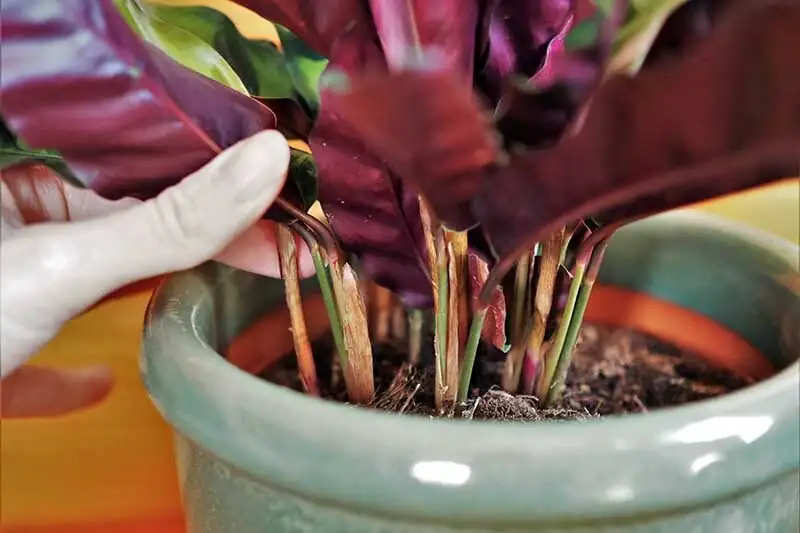
Long, lance-shaped leaves with wavy margins, snakeskin-like swaths of yellow-green and deep green on top, and a rich burgundy underside that glows in strong indirect light. Keep it warm, evenly moist, and humid, and your Rattlesnake Plant will reward you with a lush, upright clump that looks freshly painted year-round.