

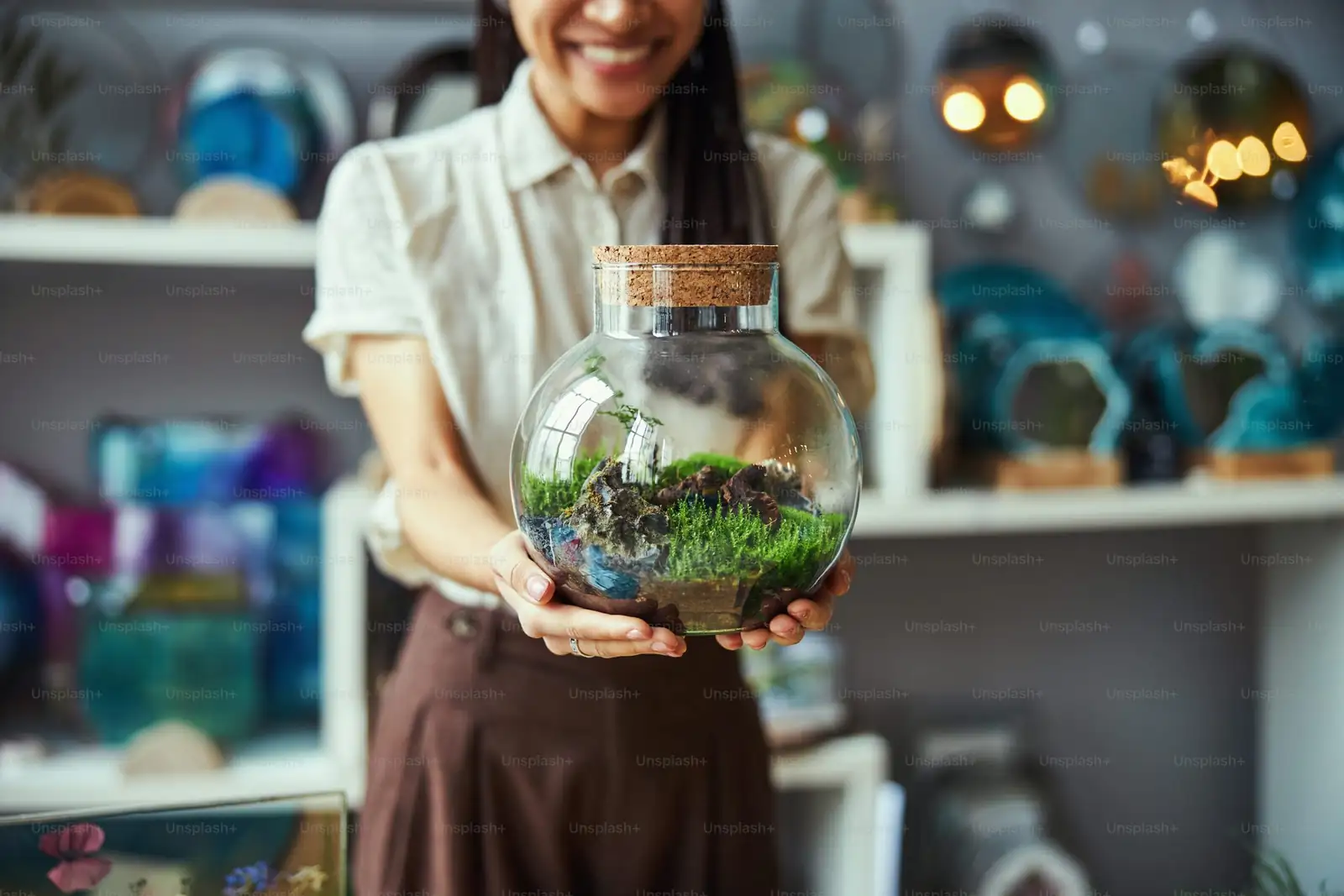
Consider Hypoestes phyllostachya your color director—those freckles and painterly blotches of pink, red, or creamy white want center stage. The trick is designing a set that lets them sing: layered substrates that breathe, airflow you can fine-tune whether your vessel is closed or open, and companion plants that offer rich green texture without competing for attention. Here’s how to build a terrarium or tabletop planting that turns Polka Dot Plant into the chromatic focal point.
Start with the color story
- Choose the star shade: Pink and red cultivars read bold and playful; white variegates feel modern and graphic. All are richest in bright, filtered light.
- Build a supporting cast in greens: Let Hypoestes be the only “neon.” Use a palette of matte, deep, and mossy greens around it to make those speckles glow.
- Use the 10–20% accent rule: Make Hypoestes the smallest but most saturated element—about 10–20% of the total planting. A single lush mound or a tight trio is enough to pull the eye.
The art (and science) of layered substrates
Think of your substrate as both stagecraft and life support. Layers manage moisture, oxygen, and microbes—and they look great through glass.
Closed vessel layering (self-contained, humidity-forward)
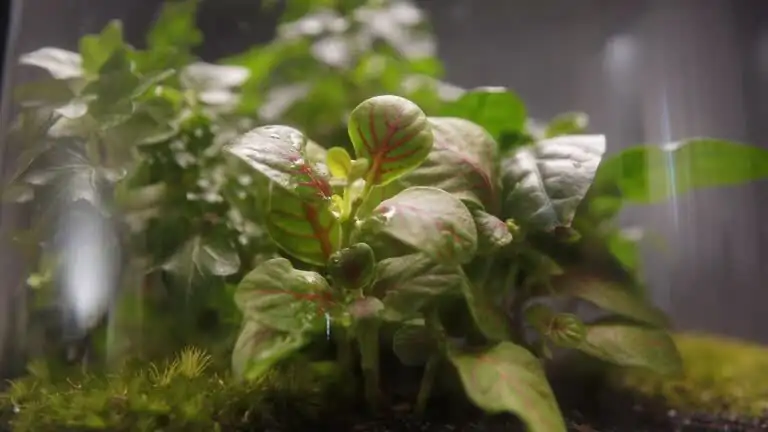
- Base drainage (2–5 cm / 0.75–2 in): Rinsed lava rock, aquarium gravel, or LECA. This captures excess water without drowning roots.
- Separator (thin layer): Insect screen or coir mesh so soil doesn’t sift down. Optional: a sprinkle of horticultural charcoal to keep odors in check.
- Rooting substrate (5–8 cm / 2–3 in, deeper for taller vessels):
- A loose, well-draining mix is key. Try 2 parts high-quality houseplant mix + 1 part perlite, with an optional 10–15% coco coir for moisture balance.
- You can fold in a light pinch of worm castings for slow nutrients, but go easy—closed systems exaggerate everything.
- Topdress for design: Fine-grain gravel “paths,” bark chips, or a drift of cushion moss to frame your focal plant.
Why it works: The drainage zone prevents waterlogging, the separator keeps the profile crisp, and the airy substrate stays evenly moist rather than soggy—exactly what Hypoestes prefers.
Open pot or bowl layering (breathable, maintenance-light)
- Choose a container with a drainage hole whenever possible.
- Substrate: Standard houseplant mix improved with perlite (about 30–40%) for quick drainage. In shallow bowls, add some fine bark to keep pockets of air.
- Topdress: Washi-sized pebbles, live or preserved moss, or dark bark mulch that visually cools the scene and spotlights the leaf color.
Sculpt the terrain
- Build a gentle berm under Hypoestes so it sits slightly higher than companions—instant focal point and better airflow at the crown.
- Create negative space: a sweep of moss, a gravel “river,” or a small slope draws the eye right to the speckles.
Airflow you can dial in
In a closed terrarium
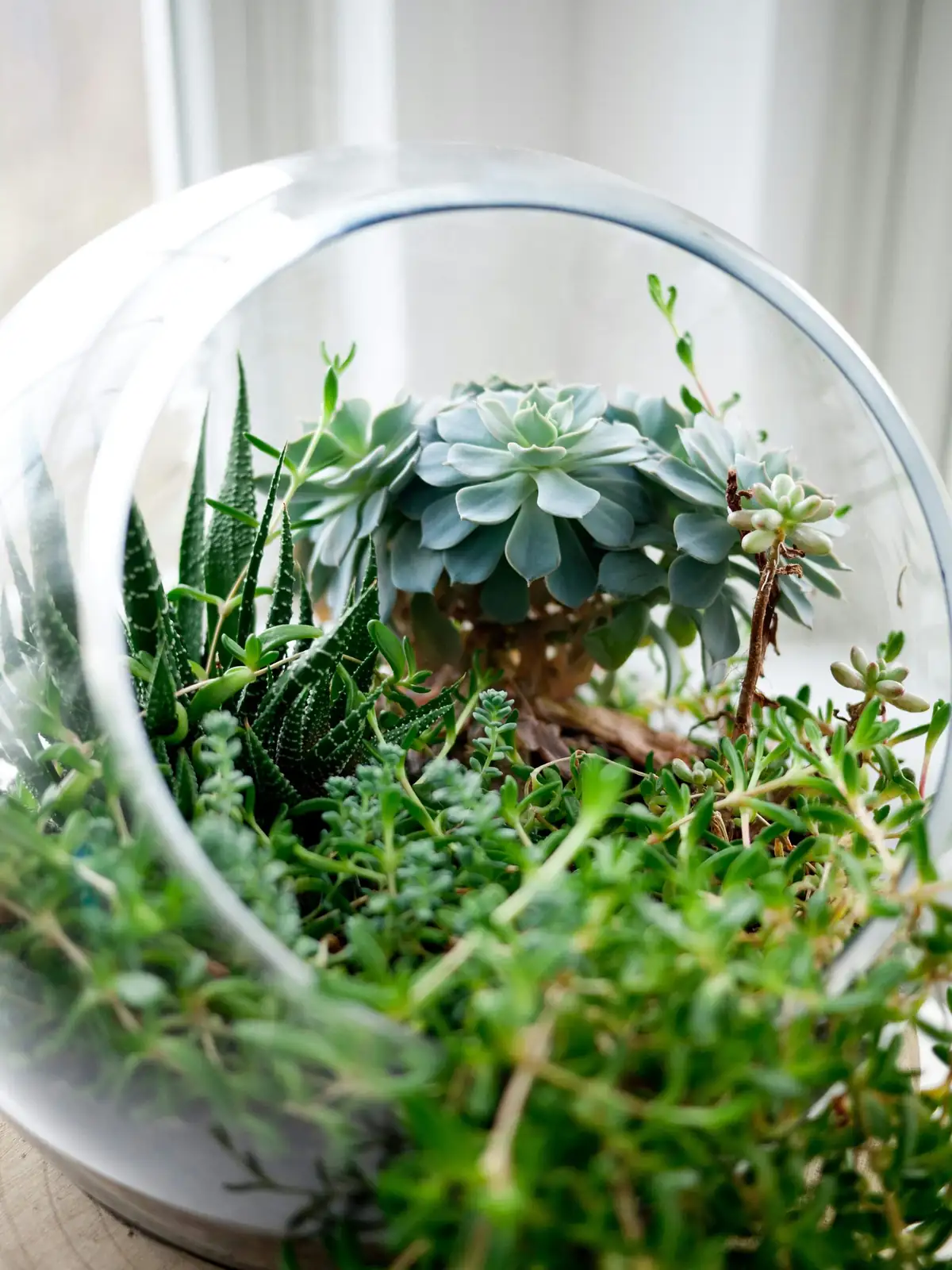
Hypoestes loves moderate to high humidity and steady warmth, but it still needs to breathe.
- The first two weeks: Leave the lid slightly ajar (2–5 mm) or “burp” the vessel daily to release excess humidity while roots settle. Aim for light, occasional condensation that clears by midday.
- Venting options: Use a lidded jar you can crack, a vessel with a small vent, or prop the lid with a sliver of cork to fine-tune airflow.
- Placement: Bright, filtered light—think an east window or a bright spot a few feet back from a sunny exposure. Avoid harsh midday sun that can turn the terrarium into a sauna.
- Temperature sweet spot: 18–27°C (64–81°F). Keep it well above 13°C (55°F).
- Mold or algae? Wipe the glass, increase the vent gap, and let the upper centimeter of substrate dry slightly before re-closing.
In an open vessel
You’re trading humidity for airflow, so manage moisture thoughtfully.
- Avoid drafts from AC/heat vents; steady, gentle room air is best.
- Boost ambient humidity to around 50%+ with a pebble tray nearby (pot above the waterline) or by grouping plants.
- Water thoroughly when the top 1–2 cm (0.4–0.8 in) of mix feels dry, then let excess drain completely.
Light that keeps the confetti bright

- Bright, filtered light or partial sun is the color key. East-facing windows are golden; bright north light works too.
- Too little light: leaves go greener and the plant stretches. Move closer to the light and pinch tips to restore a compact, patterned look.
- Too much direct midday sun: leaf scorch. Use sheer curtains or step it back from the window.
- Grow lights: 8–12 hours under a 5000–6500 K LED, with the fixture 25–35 cm (10–14 in) above the leaves, keeps color saturated without stress.
Choose companions that frame (not fight) your focal point
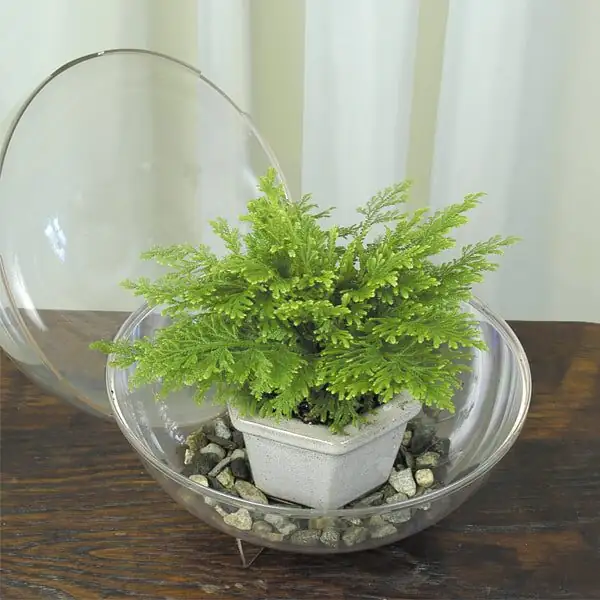
Go for texture, scale contrast, and restful greens. These all enjoy similar moisture and gentle light.
- Mossy carpets: Cushion/pillow moss, fern moss. They soften hard lines and make color pop.
- Fine-texture fillers: Selaginella species, Pilea depressa or Pilea glauca for tiny leaves and soft drape.
- Understory foils: Small ferns (e.g., delicate Pteris or micro Asplenium types) kept pruned low to mid-height.
- Vein detail without color clash: Green or white-veined Fittonia (nerve plant) accents work if used sparingly and kept lower than your Hypoestes.
- Trailers for edge framing: Peperomia prostrata or small creeping Peperomia cuttings to outline paths and mounds.
Design tip: Keep high-contrast or heavily variegated plants away from the Hypoestes spotlight. You want a single star, not a turf war.
Planting and maintenance, step by step
Closed terrarium build
- Rinse and lay the drainage layer; add separator and substrate.
- Pre-moisten substrate until it clumps lightly when squeezed but doesn’t drip.
- Plant Hypoestes atop a small berm; tuck companions around the base. Keep leaves off the glass for airflow.
- Topdress to define negative space.
- Water sparingly along the glass with a pipette, then place the lid slightly ajar. Adjust venting over a week as condensation patterns stabilize.
Open vessel (pot or bowl)
- Use a pot with drainage. Add your airy mix.
- Plant Hypoestes center-high; companions go lower and looser.
- Water thoroughly and let drain; add a pebble tray nearby if room humidity is low.
- Topdress for contrast and to keep soil splash-free.
Watering and feeding that support color
- Growing season (spring–autumn):
- Open containers: water when the top 1–2 cm is dry; soak through and drain.
- Closed vessels: water lightly only when you see the substrate lighten and condensation disappears for a day or two.
- Feed every two weeks at half strength with a balanced liquid fertilizer. In closed systems, go lighter (quarter strength monthly) to avoid algae and salt buildup.
- Winter: Light is weaker and growth slows. Keep just lightly moist and reduce or pause feeding.
Pruning, shape, and those small magenta flowers
- Pinch tip growth often to keep a compact, bushy mound—this is your design ally against legginess.
- Summer blooms are charming but can pull energy from foliage display. Remove flower spikes if you want maximum leaf color and density.
Troubleshooting (designer’s quick fixes)
- Leggy, greener leaves: Increase bright, indirect light; pinch stems to encourage branching.
- Crispy edges in open pots: Boost humidity (pebble tray, grouping) and water before the top layer fully dries out.
- Yellowing and limp: Possible overwatering. Improve drainage, let the mix breathe, and never let a pot sit in water.
- Fogged-up glass all day: Too wet or too warm. Vent more, reduce watering, move to gentler light.
- Pests (spider mites, aphids, mealybugs, whiteflies): Treat early with insecticidal soap or horticultural oil and improve humidity/airflow. Always remove plants from a closed terrarium to treat, let them dry, and reintroduce once stable.
Propagation and refreshes
- Take 5–10 cm (2–4 in) stem tips, strip the lower leaves, and root in water or moist potting mix. Warmth and higher humidity speed things along.
- Use new cuttings to re-densify a display or start a fresh, compact focal mound.
- Repot into a 12.5–15 cm (5–6 in) pot with fresh mix when roots fill the space; refresh terrarium plantings every couple of years to keep them crisp.
Placement ideas
- Bathrooms and kitchens are prime—naturally higher humidity and bright, gentle light suit Hypoestes perfectly.
- On a bright shelf a few feet back from a sunny window, or near an east window where morning sun is kind.
Safety and hardiness
- Generally considered non-toxic to cats and dogs; nibbling may still cause mild stomach upset.
- Frost-averse; hardy outdoors only in warm climates. Keep well above 13°C (55°F).
Design takeaway: Let texture whisper and color shout. With breathable layers, tuned airflow, and a chorus of quiet greens, Hypoestes phyllostachya becomes the unapologetic focal point—your living exclamation mark in glass.