

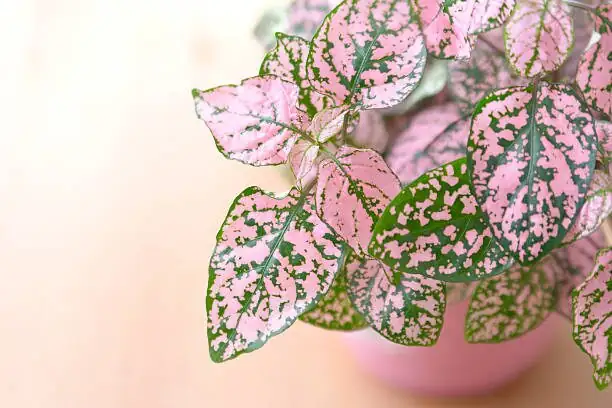
Ever met a houseplant that shows you exactly how it feels about your lighting, watering, and pruning—in technicolor? Hypoestes phyllostachya (aka the Polka Dot Plant, Freckle Face, Flamingo Plant, Measles Plant) is a tiny drama queen with a huge payoff. When you get the light, trims, and moisture right, it explodes with painterly pinks, reds, and creamy splashes. When you don’t, it “tells on you” by turning green and lanky. Let’s have some fun busting the biggest myths about color fade, legginess, and flowering—and then we’ll talk about why terrariums turn this plant into a star.
Meet the Polka Dot Plant (and why it’s lovable)
- Origin: Madagascar; now a beloved indoor foliage plant worldwide
- Look: Green, heart- to oval-shaped leaves blotched with pink, red, or creamy-white
- Size: Typically around 25 × 25 cm (10 × 10 in) as a compact potted plant
- Vibe: Compact, bushy, and made for bright, gentle light and moderate-to-high humidity
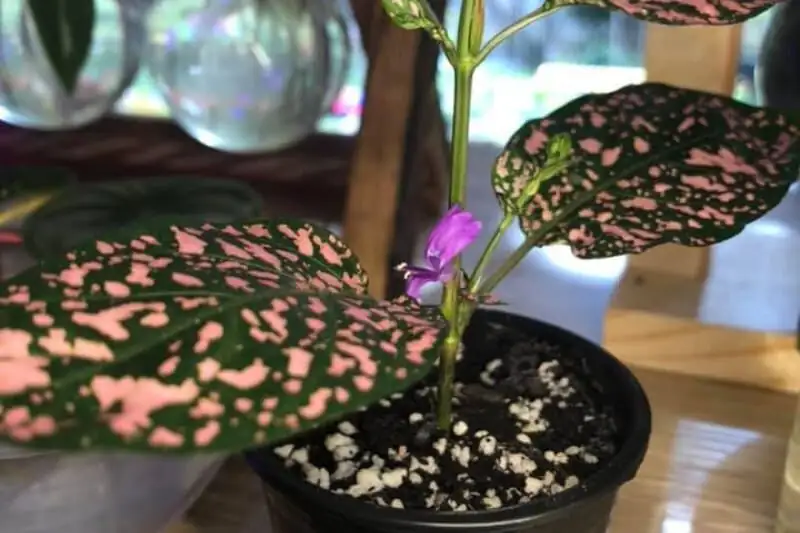
- Bonus: Tiny magenta-to-purple flowers in summer (most folks grow it for the leaves)
Myth-busting the “missing dots”: why color fades in low light
Myth
“If it’s losing color, it needs more fertilizer.”
Truth
Color intensity in Polka Dot Plant is driven primarily by light quality, not nutrients. In low light, the plant protects itself by making more green chlorophyll—so variegation fades and the plant stretches toward the nearest window.
Fix it (without frying it)
- Aim for bright, filtered light or gentle partial sun. Indoors, an east window, a bright north window, or a spot a few feet back from a sunny window is perfect.
- Avoid harsh midday rays. Direct, intense sun can curl or scorch leaves against hot glass.
- Rotate the pot weekly so it doesn’t lean or shade itself.
- Keep leaves dust-free for maximum “light capture.”
- In deep interiors, use a small grow light set to bright-but-diffused.
Result: richer speckles, tighter spacing between leaves, and a compact, mounded plant.
Legginess without pinching: is it destiny or just a haircut away?
Myth
“Leggy stems are inevitable—this plant just gets scraggly.”
Truth
Hypoestes is naturally bushy, but it puts on lanky growth without regular tip-pinching, especially in lower light. Each pinch signals the plant to branch, creating that dense, cushiony look everyone loves.
Your pinch plan (and how to turn trims into new plants)
- When to pinch: As soon as stems have 2–3 pairs of leaves, nip off the tender tip just above a leaf node.
- How: Use clean fingers or snips. Pinch lightly and often for a tidy, compact mound.
- Bonus propagation: Root 5–10 cm (2–4 in) tip cuttings in water or moist potting mix. Plant them back into the mother pot to thicken the clump fast.
Lighting still matters: even with pinching, dim conditions encourage stretch. Combine regular trims with brighter, filtered light for the most compact habit.
Flowers vs. foliage: the energy tug-of-war
Myth
“Let it flower—more blooms mean a healthier plant.”
“Or… doesn’t it die after flowering?”
Truth
Polka Dot Plant can produce small magenta-to-purple flowers in summer, but it’s grown primarily for foliage. Flowering diverts energy from leaf production and can make the plant look sparse. Many growers simply remove flower spikes to keep leaves lush and patterns bold. Indoors, it does not have to “die after blooming”—keep deadheading, and it’ll continue as a vibrant foliage plant.
What to do
- For maximum color and density: pinch off flower spikes as they appear.
- If you enjoy the blooms: let a few open, then remove the spent spikes to refocus growth on leaves.
Why terrariums make Polka Dot Plant shine
Think of a terrarium as a spa day… forever. It gives this plant everything it craves: steady humidity, even moisture, and soft, diffused light.
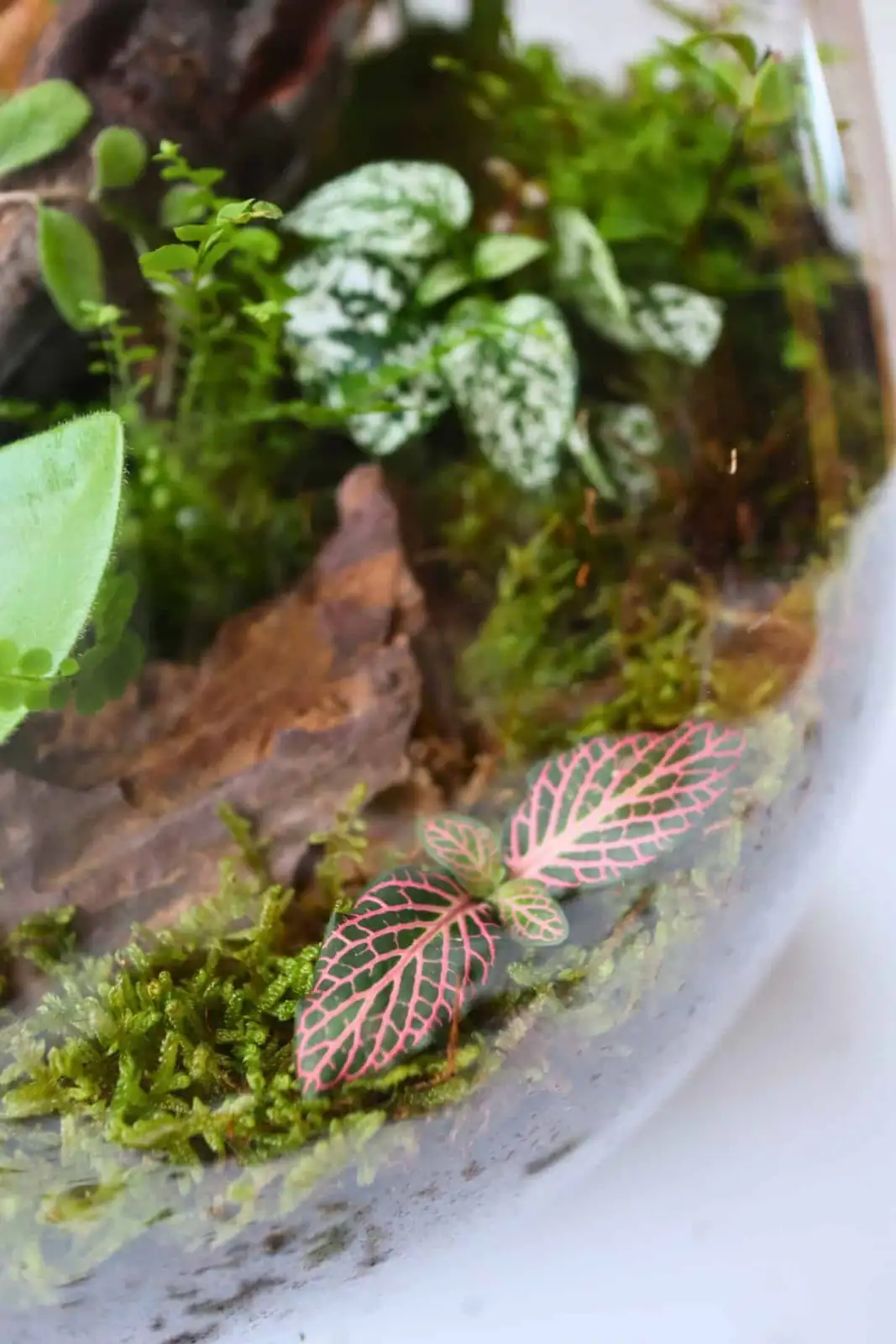
What a terrarium gets right (almost automatically)
- Humidity: Naturally higher (aim for 50%+; many terrariums run higher still), which keeps leaves plump and reduces spider mite risk.
- Moisture: The closed environment evens out watering swings—no dramatic wilts, just steady growth.
- Light: Glass diffuses brightness for rich variegation without scorch.
- Scale: Its compact habit suits small landscapes; frequent pinches keep it adorably mini.
Terrarium setup tips
- Container: Enclosed or semi-closed with some airflow; avoid full sun on glass (it’s a magnifying oven).
- Layers: Pebble/LECA drainage layer, mesh barrier, then a loose, well-draining substrate. A standard houseplant mix improved with perlite works great.
- Watering: Add small amounts and watch the glass. Persistent heavy condensation? Vent to dry slightly.
- Maintenance: Pinch sparingly but regularly. Remove any flower spikes if you want a tight, leafy dome.
- Companions: Ferns, mosses, small peperomias—their love of humidity and gentle light aligns nicely.
At-a-glance care cheat sheet
- Light: Bright, filtered light or partial sun; avoid harsh midday sun.
- Water: Spring–autumn, water when the top 1–2 cm (0.4–0.8 in) of mix is dry, then soak through and drain. Winter, keep just lightly moist.
- Temperature: 18–27°C (64–81°F). Avoid chills below ~13°C (55°F).
- Humidity: Moderate to high; 50%+ is ideal. Pebble tray, grouping, or a naturally humid room helps.
- Soil: Loose, well-draining potting mix (add perlite for airiness).
- Feeding: Spring–autumn, every 2 weeks with a balanced liquid fertilizer at half strength. Pause/reduce in winter.
- Pruning: Pinch tips often to prevent legginess; remove blooms to keep foliage showy.
- Propagation: Easy from 5–10 cm (2–4 in) stem cuttings, rooted in water or moist mix.
- Repotting: Move to a 12.5–15 cm (5–6 in) pot with fresh mix when root-bound; refresh every 2–3 years.
- Placement: Bright bathroom or kitchen is terrific; also perfect for terrariums and glass jars (with some airflow).
- Hardiness: USDA 10–11; treat as an indoor plant in cooler climates.
- Pet safety: Generally considered non-toxic to cats and dogs (chewing may cause mild tummy upset).
Troubleshooting: fast fixes
- Faded color, more green than pink: Light is too low. Move closer to bright, indirect light and rotate weekly.
- Long, spindly stems: Combine brighter light with frequent tip-pinching.
- Sudden wilting/crisping: The mix got too dry. Water thoroughly; it often perks back up. Aim for even moisture next time.
- Yellowing leaves and soggy mix: Overwatered or poor drainage. Let excess drain; never let the pot sit in water.
- Brown, curled edges or scorch: Too much direct, hot sun against glass. Pull back or diffuse.
- Fine webbing or sticky residue: Spider mites, aphids, mealybugs, or whiteflies. Treat early with insecticidal soap or horticultural oil; improve humidity and airflow.
- Mushy stems, sour smell: Root rot from waterlogged soil. Repot into a well-draining mix and reduce watering volume/frequency.
The take-home
If your Polka Dot Plant is green and gawky, it’s not being “difficult”—it’s sending clear signals. Give it bright, gentle light, keep the soil evenly moist (never swampy), and pinch with confidence. Deadhead to keep the color show going. Better yet, pop it into a terrarium and watch those freckles glow. This is a small plant with big personality—once you learn its language, it will happily shout in pink.