

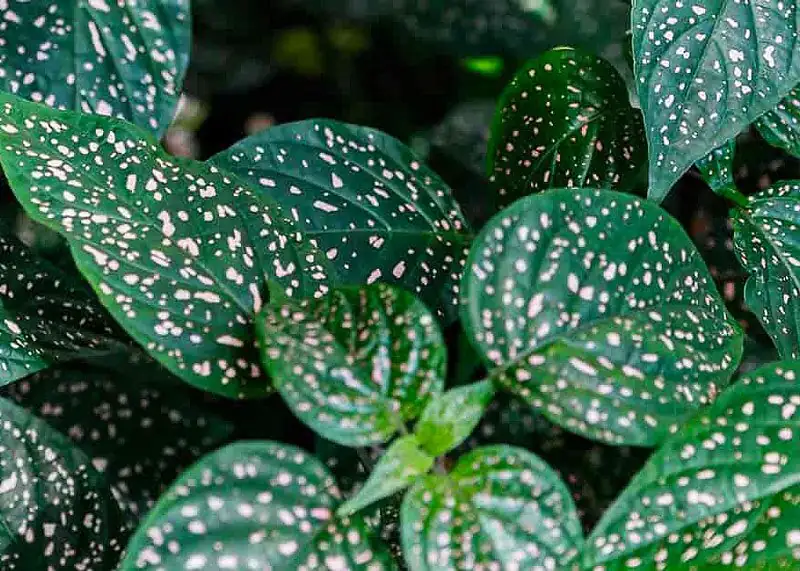
Step into the dappled shade of Madagascar’s rainforests and you’ll find a little understory showstopper splashing color where you least expect it. Hypoestes phyllostachya—better known as the polka dot plant—turns green leaves into confetti, freckling them with pink, red, or creamy-white. It’s a plant that seems to laugh in dots and dashes, then settles happily into small pots and terrariums back at home.
From Madagascar’s understory to your windowsill
In its native Madagascar, the polka dot plant grows beneath taller trees, where sunlight is sifted into flecks. That filtered glow is its sweet spot: bright enough to paint bold freckles, gentle enough to keep leaves soft and lush. Give it similar conditions indoors and it rewards you with the richest color and a dense, bushy habit. Starve it of light and it stretches and turns greener; overwhelm it with harsh midday sun and leaves can scorch.
Meet the plant: quick botanical portrait
- Scientific name: Hypoestes phyllostachya (family Acanthaceae; genus Hypoestes)
- Common names: Polka Dot Plant, Freckle Face Plant, Flamingo Plant, Measles Plant
- Habit and size: Compact, mounding, and bushy; typically about 25 × 25 cm (10 × 10 in) as a potted plant, and easily kept smaller with regular pinching
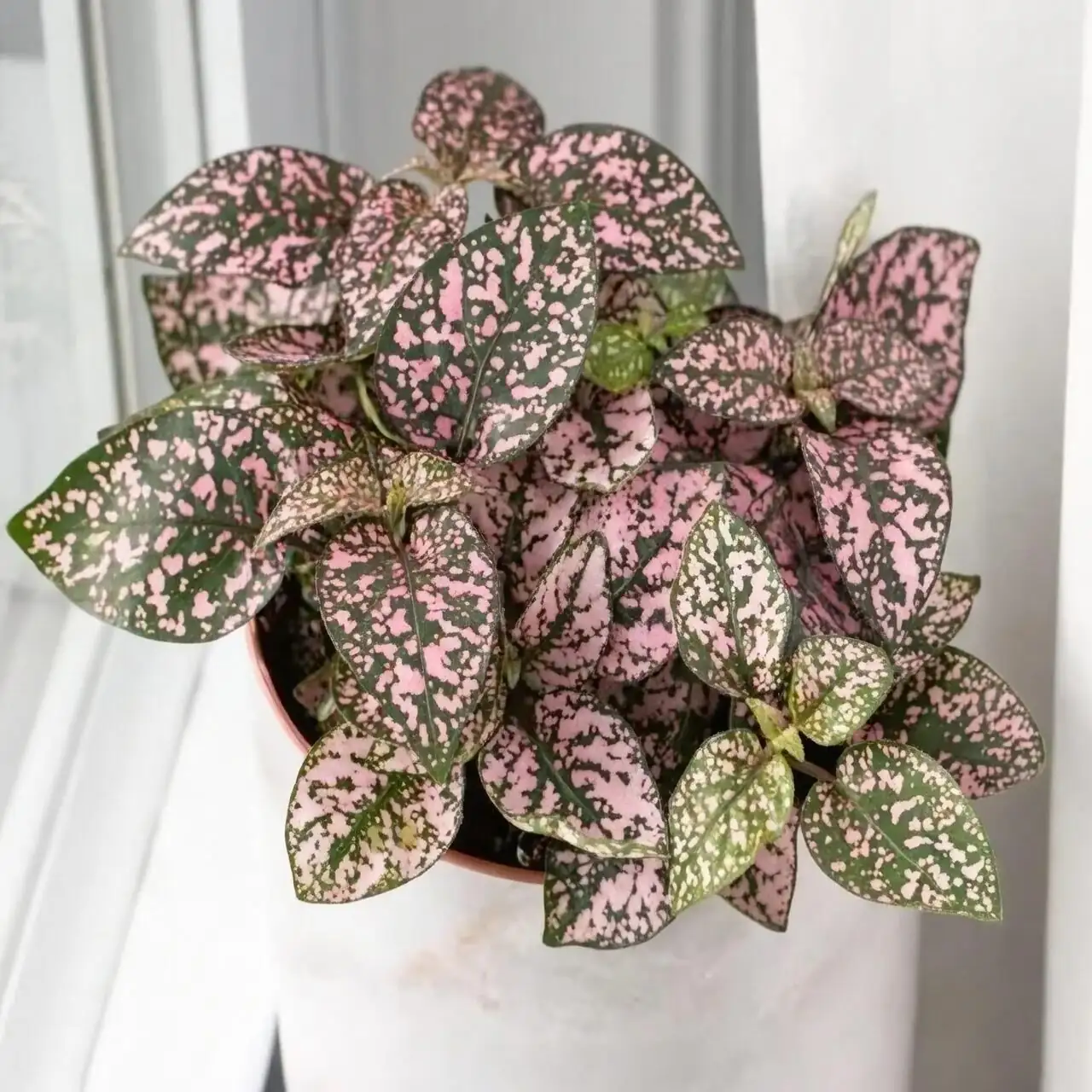
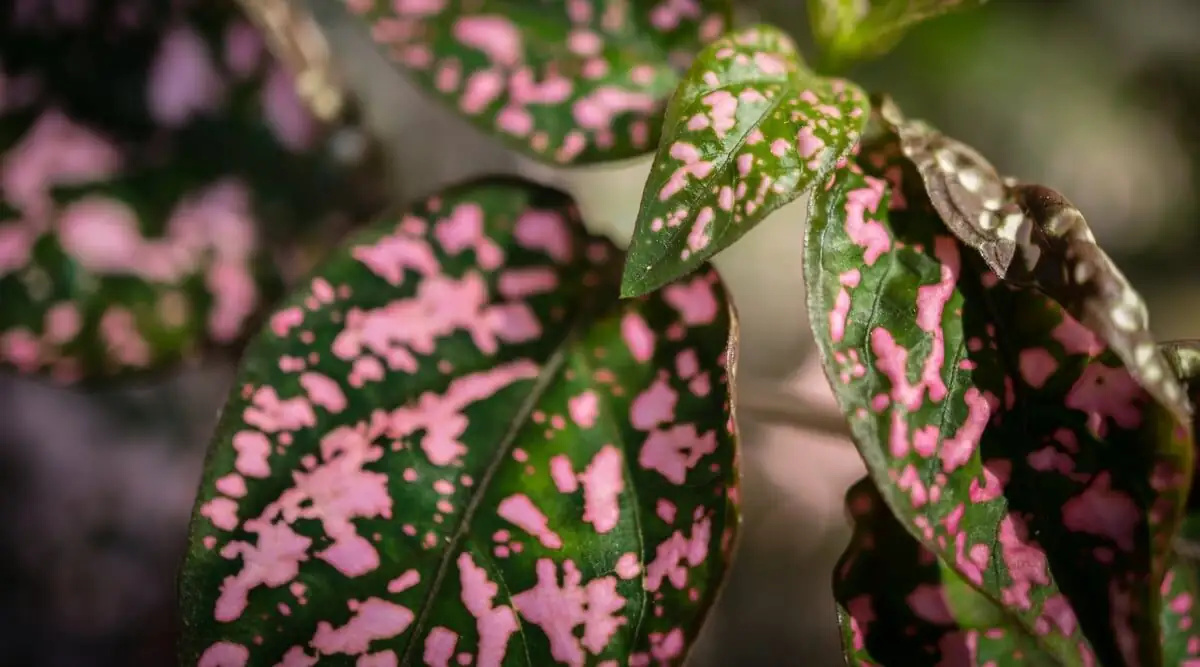
- Foliage: Heart- to oval-shaped green leaves splashed or blotched with pink, red, or creamy-white (often more painterly patches than tidy dots)
- Flowers: Small magenta-to-purple blooms may pop up in summer; many growers pinch them off to keep the foliage in top form
- Origin: Madagascar; widely cultivated and naturalized in some tropical regions
A brief history: from forest floor to horticultural favorite
European collectors fell hard for this freckled foliage in the late 19th century, when Hypoestes phyllostachya entered botanical literature and glasshouse collections. Its preference for bright, gentle light made it a perfect plant for conservatories, and later, for the humble home windowsill and—most famously—terrariums and glass jars. The genus name Hypoestes is rooted in Greek: hypo (“under”) and estia (“house”), a nod to floral parts that are sheltered by bracts. Fitting, since this is a plant that loves a protective canopy, whether that’s a rainforest ceiling or the soft light of an east-facing window.
The modern makeover: how breeding painted today’s “splashes”
Originally, some forms showed tidy dots—hence “polka dot”—but over decades, plant breeders leaned into bolder brushstrokes. Through careful selection and modern breeding, we now have a kaleidoscope of cultivars in pink, red, and white, with patterns from dustings to dramatic splashes.

- Colorways and styles
- Pink splash types: From bubblegum blush to deep rose
- Red splash types: Carmine to wine-red contrast on dark green
- White splash types: Creamy sprinkles to near-white overlays
- What breeders selected for
- Higher-contrast leaf patterns that hold color indoors
- Compact, branching habits that stay tidy in small pots
- A tendency to delay or minimize flowering so foliage remains the star
- Cultivar names you’ll meet
- Pink and red “Splash” types (e.g., ‘Pink Splash’, ‘Red Splash’)
- The “Confetti” series (including white and pink options)
- Select lines with richer, painterly blotches rather than fine speckles
Today you can find both seed-grown series (great uniformity and compactness) and cutting-propagated selections (often the most saturated colors). Either way, breeding has turned this Madagascan understory sprite into a designer’s go-to for tiny tablescapes and terrarium vignettes.
How to grow a polka dot plant with panache
Think “warm rainforest window” and you’ve got the care recipe.
Light
- Best: Bright, filtered light or gentle partial sun; indoors, try an east window, a bright north window, or a few feet back from a sunny exposure
- Color tip: More light (not harsh midday) deepens freckles; low light makes leaves greener and growth leggy
Temperature and humidity
- Temperature: 18–27°C (64–81°F); avoid chilling below 13°C (55°F)
- Humidity: Moderate to high; aim for 50%+ if you can
- Try a pebble tray (keep the pot above the waterline), group humidity-loving plants, or park it in a naturally moist room like a bathroom or kitchen
Soil and watering
- Soil: Loose, well-draining houseplant mix; add perlite for airiness
- Watering rhythm:
- Spring to autumn: Water when the top 1–2 cm (0.4–0.8 in) feels dry; drench thoroughly and drain—never let it sit in water
- Winter: Growth slows; keep the mix just lightly moist and water less often
Feeding
- Spring to autumn: Every 2 weeks with a balanced liquid fertilizer at half strength
- Winter: Reduce or pause feeding
Pruning and shaping
- Pinch out stem tips often to encourage branching and keep the plant compact and bushy
- Remove flower spikes if you prefer maximum foliage color and density
Repotting
- Refresh into a 12.5–15 cm (5–6 in) pot when roots fill the container
- Repot every 2–3 years, or sooner if root-bound
Propagation (so easy, it’s addictive)
- Take 5–10 cm (2–4 in) tip cuttings
- Strip lower leaves and root in water or moist potting mix
- Warm temperatures and higher humidity speed rooting
Placement ideas: where polka dots truly pop
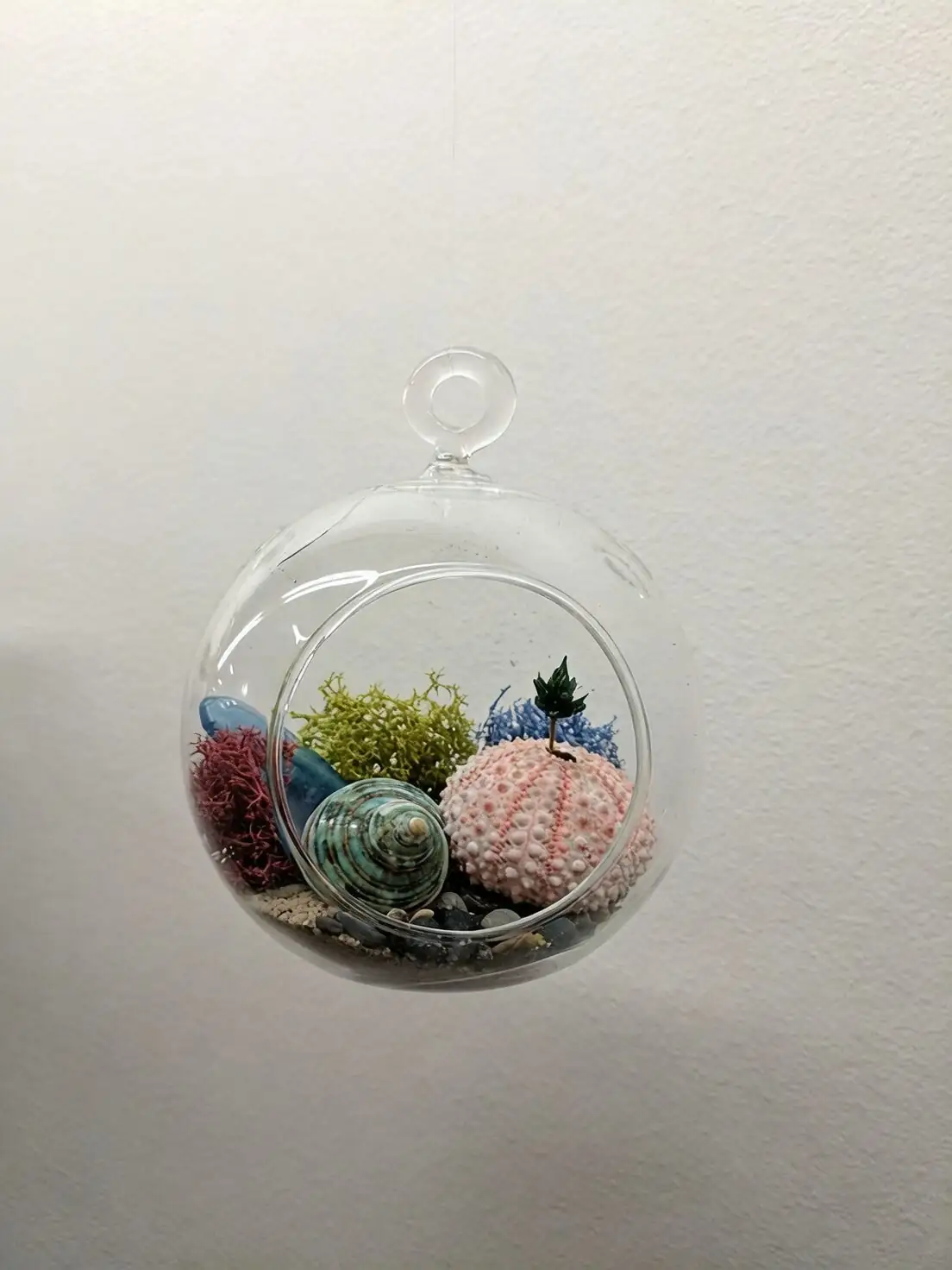
- Terrariums and glass jars: A natural, size-perfect star (ensure some airflow)
- Bathrooms and kitchens: Gentle light plus built-in humidity
- Mixed planters: Pair with low, fine-textured greens to let the freckles sing
Common snags and quick fixes
- Leggy, stretched stems: Increase bright, indirect light and pinch tips regularly
- Greener leaves, fewer freckles: Provide brighter filtered light
- Crispy edges: Usually low humidity or inconsistent watering; boost humidity and water more consistently (without waterlogging)
- Pests (especially in dry air): Spider mites, aphids, mealybugs, and whiteflies can appear
- Act early with insecticidal soap or horticultural oil
- Improve humidity and airflow to discourage outbreaks
- Overwatering and root rot: Use a chunky, well-draining mix and never leave the pot sitting in a saucer of water
Pet-friendliness
Polka dot plant is generally considered non-toxic to cats and dogs. That said, curious nibbling can still cause mild stomach upset, so it’s wise to keep it just out of reach of habitual leaf-tasters.
Year-round rhythm
- Spring–autumn: Water when the surface dries; feed at half strength every 2 weeks; pinch often for fullness
- Summer: Expect occasional small magenta-to-purple blooms; remove them if you want to keep the foliage show at peak
- Winter: Reduce watering and feeding; keep just lightly moist
- Any time: Repot when roots crowd the pot (usually every 2–3 years)
Symbolism and sentiment: what do the freckles say?
There isn’t a deep, traditional “flower language” history for Hypoestes phyllostachya. Any modern symbolism is more a reflection of its look and lifestyle than old folklore. Today, its playful spots are often taken to mean:
- Joy and lightheartedness (confetti leaves!)
- Embracing individuality (no two patterns are quite alike)
- Small-scale beauty (a reminder that a 10 cm pot can still be a showpiece)
In short, it’s a contemporary emblem of cheer, not a plant with a centuries-old coded message.
Five fun facts to impress your plant pals
- Light tells the palette what to do: brighter, filtered light intensifies the freckles; dim corners mute them
- Pinching is magic: a quick tip-snip keeps it compact for months
- It loves company: terrariums and humidity-rich rooms suit it perfectly
- The “polka dots” can morph into painterly splashes in modern cultivars
- Many growers remove the small summer flowers so the leaves remain the main event
At a glance
- Name: Hypoestes phyllostachya (Polka Dot Plant)
- Family: Acanthaceae
- Origin: Madagascar (now widely cultivated; naturalized in some tropical regions)
- Indoors: Compact foliage star for bright, indirect light and moderate to high humidity
- Outdoors: Frost-tender; suitable year-round only in USDA zones 10–11
From the rainforest understory to the rim of a teacup terrarium, Hypoestes phyllostachya has made a joyous journey—evolving from speckles to splashes and proving that color doesn’t have to be loud to be lively. Give it gentle light, a bit of humidity, and regular pinching, and this freckled charmer will keep your indoor landscape delightfully dotted.