

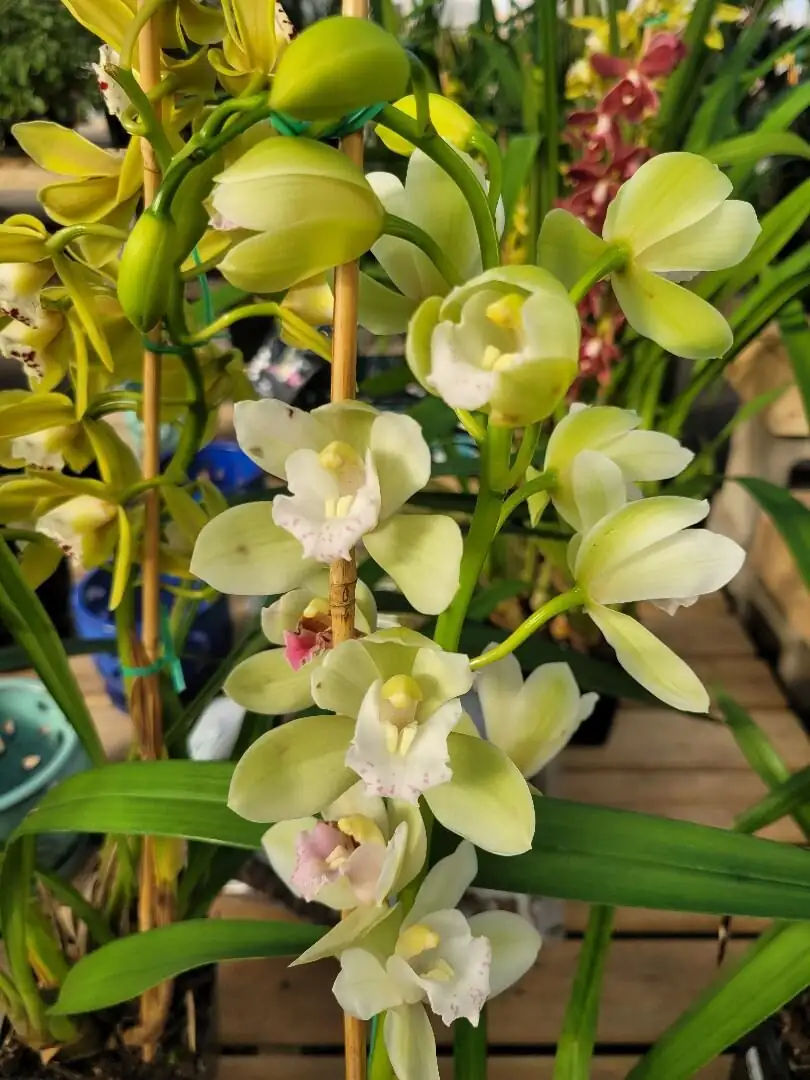
Think of Miniature Cymbidium orchids as compact stylists: refined, poised, and surprisingly adaptable—provided you give them a bright seat, a cool evening, and a little spa-like humidity with fresh, gentle air. The best part? You can create that orchid-perfect microclimate with companions and setups that look as good as they work.
Meet the Miniature Cymbidium Orchid (Cymbidium hybrids, miniature cultivars)
- Family: Orchidaceae; Genus: Cymbidium
- Origin: Horticultural hybrids bred for compact growth (the genus is native mainly to Asia and Australia)
- Habit and size: Compact, clumping sympodial orchid with pseudobulbs; typically 30–60 cm (12–24 in) tall
- Foliage: Evergreen, strap-like leaves arching from firm pseudobulbs
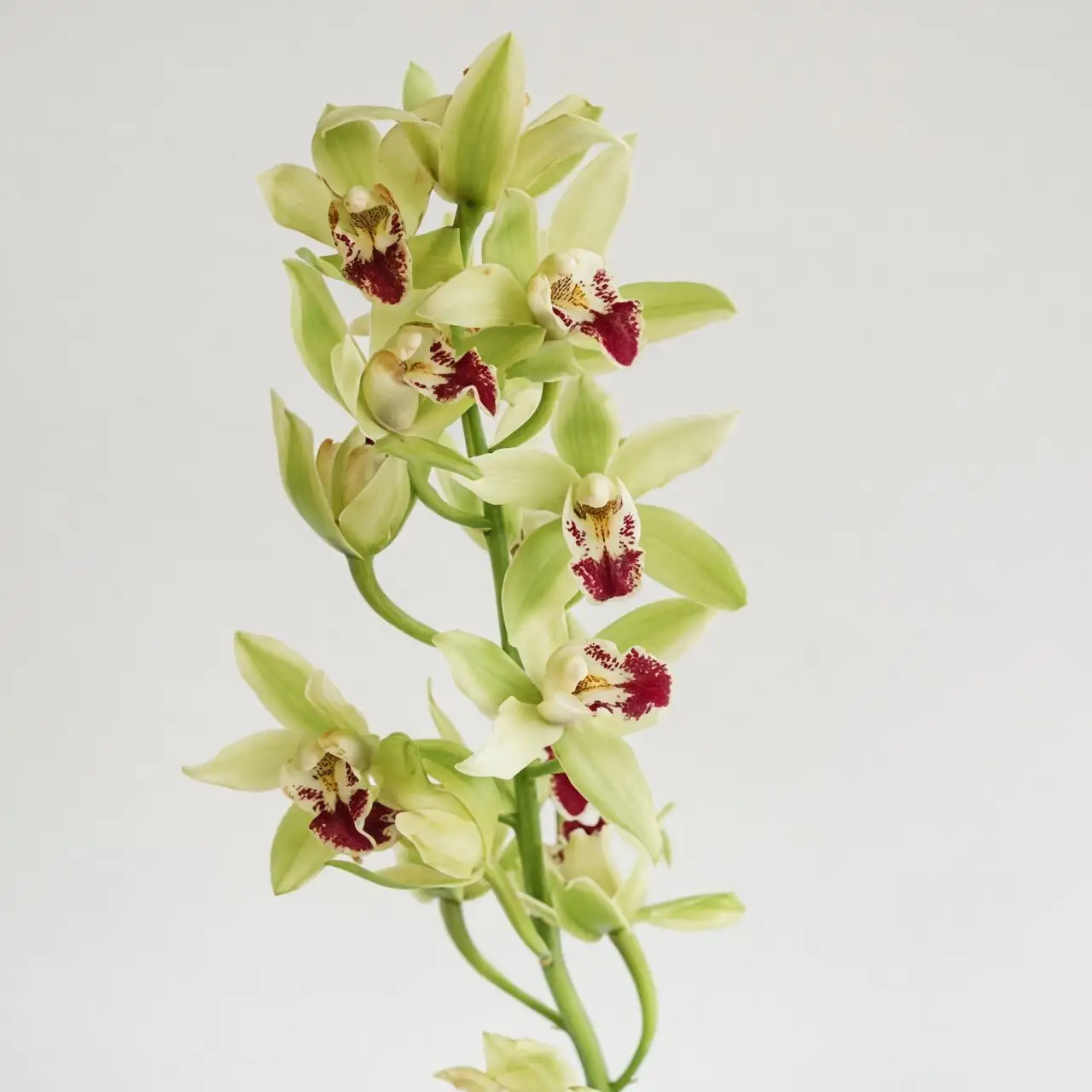
- Flowers: Waxy, long-lasting blooms on upright to gently arching spikes; typically winter–spring indoors, depending on cultivar and care
- Why they bloom: Bright light plus cooler nights in late summer to autumn is the classic trigger
Style-Smart Microclimate: Light, Humidity, Airflow
- Light: Bright, indirect light; gentle morning sun is welcome. Avoid harsh midday sun through glass.
- Temperature: Best growth around 10–24°C (50–75°F). To set flower spikes, aim for several weeks of cooler nights about 10–13°C (50–55°F) in autumn.
- Humidity: Moderate—target 40–60%. Keep air moving so it’s never stale or clammy.
Elegant tools that look intentional:
- Pebble trays in ceramic or stoneware, with smooth river pebbles
- A slim, quiet USB or clip-on fan set to low, angled to skim past foliage (not blast it)
- A small digital hygrometer to monitor that sweet 40–60% zone
- Sheer curtains to soften sun, or a matte window film for bright, diffuse light
Tip: Grouping plants subtly bumps local humidity, but space them so leaves don’t touch—your orchid values both moisture and breathable “personal space.”
Companion Planting That Works (and Wows)
Companions aren’t just pretty—they fine-tune moisture around your orchid by creating a calm, humid boundary layer. Two style-forward families shine: ferns and peperomias.
Ferns: The soft-focus humidity halo
Choose fern textures that flatter Cymbidium’s clean leaf lines:
- Airy: Maidenhair fern (Adiantum) for a cloudlike edge—best for attentive waterers
- Sculptural: Bird’s nest fern (Asplenium nidus) for a bold, bowl-like rosette that pairs beautifully with modern pots
- Classic: Boston fern (Nephrolepis exaltata) or silver brake fern (Pteris cretica) for lacy contrast
Placement and care notes:
- Pot ferns separately so you can water freely without soaking orchid bark
- Set fern pots on their own pebble trays; keep all trays’ water lines below pot bases
- Give 5–8 cm (2–3 in) of air gap between plants to avoid stagnant pockets
Peperomias: Low-fuss, high-style foliage foils
These compact companions prefer the same bright, indirect light:
- Peperomia obtusifolia: glossy, sculptural, easy
- P. argyreia (Watermelon): dramatic silver striping that echoes cymbidium petals
- P. caperata: corrugated leaves for extra texture in tighter nooks
Placement and care notes:
- Let peperomia pots dry a touch more between waterings than ferns
- Use matte white, charcoal, or brass-toned cachepots to create a cohesive vignette
- Tuck peperomias slightly to the sides so your cymbidium’s future spikes have a clear stage
Three Chic Setups That Boost Humidity and Airflow
1) East-Facing Windowsill Vignette (Bright + Gentle)
- Surface: A narrow sill or slab with a sheer curtain
- Center: Mini Cymbidium on a low-footed stand over a pebble tray (water below pot base)
- Flanks: A small bird’s nest fern and a Watermelon peperomia on their own trays
- Air: A whisper-quiet fan on low, angled across the leaf tops to keep air moving
- Monitor: Hygrometer tucked behind the orchid; aim for ~45–55% RH
- Result: Polished, spa-like, and bloom-ready

2) Slim Console Garden (Good Looks in a Tight Hallway)
- Shelf: Open, slatted or wire for airflow
- Top tier: Cymbidium slightly forward for morning light; peperomia as a sidekick
- Lower tier: A Boston fern in dappled light; a shallow tray with pebbles under each pot
- Air: Clip-on fan under the console to send a gentle upward draft
- Cable care: Thread cords in braided sleeves so it reads as design, not clutter
3) Frost-Free Sunroom Nook (Cool Nights, Blooming Rights)
- Light: Bright but filtered; midday sun softened by a sheer or bamboo blind
- Bench: Stone or wood slats; multiple ceramic trays with river pebbles
- Companions: Silver brake fern + P. obtusifolia for durable contrast
- Air: A small oscillating fan; crack a window on mild autumn nights to hit 10–13°C (50–55°F)
- Winter: Keep it bright and cool; support spikes with unobtrusive stakes
Note: If summering outdoors in mild climates, protect from midday sun and bring plants in before temperatures drop near 10°C (50°F). These minis are not frost-hardy.
Water, Feed, and Repot—Without Sacrificing Style

- Watering rhythm: Soak the orchid mix thoroughly, then drain completely. In active growth, keep evenly moist with a light dry-down at the top between waterings; scale back in cooler, darker periods. Never let the pot sit in water.
- Fertilizer: Balanced orchid feed at half strength every 2–4 weeks in active growth; reduce or pause in winter unless new growth is obvious.
- Pruning: After the show, snip spent spikes near the base. Only remove leaves that are dead or yellowing.
- Repotting: Every 2–3 years, ideally after flowering or as new growth begins. Use a snug pot and a fresh, airy bark-based mix with perlite and/or charcoal.
- Propagation: Divide established clumps, ensuring each division includes several pseudobulbs plus healthy roots.
Style tip: Cachepots are your friend. Keep the orchid in a plain nursery pot for ideal drainage and slip it into a decorative cover pot. Set both on a pebble tray so run-off never re-wets the bark.
Blooming on Cue: Your Cool-Night Game Plan
- Late summer to autumn: Keep light bright and deliver cooler nights around 10–13°C (50–55°F) for several weeks
- Keep away from radiators, heating vents, and hot drafts that erase the temperature drop
- Once spikes appear, maintain bright, cool conditions; rotate gently so buds develop evenly
Health Check: Airflow Is Preventive Medicine
- Pests to watch: Scale, mealybugs, spider mites, and aphids. Wipe leaves weekly and treat with horticultural soap or oil if needed.
- Disease: Root rot from stale, waterlogged media. Avoid heavy, broken-down mixes and standing water.
- Good news: Generally considered non-toxic to cats and dogs, though chewing any plant can upset a tummy.
Buying Guide: Choose a Star
- Look for firm, plump pseudobulbs and clean, deep-green leaves
- Avoid black spotting, mushy bulbs, or sour-smelling media
- For the longest display, pick plants with developing spikes or just-opening buds
Year-Round Care Calendar
- Spring–Summer: Bright light; regular watering; light feeding
- Late Summer–Autumn: Keep light bright; introduce cool nights around 10–13°C (50–55°F) for several weeks to initiate spikes
- Winter: Bright and cool; water less; support developing spikes
Flower Language and Meaning
Orchids have long symbolized elegance, admiration, and refined beauty—associations shaped by centuries of cultivation in Asia and later by Victorian “orchidelirium,” when rarity equaled status. Cymbidiums, with their dignified spikes and enduring blooms, became a favorite for celebrations and gifts. Rather than a single fixed “flower language,” think of cymbidiums as conveying considered taste and lasting regard: a bloom you choose when you want beauty to endure week after week.
Quick FAQ
- Why won’t my miniature cymbidium bloom indoors?
- Most often, nights never get cool enough in late summer to autumn. Keep the plant bright and deliver several weeks of nights around 10–13°C (50–55°F), away from heaters and warm drafts.
- Can I grow it outdoors?
- Only in mild, frost-free climates. Elsewhere, your plant can vacation outside in warm weather but must come in before temperatures dip below about 10°C (50°F), and it must be protected from any frost.
Fun to Know
- Miniature cymbidiums were bred to keep the classic cymbidium look while fitting elegantly on windowsills.
- Their blooms are famously long-lasting—weeks of color and polish from a compact plant.
The takeaway: Pair your Miniature Cymbidium with a fern for softness, a peperomia for graphic foliage, and a few well-chosen tools—pebble tray, fan, sheer light—to keep humidity balanced and air fresh. You’ll create a living vignette that’s both beautiful and bloom-promoting, no compromises required.