

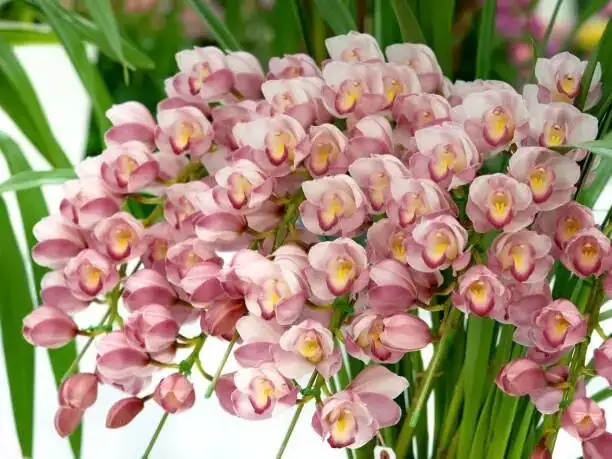
Picture cool dawn air slipping off Himalayan hills and drifting over Australian bushland. Now shrink that wind into your living room, where a compact, clumping orchid leans into the light on a windowsill and lifts a polished spray of blooms that last for weeks. That is the journey of miniature Cymbidium orchids—born from wild Asian–Australian ancestry, refined by generations of breeders, and tailored to thrive in the modern home.
From misty mountains to modern minis
Wild roots across Asia and Australia
Cymbidiums are a genus of orchids native mainly to Asia and Australia, where they range from highland forests to open woodland edges. In cooler mountain zones, crisp nights cue the plants to set spikes; in milder areas, they ride out seasonal swings with evergreen poise. Those resilient wild rhythms—especially the need for bright light and notably cooler nights—became the heartbeat of modern hybrids.

The breeder’s crossroad
As orchid growing exploded in popularity, breeders wanted the stately cymbidium look without the greenhouse footprint. Through decades of selective crossing and line-breeding, they distilled traits from diverse species into compact hybrids that:
- keep their leaves evergreen and strap-like
- clump neatly from pseudobulbs
- send up upright to gently arching flower spikes with waxy, long-lasting blooms
Notable species with influence on compact lines often cited by growers include Cymbidium floribundum (formerly known as pumilum) for free-flowering habit, and garden favorites like ensifolium, devonianum, tracyanum, and lowianum for shape, pattern, and vigor. The exact recipe varies by breeder, but the goal remained constant: smaller plants, big performance.
The dream list: what breeders chased—and won
- Compact habit without compromise
- Target size around 30–60 cm (12–24 in) tall, with tidy, clumping growth that fits a windowsill or cool sunroom.
- Spike architecture
- Strong, manageable spikes that stand upright or arch gracefully; easy to display, easy to stake.
- Durability and display life
- Waxy flowers that hold for weeks; clean foliage that stays presentable between blooms.
- Blooming on cue
- Reliable spiking in winter to spring when days are shorter—prime time for indoor color.
- Temperature savvy
- Willingness to grow in 10–24°C (50–75°F) and respond to autumn cool nights of 10–13°C (50–55°F) to set buds.
- Color, pattern, and lip detail
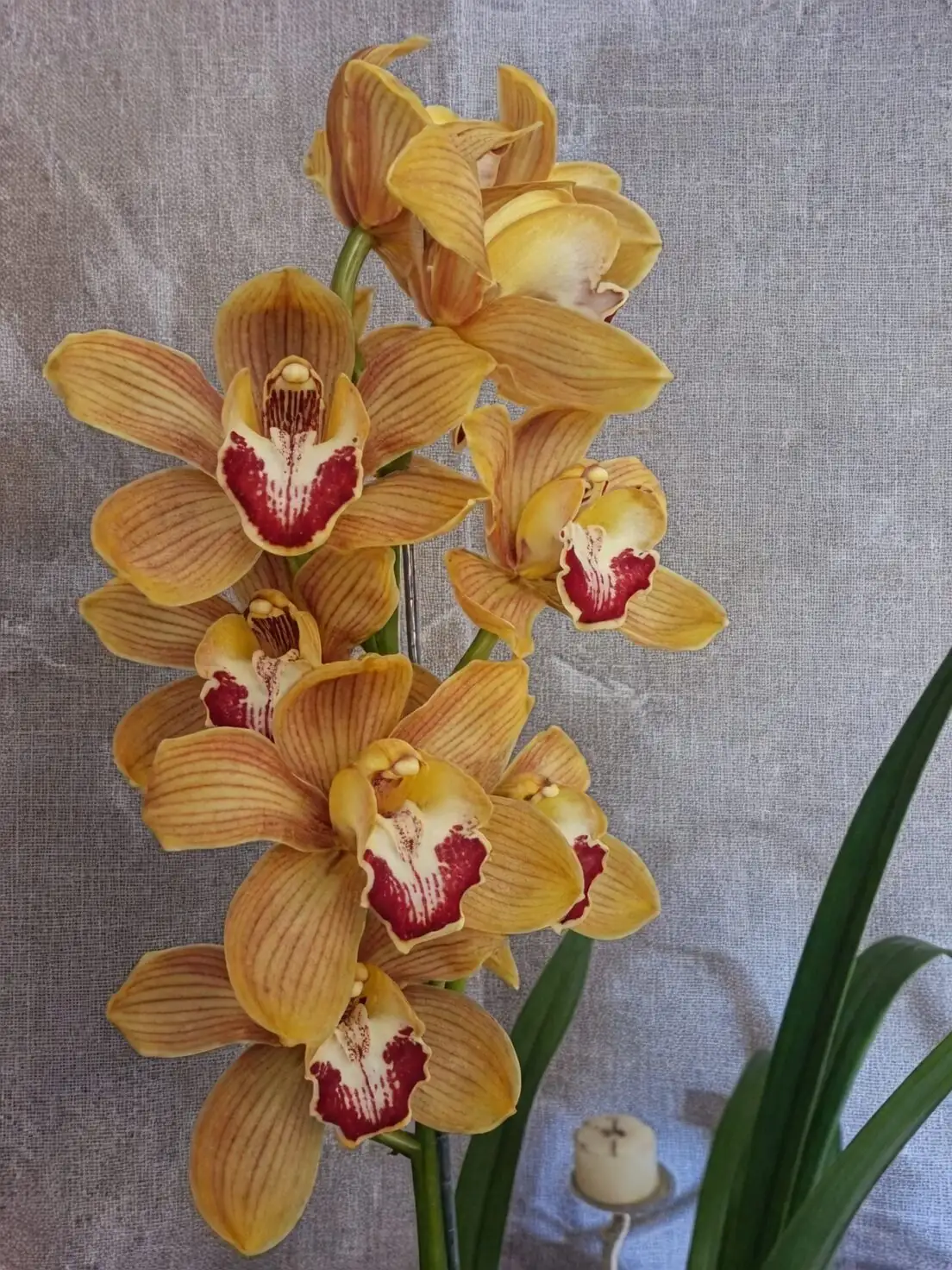
- From classic greens and creams to blushes, burgundies, and freckles; a nod to both tradition and trend.
- Indoor compatibility
- A forgiving nature day to day, as long as you honor their one non-negotiable: bright light plus cooler nights to trigger spikes.
Miniaturizing without shrinking the show
Breeders balanced compact plant size with flower substance by selecting for shorter leaves, tighter clumps, and firm-textured blooms. Many modern minis use careful parent choice and line-breeding to keep the spike “full” while the plant stays petite.
How mini cymbidiums conquered the windowsill
Classic cymbidiums became greenhouse icons. Miniature cultivars moved the story indoors.
- Light
- Bright, indirect light is the sweet spot; gentle morning sun is welcome. Avoid harsh midday sun through glass to prevent leaf scorch.
- Temperature
- Grow well at 10–24°C (50–75°F).
- To bloom, give several weeks of cooler nights around 10–13°C (50–55°F) in late summer to autumn.
- Humidity and airflow
- Aim for 40–60% humidity with gentle air movement—neither parched nor stagnant.
- Potting mix
- Use a free-draining orchid mix: bark-based with perlite and/or charcoal. Never use heavy garden soil.
- Watering
- Drench thoroughly, then drain completely. Keep evenly moist during active growth, letting the top of the mix dry slightly between waterings. Ease off in cooler, darker months. Never stand the pot in water.
- Feeding
- A balanced orchid fertilizer at half strength every 2–4 weeks during active growth. Reduce or pause in winter unless new growth is evident.
- Placement
- A cool, bright windowsill or a frost-free, unheated sunroom is ideal. Keep away from radiators, heating vents, and hot, dry drafts.
The seasonal rhythm
- Spring–summer: brighter light, steady watering, light feeding.
- Late summer–autumn: keep light bright and introduce cool nights (10–13°C / 50–55°F) to initiate spikes.
- Winter: cool and bright; water a bit less; stake and support developing spikes as needed.
Buying smart
- Choose plants with firm pseudobulbs and clean green leaves.
- Avoid black spotting, mushy bulbs, or a sour smell from the pot.
- For the longest show, pick plants with developing spikes or buds rather than fully open flowers.
The shape of the show: spikes with style
Breeders played with spike form as much as flower color:
- Upright spikes
- Clean silhouettes that suit tight spaces and cut-flower work.
- Gently arching spikes
- A natural, flowing line that spills from shelves or windowsills with grace.
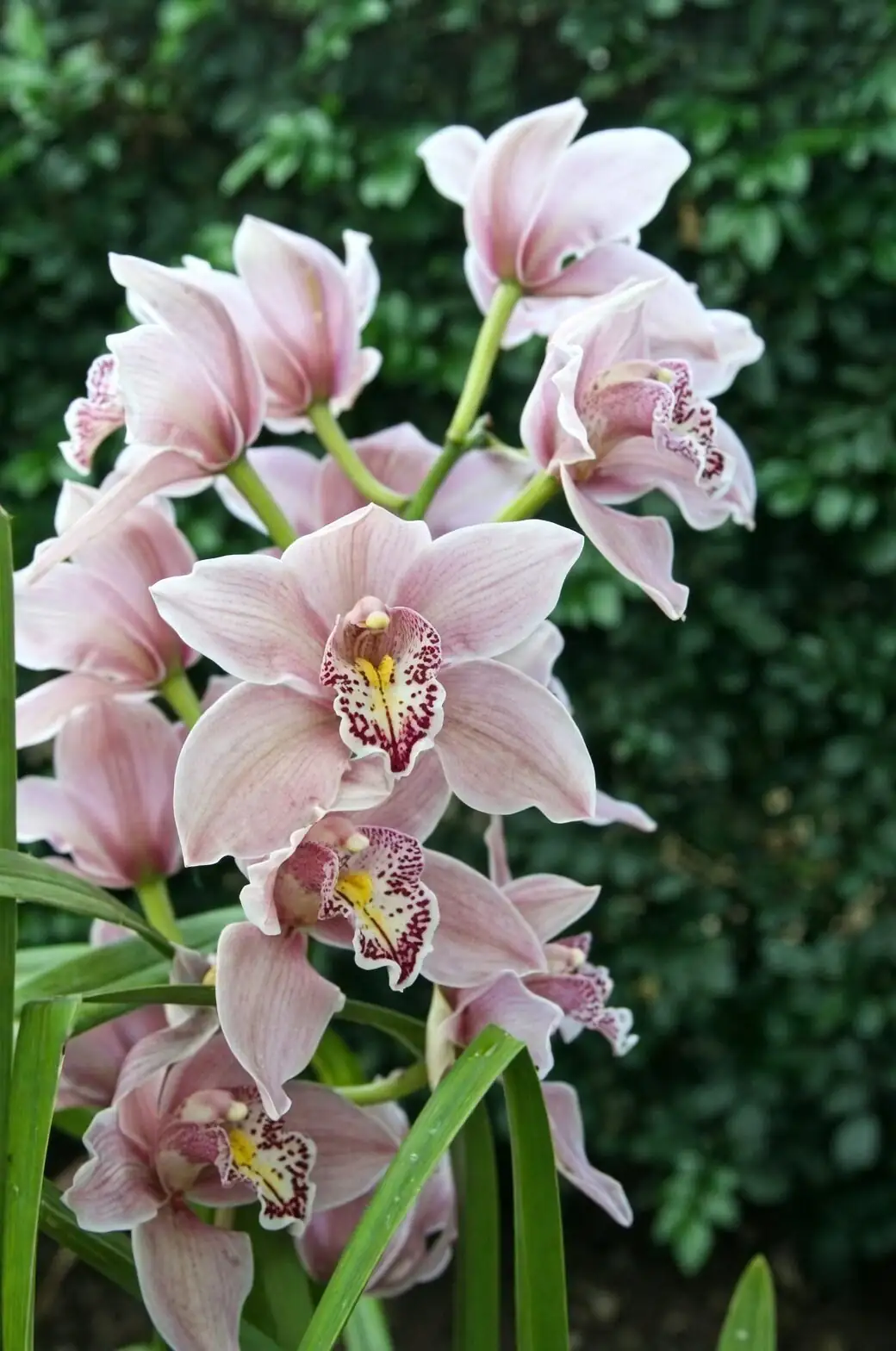
Both styles hold rows of waxy, showy blooms—an unmistakable cymbidium signature, just scaled for home life.
Troubleshooting bloom holdouts
- No cool nights in autumn
- The number one reason for “no spikes.” Aim for 10–13°C (50–55°F) nights for several weeks.
- Light too low
- Leaves should be medium to deep green, not dark olive. Increase brightness without scorching.
- Mix too wet or broken down
- Soggy, stale media suffocates roots and stops blooming. Repot every 2–3 years or when the mix degrades.
- Overpotting
- Large pots stay wet too long. Cymbidiums prefer a snug fit.
- Heat sources nearby
- Radiators and hot vents erase those precious cool nights.
- Pests
- Scale, mealybugs, spider mites, and aphids sap plant vigor. Use horticultural soap or oil and improve airflow.
Safety, hardiness, and health
- Non-toxic
- Generally considered non-toxic to cats, dogs, and people (though any plant nibbling can cause mild tummy upset).
- Not frost-hardy
- Protect from freezing; outdoors only in frost-free climates (roughly USDA Zone 10–11), with protection.
- Disease watch
- Root rot is the main risk from waterlogged or broken-down media. Prioritize drainage and repot on schedule.
Flower language and symbolism
Orchids have long symbolized elegance and admiration. In East Asia, cymbidiums—“lan” in classical Chinese poetry—stood for refined virtue and scholarly grace, a companion to the ink brush and lute. In Victorian floriography, orchids whispered of luxury and rare beauty. Miniature cymbidiums inherit both legacies: they’re dignified yet accessible, turning winter windows into quiet celebrations. When gifted, they nod to achievement and taste—but they also tell a practical love story: “I chose beauty that endures.”
Quick profile
- Name: Miniature Cymbidium Orchid (Cymbidium hybrids, miniature cultivars)
- Family: Orchidaceae; Genus: Cymbidium
- Habit: Compact, clumping, evergreen with pseudobulbs
- Size: 30–60 cm (12–24 in) tall
- Flowers: Waxy, long-lasting; upright to gently arching spikes
- Season: Typically winter to spring (varies by cultivar and conditions)
- Indoors: Bright, cool spot; cool autumn nights essential to bloom
Two fast FAQs
- Why won’t my miniature cymbidium bloom indoors?
- Brighten the light and, crucially, give cool autumn nights (about 10–13°C / 50–55°F) for several weeks. Keep away from indoor heat sources.
- Can I grow it outdoors?
- Yes, but only in mild, frost-free climates. Elsewhere, summer outside is fine; bring it in before nights drop below about 10°C (50°F) and protect from any frost.
A short love letter to the minis
Miniature cymbidiums are proof that good breeding tells good stories. From wild, cool nights on distant hillsides to the glow of a home window, they kept the cymbidium spirit—the glossy spikes, the winter bloom, the weeks-long display—and tucked it neatly into everyday life. Give them light, give them a little autumn chill, and they’ll give you a show that feels both timeless and perfectly of the moment.