

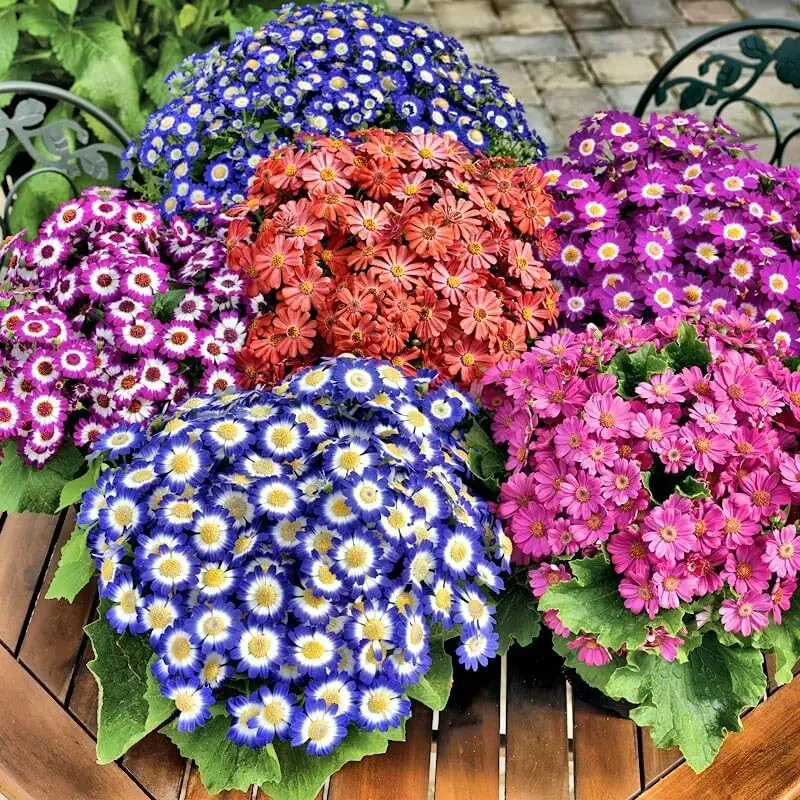
When the air is crisp and jackets return to the porch hooks, Pericallis × hybrida (Florist’s Cineraria) steps in like a burst of sky—a tight, domed cloud of foliage topped with dazzling daisies in electric blues, velvety purples, punchy pinks, and chic bicolors. Treat it right—cool temps, bright light, even moisture—and it will reward you with a long, luminous show just when gardens are quietest.
Here’s how to design containers that make its blues sing, keep watering on the same rhythm, and place pots so morning sun and afternoon shade work in your favor.
Meet the star: compact, cool-loving, and color-saturated
- Botanical: Pericallis × hybrida (Asteraceae), widely sold as Florist’s Cineraria; also seen under older trade names like “Cineraria” or “Senecio.”
- Habit and size: Compact, mounded, 20–45 cm (8–18 in) tall and wide.
- Peak season: Winter to spring (may stretch into late spring/early summer if kept cool and bright).
- The must-do trio:
- Keep it cool: 10–15°C (50–59°F) is the sweet spot; avoid sustained heat above 20°C (68°F).
- Give very bright light: morning sun, afternoon shade outdoors; brightest window indoors (east or bright south with protection from harsh midday).
- Water evenly: moist but never soggy; excellent drainage; avoid wetting flowers.
Morning sun, afternoon shade: exact placements that work

- Outdoors (cool weather only; frost-tender):
- Best: East-facing stoop, balcony, or patio—2–5 hours of gentle morning sun, then high, bright shade.
- Avoid: Reflective midday heat (south/west hardscape), and windy, hot pockets. Move pots if a warm front arrives.
- Indoors:
- Best: East window, bright south window with a sheer at midday, or a cool, bright sunroom.
- Keep away from radiators, heater vents, and hot drafts; crack a window for fresh air on mild days.
Tip: Bud-stage plants develop tighter domes if they “train” in the sunniest cool spot you can give them.
Pot sizes, spacing, and layouts for that perfect dome
Pericallis looks most luxurious when each plant’s flower canopy has breathing room. Use these simple spacing rules:
- Solo specimen:
- 15–20 cm (6–8 in) pot: 1 plant centered; keep 2–3 cm (about an inch) from the rim.
- Rounded bowls and window boxes:
- 30 cm (12 in) bowl: 3 plants, triangle pattern, 18–20 cm (7–8 in) apart.
- 40–45 cm (16–18 in) bowl: 5 plants, one center + four around, 18–22 cm (7–9 in) apart.
- Long window box (60 cm / 24 in): 3 plants evenly spaced.
- Spacing cues:
- Aim for canopies to just touch at peak bloom—enough to read as one dome but not so tight that leaves stay wet.
- Tuck fillers at the edges or in the gaps so water reaches soil without kissing the flowers.
Watering sync: build containers that drink together
Pericallis likes consistent, even moisture in a free-draining mix. To keep your whole container on the same schedule, combine it with companions that want cool temperatures and evenly moist—not bone-dry—conditions.
- Potting mix:
- Use a fertile, loose, well-drained blend; add perlite for aeration and a little compost/leaf mold for fertility.
- Technique:
- Water when the top 1–2 cm (½–¾ in) of mix feels slightly dry. In cool, bright conditions, that’s often about twice a week.
- Direct the stream under the leaves or bottom-water; avoid soaking blooms to reduce gray mold.
- Empty saucers; root rot is a real risk if pots sit in water.
- Sync-friendly companions (cool, even moisture lovers):
- Fillers: Primroses (Primula), violas/pansies (Viola), English daisy (Bellis), nemesia, forget-me-not (Myosotis), lobelia (Lobelia erinus in cool weather), heuchera (Heuchera, moderate moisture), Iberis (candytuft).
- Spillers/edges: Ajuga reptans ‘Burgundy Glow’, variegated ivy (Hedera helix) in cool shade, Carex ‘Evergold’ or ‘Ice Dance’.
- Foliage foils: Silver dusty miller (Jacobaea maritima) can work in cool seasons if the mix drains sharply—still keep overall moisture even.
- Grouping trick:
- Cluster containers with similar thirst so you can water the whole cluster on one cadence and avoid over/underwatering outliers.
Feeding and grooming for a longer show
- Light, steady feed during growth and bloom: every 2 weeks with a diluted balanced liquid; one or two bloom-boost feeds (slightly higher P & K) once buds appear.
- Deadhead spent flower stems promptly to keep the dome tidy.
- After the main flush: cut back to 10–15 cm (4–6 in). In a cool, bright spot, a smaller second round may follow.
Five cool-weather container recipes that make blues and bicolors pop
1) Blue Hour Bowl (intensifies true blues)
- Pot: 40 cm (16 in) low bowl; finish in a matte charcoal or deep navy.
- Planting:
- 3 Pericallis × hybrida (blue forms), triangle pattern.
- 3 Myosotis (forget-me-not) tucked between, echoing blue at a softer pitch.
- Edge with a ring of white alyssum or Iberis for a bright halo.
- Spacing: Pericallis 18–20 cm apart; fillers in gaps, not crowding crowns.
- Why it works: Crisp whites and soft sky blue push Pericallis blues forward; charcoal pot frames the color.
- Watering sync: All appreciate cool, even moisture; excellent drainage is still essential.
2) Cobalt + Silver Glow (cool and glistening)
- Pot: 30–35 cm (12–14 in) bowl, glazed cobalt.
- Planting:
- 2 Pericallis (blue).
- 1 Dusty miller (Jacobaea maritima) as a cool-toned foil.
- 3–4 tufts of Carex ‘Evergold’ woven at the rim.
- Spacing: Keep dusty miller offset so it doesn’t shade Pericallis buds.
- Why it works: Silver and cream sharpen the blue; fine Carex texture keeps the dome light.
- Watering sync: Dusty miller tolerates drier spells but handles even moisture in cool weather if drainage is sharp.
3) Bicolor Bonbon Dome (echo the ring)
- Pot: 40–45 cm (16–18 in) bowl, soft gray or white.
- Planting:
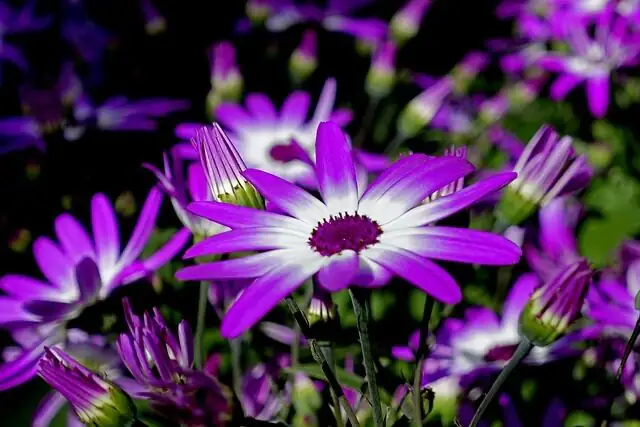
- 3–5 Pericallis in purple-white bicolor.
- 5 white violas dotted between them.
- A whisper of variegated ivy to spill and mirror the petal edge.
- Spacing: Pericallis center-to-center 18–22 cm; violas nestled where you can water soil directly.
- Why it works: White violas amplify the bicolor “halo” and extend brightness into the shoulder season.
4) Porch Pastels (for bright shade and patios)
- Pot: 30 cm (12 in) urn.
- Planting:
- 1 Pericallis (soft pink or blue).
- 3 Primula acaulis in harmonizing pastels.
- 3 Ajuga ‘Burgundy Glow’ to soften the lip.
- Placement: East-facing porch or north patio with bright reflected light.
- Why it works: Gentle tones and broad leaves echo Pericallis’ plush look; ajuga adds a cool spill without thirst conflicts.
5) Balcony Cool-Color Trio (modular and easy to water)
- Three matching 20 cm (8 in) pots:
- Pot A: 1 Pericallis (blue).
- Pot B: 1 Heuchera (plum foliage) + white lobelia edging.
- Pot C: 1 Pericallis (blue or bicolor).
- Arrange in a triangle so heuchera’s plum reads as depth between the blues.
- Watering sync: All favor consistent moisture in cool weather; water the entire trio together.
Design notes that amplify blues and bicolors
- Use a 60-30-10 palette: 60% blue Pericallis, 30% white/silver accents, 10% deep plum or charcoal for contrast.
- Choose pot colors thoughtfully: charcoal, navy, white, or weathered concrete sharpen blues; avoid bright orange or terracotta if you want cooler vibes.
- Texture matters: fine, airy companions (alyssum, Carex) make Pericallis daisies look larger; broad leaves (primrose, heuchera) make the dome feel lush.
Quick care checklist
- Light: Very bright; morning sun/afternoon shade outdoors; brightest window indoors.
- Temperature: Best at 10–15°C (50–59°F); avoid hot rooms and heat blasts.
- Water: Evenly moist, never swampy; avoid wet flowers; empty saucers.
- Airflow: Fresh air reduces mildew and gray mold—don’t crowd plants.
- Feeding: Light, regular, stop as bloom wanes.
- Deadhead: Keeps the dome clean and encourages more buds.
Troubleshooting in cool-season containers
- Leggy stems, bigger thinner leaves: Too warm or too dim. Move to a cooler, brighter spot.
- Wilting despite moist soil: Check for root rot from waterlogging; ensure drainage and let the top surface dry slightly between waterings.
- Powdery mildew or gray mold: Improve airflow, avoid splashing blooms, remove affected parts. Keep humidity moderate rather than stagnant.
A note on symbolism (flower language)
Florist’s cineraria is often linked with lasting joy and bright endurance—an apt, modern florist’s reading for a plant that lights up late winter when we need cheer most. Unlike ancient symbolic traditions, this “flower language” grows from gifting culture: the dome of long-lasting daisies suggests steady optimism, and the rare true blues hint at calm and clarity. Take it as a contemporary sentiment rather than a historic doctrine—still meaningful, especially in the grey months.
Safety and companionship with pets
Guidance varies among references, but it’s prudent to treat Pericallis × hybrida as potentially toxic if ingested. Keep it away from pets and small children, avoid nibbling, and wash hands after handling.
For growers and tinkerers
- From seed: Surface-sow late summer to autumn; germinates at 21–24°C (70–75°F) in 1–2 weeks. Plants often flower 3–5 months from sowing. Named hybrids may not come true, so most people buy fresh each season.
- Second act: After the main flush, cut back to 10–15 cm (4–6 in). If you can keep it cool and bright, you may enjoy a smaller encore bloom.
Set your pots where the morning sun can kiss them, keep the soil steadily sipped—not slurped—and pair those vibrant daisies with silvers and whites. Your Pericallis will repay you with cool-season color so vivid it feels like you borrowed a piece of the winter sky.