

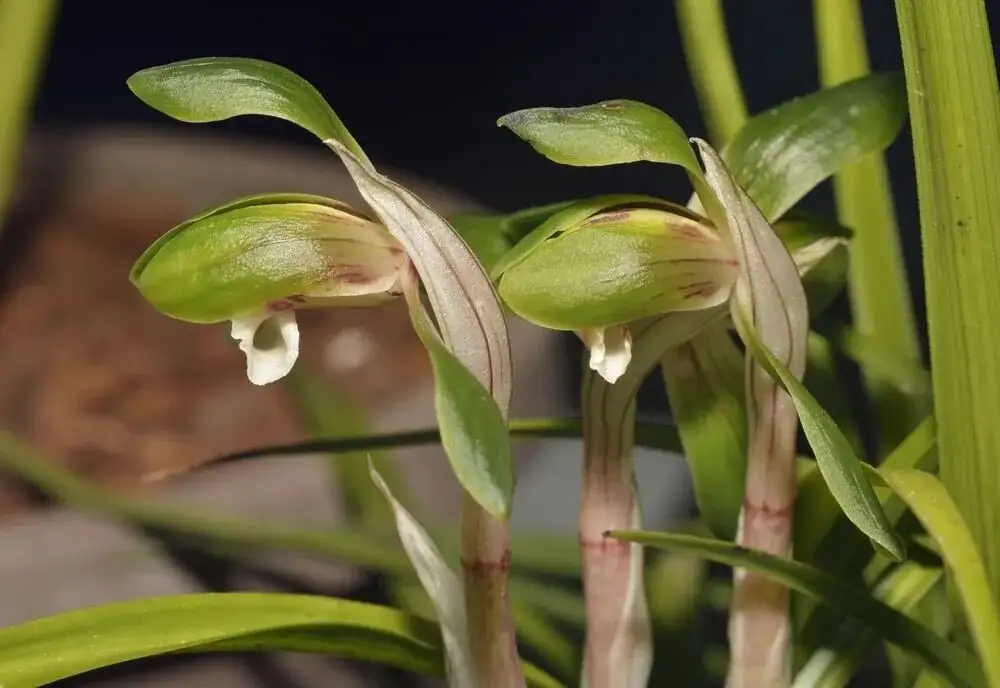
If you love orchids that whisper rather than shout, Cymbidium goeringii—the Chinese Cymbidium or Spring Orchid—is your plant. Its grassy clumps and winter-to-spring, starry blossoms carry a perfume so refined it’s been praised for centuries. The trick to keeping this cool-growing classic happy? Treat light, air, heat, and cold like adjustable dials. Below is a field-tested playbook to ride out heatwaves, carve breezy microclimates, boost humidity without soggy roots, and shield plants during brief freezes down to about -8°C.
Filtered light that feels like a forest edge
Think “bright shade with dappled, filtered light,” not raw sun. In summer, aim for 60%–80% shade. In winter, give it a brighter perch with gentle morning sun or softened light indoors.
- Outdoor summer targets
- Shade cloth: Use 60%–80% and place it high enough (30–60 cm above plants) to keep heat from radiating down.
- Trees and pergolas: Dappled shade from a deciduous canopy or a pergola with shade netting mimics its native forest light.
- The hand test: At midday, your hand’s shadow should look soft-edged, not sharp.
- Indoor winter finesse
- East-facing window with a sheer curtain or frosted film works well.
- Typical sunny windowsills can be too bright and dry—soften the light and raise humidity (more below).
A simple filtered-light rig you can build fast
- Balcony: Two offset layers of 40% white shade cloth can approximate ~60%–70% shade and diffuse heat better than dark cloth.
- Yard: Stretch 60%–70% cloth over a lightweight frame; leave open sides for airflow.
- Indoors: Sheer curtain + venetian blind slats tilted up create soft, bright shade and curb leaf scorch.
Airflow corridors: your living thermostat
Cool-growing and humidity-loving, this orchid still despises stagnant air. Moving air keeps leaves dry, roots oxygenated, and fungal spots at bay.

- Layout for a breeze
- Don’t back pots into corners; align plants so prevailing breezes can pass “through” the leaves.
- Leave a couple of finger-widths between pots so air can circulate.
- Fans that act like mountain wind
- Use a small oscillating fan set to gentle, moving air across—not directly into—the potting mix.
- Run it longer during muggy weather; pair with a second fan at floor level to pull in fresh air.
- Venting hot spaces
- On porches or sunrooms, crack opposite windows/doors to create a cross-breeze. A narrow “wind tunnel” effect can drop leaf temperatures several degrees.
Humidity without wet feet: evaporative trays and smart watering
Cymbidium goeringii appreciates moderate-to-high humidity, but never at the expense of soggy roots.
- Humidity targets with air movement
- Baseline: 50%–60%.
- During active growth: 80%–90% is superb if airflow is strong.
- Winter: Aim for ~60%–70% with a steady breeze.
- Build an evaporative tray
- Fill a tray with pebbles; add water to just below the pot base (the pot never sits in water).
- Cluster several plants over the tray for a humidity “bubble.”
- For extra cooling in heat spells, aim a fan across the tray surface to drive evaporation.
- Watering that respects the season
- Summer: Water more often, but shield from heavy rain and never let the mix stay waterlogged.
- Autumn: Water in the morning.
- Winter: Water around midday on sunny days so foliage and crowns dry before night.
- Always use clean, room-temperature water. Let tap water sit to dissipate chlorine. Avoid water pooling in the crown.
Heat playbook: keep leaf temps down when days soar
Growth slows above 35°C, so your job is to cool the microclimate.
- Shade harder when it’s hottest
- Move from ~60% toward 70%–80% shade during heat spikes. White or aluminized shade nets reflect heat better than dark ones.
- Move air, not just light
- Gentle, continuous airflow prevents heat buildup under leaves. Use oscillating fans outdoors under covered areas too.
- Evaporative cooling
- Pair an evaporative tray with a fan (see above). Lightly mist the air around the bench and the shade cloth—not into leaf crowns or the potting mix—to cool the boundary layer.
- Vent at night to purge stored heat from enclosed spaces.
- Hydration with restraint
- Water thoroughly, then let the airy mix re-oxygenate; avoid “little and often” that keeps roots clammy.
- Pause overhead wetting of foliage in hot, still conditions to reduce leaf-spot risk.
Cold playbook: brief-freeze protection down to about -8°C
This species can ride out short dips around -8 to -5°C if kept drier and protected. It does not like prolonged freezes.
- Choose a forgiving microclimate
- Park pots near a leeward wall, under deep eaves, or inside a cold frame for wind shelter and overhead dry.
- Morning sun after a freeze is fine—just avoid sudden, harsh blasts. Let plants thaw gradually.
- Keep it slightly drier
- In cold snaps, err on the dry side. Wet media conducts cold into roots and crowns.
- Night shields you can add and remove
- Drape a breathable frost cloth over the bench; avoid plastic touching leaves.
- Wrap pots (not leaves) with insulating material (fleece, bubble wrap) to protect roots. Double-potting—slipping the orchid pot into a larger one with dry bark around it—buffers temperature swings.
- Move if the forecast turns severe
- If temperatures will fall below ~-8°C or stay subfreezing, shift plants to a bright, cool, sheltered spot indoors or to an unheated porch that stays just above hard freeze.
- Winter bud initiation is encouraged around 12–13°C, so cool is good—just not icy for long.
- After the frost
- Remove covers for daylight and airflow. Check crowns and leaf bases; if you find soft tissue, dry and ventilate immediately.
Potting mix that breathes—and helps regulate extremes
This orchid thrives in a very airy, fast-draining medium that never stays soggy. Many growers blend local materials such as leaf mold, peat, moss, composted bark/wood chips, coconut coir, charcoal, pumice, brick chips, and vermiculite. A granular, layered approach also works well for airflow and stability:
- Option: coarse drainage layer at the base (shards or brick chips), then a main mix with pumice or bark plus charcoal for sweetening, topped with slightly finer material to anchor roots.
- Position 3–5 shoots per pot for a fuller clump.
- Leave about 2 cm (0.8 in) headspace to make thorough watering easier.
- Repot every 2–3 years; let the mix dry slightly beforehand to reduce root breakage.
Feeding and routine care (kept light but consistent)
- Fertilizer: Use a very dilute feed every 2–3 weeks during active growth. Skip winter and around flowering. Keep fertilizer out of the plant’s center.
- Pruning: Remove yellowing or damaged leaves; during repotting, trim dead roots and discard weak shoots.
- Propagation: Divide during repotting (often March or around September), just before new roots extend. Keep divisions modest (2–3 growths). Dust cuts with sulfur and recover in bright shade.
Seasonal cheat sheet
- Summer
- Shade: 60%–80%.
- Water: More frequent, but protect from heavy rain; keep media airy.
- Climate control: Fans + evaporative trays; vent at night.
- Autumn
- Water: Mornings; avoid rain-soaking to reduce leaf-spot risk.
- Light: Bright shade; days shorten—great for setting up winter bloom.
- Winter
- Placement: Bright, cool spot with gentle sun; boost humidity to ~60%–70% with airflow.
- Water: Less often, at midday on sunny days.
- Cold protection: Keep drier; use frost cloths and windbreaks during brief freezes.
- Spring
- Enjoy the scent and flowers.
- Repot/divide if due, before new roots really run.
Troubleshooting quick cues
- Leaves paling or reddening: Light too strong; increase shade or diffuse indoor sun.
- New leaves spotting or soft rot at bases: Air is too still and humid; increase airflow, avoid soggy media, consider an orchid-safe fungicide if needed.
- Clump shrinking over time: Roots lacked air or humidity too low; refresh mix, re-balance watering, and raise humidity with trays/fans.
- Sour-smelling pot: Medium staying wet—repot into a fresher, airier blend.
A note on meaning and mood
Often associated with purity, elegance, and refined character, Cymbidium goeringii has been treasured across East Asia for centuries. The symbolism grew from its restrained form and extraordinary perfume—beauty that doesn’t demand attention yet rewards those who draw close. In cultivation, that same spirit applies: create quiet balance—filtered light, breathing roots, moving air—and the plant replies with winter fragrance that feels like a well-kept secret.
With the right shade targets, airy “wind lanes,” evaporative trays, and smart frost shields, you can keep this spring orchid comfortable from heat spikes to brief, subzero nights—and enjoy its legendary scent right when the year feels coldest.