

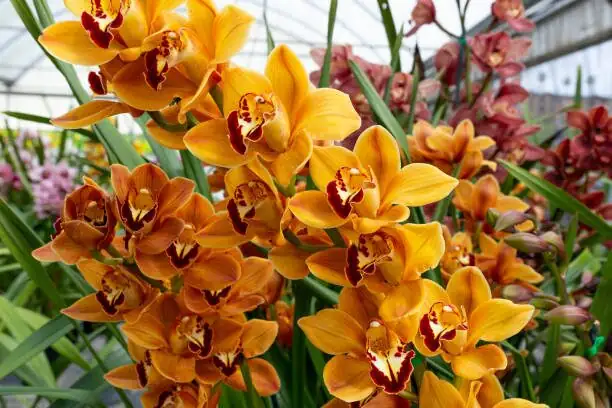
Imagine a winter morning, pale sunlight slipping through sheer curtains as a quiet perfume rises from a pot of starry, waxy blooms. That’s Cymbidium goeringii—the Chinese Cymbidium, or Spring Orchid—bringing a calm, contemplative mood to your home. This is an orchid for lovers of restraint: grassy, deep-green leaves; compact clumps; and one of the finest sweet fragrances in the plant world. The joy is in curating its microclimate with style—softened light, elegant humidity, and a serene corner where horticulture meets interior design.
Meet the plant: refined presence, winter-to-spring reward
- Origin: China, Japan, and the Korean Peninsula
- Habit: Clump-forming sympodial orchid with pseudobulbs; evergreen, strap-like leaves
- Size: Typically 20–40 cm (8–16 in) tall in pots
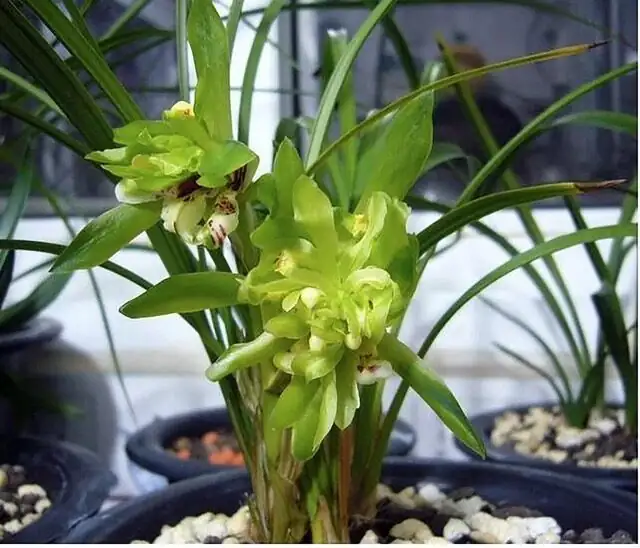
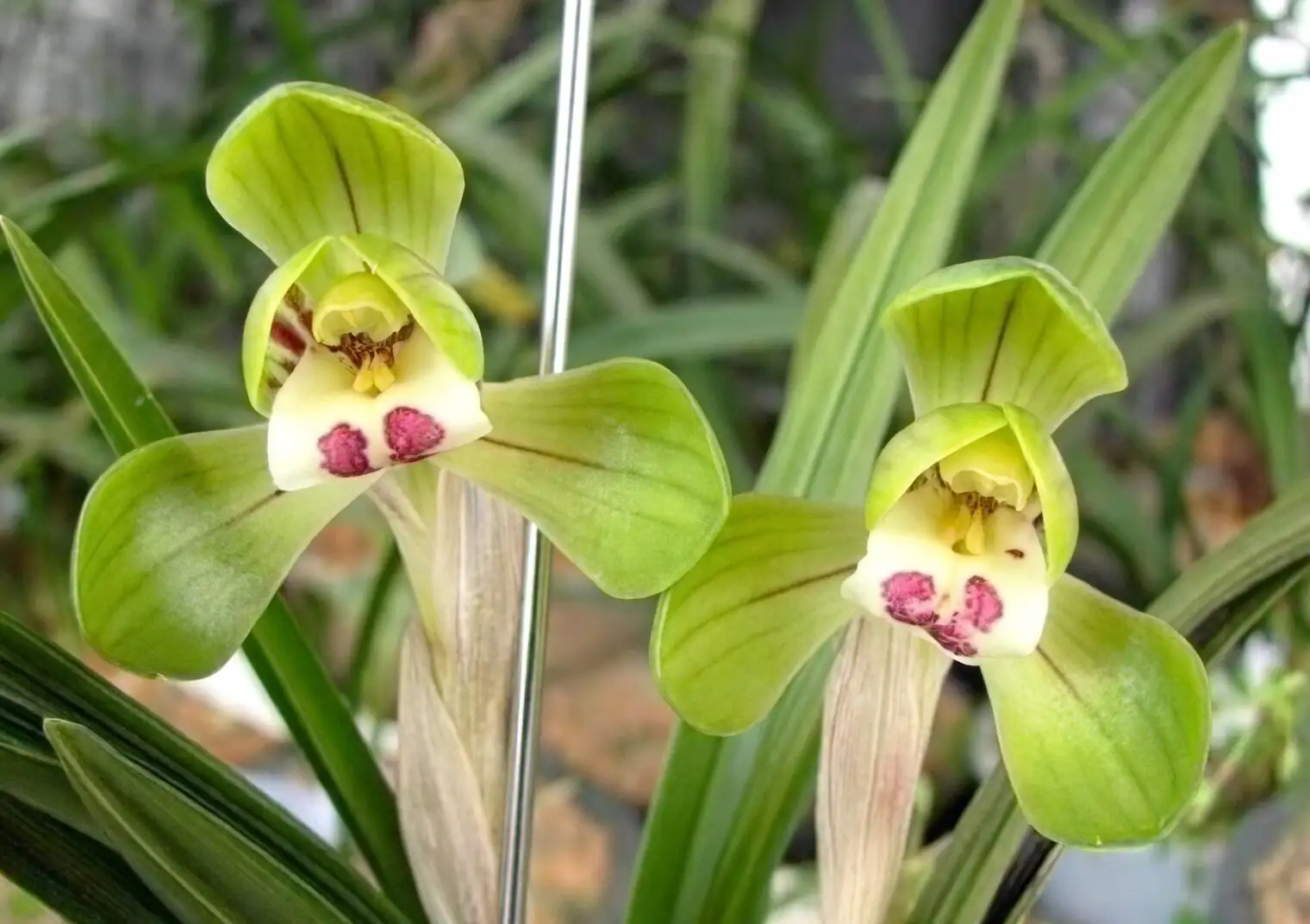
- Flowers: A few waxy, star-shaped blooms in green to yellow-green tones, winter into spring, with a rich, sweet fragrance
- Temperament: Cool-growing, shade-loving, sensitive to waterlogging; thrives on balance—light, airflow, and careful watering
Light like a stylist: bright window, no scorch
Chinese Cymbidium wants bright shade to dappled/filtered light—never harsh midday sun. Think “soft, luminous room” rather than “sunbaked sill.”
Where to place it
- Best exposures indoors: Bright east or bright north windows. West or south windows only with filtering.
- Create filtered light:
- Hang sheer curtains or use translucent blinds to turn direct beams into a soft wash.
- Apply frosted window film to the lower pane and set the pot there.
- Place the orchid 30–60 cm (1–2 ft) back from very bright glass.
- Summer vs. winter:
- Summer: Provide roughly 60%–80% shade; a bright room with diffused sun is ideal.
- Winter: A bright windowsill or balcony with gentle sun works well, still filtered at midday.
Pro tip: Typical sunny windowsills can be too dry and too bright unless you both soften the light and boost humidity. If the leaf tips bleach or feel hot by midday, pull the plant a bit farther from the glass and add another layer of sheers.
Humidity—elegantly elevated
Moderate to high humidity keeps leaves lush and helps buds develop without stress. The goal is a humid “halo” that looks beautiful and stays healthy with moving air.
- Targets:
- A workable baseline indoors: 50%–60%
- During active growth: 80%–90% can be ideal if airflow is strong
- In winter: 60%–70% with steady air movement
- Design-forward ways to boost humidity:
- Pebble trays: Use a low, glazed tray with smooth river stones; keep water just below the stone tops. It reads like a tabletop rill and adds gentle humidity.
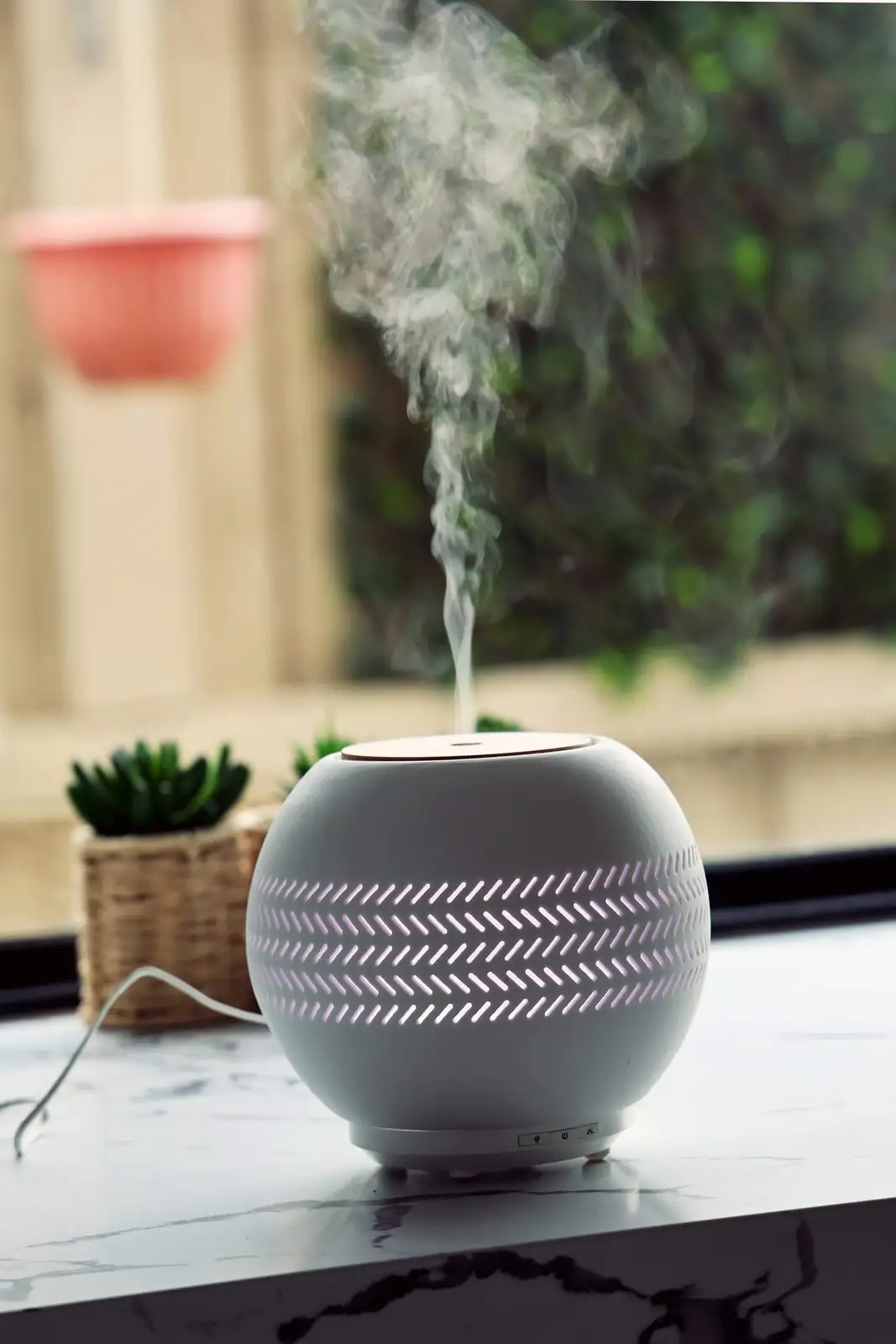
- Discreet humidifier: Tuck a quiet ultrasonic unit behind a rattan screen or plant stand; set it on a timer. Pair with a small digital hygrometer on the shelf.
- Companion plants: Group with other humidity-lovers (e.g., small ferns) to create a microclimate—leave space for airflow.
- Airflow matters: A silent micro-fan on low, angled past the plant, prevents stagnant pockets that invite leaf spot or soft rot.
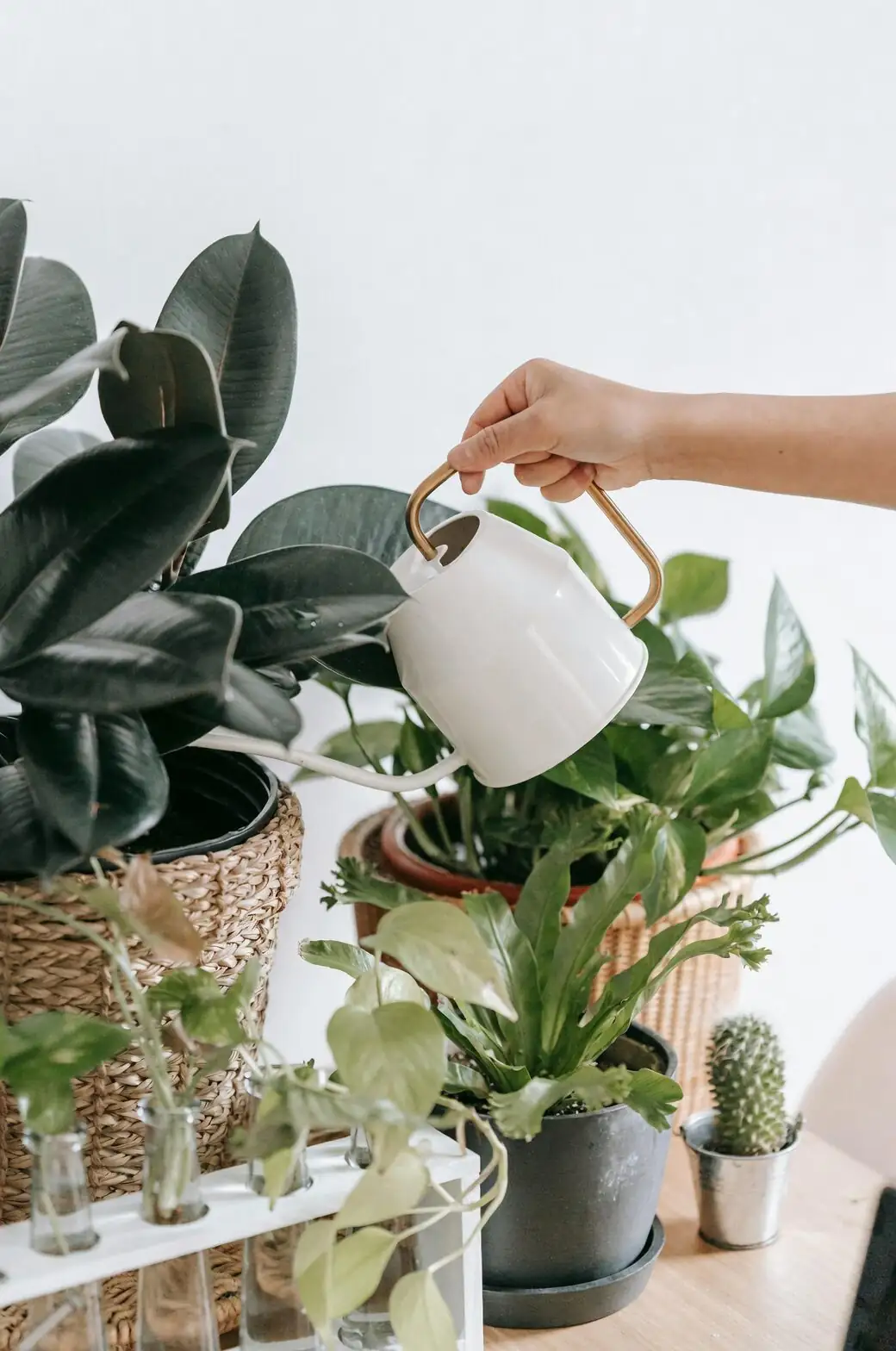
Watering with finesse (and a beautiful jug)
Watering is the make-or-break. Keep roots airy and never stagnant.
- Rhythm by season:
- Summer growth: Water more frequently, but never let the mix stay wet for long.
- Autumn: Water in the morning to dry by evening; avoid rain-soaked conditions if you summer the plant outdoors.
- Winter: Water less; choose midday on sunny days so foliage dries in the light.
- How to water:
- Use clean, room-temperature water. If tap water is chlorinated, let it sit so chlorine dissipates.
- Water thoroughly, then let excess drain completely. Do not let water pool in the crown/center.
- Avoid splashing dirty water on leaves or into the plant’s center.
- Visual cues:
- Leaves folding lengthwise or slack pseudobulbs can signal dryness; a persistently heavy pot signals excess moisture.
- Adjust with the weather: cooler temps = slower drying = lighter hands.
The right vessel and medium—function dressed as form
This orchid thrives in an airy, fast-draining mix that never stays soggy, paired with a pot that flatters its vertical lines.
- Pot choice:
- Use a deep, well-drained pot; place coarse drainage material (shards or brick chips) at the base.
- Unglazed clay enhances breathability; minimalist glazed ceramics suit modern interiors—just ensure ample drainage.
- Proven mixes (choose based on your environment and watering style):
- Classic airy blends: Combinations of composted bark/wood chips, leaf mold, peat, coconut coir, charcoal, pumice, brick chips, and vermiculite.
- Moss-forward (advanced): Mostly moss only with excellent ventilation and very careful watering.
- Contemporary granular trend: A layered, pH-neutral, moisture-retentive yet free-draining blend of porous volcanic stones (e.g., graded pumice and kanuma with perlite/hard pumice). Rinse media first and build from larger to finer grains toward the top to balance drainage and capillarity.
- Repotting:
- Every 2–3 years. Let the mix dry slightly beforehand to limit root breakage.
- Spread roots over the mound, firm gently, leave about 2 cm (0.8 in) of headspace, top-dress if desired, water thoroughly, then keep in bright shade until established.
- Many growers pot 3–5 shoots together for a fuller clump.
Temperature and airflow: cool, calm, and composed
- Sweet spot: 15–25°C (59–77°F)
- Bud initiation is often encouraged around 12–13°C (54–55°F)
- Tolerance: Brief dips to about -8 to -5°C (18–23°F) when kept drier and protected; dislikes prolonged freezing. Growth slows above 35°C (95°F).
- Home strategies:
- In heat waves, increase shade and airflow; shift the plant away from west windows and hot glass.
- In winter, a chilly but bright balcony or near-window nook can help induce buds—keep it protected and not waterlogged.
A serene, scented corner—styling ideas
- Visual palette: Pair the orchid’s deep-green leaves with pale walls, raw wood, or matte stone. Think tea tray, linen runner, and a low ceramic bowl for the pebble tray beneath.
- Placement recipes:
- Calm east window: Double sheer curtains, pebble tray, and a slim fan set to low. Add a reading chair and a small side table for a quiet morning ritual.
- Winter fragrance nook: Bright, filtered light near a balcony door. Keep a hygrometer on the shelf; skip scented candles so the orchid’s perfume shines.
- Minimalist ledge: Frosted lower pane, white cachepot with a breathable inner pot, and a hidden humidifier behind a screen for a gallery-clean look.
Feeding and seasonal care at a glance
- Fertilizer: During active growth (not winter and not right around flowering), feed very dilute every 2–3 weeks. Many growers alternate a gentle nitrogen source with a bloom-supporting feed. Avoid feeding on overcast/rainy days and keep solution out of the plant’s center.
- Calendar:
- Summer: 60%–80% shade; water more; protect from heavy rain.
- Autumn: Water mornings; avoid rain-soaking to reduce leaf-spot risk.
- Winter: Brighter indoor placement; water less, ideally midday on sunny days.
- Repot/divide: Every 2–3 years, often in March or around September before new roots elongate.
Division: the tasteful way to multiply
- Best timing: Before new shoots rise above the medium and before new roots run—commonly March or around September.
- Method: Remove old mix, trim dead tissue, divide modestly (often 2–3 growths per piece), dust cuts with sulfur, and recover in bright shade.
Troubleshooting—keep it fresh, never stagnant
- Leaf scorch or yellowing streaks: Light too harsh or glass too hot. Add a second layer of sheers or increase distance from the window.
- Leaves getting smaller over time: Often a mix of low humidity, too-bright light, or stressed roots from wet or bone-dry conditions. Rebalance humidity (60%–70% in winter; higher in growth with airflow), soften light, and reassess the medium.
- Leaf spot and soft rot: Thrive in stagnant, overly wet setups. Increase airflow, let the mix drain and dry promptly, and avoid water sitting in crevices. Consider an orchid-appropriate fungicide if needed and follow label directions.
Safety note
Cymbidium orchids are not widely cited as seriously toxic to people or pets, but nibbling may cause mild stomach upset. Keep out of reach of curious chewers.
Culture and “flower language” (花语)
Across East Asia, Cymbidium goeringii has long symbolized purity, elegance, and refined character—traits admired by scholars who celebrated its quiet beauty and extraordinary scent in classical writings. While modern “flower language” charts often generalize meanings, this orchid’s reputation grew from lived tradition: subtle form, winter courage, and perfume revealed only at close distance. It embodies the idea that strength can be gentle, and beauty, understated.
Quick start: the bright-window, no-scorch recipe
- Location: East-facing window, 30–60 cm (1–2 ft) from the glass, behind sheer curtains
- Humidity: Pebble tray + discreet humidifier to hold 60%–70% in winter; add a micro-fan for airflow
- Medium: Airy, fast-draining orchid mix (bark/leaf mold/pumice/charcoal), or a rinsed, graded volcanic-stone blend if you prefer granular media
- Water: Thoroughly, then drain; more in summer, less in winter; winter watering at midday on sunny days
- Feed: Very dilute every 2–3 weeks in active growth; pause in winter and around flowering
- Style: Low-profile ceramic tray beneath, neutral pot, and a nearby chair to enjoy the fragrance mid-morning
Curate light like a designer, moisture like a grower, and ambience like a host. Do that, and your Cymbidium goeringii will return each winter-to-spring with quiet leaves, pristine blooms, and perfume that makes the whole corner exhale.