

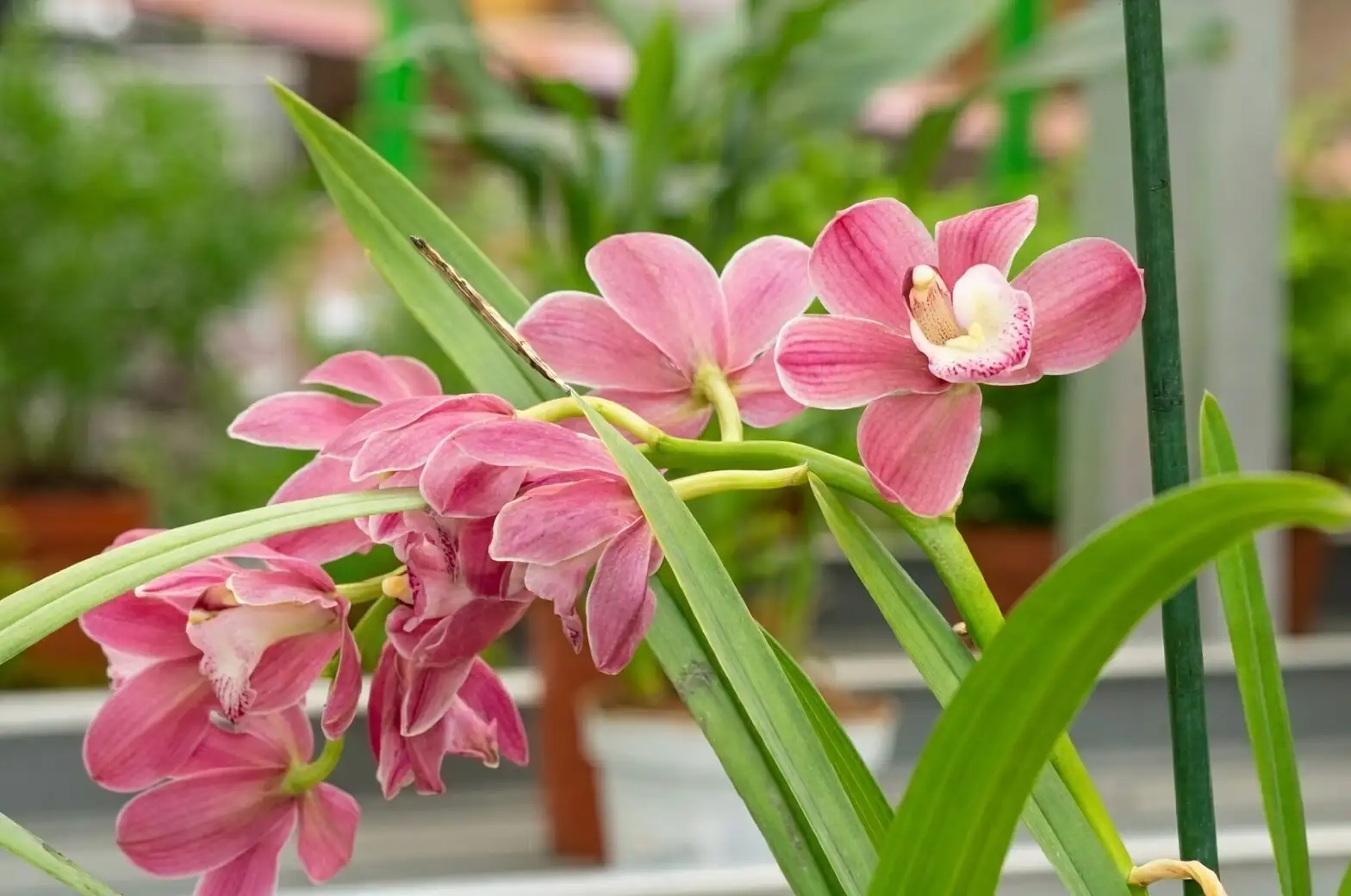
Cymbidium goeringii—China’s cherished “Spring Orchid”—rewards patient hands with winter-to-spring perfume and quiet grace. If you’ve ever hesitated to divide one, this guide will walk you through clean, modest divisions (2–3 growths per piece), sulfur-dusting the cuts, gentle firming into an airy mix, and a bright-shade recovery that actually speeds rebound. Just as vital, you’ll learn to “read” root and shoot timing so you split at the sweet spot—before new roots run and after buds have declared their intentions.
Meet the plant, meet its rhythm
- Botanical name: Cymbidium goeringii (Chinese Cymbidium; 春兰)
- Origin: China, Japan, Korean Peninsula
- Habit: Clump-forming, sympodial orchid with pseudobulbs and grassy evergreen leaves
- Size: Typically 20–40 cm tall; tidy clumps widen slowly
- Flowers: Waxy, star-shaped, usually greenish to yellow-green with markings; intensely sweet fragrance
- Season: Winter to spring
- Preference: Bright shade/dappled light, airy roots, moderate to high humidity, and cool to mild temperatures
This species thrives when light, airflow, and carefully timed watering are in calm balance. It’s sensitive to waterlogging but loves humidity with movement.
Reading the plant’s clock: when to divide
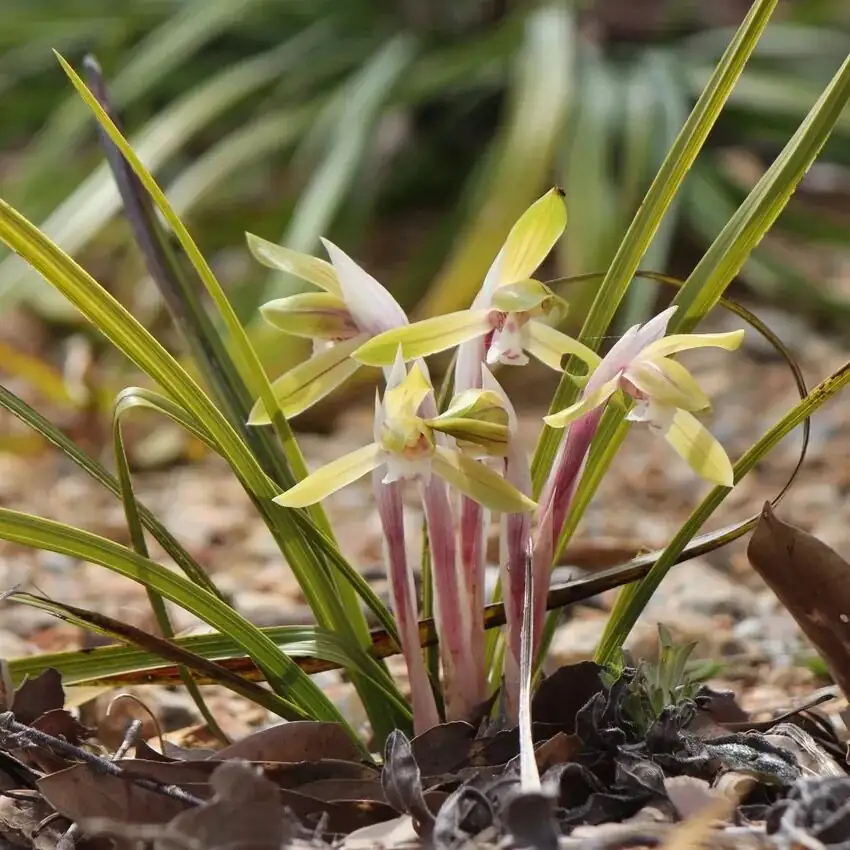
The best divisions happen just before a fresh root flush—when shoots are swelling but roots haven’t started running.
- Prime windows: Often March or around September.
- Shoot “tells”:
- Eyes at the rhizome swell like little green grains before they poke above the mix.
- New shoots feel firm under the sheath but are still short and compact.
- Root “tells”:
- Ideal: you see tiny, glossy green nubs at the base—root tips just waking.
- Too late: actively elongating, pointed green tips >0.5–1 cm. Wait until this flush matures, then aim for early autumn.
- Temperature cue for buds: Cool nights around 12–13°C can encourage flower initiation. Avoid division while spiking/blooming; let the show finish.
If you must divide outside these windows, handle even more gently, keep shade brighter (but not direct sun), and prioritize airflow to prevent setbacks.
Tools, prep, and mix: set yourself up for success
- Tools and hygiene:
- Sterile, sharp knife or shears; flame or alcohol-sterilize between cuts.
- Sulfur powder to dust fresh wounds (excellent for Cymbidium goeringii).
- Clean water and a mild disinfectant rinse if needed.
- Pots and drainage:
- Deep, well-drained pots with a coarse drainage layer (shards, brick, or large pumice) at the base.
- Leave ~2 cm headspace for watering and a neat top-dress.
- Airy mix options (choose what suits your climate and watering style):
- Organic-leaning: composted bark/wood chips + coconut coir or leaf mold + a bit of charcoal and pumice/brick chips.
- Mineral-leaning: pumice or similar volcanic stone with a small proportion of Kanuma/perlite for moisture moderation.
- Moss-only setups can work with excellent ventilation and tight watering control—but they’re less forgiving.
- Pro tip: Rinse dusty components so fines don’t clog air spaces. Aim for “breathe and drain,” never soggy.
Step-by-step: divisions with 2–3 growths per piece
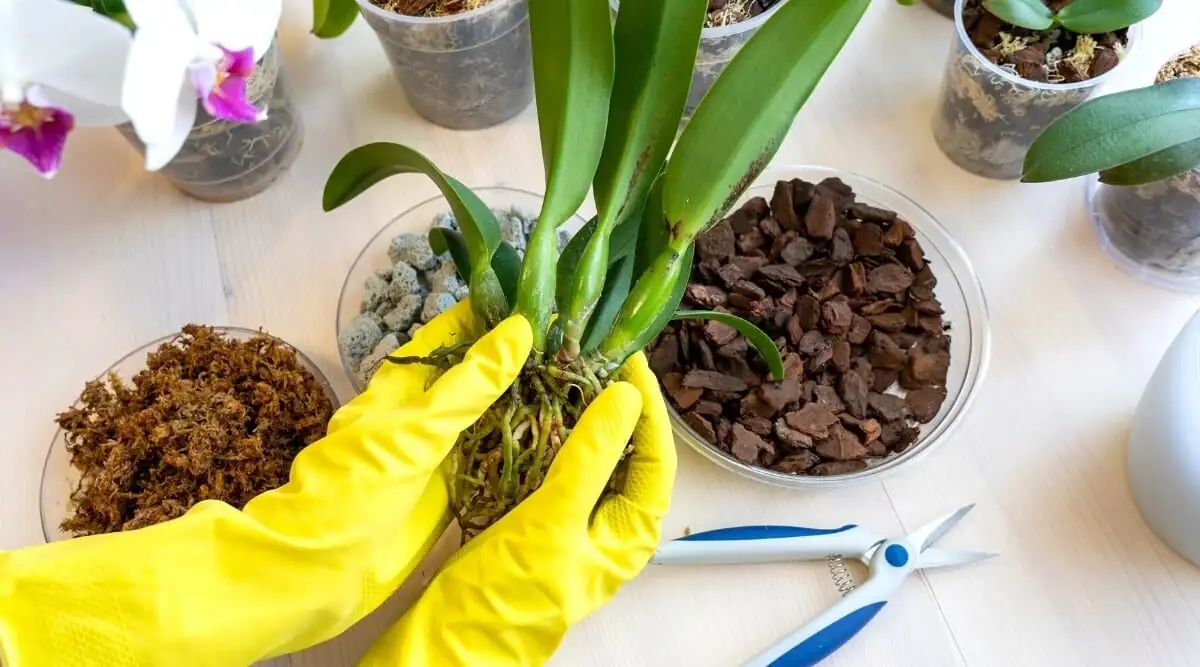
1) Ease the plant out
- Water a day or two before to slightly soften the mix, or let it dry just a touch to reduce root breakage—both approaches aim for pliable, not brittle, roots.
- Gently remove old medium; rinse roots to see what you’re doing.
2) Assess and plan cuts
- Discard dead roots and weak, diseased, or obviously declining shoots.
- Visualize divisions with 2–3 healthy growths each. This size re-establishes fastest without stalling.
3) The cut
- Make one clean slice through the rhizome between growths.
- Immediately dust all fresh cuts (rhizome and any root nicks) with sulfur.
4) Brief air-dry
- Let divisions rest for 30–60 minutes so surfaces stop weeping. This helps seal tissues.
5) Potting: gentle, but firm enough
- Add a coarse drainage layer, then a collar of your airy mix.
- Spread roots over a small mound; set the pseudobulb bases just below or level with the pot rim.
- Backfill and gently firm—think “secure yet springy,” not compacted.
- Leave that ~2 cm headspace. Optional: a neat top-dress of fine particles or moss for humidity buffering (don’t smother).
6) First drink and settle
- Water thoroughly to seat the mix and eliminate large voids.
- Move to bright shade with strong airflow for recovery.
Bright-shade recovery: how to nail the aftercare
- Light:
- Bright shade/dappled light; avoid harsh midday sun.
- Summer: about 60%–80% shade.
- Winter: a bright windowsill or balcony with softened, gentle sun.
- Humidity and air:
- Aim for 50%–60% as a baseline; 80%–90% during active growth if airflow is strong.
- Keep air moving to discourage leaf spot and soft rot.
- Watering:
- During recovery: keep evenly moist, never sodden. Let the top layer just begin to dry before watering again.
- Autumn: water in the morning.
- Winter: water around midday on sunny days; less overall.
- Always use clean water and avoid pooling in the crown.
- Feeding:
- Hold fertilizer for 2–3 weeks post-division.
- Then feed very dilute every 2–3 weeks during active growth. Pause in winter and around flowering.
- Hands-off patience:
- Resist wiggling divisions to “check” roots. New root tips will tell you they’ve settled when you see fresh, jade-green points at the base.
Potting mixes that breathe: two reliable styles
- Bark-forward blend (adaptable, forgiving):
- Medium bark + a small portion of coconut coir or leaf mold for moisture + charcoal and pumice/brick chips for airflow and stability.
- Great where humidity is moderate and watering is regular.
- Mineral-forward blend (crisp drainage, precise watering):
- Pumice-based, optionally with some Kanuma/perlite and a sprinkle of fine grains near the base of the growth.
- Excellent where summers are humid or if you water more frequently. Rinse fines before use.
Whichever path you choose, the rule stands: airy, fast-draining, never soggy.
How to read success (and trouble) in the months after
- Signs you nailed it:
- New root tips: glossy green darts emerging from the base.
- Leaves hold a deep, fresh green; growths slowly plump.
- Water infiltrates readily and drains fast—no swampy smell.
- Gentle course-corrections:
- Leaves yellowing or shrinking: check for stale, wet mix or too much sun; increase humidity/airflow.
- Slow or no root action: raise light slightly within “bright shade” and ensure you haven’t over-firmed the medium.
- Leaf spot risk in muggy stillness: boost airflow; water earlier in the day; consider an orchid-safe fungicide if needed.
A seasonal cheat sheet
- Spring:
- Post-winter perk-up; a common division window as shoots stir and roots cue up.
- Increase watering with rising temps, but maintain airflow.
- Summer:
- 60%–80% shade, more frequent watering—but shield from heavy rains and waterlogging.
- Autumn:
- Second division window (before new roots run).
- Water in the morning; keep leaves dry overnight.
- Winter:
- Brighter placement indoors; water less, ideally at midday on sunny days.
- Buds and blooms appear; enjoy the fragrance and go easy on fertilizer.
Common pitfalls and how to avoid them
- Overpotting or over-firming:
- Leads to stagnant pockets and rot. Choose a pot that just fits the root mass and firm gently.
- Soggy centers:
- Top-dress lightly; don’t cap the medium with airtight moss.
- Dividing too small:
- Single-bulb or one-growth pieces often stall. Stick to 2–3 growths per division.
- Bright but bone-dry windowsills:
- Buffer with a humidity tray, increase shade, and boost airflow—not heat.
Pests, diseases, and prevention
- Leaf spot and soft rot thrive in still, saturated conditions.
- Prevention:
- Keep the mix airy, avoid prolonged wet foliage, and ensure steady airflow.
- If needed, use an orchid-appropriate fungicide as labeled.
- Keep plants out of reach of nibbling pets; Cymbidium orchids are not widely cited as seriously toxic, but ingestion may cause mild stomach upset.
FAQs
- What mix is “best” in a pot?
The “best” mix is the one that stays airy in your climate. Many growers succeed with bark-based blends amended with coir/leaf mold, charcoal, and pumice/brick chips. Others favor mostly mineral media. Some even use moss-heavy mixes—only with top-tier ventilation and tight watering control.
- Why is my plant shrinking over time?
Usually root stress from waterlogging (or extreme dryness) plus too-harsh light and low humidity. Keep the root zone breathable, provide filtered light, and raise humidity during active growth (often 80%–90%) with good airflow. Many indoor sills are simply too bright and dry without active management.
Flower language and cultural notes
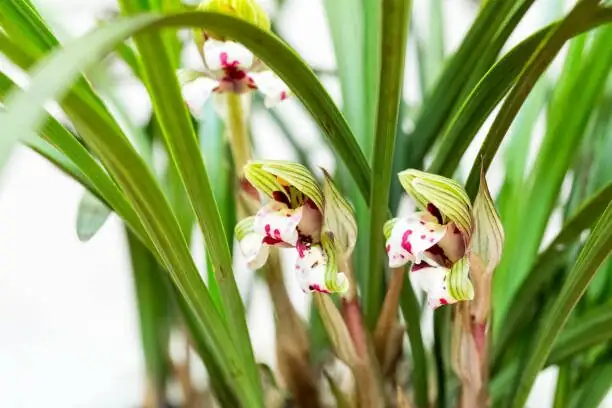
In East Asian tradition, Cymbidium goeringii embodies purity, reserved elegance, and a refined, upright character—the kind of beauty that whispers rather than shouts. This symbolism grew from centuries of cultivation in scholar’s studios and gardens where its winter perfume—often considered among the finest of any flower—offered quiet companionship during cold months. Its “Spring Orchid” name nods to the season when it often reveals its starry, fragrant blooms, but the deeper meaning points to inner balance: strength wrapped in subtlety, discipline softened by scent.
—
Mastering Cymbidium goeringii is less about force and more about finesse: timely divisions with 2–3 growths per piece, sulfur-sealed cuts, a feather-light but secure potting hand, and recovery in bright shade with moving air. Learn to read the plant’s root and shoot cues, and you’ll be repotting on its schedule—not yours—and rewarded with clumps that grow steadily more beautiful, and more fragrant, year after year.