

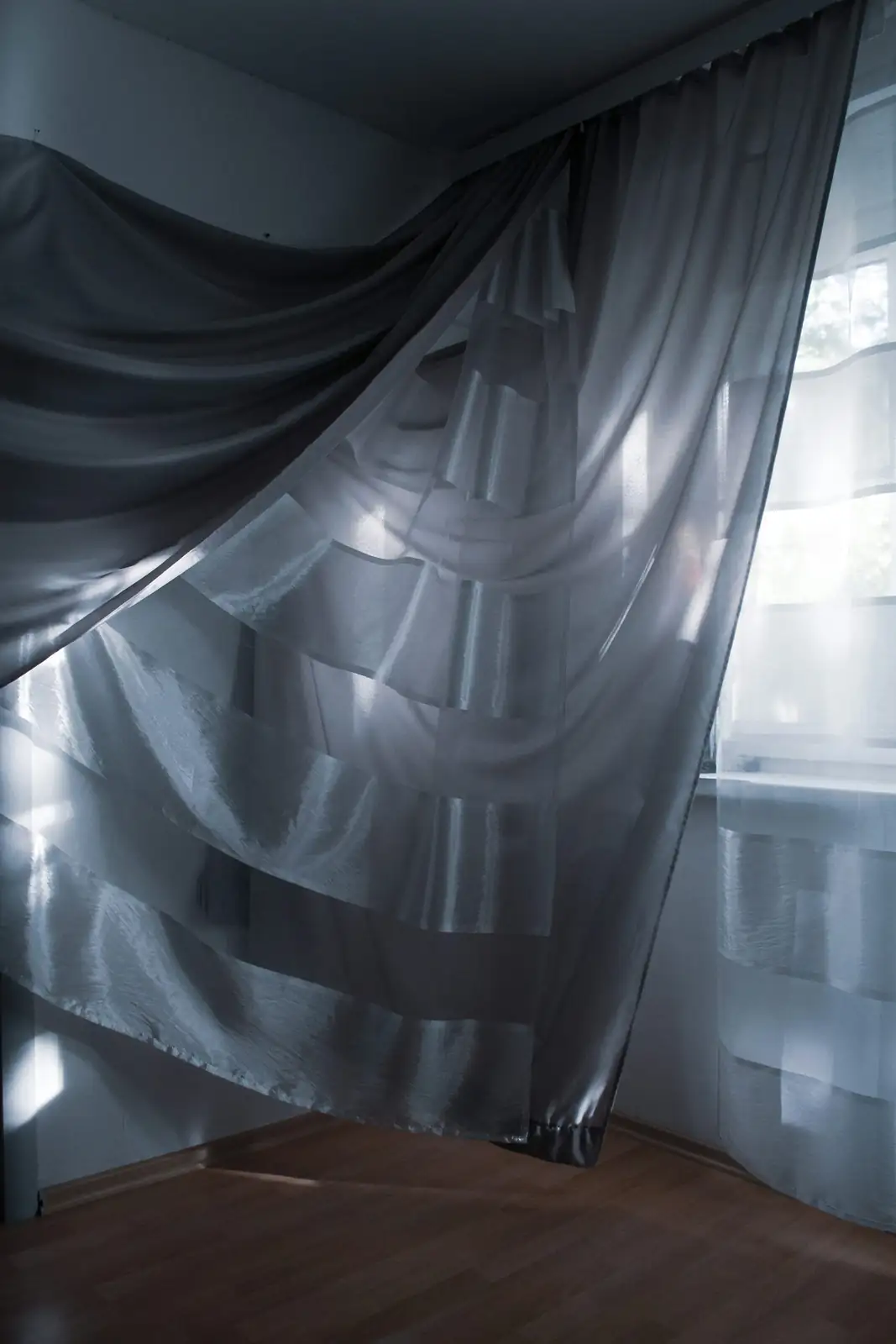
If you’ve ever tucked a Rose-painted Calathea into a dim corner because the tag said “low light,” this one’s for you. Goeppertia roseopicta doesn’t crave darkness—it craves forest-filtered sunshine. Think bright shade, not gloomy shade. Once you learn to translate “dappled jungle light” into windowsill language, those painted leaves will repay you with vivid color and lush, steady growth.
Meet the Rose-painted Calathea (Goeppertia roseopicta)
- Family: Marantaceae (the prayer-plant family)
- Origin: Northwestern Brazil
- Habit and size: A tidy, clumping houseplant about 30–60 cm (12–24 in) tall and wide
- Foliage: Broad oval leaves boldly striped as if hand-painted; undersides glow purplish-red
- Flowers: Small and usually insignificant indoors—this one’s all about foliage
This warm-loving, humidity-happy plant pushes out new leaves quickly when it has steady warmth, moist-but-aerated soil, and filtered light. Harsh direct sun and dry air? Fast track to crispy edges.

Myth-busting: “Low light” vs. “Bright indirect”
Let’s de-code the label:
- The myth: “Low light” means any dim spot will do.
- The truth: It tolerates low to medium light, but truly thrives in bright, indirect light. In other words, plenty of brightness—just softened before it hits the leaves.
Why the confusion? Under a rainforest canopy, light is abundant but filtered. Indoors, we mimic that with gentle, diffused brightness rather than direct beams.
What “bright, indirect” looks like at home
- Near an east-facing window with no direct midday sun
- A few steps back from a bright south window, with a sheer curtain between plant and glass
- In a luminous room where the plant sees the sky but never a harsh sunbeam
Quick check: Hold your hand 20–30 cm above the leaves at midday.
- Soft-edged shadow = sweet spot (bright indirect)
- Crisp shadow = too direct (add sheer/distance)
- Barely any shadow = getting dim (move closer to the window)
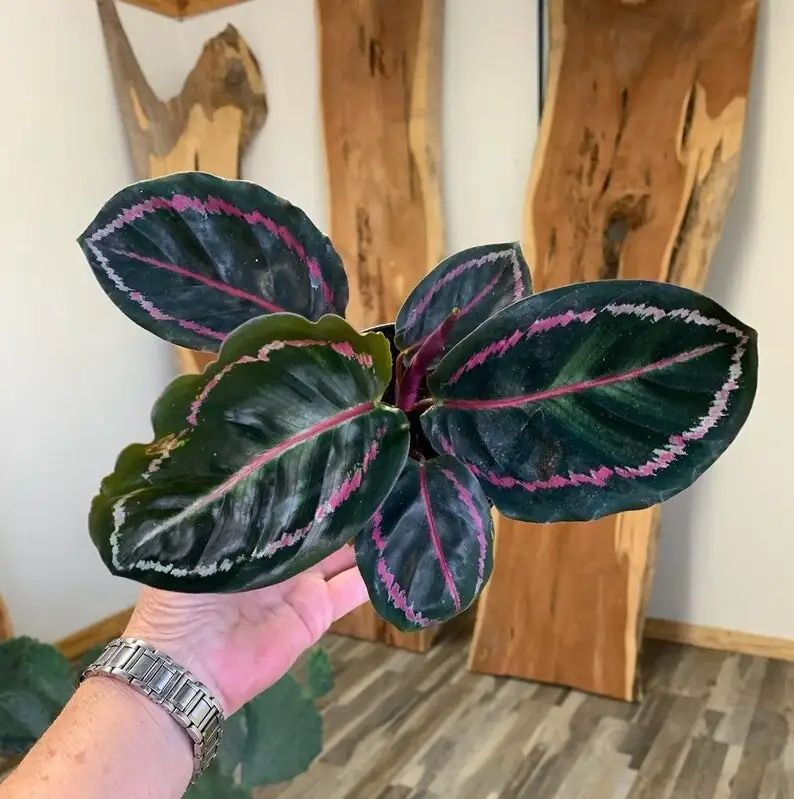
Sheer curtains and that magic 50–70% shade
Forest shade in a window frame? Use sheers. Aim for roughly 50–70% shade when the sun is strong.
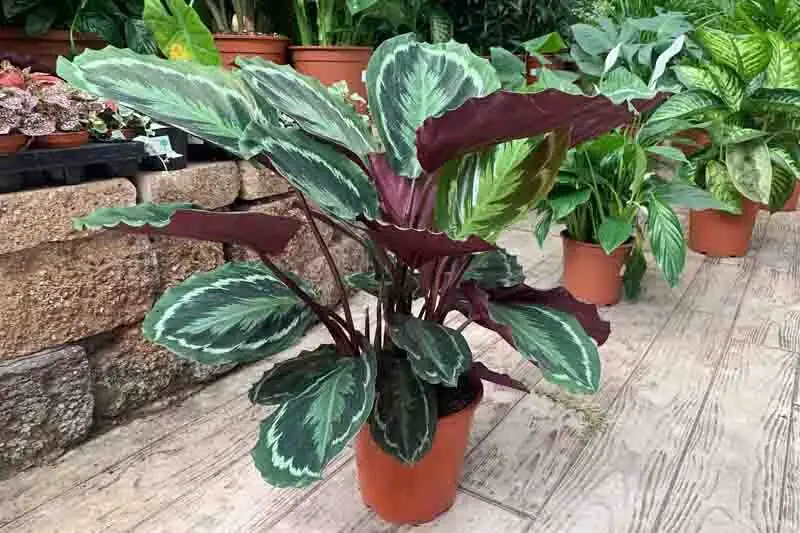
- One quality sheer panel often knocks light down around half—perfect for an east or south window at midday.
- Two layers (double sheer, or sheer + light-filtering shade) push you toward the higher end of shade for stronger sun exposures or heat waves.
- Distance amplifies the effect. Set the plant 30–90 cm (1–3 ft) behind the curtain to smooth hot spots and even out light.
- Want to geek out? A phone light meter can help. You’re after gentle medium-to-bright, filtered light—think “well-lit reading chair” without sun on the page.
Tip: White walls and bright floors bounce light. If the room’s luminous, you may not need to be right at the window—just keep those sunbeams off the leaves.
Visual cues: Too much light vs. too little light
Plants speak with their leaves. Here’s how to listen.
Signs of too much light
- Crispy brown edges or tan “scorch” patches, especially on the sun-facing side
- Color washing out or irregular bleaching on the upper surface
- Leaves cupping or curling inward midday even though soil is moist
- Potting mix drying unusually fast
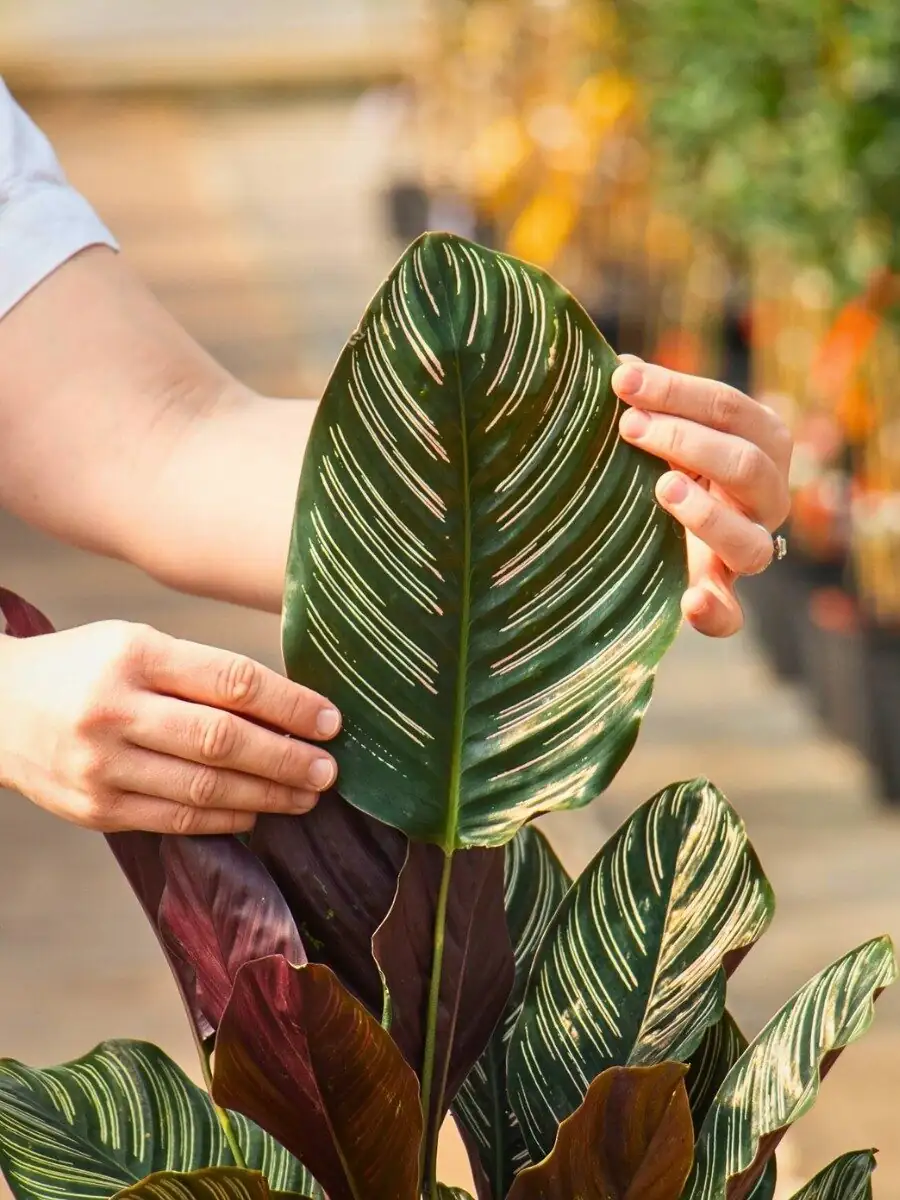
Fixes:
- Add or double a sheer
- Move 30–60 cm farther from the glass
- Boost humidity to 60–70% to counter the drying effect of bright exposures
Signs of too little light
- Patterns dulling and pink/silver markings fading
- Slower growth; smaller new leaves
- Long petioles and leaves “reaching” toward the window
- Mix stays wet for too long; yellowing may follow from overwatering in low light
Fixes:
- Slide it closer to the window (but keep the filter)
- Choose an east-facing spot or a brighter south window with a sheer
- Avoid deep-room corners unless the room itself is very bright
Note: Low humidity can mimic light stress with brown edges. If edges crisp in a bright spot, raise humidity and confirm you’re not getting stray sunbeams.
Light goes hand-in-hand with water, warmth, and humidity
Dial in the rest and your Calathea will glow.
- Temperature: Ideal 18–24°C (64–75°F). Keep above 8°C (46°F); avoid below 5°C (41°F). In hot spells, keep under 32°C (90°F) with airflow and humidity.
- Humidity: Prefers 60–70%. Use a humidifier, pebble tray, or plant groupings. Bright light plus dry air equals crispy margins.
- Watering: Keep the mix evenly moist in growth. Water thoroughly when the top 2–3 cm (0.8–1.2 in) is dry; never waterlog. In winter, water less as growth slows. Avoid leaving water on leaves overnight.
- Soil: Loose, moisture-retentive but free-draining—peat/coco base with perlite/coarse sand works well.
- Feeding: From roughly May–September, feed every 2 weeks with a gently diluted, balanced houseplant fertilizer. Pause or reduce in winter.
- Pruning: Remove yellowed or damaged leaves at the base to keep the clump neat.
- Repotting and propagation: Repot in spring if rootbound or the mix has broken down. Divide rhizomes in late spring–early summer; each division should have roots and several leaves.
- Pests and disease: Watch for mealybugs and scale, often on undersides. Wipe, then treat with a mild soapy spray, repeating every 5–7 days as needed. Overly wet, stagnant conditions can invite leaf spots—improve airflow and remove affected leaves.
- Pet safety: Generally considered non-toxic to cats and dogs.
Placement recipes that work
- East window, filtered: Set-and-forget winner for color and growth.
- South window, filtered: Add a sheer (or two) and place 30–90 cm back to hit that 50–70% shade sweet spot.
- West window: Strong late sun—use a denser sheer or double layer; watch for heat spikes.
- North window: Can work if the view is wide and unobstructed; keep the plant close to the glass. If growth slows and patterns fade, move brighter.
A seasonal nudge
- Spring: Repot/divide; increase watering as days brighten; resume gentle feeding.
- Summer: Peak growth—water more often; maintain 50–70% shade from strong sun; keep humidity high.
- Autumn: Indoor air dries—boost humidity and watch for edge crisping.
- Winter: Keep warm (above 8°C/46°F), water less, and pause feeding if growth slows.
Quick FAQ
- The leaf edges are browning. Is it light or humidity? Often both. Bright exposures dry air faster. Add humidity (60–70%) and ensure no direct sun is slipping through. If scorchy tan patches appear, increase shade.
- How do I know my sheer is enough? If the midday hand shadow is soft, you’re close. If you still see patches of direct sun on furniture/floor, add a second sheer, move the plant back, or shift slightly off-axis from the window.
A note on symbolism and “flower language”
Though it rarely blooms indoors, Rose-painted Calathea is often linked with quiet beauty and “living art.” As a prayer-plant relative, its leaves subtly change position between day and night, a gentle rhythm many people read as calm, mindful presence. If you see “flower language” at play here, it isn’t about blossoms—it’s about the foliage’s painted elegance and daily poise.
Bottom line: Give Goeppertia roseopicta what the forest gives—bright, filtered light, steady warmth, and humid air. A simple sheer curtain and a keen eye for leaf cues will turn “tricky” into “thriving.”