

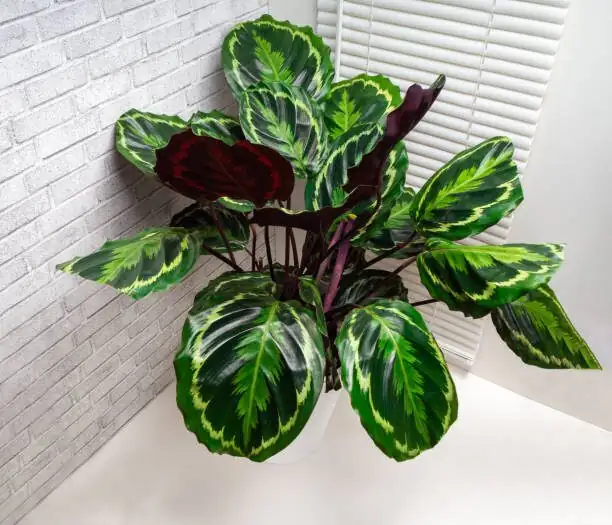
If your Rose-painted Calathea (Goeppertia roseopicta) has ever crisped at the edges like a crème brûlée, it’s sending you a memo: “More rainforest, please.” This Brazilian beauty shows its best color and lush clumping habit when humidity hovers near 60–70%, in steady warmth and soft, filtered light. The good news? You can build a tiny rainforest right on your shelf with three simple moves: plant buddies, pebble trays, and a well-placed humidifier.
Here’s your blueprint for creating that cushy microclimate—no greenhouse required.
Meet the plant (and its preferred weather)
- Origin: Northwestern Brazil; warm, humid forest understory
- Size: Typically 30–60 cm (12–24 in) tall and wide indoors, forming a dense clump
- Light: Low to medium or bright, indirect light; think 50–70% shade with a sheer curtain. East windows are great; south windows work if filtered. Direct midday sun = scorch risk.
- Temperature: Ideal 18–24°C (64–75°F). Keep above 8°C (46°F) in winter; avoid below 5°C (41°F). In heat, keep it under 32°C (90°F) with airflow and humidity.
- Humidity: Loves 60–70%. Dry air + too much light = yellowing, browning, crispy edges.
- Soil: Loose, moisture-retentive but free-draining (peat/coco with perlite/coarse sand).
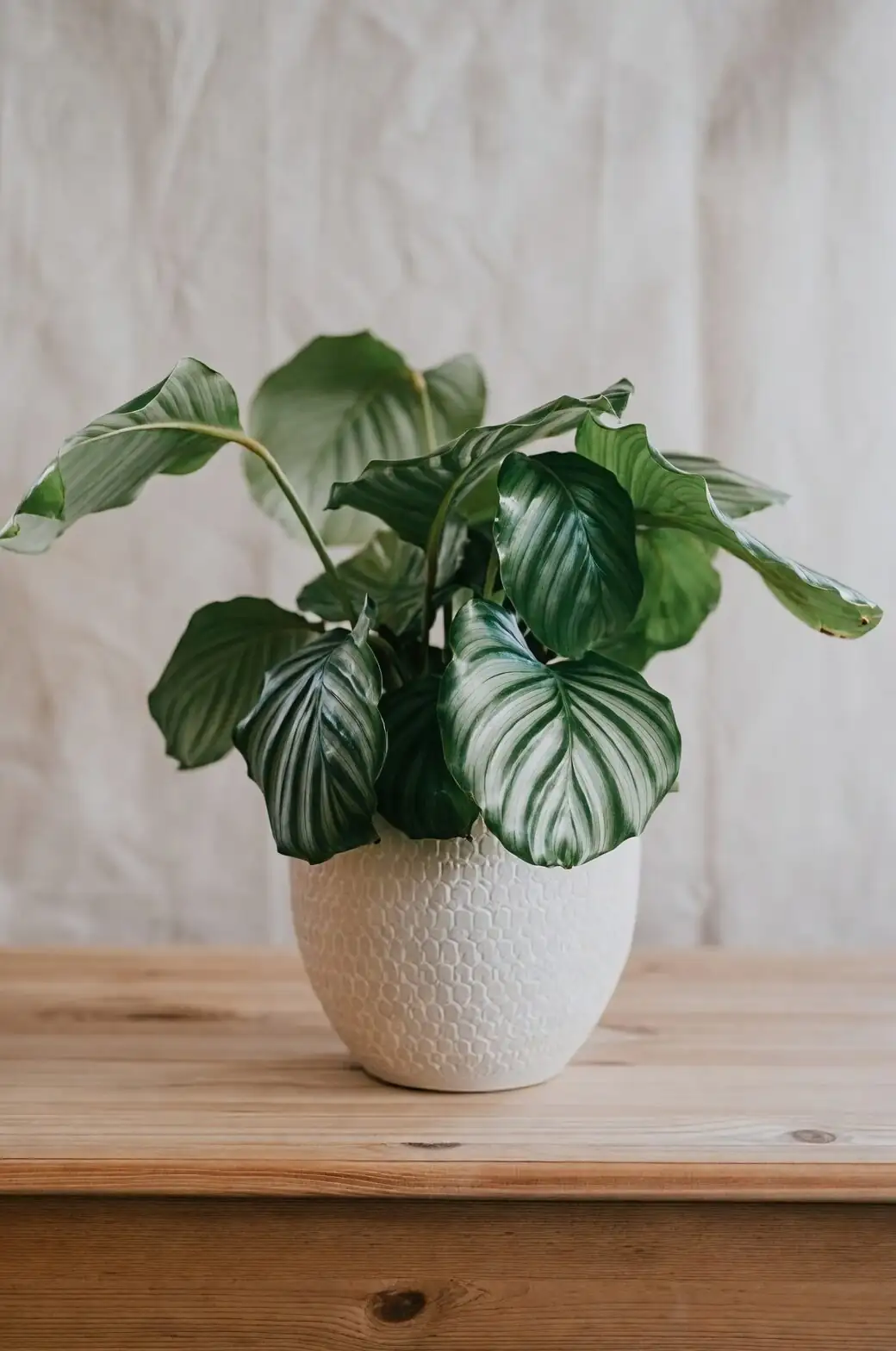
- Habit: Upright, clumping; broad oval leaves with “painted” striping and rich purple undersides.
The 60–70% humidity sweet spot
Signs your roseopicta wants more moisture:
- Browning or crispy tips/edges
- Curled or wilting foliage, misshapen new leaves
- Scorched patches when light is also too strong
Aim to keep relative humidity steady, not spiky. A reliable 60–70% supports even moisture in the potting mix and helps the plant push out those gorgeous leaves without fray or fade.
Build a rainforest microclimate: step-by-step
1) Start with the right light and placement
- Place near an east-facing window, or behind a sheer curtain in south light.
- Keep away from heaters and AC vents—hot/cold drafts dehydrate foliage fast.
- Elevate to eye level to enjoy the purple leaf undersides.
Pro tip: Set a small hygrometer at leaf height. Watch 24-hour patterns—you’ll see humidity drop during heating/AC cycles and rise after watering or shower steam.
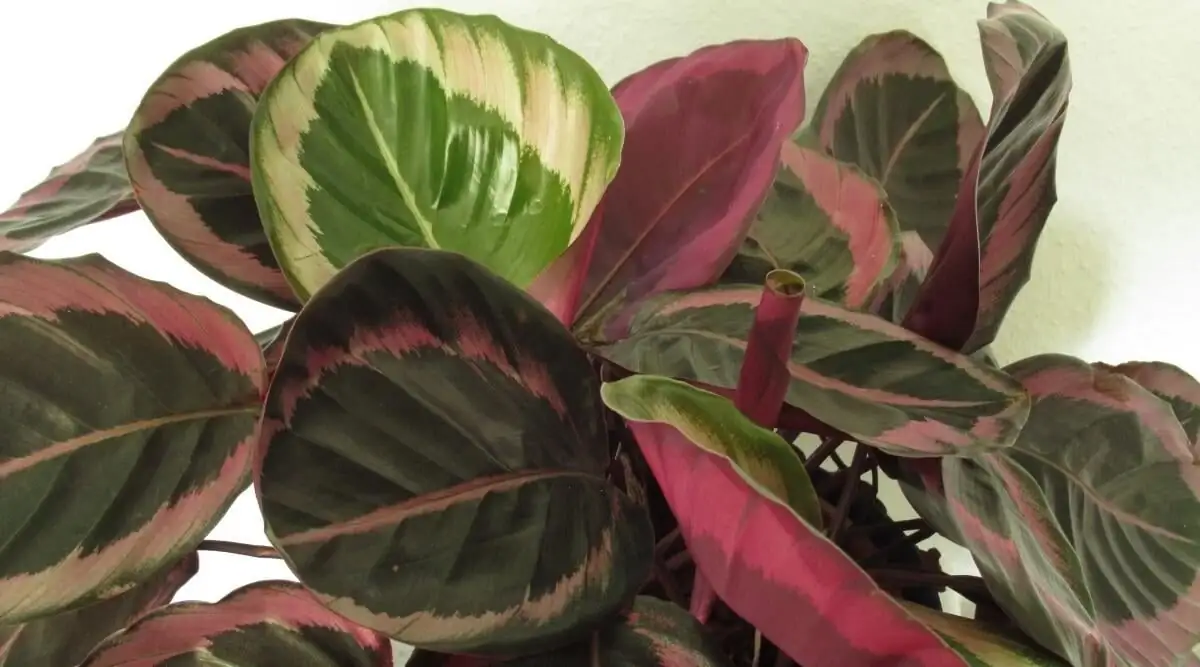
2) Group with compatible plant buddies
Plants release moisture through their leaves (transpiration). Cluster a few humidity-lovers with similar light needs and you’ll create a gentle “humidity bubble” around the group.
Great companions for bright, indirect to gentle medium light:
- The prayer-plant clan (excellent matches)
- Maranta leuconeura (classic prayer plant)
- Goeppertia orbifolia, G. makoyana, Ctenanthe setosa
- Stromanthe sanguinea ‘Triostar’ (brighter but still filtered)
- Forest-floor friends
- Fittonia (nerve plant)
- Ferns (Boston, silver ribbon, small maidenhair cultivars if you’re attentive)
- Spathiphyllum (peace lily)
- Chamaedorea elegans (parlor palm)
- Bonus: Phalaenopsis orchids often thrive in similar light with added humidity
Arrangement hacks:
- Create a semicircle with your roseopicta slightly forward and companions surrounding a central humidity source (pebble tray or humidifier).
- Keep leaves from touching too tightly—light, even airflow prevents leaf spot.
- Avoid pairing with succulents/cacti; they prefer drier air and brighter, direct sun.
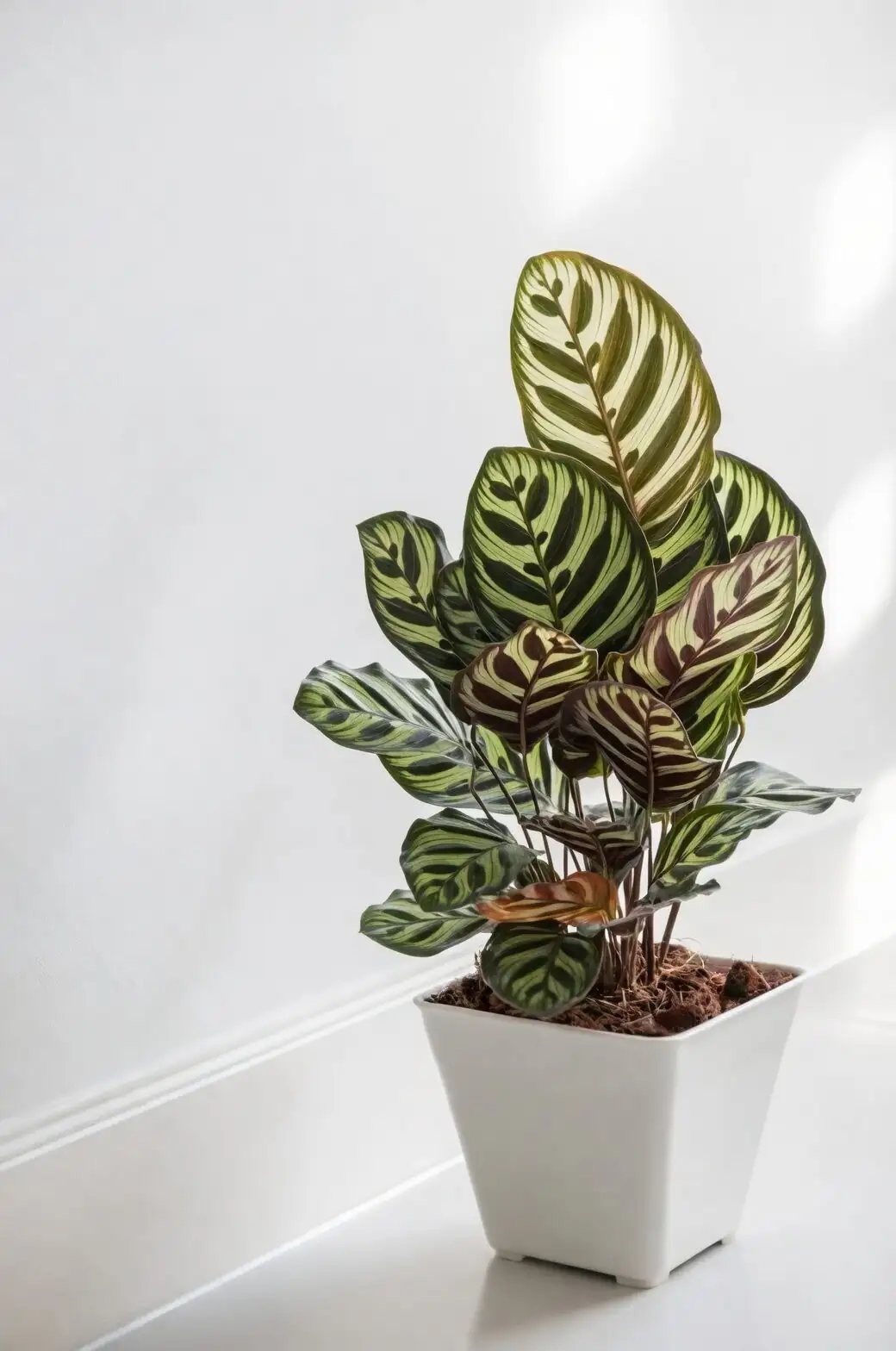
3) Set out pebble trays for “passive” humidity
A pebble tray uses evaporation to raise local humidity—simple, stylish, and low-cost.
- Choose a water-tight tray several inches wider than the plant’s foliage spread.
- Fill with pebbles (or LECA/terra-cotta chips), then add water so the tops of pebbles sit just above the waterline.
- Place pots on the pebbles—never in standing water.
- Top up as water evaporates, and rinse the tray periodically to prevent algae.
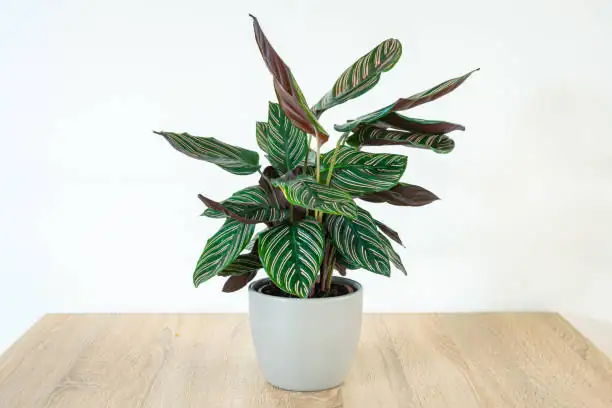
Reality check: Pebble trays add a modest, localized boost—especially helpful for Calatheas and ferns. In dry winters, pair with a humidifier to stay near 60–70%.
4) Bring in a humidifier for consistency
- Choose an evaporative or ultrasonic cool-mist unit sized to your room.
- Place it near (but not blasting directly onto) the plant cluster; set to maintain 60–70%.
- Clean regularly and use distilled/filtered water if you have hard water to avoid mineral dust on leaves.
- Run it more in winter when indoor air plunges.
5) Balance humidity with airflow
High humidity without movement invites leaf spot. Use gentle, indirect airflow (oscillating fan on low, not pointed right at the leaves). Keep foliage dry overnight.
Watering that matches the microclimate
- Goal: Evenly moist, never soggy.
- Water thoroughly when the top 2–3 cm (0.8–1.2 in) feels dry; let excess drain.
- Reduce watering in winter as growth slows—constant wetness can cause rhizome/root rot.
- Light misting can offer a quick bump, but avoid beads sitting on leaves for long, especially at night.
Soil recipe:
- Peat or coco base + perlite and/or coarse sand for drainage. You want moisture retention without waterlogging.
Feeding, repotting, and pruning
- Fertilizer: In active growth (roughly May–September), feed every 2 weeks with a gently diluted, balanced houseplant fertilizer. Avoid splashes on leaves. Pause or reduce in winter.
- Repotting: Spring is best, sizing up gradually. It’s also the easiest time to divide healthy clumps into sections with roots and several leaves.
- Pruning: Remove yellowing or damaged leaves at the base; thin slightly if crowded to improve airflow.
Pests and pet safety
- Watch for mealybugs and scale (often on undersides). Rinse, wipe, and treat with a mild soapy spray, repeating every 5–7 days as needed. Improve airflow and avoid wet foliage overnight to deter leaf spot/blight.
- Generally considered non-toxic to cats and dogs. Still, any nibbling can cause mild tummy upset.
Troubleshooting quick guide
- Crispy edges, leaf curl: Dry air and/or too much light. Raise humidity toward 60–70% and soften the light with a sheer curtain.
- Yellowing leaves: Chill, dry air, or sun stress. Keep to 18–24°C (64–75°F), bright indirect light, and evenly moist soil.
- Scorch marks: Direct sun. Increase shade (50–70%).
- Leaf spot/blight: Overly wet foliage and stale air. Space plants slightly, add gentle airflow, remove affected leaves.
A seasonal microclimate calendar
- Spring: Repot/divide if needed; restart feeding; establish your plant cluster and humidifier baseline.
- Summer: Peak growth—water more often; maintain 50–70% shade; keep humidity high and temps under 32°C (90°F) with airflow.
- Autumn: Indoor air dries—refresh pebble trays, tune the humidifier, and watch for crisping tips.
- Winter: Keep above 8°C (46°F); water less; pause fertilizer if growth slows; rely more on the humidifier than on misting.
A note on symbolism and “flower language”
Goeppertia roseopicta is often associated with quiet beauty and “living art,” thanks to its painted leaves and the gentle day–night rhythm of its prayer-plant kin, whose leaves can subtly reposition between day and night. While it’s not rooted in classical flower-language traditions, today’s houseplant culture embraces it as a symbol of calm, daily ritual, and creative flair—a reminder to soften the light, slow the air, and tend to the small climate that sustains growth.
Snapshot care card (to pin near your plant)
- Light: Bright, indirect to gentle medium; avoid harsh sun.
- Temp: 18–24°C (64–75°F); never below 8°C (46°F).
- Humidity: 60–70% via grouping + pebble trays + humidifier.
- Water: Evenly moist; water when top 2–3 cm are dry; excellent drainage.
- Soil: Peat/coco mix with perlite/coarse sand.
- Feed: Every 2 weeks in growing season, diluted.
- Pet safety: Generally non-toxic.
Build the microclimate, and your Rose-painted Calathea will repay you with plush growth and saturated color—proof that a tiny rainforest can thrive on a shelf when its weather is just right.