

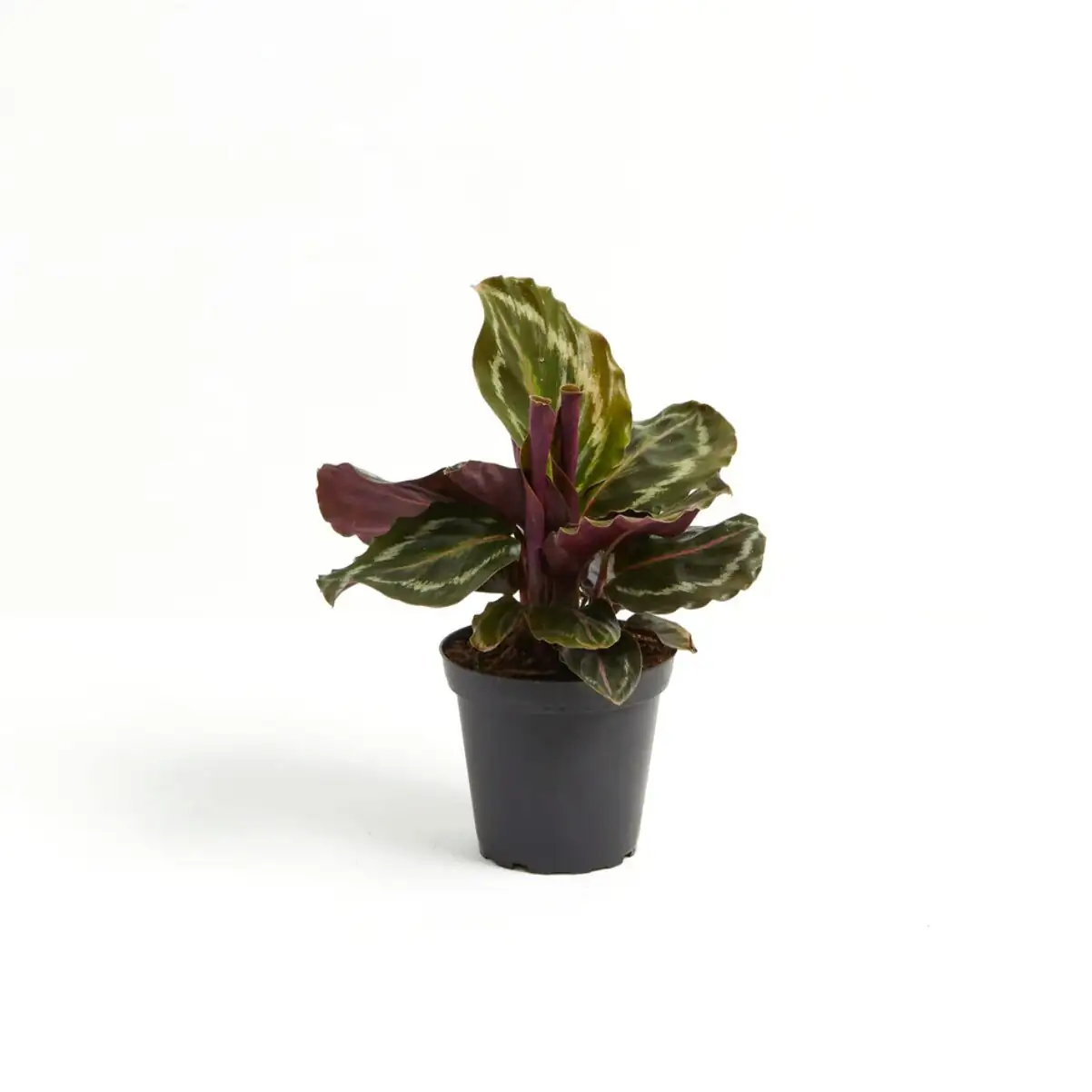
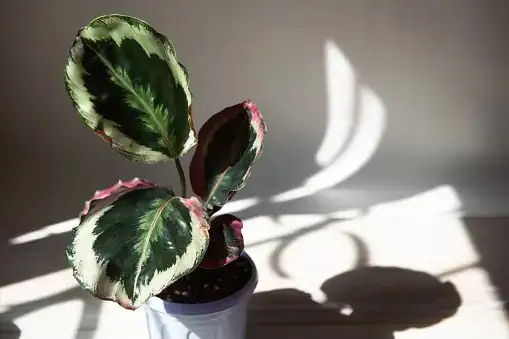
Step into a room where the foliage does the decorating for you: Goeppertia roseopicta—often sold as Rose-painted Calathea—wears blush brushstrokes on deep green leaves and reveals a velvety purple underside when you catch it at just the right angle. Style it thoughtfully and you can amplify those rose-painted patterns without flirting with sun scorch. This guide blends interior design choices—planter colors, shelf height, backdrops—with light-smart placement so your plant stays lush, glossy, and photo-ready.
Meet your muse: a quick styling profile
- Look: Broad, oval leaves with painted pink to silvery striping; undersides in rich purplish-red.
- Habit and size: Dense, upright clump about 30–60 cm (12–24 in) tall and wide indoors.
- Light tolerance: Low to medium light or bright, indirect light; harsh direct sun will crisp edges and fade patterning.
- Comfort zone: Warm (18–24°C / 64–75°F) and humid (60%–70%).
- Best stage-view: Eye level, where the purple undersides glow and the patterns read like living art.
Design note: Many shops still label it “Calathea roseopicta,” and you’ll find glamorous cultivars like ‘Dottie,’ ‘Rosy,’ or ‘Medallion.’ Whichever you grow, protect it from midday rays and dry air to keep those colors saturated.
Planter color and finish: palettes that make pink sing and purple deepen
Think of the pot as your picture frame—subtle shifts in tone and texture can dial up the foliage drama.
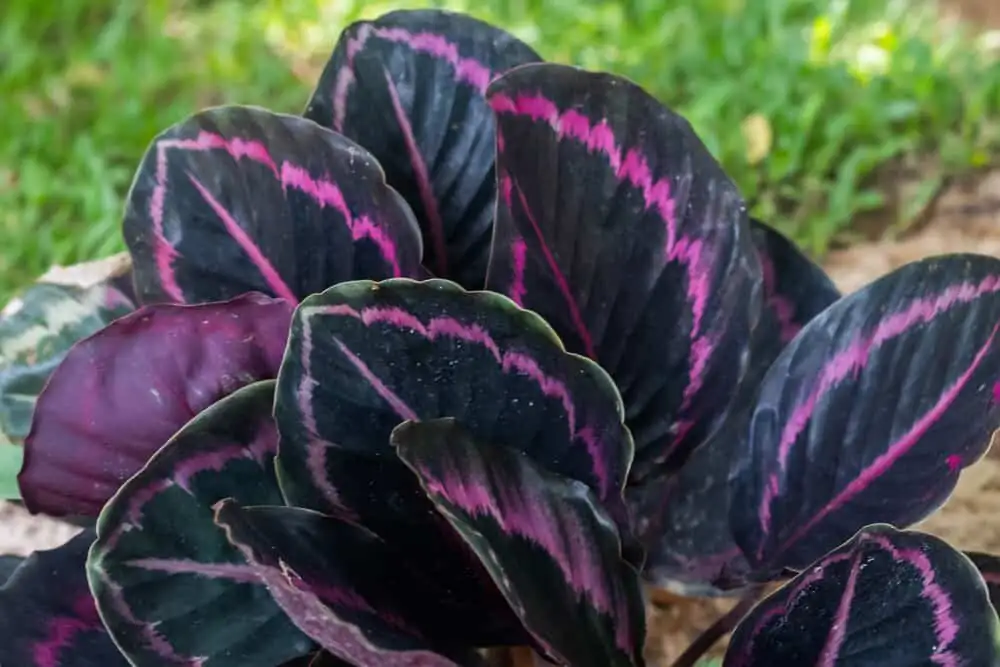
Color families that flatter
- Deep contrast (to sharpen the pink): charcoal, matte black, inky navy, deep forest green.
- Blush echo (to harmonize with the midrib): dusty rose, mauve, muted berry. Keep finishes matte so they don’t compete with the leaf sheen.
- Earthy neutrals (to let pattern star): warm greige, clay, café au lait, stone.
- Jewel accents (to mirror the underside): aubergine, plum, blackberry. Use in matte or satin to avoid glare.
- Warm metallics (soft glow, not mirror bright): brushed brass or antique gold planters/stands subtly warm the green and pink without spiking reflected light.
Texture and shape
- Finish: Matte or satin ceramic and unglazed stoneware complement the foliage’s satiny surface; high-gloss white can bounce too much light near sunny windows.
- Ribbed, fluted, or vertically grooved pots echo the leaf veining without visual clutter.
- Form: A slightly wider-than-tall cylinder suits its clumping base. Footed or pedestal pots lift leaves to eye level and improve airflow.
- Size up slowly: Choose a planter just one step larger than the nursery pot (many arrive in 12–15 cm / 4.7–5.9 in). Ensure drainage, then slip into a decorative cachepot if you like a seamless look.
Shelf height and placement: showcase the purple, avoid the scorch
To protect patterning and show off the undersides, placement matters as much as the pot.
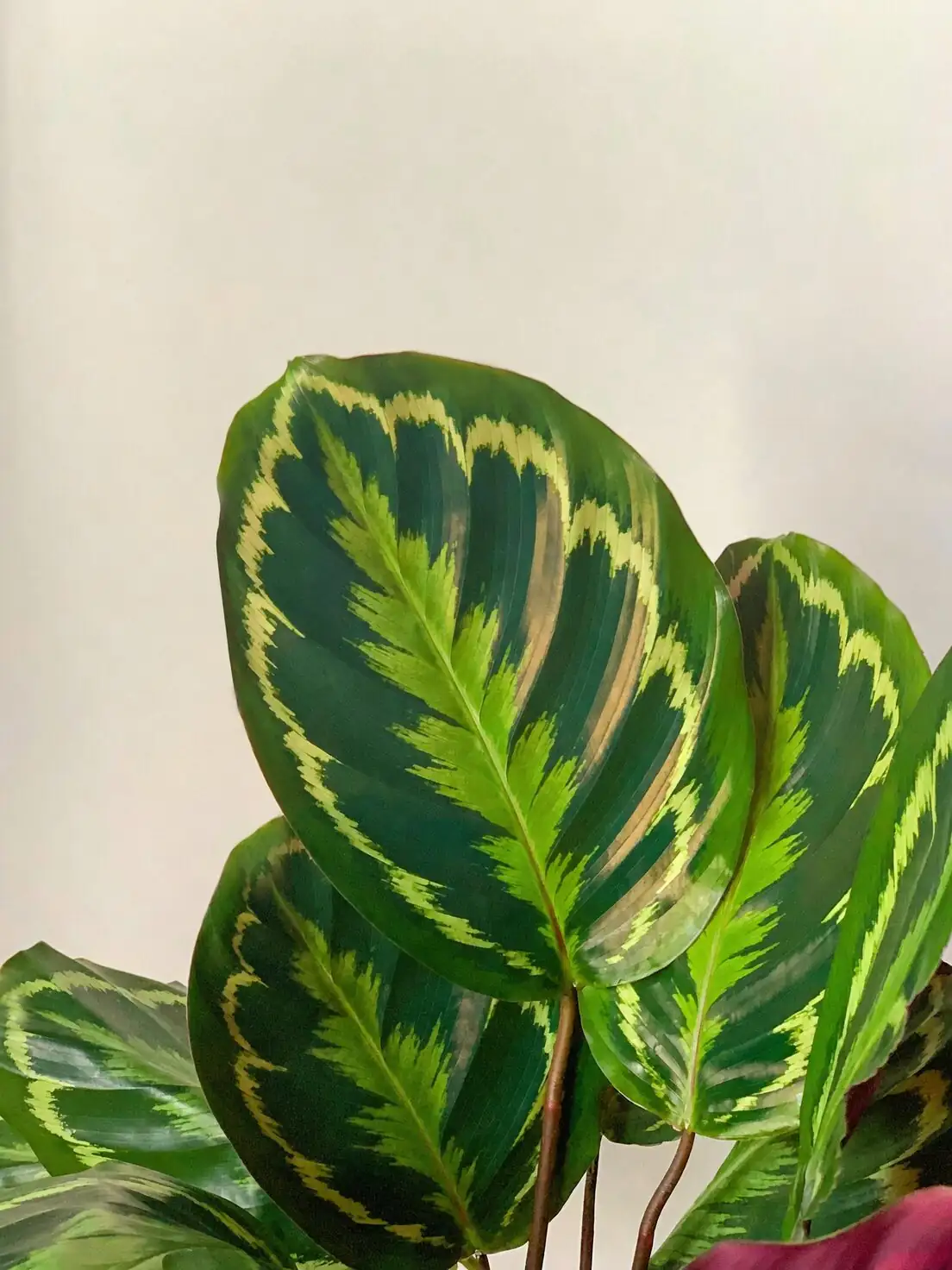
The eye-level rule (for drama on demand)
- Seated eye line: 90–120 cm (35–47 in) from the floor on a console or low bookshelf near bright, filtered light.
- Standing eye line: 140–160 cm (55–63 in) on wall shelves or tall étagères. Tilt the pot slightly forward with clear risers so undersides catch the view.
Window orientation cheat sheet
- East-facing (ideal): Place 0.5–1 m (1.5–3 ft) from the window or right at the window behind a sheer. Morning sun is gentler; colors look richest here.
- South-facing (strongest): Use a sheer curtain or light-filtering blind to create about 50%–70% shade. Position 1–2 m (3–6.5 ft) back. Matte pots and medium-tone walls reduce reflectivity.
- West-facing (hot afternoons): Same filtering as south; watch for sharp sunbeams that move across shelves. A louvered blind angled upward helps protect leaf edges.
- North-facing (softest): Closer to the glass is fine. Growth is steady but slower; the plant still reads beautifully as a mood piece.
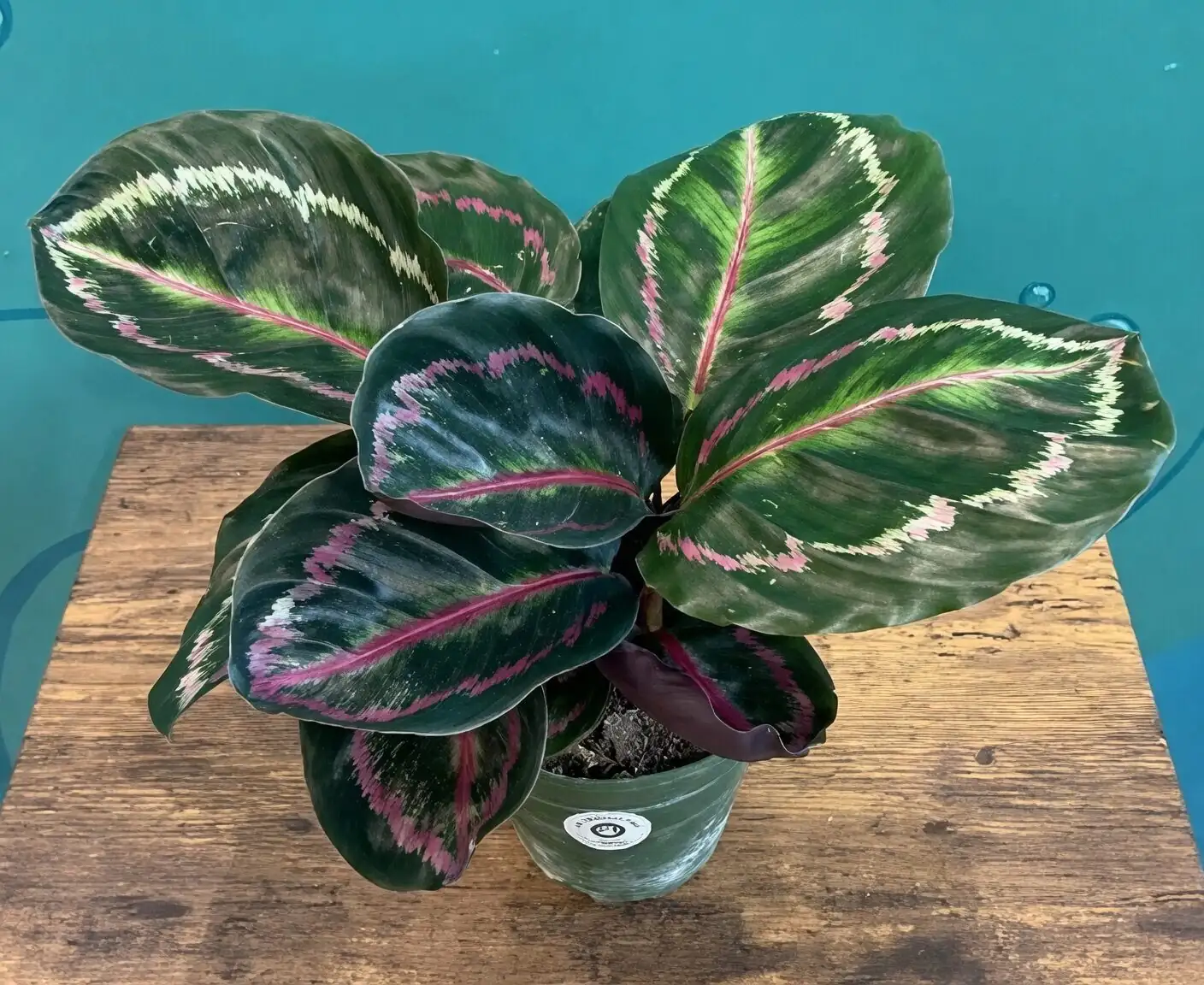
Tip: Rotate a quarter turn each week so both patterns and purple tone develop evenly—its leaves subtly reposition from day to night, so give it a calm, consistent spot away from AC/heater blasts.
Backdrops that make foliage pop (without boosting leaf burn risk)
Your wall, furniture finish, and nearby materials can either spotlight the pattern—or wash it out.
Wall colors that flatter
- Crisp contrast: smoky dove gray, graphite, ink blue.
- Gentle harmony: muted sage, eucalyptus, chalky greige, warm linen.
- Avoid: stark gloss-white walls immediately beside unfiltered south/west windows; they reflect light that can tip conditions toward scorch.
Materials and patterns
- Wood tones: medium walnut or honey oak warm the pinks; black-stained oak adds gallery-like contrast.
- Stone and tile: honed terrazzo or soft concrete emphasizes the modern, graphic leaf paintwork.
- Wallpaper: choose low-contrast, large-scale textures (linen effect, soft botanicals) to avoid competing with the plant’s striping.
- Mirrors: use antique/bronze mirrors or place mirrors off-axis from windows; avoid placing a glossy mirror directly behind the plant in strong exposures, which can concentrate light.
Room-by-room styling recipes
Living room “gallery console”
- Setting: East window with a sheer curtain.
- Height: On a 70–80 cm (28–32 in) credenza; pot lifted on a 5–8 cm (2–3 in) pedestal ring.
- Palette: Matte charcoal pot with a slim brass stand; backdrop in warm greige.
- Companions: A soft fern and a trailing Maranta to boost humidity and amplify the “prayer-plant” theme.
Bedroom sanctuary
- Setting: 0.8–1 m (2.5–3 ft) from a bright window, filtered light.
- Height: Nightstand or dresser at seated eye level—perfect for enjoying the evening “fold” of leaves.
- Palette: Dusty-rose ceramic with satin finish; linen wall color or pale eucalyptus.
- Comfort: A quiet humidifier tucked behind decor raises RH to 60%–70%. Use a pebble tray that looks like a stone trivet under the pot.
Home office, camera-ready
- Setting: South window with sheer; plant 1.5 m (5 ft) back, within your webcam frame.
- Height: Upper shelf at 140–150 cm (55–59 in) so purple undersides peek into view.
- Palette: Matte black pot; ink-blue accent wall. Add a small, diffuse desk lamp to create a soft highlight on the leaf paintwork without heat.
Light-smart styling tricks
- Layered filtering: Sheer curtains, solar films, or bamboo shades create the 50%–70% shade this plant loves near bright windows.
- Angle the blinds: Tilt slats upward so sun reflects into the ceiling, not onto foliage.
- Mobile stands: A plant caddy with wheels helps you retreat from summer’s high sun and edge closer during winter’s gentler light.
- Gentle grow lights: If your space is dim, use a warm-white LED (around 4000–5000K) positioned 30–45 cm (12–18 in) above the leaves on a 10–12 hour timer. Keep intensity moderate—too much artificial light can wash out those painted markings.
Humidity and watering—disguised as design
- Elegant pebble trays: Shallow ceramic trays filled with river pebbles double as sculpture and keep humidity up around the plant base.
- Grouping: Style in trios with other humidity lovers (ferns, Maranta, small peperomias) to raise local RH and create lush texture contrast.
- Misting: A fine mist can be a momentary refresh, but don’t leave water sitting on leaves for long periods—especially overnight—to avoid spotting or blight.
- Watering rhythm: Keep the potting mix evenly moist, not soggy. Water thoroughly when the top 2–3 cm (0.8–1.2 in) feels dry; let excess drain. In winter, back off as growth slows.
Seasonal choreography
- Spring: New leaves arrive fast—repot or divide if rootbound, then restart gentle feeding. This is your moment to tweak height and backdrop as foliage fills out.
- Summer: Peak growth. Provide 50%–70% shade from strong sun, and keep humidity high. Expect more frequent watering.
- Autumn: As indoor air dries, reinforce humidity and watch edges for crisping. Rotate for even color as daylight shifts lower.
- Winter: Pull pots away from cold glass; keep above 8°C (46°F) and pause or reduce feeding. A sheer curtain doubles as a thermal veil against drafts.
Styling pitfalls (and easy fixes)
- Too much glare: High-gloss white pots and bright walls near south/west windows can reflect light and scorch leaves. Fix with matte finishes and sheers; move the plant 0.5–1 m back.
- Traveling sunbeams: Hot “stripes” march across floors in late afternoon—avoid placing the plant where those beams land.
- Stale corners: Deep bookshelves with no airflow encourage leaf spot and pests. Pull the pot 5–10 cm (2–4 in) from the wall and keep a gentle fan on low nearby.
- Oversized pots: Big jumps in pot size keep soil wet too long. Size up gradually and use a loose, moisture-retentive but free-draining mix (peat/coco with perlite or coarse sand).
Mini care cheat sheet (for design-first plant parents)
- Light: Low to medium or bright, indirect. East-facing windows are ideal; south/west need filtering to avoid scorch.
- Temperature: 18–24°C (64–75°F). Never below 8°C (46°F); avoid cold or hot drafts.
- Humidity: 60%–70% preferred. Pebble trays, grouping, and humidifiers are your friends.
- Water: Evenly moist; water when the top 2–3 cm (0.8–1.2 in) is dry, then drain well. Reduce in winter.
- Feeding: Every ~2 weeks in the growing season with a gently diluted, balanced houseplant fertilizer; pause or reduce in winter.
- Grooming: Dust leaves to keep patterns vivid; remove damaged leaves at the base. Check undersides for mealybugs and scale.
- Pet note: Generally considered non-toxic to cats and dogs—stylish and peace-of-mind friendly.
Symbolism: quiet beauty and daily rhythm
Rose-painted Calathea is often linked with “living art”—its leaves look hand-painted—and with gentle daily rhythms. Like its prayer-plant relatives, the foliage subtly shifts position from day to night (a natural, pulvinus-driven movement known as nyctinasty). Beyond the botany, that rise-and-rest cadence resonates as a reminder to pace our own routines. In interiors, it becomes a living metronome for calm: not loud or flashy, just steadily beautiful.
—
Style it for the view, filter the light, and keep the air softly humid. Do that, and Goeppertia roseopicta will reward you with leaves that look freshly painted every day—and a whisper of purple every time you pass by.