

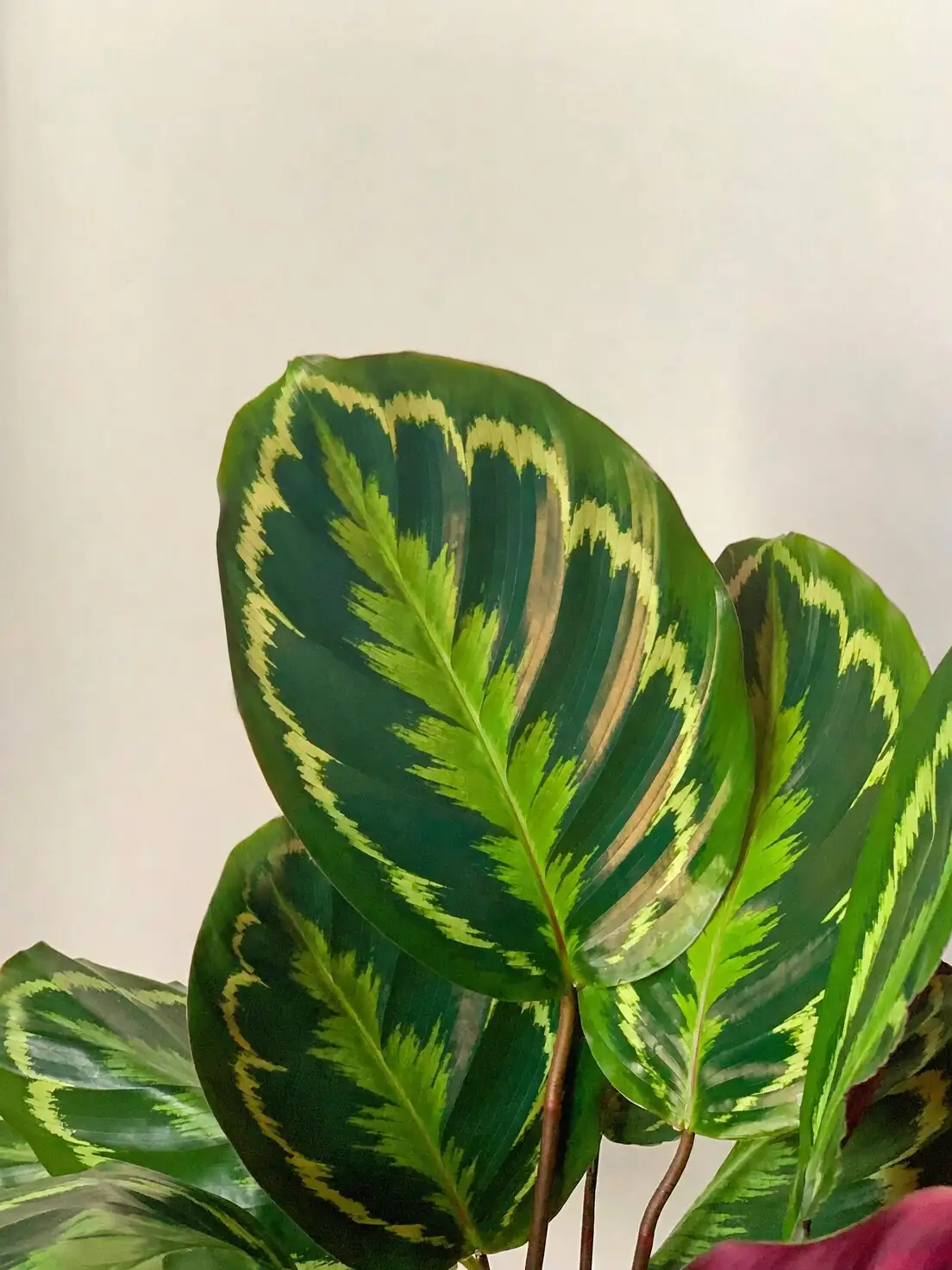
Sometimes a plant feels less like décor and more like a pause button. Goeppertia roseopicta—often sold as Rose-painted Calathea—does exactly that. Its broad, painterly leaves catch the light like living canvases by day, then lift into a soft evening posture that hushes the room. Calm, gratitude, living art: this is a plant that turns daily care into a small ritual.
Meet Goeppertia roseopicta (Rose-painted Calathea)
- Botanical family: Marantaceae (the “prayer plant” family)
- Also seen as: Calathea roseopicta, Rose Calathea, Roseopicta Calathea, Prayer Plant
- Origin: Northwestern Brazil
- Habit: A lush, upright-from-the-base clump, typically 30–60 cm (12–24 in) tall and wide indoors
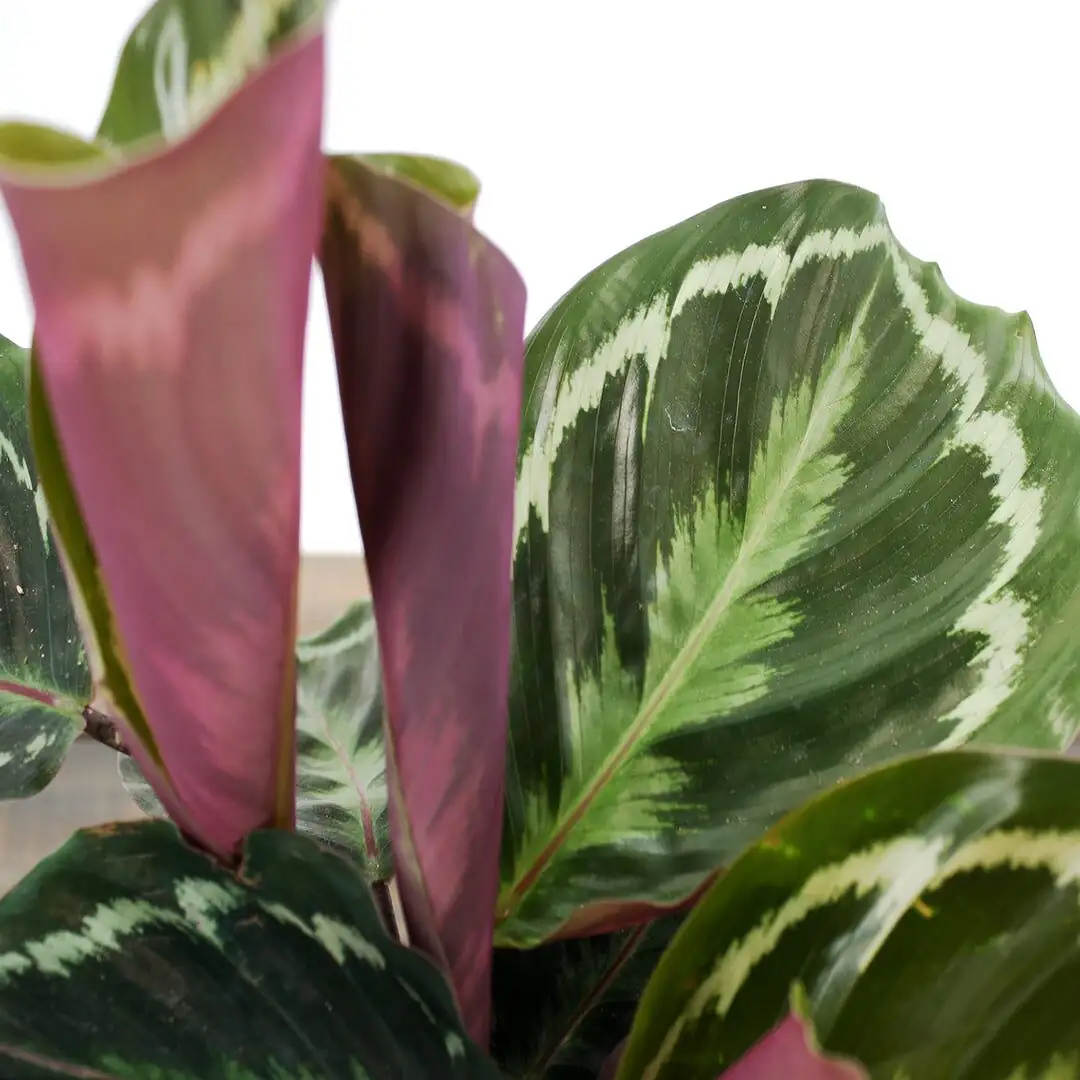
- Foliage: Broad, oval leaves striped as if brushed by a fine artist; undersides glow purplish to reddish-purple—striking at eye level
- Flowers: Small and usually not showy indoors; this beauty is all about foliage
Botanically, many “Calathea” houseplants have been reclassified into the genus Goeppertia, so you’ll see both names on tags. Either way, this is a warm-loving, humidity-happy indoor foliage plant that thrives in bright, indirect or gentle medium light.
Why it’s linked with calm—and called a “prayer plant”
Living art that slows the gaze
Variegated bands across deep green blades, a wash of wine-purple beneath: the leaves invite you to look longer. That unhurried gaze does real work—our brains read symmetrical, flowing patterns as restful, which is why Rose-painted Calathea so often finds its way into bedrooms, reading nooks, and home offices.
The nightly leaf “prayer”
As dusk falls, many members of the Marantaceae subtly raise or reposition their leaves. It’s a daily rhythm known as nyctinasty—an internal clock gently shifting leaf angles between day and night. In profile, the lifted leaves can resemble hands at rest, inspiring the “prayer plant” nickname. In G. roseopicta the movement is often graceful and understated rather than theatrical, but once you notice the shift, it becomes a cue: day’s done, take a breath.
Contemporary 花语 (flower-language) for Rose-painted Calathea—meanings and their context
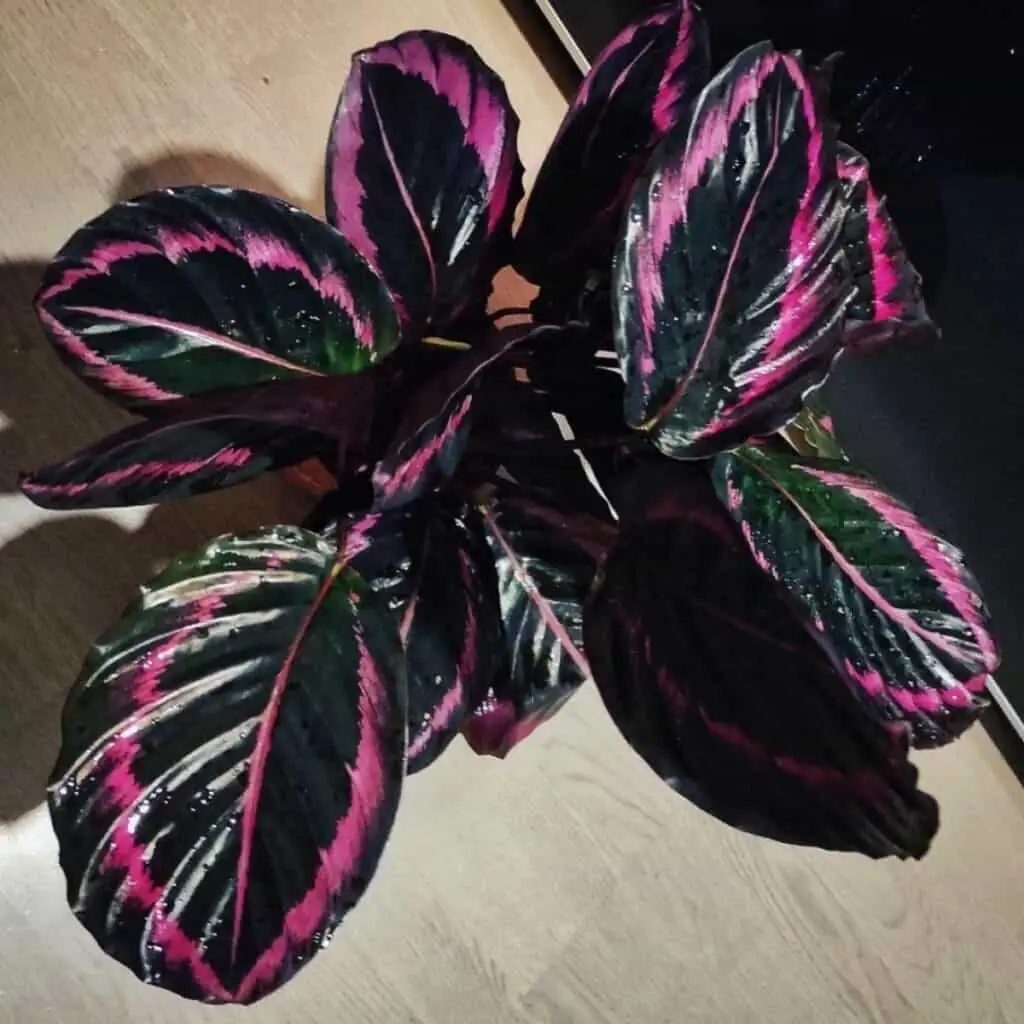
Flower language—called 花语 in Chinese and hanakotoba in Japanese—traditionally belongs to cut flowers and classic garden species, not tropical houseplants. Modern houseplant culture, however, has extended the idea to foliage favorites. These attributions are contemporary and interpretive (not historical canon), but they resonate:
- Calm and composure: The plant’s quiet, painted symmetry and gentle nightly posture read as serenity in motion.
- Gratitude: Those blush-toned midribs and soft undersides feel like a “thank-you note” folded within each leaf—beauty turned inward as much as outward.
- Harmony and daily rhythm: As a prayer-plant relative, its day–night leaf shifts symbolize honoring cycles—work and rest, light and dark, giving and receiving.
- Gentle resilience: With steady warmth, even moisture, and humidity, it rebounds with fresh leaves—an everyday lesson in patient care.
Cultural note: Contemporary 花语 for houseplants is shaped by design trends, social sharing, and personal ritual. Let it be a conversation starter, not a rulebook—choose the meaning that fits your intention.
A gift that says “thank you,” “rest well,” and “keep going”
Great for:
- Housewarmings and new offices (living art that softens a space)
- Thank-you and appreciation gifts (gratitude folded into every leaf)
- Recovery and self-care baskets (a calming daily check-in)
- Anniversaries and milestones (quiet resilience and growth)
How to present it:
- Pot choice: Round black or deep blue ceramic echoes a Water element vibe and makes the foliage pop; soft white also spotlights the purplish undersides.
- Include a care card: Bright, indirect light; keep evenly moist; aim for 60%–70% humidity.
- Mention the pets: Generally considered non-toxic to cats and dogs—always appreciated by pet parents.
- Placement tip: Eye-level shelves show off the glowing leaf backs.
Feng shui placement ideas (with plant-first practicality)
Many practitioners associate lush, patterned Calatheas with calming Water energy—balance, introspection, and harmonious flow. To weave that into your space:
- North area (Career/Life Path): A classic Water-sector spot. Use a round pot in black or deep blue to reinforce the element.
- Home office: On a shelf within your peripheral vision—its “living art” presence softens screen time and encourages mindful pauses.
- Bedroom: A serene companion for unwinding—place where morning light is filtered.
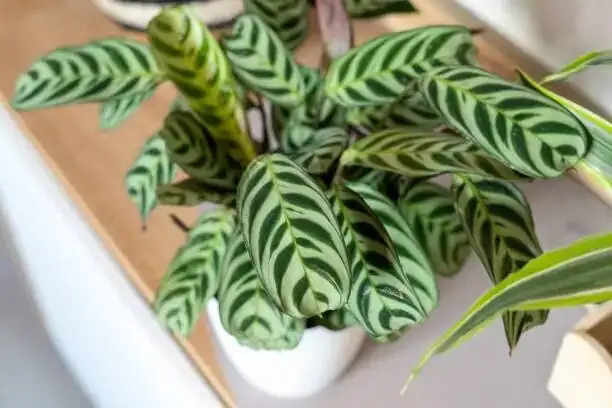
Plant-first basics still rule:
- Light: Give bright, indirect light or gentle medium light. East windows are ideal; south works with a sheer curtain.
- Avoid drafts: Keep away from heaters and AC vents so the chi—and the leaves—don’t get frazzled.
- Humidity: Group with other plants or use a humidifier to keep vibes (and foliage) lush.
Care that keeps the symbolism alive
Think “evenly moist, softly shaded, and warmly humid.”
Light
- Best: Bright, indirect light; 50%–70% shade if near strong sun. East-facing is excellent.
- Avoid: Harsh midday rays—fastest route to crispy edges or scorched patches.
Water and humidity
- Water when the top 2–3 cm (0.8–1.2 in) of mix feels dry; drench, then drain.
- Aim for 60%–70% humidity. Use a humidifier, pebble tray, or plant grouping.
- In winter, growth slows—ease up on watering. Don’t leave water sitting on leaves overnight.
Temperature
- Ideal: 18–24°C (64–75°F).
- Safety: Keep above 8°C (46°F); avoid below 5°C (41°F). In hot spells, keep under ~32°C (90°F) with airflow and extra humidity.
Soil and pot
- A loose, moisture-retentive yet free-draining mix (peat/coco + perlite/coarse sand).
- Choose pots with drainage; size up gradually.
Feeding
- May–September: Balanced houseplant fertilizer, gently diluted, about every 2 weeks.
- Pause or sharply reduce feeding in winter.
Grooming, repotting, and propagation
- Prune: Remove yellowed or damaged leaves at the base; thin lightly to improve airflow.
- Repot: Spring, when rootbound or mix breaks down (often yearly for quick growers).
- Divide: In late spring to early summer—split rhizomes so each section has roots and several leaves. Pot divisions promptly.
Pests and health
- Watch for mealybugs and scale, especially under leaves. Wipe, rinse, and repeat mild soapy treatments every 5–7 days as needed.
- Leaf spot/blight can follow chronically wet foliage with stale air—improve airflow, avoid wet leaves overnight, remove affected leaves.
Safety
- Generally considered non-toxic to cats and dogs. Any chewing can still cause mild tummy upset.
Troubleshooting vibe-killers
- Yellowing or crispy edges: Often too much direct sun, low humidity, or chills. Move to bright, indirect light; raise humidity; keep warmly stable.
- Soggy soil, sad roots: Constant wetness invites rot. Let the top layer dry before rewatering and ensure fast drainage.
- “No nightly movement?”: Leaf repositioning can be subtle and varies by plant, season, and conditions. If overall growth and color look good, all is well.
Small rituals for calm and gratitude
- Evening check-in: Notice the gentle lift of the leaves as daylight fades—let that mark your own wind‑down.
- Weekly leaf wipe: A soft, damp cloth removes dust and turns maintenance into a minute of mindfulness.
- Watering mantra: As you water, name one thing you’re grateful for—pairing care with thanks reinforces the plant’s 花语 of gratitude.
Quick facts to admire
- Native to northwestern Brazil’s warm, humid forests
- Grows as a neat, upright clump, 30–60 cm tall and wide indoors
- Leaves are boldly patterned above, purplish beneath—best enjoyed at eye level
- Flowers are modest indoors; foliage is the star
- Not frost hardy; happiest indoors in most climates
- Generally pet-safe for cats and dogs
Rose-painted Calathea doesn’t shout; it softens. With steady warmth, even moisture, and generous humidity, it responds with richer color, fresh new leaves, and that lilting evening posture—a daily reminder to slow down, say thank you, and live with art.