


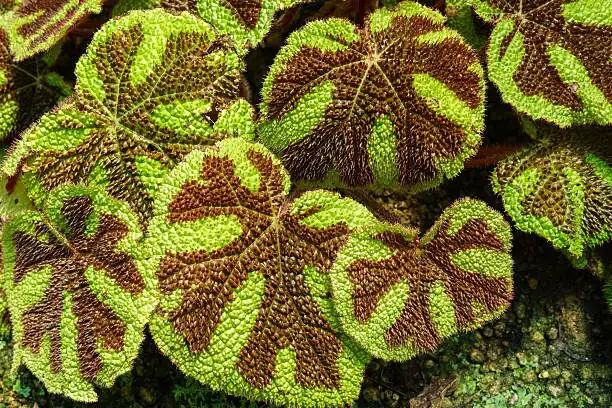
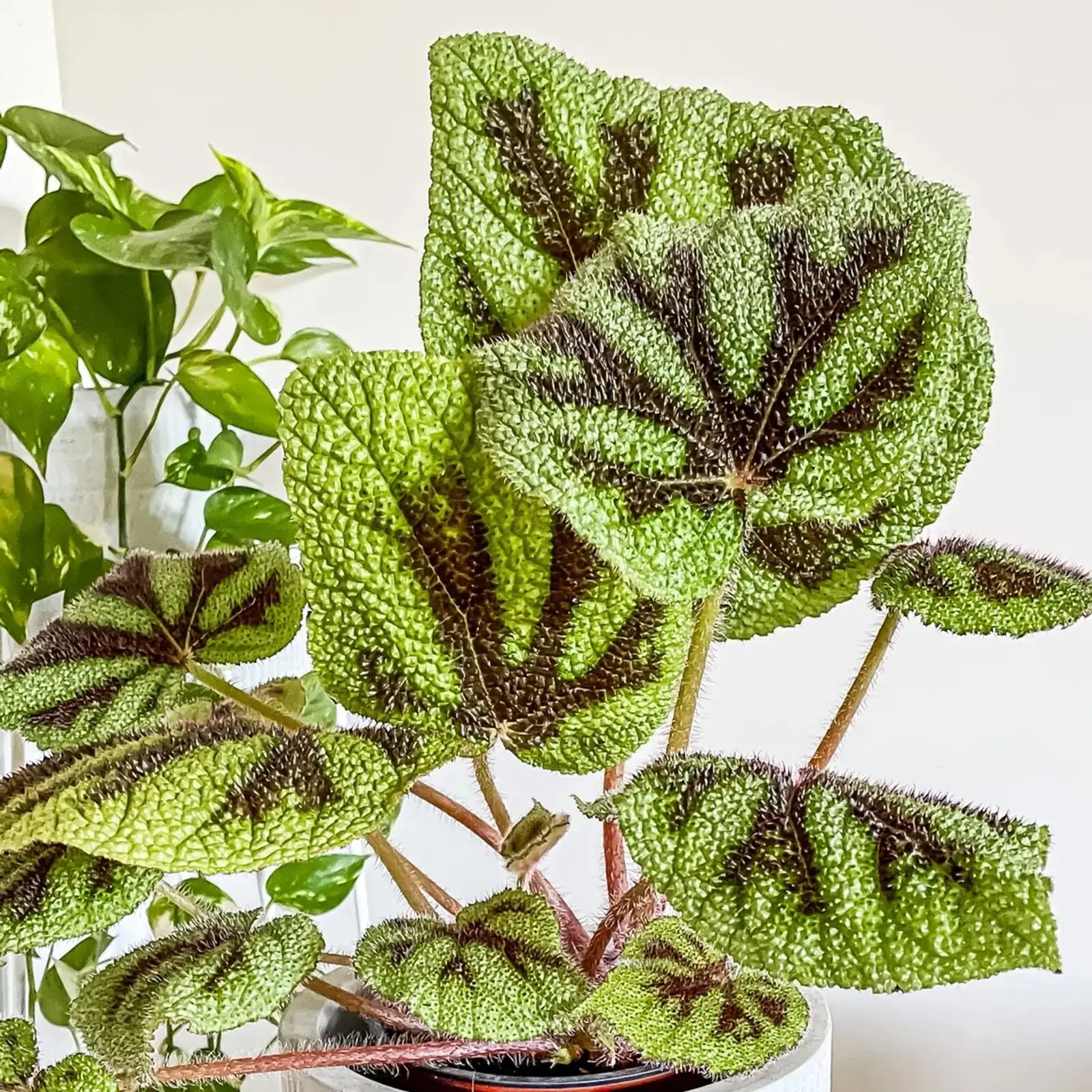
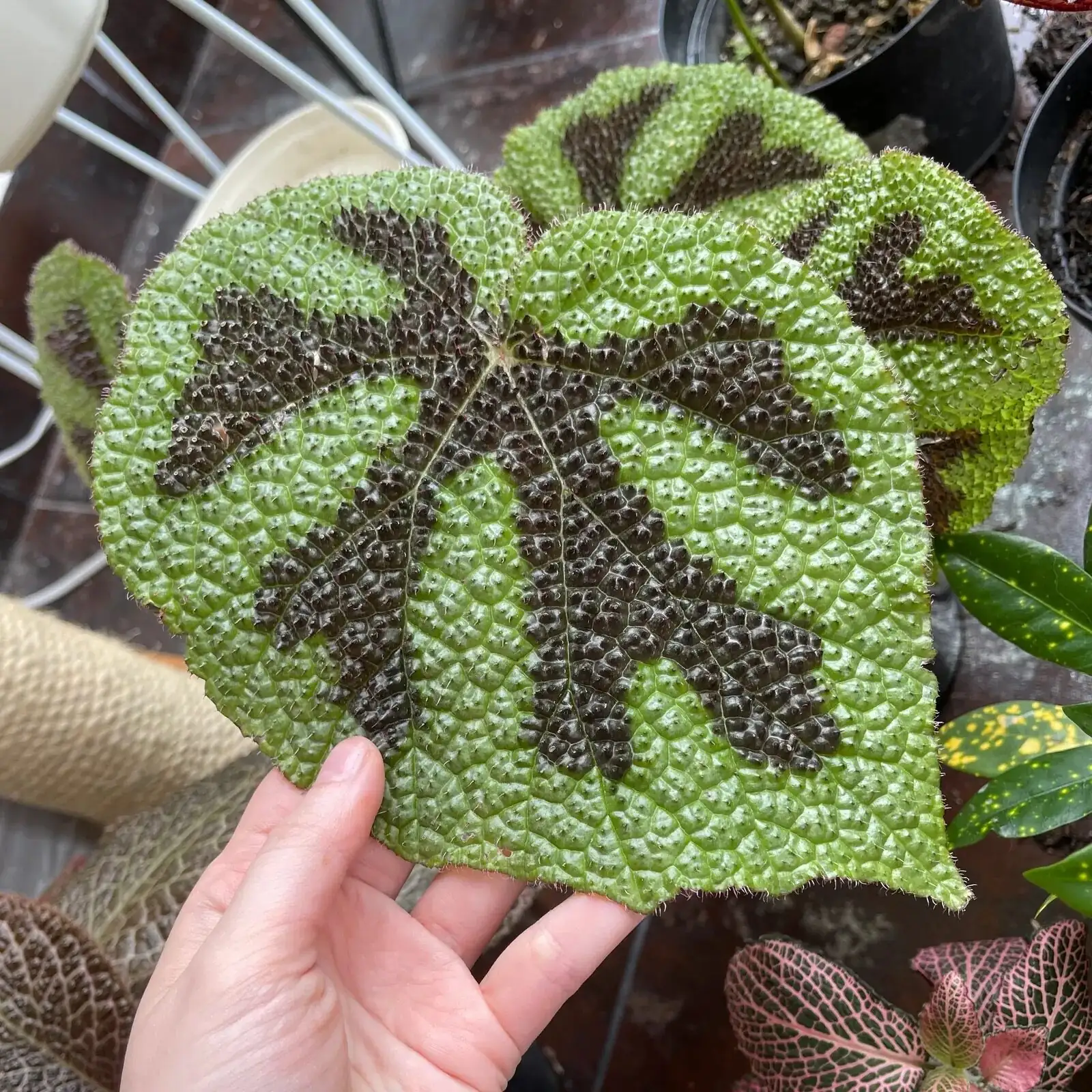
There’s a reason people stop mid‑stride when they see Begonia masoniana. Each soft, quilted leaf carries a bold, dark cross—as if a tiny heraldic emblem had unfurled in the shade. Known as the Iron Cross Begonia, this plant isn’t famous for showy blooms. Instead, it whispers its story through foliage: a quiet emblem of steadiness and care that makes a surprisingly meaningful gift.
From secret messages to modern meaning
A quick tour through floriography
In the Victorian era, people sent coded messages with flowers. Begonias, as a group, often carried layered notes such as:
- Caution or “take care”
- Deep thoughts and reflective regard
- Gratitude and admiration
Different dictionaries and eras framed these emotions differently, so there’s no single, universal “begonia meaning.” And Begonia masoniana, in particular, doesn’t have a fixed, species‑specific flower language. Still, these broader begonia themes give us a useful starting point.
Translating that language to Iron Cross Begonia today
The Iron Cross Begonia deepens those historical cues in a wonderfully visual way:
- Quiet strength: It thrives in bright shade, not clamoring for sun or attention. Resilience without bravado.
- Protection and boundaries: The striking “cross” reads like a gentle shield—an emblem of guardrails, self‑respect, and keeping what matters safe.
- Respect for resilience: Its rhizomatous habit allows easy regrowth and sharing; one leaf can become a new plant. In other words, endurance multiplies.
Together, this makes Begonia masoniana a living symbol of supportive care: a plant that says “I’m rooting for your steady courage” rather than shouting with petals.
When to give an Iron Cross Begonia
Think of it as a thoughtful talisman for life’s quieter chapters.

- New home or new chapter: A housewarming “guardian” plant that suggests well‑kept boundaries and calm beginnings.
- Message idea: “May this little cross stand watch over your new space.”
- Recovery and resilience: For someone healing, grieving, or rebuilding.
- Message idea: “For your quiet strength—seen and admired.”
- New job or leadership role: A symbol of measured courage and steady decision‑making.
- Message idea: “Here’s to protection, focus, and wise steps forward.”
- Setting boundaries or self‑care: A gentle reminder that “no” is a complete sentence.
- Message idea: “May your days be protected and your energy well‑kept.”
- Gratitude to caregivers, mentors, or friends: Respect for those who protect and guide.
- Message idea: “Thank you for watching over others with strength and grace.”
- Design and pattern lovers: The dramatic leaf motif delights artists, stylists, and collectors.
Note: Its flowers are small and pale—pretty, but secondary to the leaves. This is a foliage‑first gift, and proudly so.
Thoughtful placement ideas (that also keep the plant happy)
Indoors
- Entry console, set back from bright windows: A symbolic “gentle guardian” that welcomes you home without facing harsh sun.
- Work desk near an east‑ or north‑facing window: Encourages focus and calm; the cross reads like a steadying compass.
- Reading nook or bedroom windowsill with a sheer curtain: Soft light preserves the crisp leaf pattern.
- Bathroom with a bright window: Naturally higher humidity suits it—just ensure filtered light.
- On a high shelf in pet‑friendly homes: It’s considered toxic if eaten; keep out of reach.
- Grouped with ferns or other humidity lovers: Creates a microclimate and a lush, restful vignette.
Outdoors (warm climates only)
- Sheltered shade under trees or along a north wall in frost‑free regions (about USDA Zone 10–12): It can knit into a low, carpet‑like planting that looks quietly regal beneath the canopy.
- Patio corners with dappled light: Protected from midday sun and wind.
Practical pointers for placement
- Light: Bright, indirect light or partial shade; avoid strong direct sun.
- Drafts: Keep away from hot/cold air vents and door drafts.
- Temperature: Above 10°C (50°F) in winter; best growth around 14–22°C (57–72°F).
A tiny care snapshot to tuck into your gift
Light
- Bright, indirect light; aim for 50–70% shade (about 30–50% of full sun). Filter with a sheer curtain if needed.
Water and humidity
- Keep the mix evenly moist during active growth; never waterlog. In summer, watering every 3–4 days is common—adjust for pot size and drying speed.
- In winter it often rests—water very sparingly or pause briefly to avoid rhizome rot.
- Prefers higher humidity (about 60–70%). Use a humidifier or pebble tray; mist the air nearby rather than repeatedly wetting the leaves.
Temperature
- Ideal 14–22°C (57–72°F). Growth slows above ~32°C (90°F). Keep above 10°C (50°F) to prevent leaf damage.
Soil and pot
- Loose, airy, fast‑draining mix (potting compost with peat or coco coir plus coarse sand/perlite).
- Always use a pot with drainage holes.
Feeding
- From April to August, feed every 2 weeks with a balanced fertilizer (e.g., 20‑20‑20 at label dilution). Reduce or stop in cooler, low‑light months.
Grooming and longevity
- Thin older, crowded leaves in summer to improve airflow and encourage fresh growth.
- After 4–5 years, plants may decline—refresh your “guardian” by propagating new ones.
Propagation (perfect for pass‑along gifting)
- Division (spring): Cut the rhizome into ~10 cm (4 in) sections with a growing tip; let cuts dry briefly; pot and water lightly.
- Leaf cuttings (early summer): Insert a mature leaf section into moist, sterile mix; roots often in ~3–4 weeks; transplant after ~2 months when plantlets form two small leaves.
- This easy shareability builds a lovely tradition: protection multiplied, then gifted forward.
Common snags and gentle fixes
- Yellowing or scorched patches: Usually cold, dry air, or too much sun. Move to bright, indirect light; keep above 10°C (50°F); raise humidity.
- Fungal issues (gray mold, powdery mildew, leaf spot): Improve airflow, keep foliage dry, remove affected leaves. Use an appropriate fungicide if needed.
- Scale insects: Treat with horticultural oil or insecticidal soap; repeat as labeled.
Safety note
- Considered toxic if eaten (especially rhizomes) and may irritate sensitive skin. Keep from pets and small children; wash hands after handling if you’re prone to irritation.
A short profile for the curious gifter
- Botanical name: Begonia masoniana (Iron Cross Begonia; also known as Mason’s Begonia)
- Family: Begoniaceae
- Habit: Compact, rhizomatous, clump‑forming
- Size: Typically 20–30 cm (8–12 in) tall; spreads 30–45 cm (12–18 in)
- Leaves: Soft texture with a dramatic dark cross; can yellow under cold, dry air, or harsh sun
- Flowers: Small and pale, mainly in summer—charming but modest
- Origin (often cited in cultivation): Southern China and northern Vietnam; now a beloved houseplant worldwide
Presentation and pairing ideas
- Choose a pot that frames the cross: matte charcoal, moss green, or crisp white. Always ensure drainage.
- Slip the nursery pot into a decorative cachepot so the recipient can lift and water easily.
- Add a pebble tray or small humidifier for a ready‑made “care kit.”
- Tuck in a care card with simple icons for light, water, humidity, and temperature.
- Pair with a slim bookmark or journal to echo its “deep thoughts” heritage, or a small door charm to nod to its protective motif.
The living emblem of care
From Victorian “take care” to modern “I’ve got your back,” the Iron Cross Begonia transforms caution into caretaking. Its quiet strength doesn’t crowd a room; it steadies it. Gift one to someone building a new chapter, holding a boundary, or simply doing hard things with grace—and let that little leaf‑borne cross stand watch, day after day, in gentle green.