

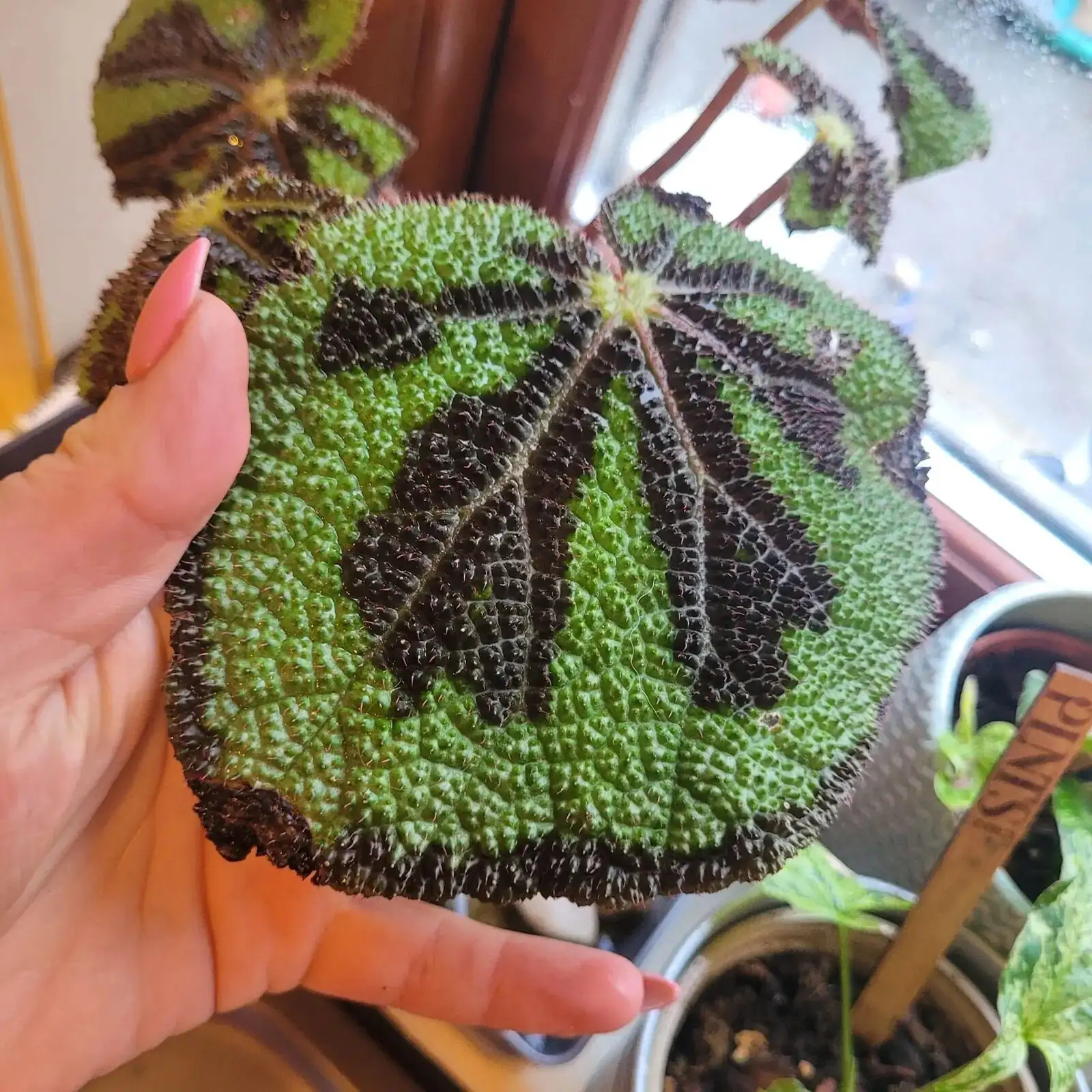
Imagine a plant that looks as if a painter pressed a bold, chocolate-brown cross into every leaf, then tucked it back into the understory mists of southern China and northern Vietnam. That’s Begonia masoniana, the Iron Cross begonia—born in warm, humid shade and now basking in global houseplant stardom. Its journey from forest floor to windowsill fame is a story of texture, pattern, and sheer personality.
Its signature? A dramatic dark “cross” emblazoned over puckered green leaves—an emblem so striking it gave the plant both its common name and its instant appeal. Collectors adore it; beginners cheer its forgiving nature. And in truly warm climates, it even moonlights as a shimmery, shade-loving groundcover.
Where it began: humid, dappled understories
- Native range: southern China and northern Vietnam
- Habitat: sheltered forest shade with high humidity and free-draining, organic-rich soils—often on rocky substrates and near steady moisture
- Microclimate: dappled light, warm air, and constant ambient humidity rather than wet feet
That understory lifestyle explains nearly everything about how this plant thrives indoors: bright but filtered light, evenly moist soil, warm temperatures, and air that never gets too dry.
The cross that launched a thousand cuttings
- The look: soft-textured, asymmetrical leaves punctuated by a dramatic, dark “iron cross” radiating from the veins
- The name: that bold marking evokes the Iron Cross, giving the species its unforgettable common name; you’ll also hear “Mason’s Begonia”
- The hook: foliage first, flowers second. It does produce small, pale summer blooms, but most people grow it for the unforgettable leaves
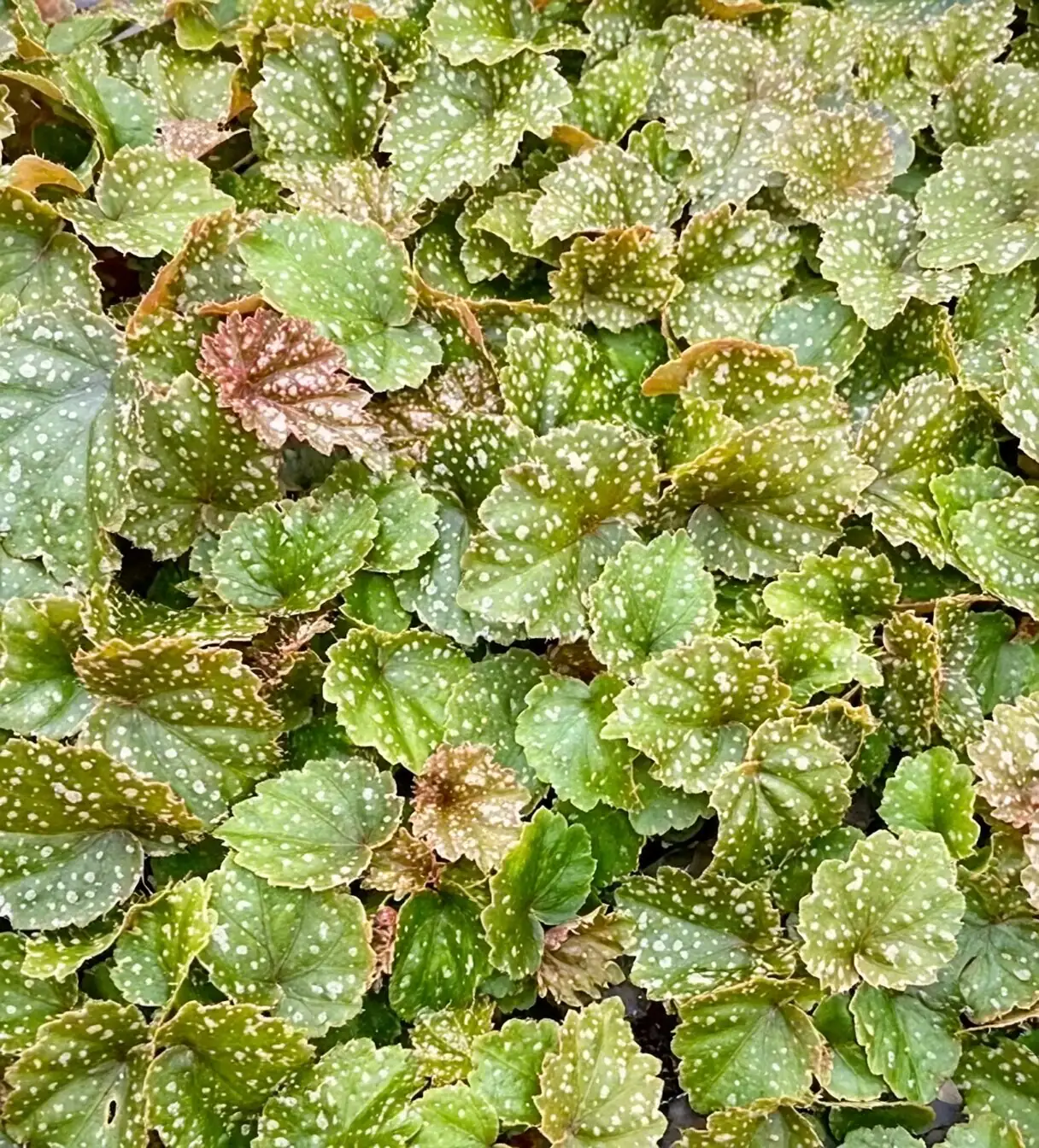
- Indoors or out: a compact, windowsill-friendly star; in warm, frost-free climates it can knit into a low, carpet-like planting beneath trees
Fun note for plant-history buffs: the species rose to Western houseplant fame in the mid-20th century and has since earned accolades in ornamental gardening, becoming a pass-along favorite for how easily one leaf can become many plants.
Growth and looks at a glance
- Size: typically 20–30 cm (8–12 in) tall; spreads about 30–45 cm (12–18 in) when happy
- Habit: rhizomatous, clump-forming, gently spreading
- Leaves: soft, textured, and boldly patterned; foliage may yellow or scorch under cold, dry air, or harsh sun
- Flowers: small and pale; summer is the usual bloom season
From forest floor to living room: recreate its habitat
Light

- Bright, indirect light to partial shade; avoid strong direct sun
- Aim for roughly 50–70% shade (about 30–50% of full sun)
- Ideal: east- or north-facing windows, or behind a sheer curtain
- Tolerates lower light, but the cross pattern stays crispest with filtered brightness
Temperature
- Best growth: 14–22°C (57–72°F)
- Keep above 10°C (50°F) in winter to prevent chilling injury (brown, crispy margins and scorch-like patches)
- Growth slows in extreme heat above ~32°C (90°F)
- Keep away from hot or cold drafts
Humidity
- Sweet spot: 60–70% relative humidity
- Low humidity plus brighter light can cause yellowing or scorch
- Use a humidifier or pebble tray; humidify the air rather than repeatedly wetting leaves
Watering
- Growing season: keep the mix evenly moist but never waterlogged
- In summer, watering about every 3–4 days is common (adjust for heat, pot size, and your mix’s drying speed)
- Winter: semi-dormant; water very sparingly or pause briefly to avoid rhizome rot
Soil and pot
- Use a loose, airy, fast-draining mix: potting compost + peat or coco coir + coarse sand/perlite
- Always choose a pot with drainage holes
- Shallow, wider pots suit the creeping rhizomes
Feeding
- From April to August: balanced fertilizer every 2 weeks at label dilution (e.g., 20-20-20)
- Reduce or stop feeding in cooler, low-light months
Hardiness and placement
- Frost-tender; outdoors year-round only in warm climates (about USDA Zone 10–12)
- Indoors: bright room with filtered light
- Outdoors (warm climates): sheltered shade under trees, protected from midday sun and wind
Propagation: how it became a pass-along classic
This begonia is famously generous—one plant can become three, then ten.
Division (spring, often at repotting)
- Lift the plant and cut the rhizome into ~10 cm (4 in) sections, each with a growing tip.
- Let cut surfaces dry briefly.
- Pot 2–3 rhizome pieces per pot; each piece should ideally carry 4–5 leaves.
- Water lightly and keep in partial shade until established.
Leaf cuttings (early summer)
- Take a mature, healthy leaf and trim it about 1 cm (0.4 in) from the petiole.
- Cut the leaf into ~6–7 cm (2.4–2.8 in) sections.
- Insert each section into moist, sterile propagation mix or sand, leaving part of the leaf above the surface.
- Roots often form in 3–4 weeks; transplant after ~2 months, when plantlets have produced a couple of new leaves.
A seasonal rhythm to follow
- Spring: repot annually; divide rhizomes if crowded
- Growing season: provide 50–70% shade; keep soil lightly, evenly moist
- Summer: water about every 3–4 days (adjust as needed); feed every 2 weeks
- Early summer: take leaf cuttings; expect rooting in ~3–4 weeks
- Autumn: raise humidity (aim 60–70%) to support new foliage
- Winter: semi-dormant; keep above 10°C (50°F) and water very sparingly
Pruning, repotting, and buying smart
- Pruning: thin crowded growth in summer by removing older leaves at the base—improves airflow and encourages fresh foliage
- Repotting: refresh the mix yearly in spring; remove some older leaves; replant offsets with 2–3 strong roots and a few leaves
- Long-term vigor: after 4–5 years, many plants decline—restart vigor by taking cuttings and growing on young plants
- Buying guide: choose compact specimens with many intact leaves and a crisp cross pattern; avoid spots, lesions, tears, or any sign of rot—handle gently, as leaves bruise easily
Troubleshooting and plant health
- Sudden yellowing leaves? Most often cold stress, dry air, or too much sun. Move to bright, indirect light, keep above 10°C (50°F), and raise humidity to 60–70%.
- Fungal issues: gray mold (Botrytis), powdery mildew, and leaf spot can appear when air is stagnant and foliage stays wet. Improve airflow, avoid splashing leaves, remove affected tissue; copper-based products are sometimes used preventively. If disease appears, use an appropriate fungicide as directed.
- Pests: scale insects may appear—treat with horticultural oil or insecticidal soap; repeat as needed.
- Safety note: considered toxic if eaten (especially rhizomes); may irritate skin in sensitive people. Keep away from pets and small children; wash hands after handling if you’re prone to irritation.
Symbolism, stories, and modern fame
Flower language for this plant isn’t fixed or traditional; today’s associations tend to spring from its look and its lifestyle. Many fans see the Iron Cross begonia as a symbol of bold beauty and quiet strength—its foliage makes a statement yet thrives in shade. There’s also a social charm to it: a single leaf can become several new plants, making it a quintessential “share-with-a-friend” begonia. Introduced to global cultivation in the mid-20th century and loved ever since, it’s now a fixture of houseplant culture, from studio shelves to botanical collections.
Quick facts to remember
- The name “Iron Cross” comes from the dark cross-shaped marking on each leaf.
- Bright, filtered light keeps the pattern crisp; harsh sun scorches the soft foliage.
- Keep it warm and humid: 14–22°C (57–72°F) and 60–70% humidity are ideal.
- In warm, shaded gardens, group plantings can create a lush, carpet-like effect.
- It’s wonderfully easy to propagate—one good leaf can make several new plants.
From misty forest understories to your living room, Begonia masoniana wears its history on every leaf. Give it gentle light, steady moisture, and a touch of humidity—and that bold cross will keep turning heads for years.