

The Iron Cross begonia is a drama queen with a telltale script. When something’s off—temperature, light, humidity, or water—it writes the problem right across its leaves. Use this fast, field-tested cheat sheet to read the signs, fix the cause, and keep those bold cross-marked leaves looking crisp.
What this plant really wants (so fewer problems show up)
- Light: Bright, indirect light to partial shade (roughly 50–70% shade; think dappled or behind a sheer curtain). Avoid strong direct sun.
- Temperature: Sweet spot is 14–22°C (57–72°F). Keep above 10°C (50°F) at all times; growth slows if it’s sweltering above ~32°C (90°F).
- Humidity: Aim for 60–70%. Dry air + brighter light = yellowing and scorch patches.
- Water: Growing season—keep the mix evenly moist but never waterlogged; summer watering is often every 3–4 days, depending on pot, heat, and airflow. Winter—semi-dormant, so water very sparingly or pause to protect the rhizome.
- Soil and pot: Loose, airy, and fast-draining (potting compost + peat or coco + coarse sand/perlite). Always use drainage holes.
- Feeding: April–August, balanced fertilizer (e.g., 20-20-20) at label dilution every 2 weeks. Ease off in cooler, low-light months.
Diagnose-by-symptom: a quick cheat sheet
Yellowing leaves
- How it looks
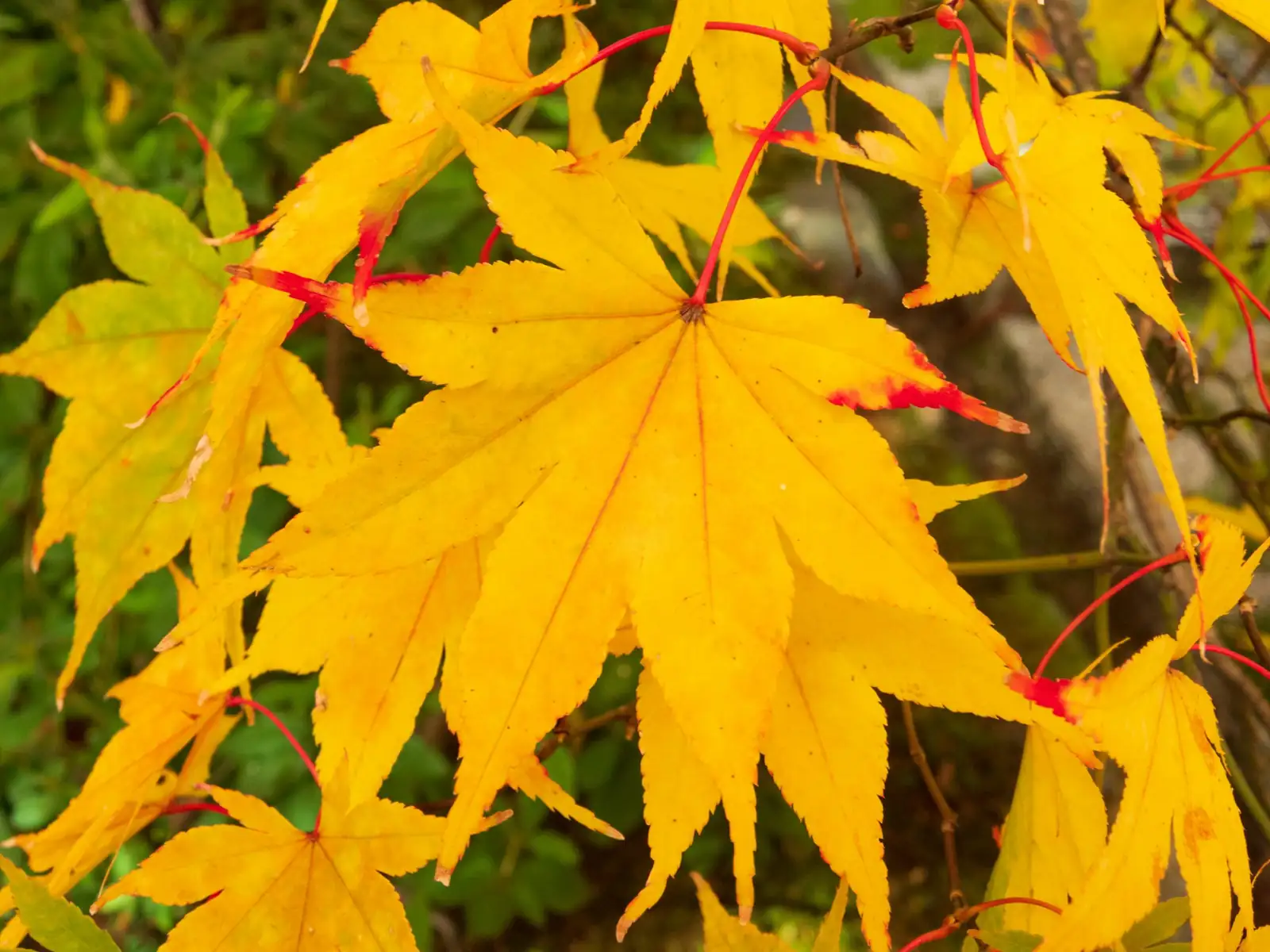
- Entire leaves fade to yellow, sometimes starting between veins.
- Most likely causes
- Cold exposure or drafts (below 10°C/50°F triggers stress).
- Dry air (especially under brighter light).
- Harsh direct sun (bleaching/yellowing before scorching).
- Chronically soggy mix leading to oxygen-starved roots/rhizome stress.
- Quick tests
- Feel for cold air near windows/doors; check recent temperature dips.
- Assess humidity (below ~50%?).
- Is the plant getting direct, hot sunbeams?
- Is the pot heavy and wet days after watering?
- Fast fixes
- Move to bright, filtered light; shield from direct sun.
- Keep above 10°C (50°F); away from AC/heat vents and leaky windows.
- Boost humidity to 60–70% via humidifier or pebble tray.
- If mix is soggy, see “Emergency triage for a wet, suffocating mix” below.
Brown, crispy margins or “scorch” patches
- How it looks
- Leaf edges crisp and brown; patchy burn-like spots.
- Most likely causes
- Chilling injury (temperatures near/below 10°C/50°F).
- Too much direct sun on soft foliage.
- Very low humidity, especially with warm, bright conditions.
- Fast fixes
- Stabilize temps at 14–22°C (57–72°F), never below 10°C (50°F).
- Pull back from harsh sun; use a sheer curtain or move to an east/north window.
- Raise humidity; avoid drying vents and fans blasting the foliage.
Leaf spots and blotches
- How it looks
- Distinct spots or fuzzy patches; may spread in cool, stagnant air.
- Most likely causes
- Fungal disease (e.g., gray mold/Botrytis, powdery mildew) encouraged by wet leaves and poor airflow.
- Fast fixes
- Remove affected leaves and debris; don’t splash the foliage when watering.
- Improve airflow (thin older leaves; use a small fan nearby, not directly on leaves).
- If needed, use an appropriate fungicide as labeled; copper-based products are sometimes used preventively.
- Prevention
- Water the soil, not the leaves. Keep conditions warm, bright, and moving—never cold and clammy.
Limp, mushy rhizomes
- How it looks
- Rhizome feels soft or hollow; leaves wilt despite wet soil.
- Most likely causes
- Overwatering or compact, poorly draining mix leading to rot.
- Winter watering when the plant is semi-dormant.
- Fast fixes
- Unpot and inspect. Trim all mushy tissue to firm, clean white/green rhizome.
- Repot in a fresh, airy mix; water lightly at first.
- Keep warm (14–22°C) and in partial shade while it re-roots.
- In winter, reduce or pause watering—prioritize humidity over dousing the mix.
Stalled growth and a faded cross pattern
- How it looks
- Few or no new leaves; the dark “iron cross” marking looks dull; internodes shorten.
- Most likely causes
- Light too low (tolerated, but foliage pizzazz fades and growth slows).
- Cool conditions or recent heat spikes above ~32°C (90°F).
- Pot-bound rhizomes or exhausted mix; minimal feeding in active season.
- Fast fixes
- Upgrade to bright, indirect light (still filtered).
- Keep within the 14–22°C comfort zone.
- Repot in spring; refresh the mix and divide if crowded.
- Feed modestly April–August to support steady new leaves.
Quick fixes for the big four
Cold drafts
- Move 0.5–1 m back from wintery windows/doors.
- Use a draft stopper; relocate away from AC/heat vents.
- Night temperatures must stay above 10°C (50°F).
Low humidity
- Target 60–70%.
- Use a room humidifier or a pebble tray with water (pot sitting on pebbles, not in water).
- Group with other plants to create a moister microclimate; avoid hot, drying airflow.
Too much sun
- Filter with a sheer curtain or move to an east/north window.
- Outdoors in warm climates: shaded, sheltered site under trees; protect from midday sun and wind.
Soggy mix
- Ensure drainage holes; empty cachepot/tray after watering.
- Use a looser substrate (compost + peat/coco + coarse sand/perlite).
- Water thoroughly, then let excess drain; don’t rewater until the top feels just starting to dry.
Emergency triage for a wet, suffocating mix
- Tip the pot and let water run off; blot with paper towels at the drainage holes.
- If roots/rhizome are at risk, unpot gently and inspect.
- Trim black, mushy tissue; keep only firm roots/rhizome.
- Repot in a smaller or similar-sized pot with a fresh, airy mix.
- Water lightly once; then wait until the top layer begins to dry before watering again.
- Keep warm, bright-indirect, and humid while it recovers.
Tuning care after triage
- Watering rhythm
- Growing season: evenly moist, not wet; summer watering is commonly every 3–4 days, but always adjust to your conditions.
- Winter: semi-dormant—water very sparingly or pause to prevent rhizome rot; maintain humidity instead.
- Feeding
- April–August: balanced fertilizer every 2 weeks at label strength.
- Stop or reduce in low light/cool months.
- Pruning and airflow
- Thin older leaves at the base in summer to open the canopy and reduce disease pressure.
- Repotting
- Annually in spring into a 12–15 cm (4.7–5.9 in) pot with fresh, fast-draining mix.
- Remove some older leaves; divide if crowded.
Propagation (and rescue options)
- Division (spring)
- Cut rhizome into ~10 cm (4 in) sections, each with a growing tip. Let cuts dry briefly, then pot 2–3 pieces per pot; water lightly; keep in partial shade until established.
- Leaf cuttings (early summer)
- Take a mature, healthy leaf; cut the blade about 1 cm (0.4 in) from the petiole.
- Insert 6–7 cm (2.4–2.8 in) sections into moist, sterile mix with part of the leaf above the surface.
- Roots in ~3–4 weeks; transplant after ~2 months once plantlets have a couple of new leaves.
Disease and pest watchlist
- Fungal issues: gray mold (Botrytis), powdery mildew, and leaf spot thrive in cool, still, damp conditions.
- Fixes: improve airflow, keep leaves dry, remove affected tissue. Copper-based products are sometimes used preventively; apply appropriate fungicide if disease appears.
- Pests: scale insects can show up.
- Fixes: horticultural oil or insecticidal soap; repeat per label until resolved.
Fast facts you’ll actually use
- Identity: Begonia masoniana (Iron Cross begonia), a rhizomatous foliage begonia.
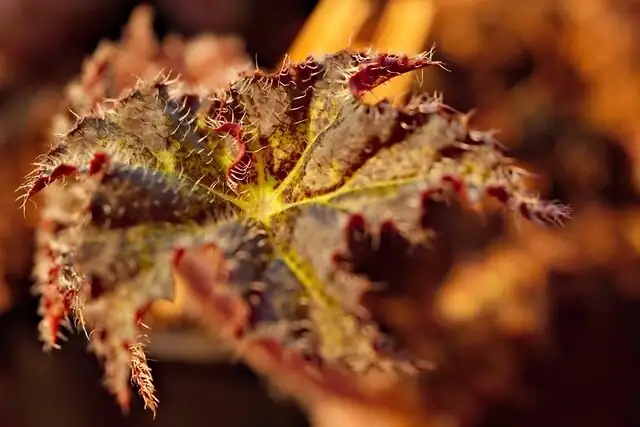
- Look: Soft leaves emblazoned with a dark, cross-like marking.
- Size: About 20–30 cm (8–12 in) tall, spreading to 30–45 cm (12–18 in) when happy.
- Indoors: Bright, filtered light; keep away from hot/cold drafts.
- Outdoors (warm climates only, ~USDA 10–12): Sheltered shade as a low groundcover.
- Toxicity: Considered toxic if eaten (especially rhizomes/underground parts); may irritate sensitive skin. Keep away from pets and small children.
A note on symbolism
This plant doesn’t have a standardized “flower language,” but many growers associate it with bold beauty and quiet confidence—the dramatic leaf cross reads like a tiny emblem that thrives in the gentler light of shade.
Mini-FAQ
- Why are my Iron Cross begonia leaves suddenly turning yellow?
- Most often it’s stress from cold temperatures, dry air, or too much sun. Move it to bright, indirect light, keep it above 10°C (50°F), and raise humidity (ideally 60–70%). Healthier new leaves usually follow once conditions improve.
- How do I choose a healthy Iron Cross begonia at the store?
- Look for a compact plant with many intact leaves, strong color, and a clear cross pattern. Avoid leaves with spots, rot, or tears, and handle gently—the foliage bruises easily.
When you pair bright, filtered light with warm, draft-free air, 60–70% humidity, and a springy, fast-draining mix, Begonia masoniana answers back with flawless, crisply marked leaves. Read the symptoms, act fast, and it will reward you with a lush, low, cross-stamped canopy.