

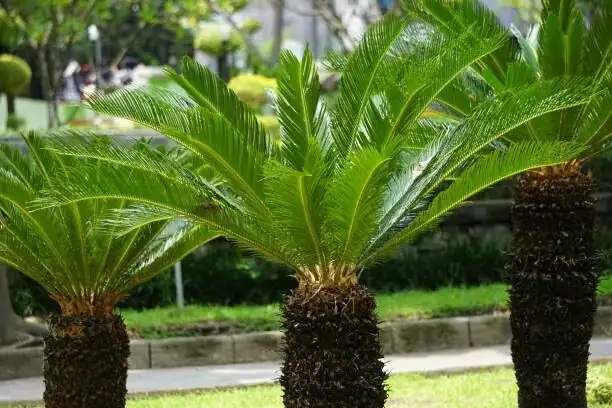
Imagine a garden that looks like it has weathered centuries: a quietly powerful Cycas revoluta rising from pale gravel, ringed by sculptural agaves, luminous aloes, and feather-soft grasses. The look is timeless—prehistoric even—yet perfectly modern. The secret to making this scene effortless rather than fussy is engineering: drainage, spacing, and sun. Get those three right, and your “sago palm” (not a true palm, but a cycad) becomes the star of a dry garden you’ll admire for decades.
Cycas revoluta at a glance
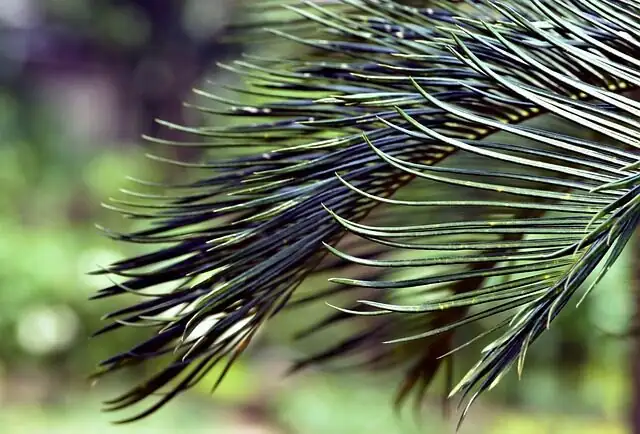
- Identity: An ancient cycad from southern Japan (including the Ryukyu Islands); often sold as “sago palm.”
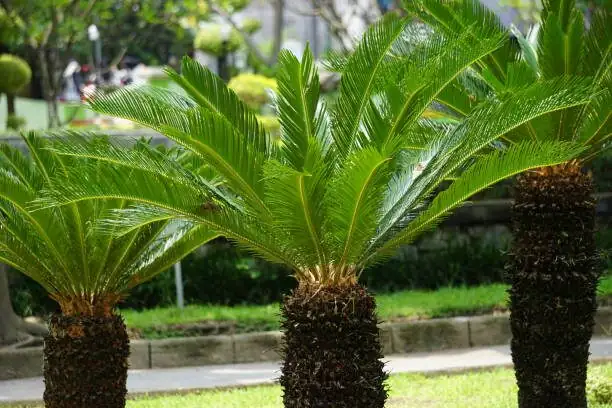
- Look: A stout, pet-like trunk (caudex) topped with a symmetrical rosette of stiff, glossy green fronds.
- Pace and temperament: Slow-growing, long-lived, heat-tolerant, shade-tolerant—but highly sensitive to staying wet, especially in cool weather.
- Outdoors: Best in warm climates (roughly USDA Zones 9–11). Elsewhere, grow in containers and protect from frost.
- Toxicity: All parts are poisonous to humans and pets; seeds are especially dangerous. Plant and place responsibly.
Why Cycas revoluta anchors a gravel garden
- Architectural authority: That upright, compact crown reads as a natural focal point against fine gravel.
- Textural contrast: Pairing its rigid, feather-like fronds with billowing grasses and bold agaves creates instant drama.
- Longevity: It’s a “living fossil” that rewards patience; the design gets better with age.
- Heat and light savvy: It tolerates bright light to full sun if acclimated, yet can handle some shade—handy among taller agaves or walls.
Designing the stage: the right plant partners
- Agaves for sculptural punctuation
- Large silver-blue statement: Agave americana (Zones 8–11)
- Flowing form: Agave vilmoriniana (octopus agave, Zone 9)
- Blue-green glow: Agave ‘Blue Flame’ (Zones 9–11)
- Aloes for seasonal color and rhythm
- Coral aloe (Aloe striata) for elegant, non-toothed rosettes and coral blooms.
- Grasses for light and movement
- Blue fescue (Festuca glauca ‘Elijah Blue’) as cool-toned mounds
- Pink muhly (Muhlenbergia capillaris) for autumn clouds
- New Zealand wind grass (Anemanthele lessoniana) for bronze movement
Note: Always match selections to your climate zone and intended scale. Use small-to-medium agaves and compact grasses near Cycas revoluta to keep it visually dominant.
Sun: how to make your cycad glow, not sulk
- Best light: Bright light to full sun with good airflow. Gradually acclimate to strong sun to prevent scorch.
- Orientation:
- Cooler climates: Morning sun + afternoon bright shade is ideal.
- Hot, arid sites: Full sun is fine once acclimated, provided excellent drainage.
- Light during new growth: Low light during a flush can stretch new fronds—keep it bright when you see the “shaving brush” of new leaves emerging.
The engineer’s guide to a bulletproof gravel bed
Think like water. Your goal is to shed, infiltrate, and never trap it around slow roots.
1) Test and shape the site
- Percolation test: Dig a 30 cm (12 in) hole, fill with water, let drain, then refill. If water lingers after 4–6 hours, plan for aggressive drainage measures.
- Grade: Aim for 1–2% slope away from structures. Create low mounds/berms for feature plants like Cycas revoluta.
2) Build real drainage (a “drainage layer” alone won’t fix heavy soil)
- Improve the whole profile:
- Blend in sharp mineral aggregates (coarse sand, grit, crushed lava, pumice, or decomposed granite) with native soil.
- Target a fast-draining planting zone at least 30–40 cm (12–16 in) deep where roots will sit.
- Consider a French drain or drywell at low points if your percolation is poor.
- Keep airflow: Avoid sealing edges with solid curbs; allow lateral drainage.
3) Create clean planting pockets
- Planting mix for Cycas revoluta and companions:
- Loam/garden soil + peat or coir for structure and moisture buffering
- Generous added sand or grit for sharp drainage
- For leafless “bald” caudexes (often sold at markets): temporarily root in clean, coarse sand to minimize rot, then transition to a fertile, fast-draining mix once new roots/fronds appear.
4) Set the plants high
- Seat the caudex so the crown sits slightly elevated above finished gravel grade.
- Backfill firmly, eliminating air gaps, but don’t bury the caudex.
- Top with angular gravel (3/8–3/4 in). Keep a small gravel-free donut around the caudex to prevent moisture against the trunk.
5) Finish with breathable surfaces
- Use angular gravel (not round pea gravel) so it locks in place, prevents compaction, and stays airy.
- Geotextile beneath gravel is optional; if used, slit it widely in planting pockets to avoid perched water.
Spacing: give your star room to shine
- Cycas revoluta
- Visual radius: Leave at least 60–90 cm (2–3 ft) of open space around the caudex for the rosette to read cleanly and for future flushes.
- Air gap: Maintain airflow under the fronds to reduce scale and fungal issues.
- Agaves
- Small/medium species: 60–120 cm (2–4 ft) from the cycad, depending on mature spread.
- Place bolder agaves in asymmetric “triads” around the cycad to frame, not crowd.
- Grasses
- Nest low mounds of Festuca within 30–45 cm (12–18 in) of the gravel edge around the cycad to create a soft halo.
- Set taller grasses like pink muhly 60–90 cm (2–3 ft) back as a billowing backdrop.
Planting sequence for a crisp, modern look
1) Place the cycad first—this is your anchor.
2) Add two or three agaves at varied distances to create depth and set sightlines.
3) Weave in aloes for seasonal color and softer geometry.
4) Tuck grasses in drifts that “flow” around the rocks and rosettes; avoid perfect symmetry.
Watering and seasonal care in a dry garden
- Watering rhythm
- Spring–summer (active growth): Water thoroughly, then allow the top of the mix to dry before watering again. Misting in warm weather can help humidity, but keep the crown dry.
- Autumn: Gradually reduce.
- Winter: Keep on the dry side. Cold + wet is the fast track to root and crown rot.
- Fertilizer
- Feed lightly about once a month in the growing season with a balanced fertilizer at a conservative dose or a gentle organic feed. No heavy feeding in winter.
- Grooming
- Remove aging, yellowing outer fronds only after the newest flush fully expands.
- If a cone appears (male or female), remove it once it’s finished so energy returns to foliage.
- Temperature
- Best growth: 13–27°C (55–81°F).
- Heat tolerance: Up to ~40°C (104°F) with excellent drainage.
- Cold protection: Keep above 7–10°C (45–50°F). Avoid frost; never combine cold with wet soil.
Container option for colder climates
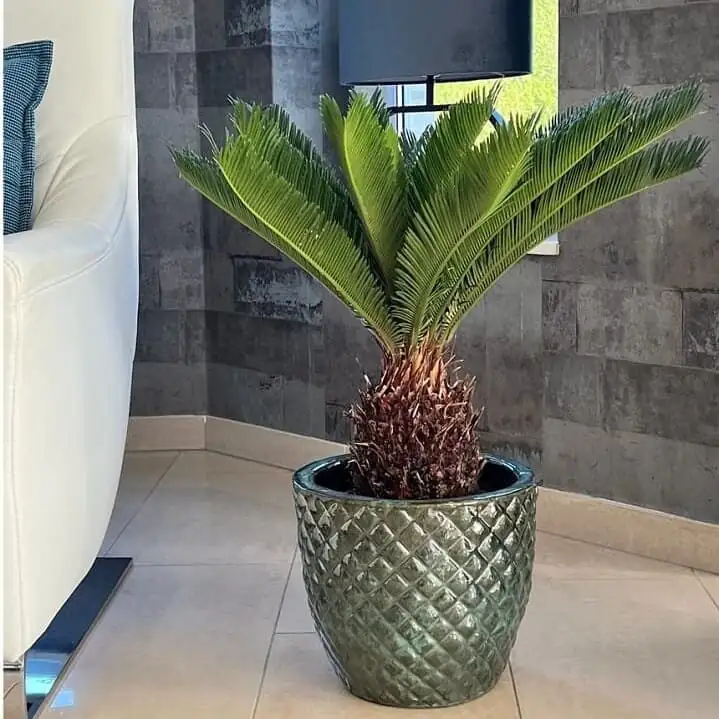
- Pot: Slightly shallow, wide container (about 15–50 cm / 6–20 in across) with generous drainage holes.
- Mix: Fertile but sharply draining as above; avoid overpotting.
- Placement: Outdoors in warm seasons in a bright, airy spot; indoors near a bright window in winter with good airflow.
- Repotting: Every 2–3 years for small/medium plants; 5–6 years for large specimens. Refresh mix; don’t bury the caudex.
Troubleshooting and health
- Overwatering is the #1 issue—especially in cool weather. When in doubt, wait.
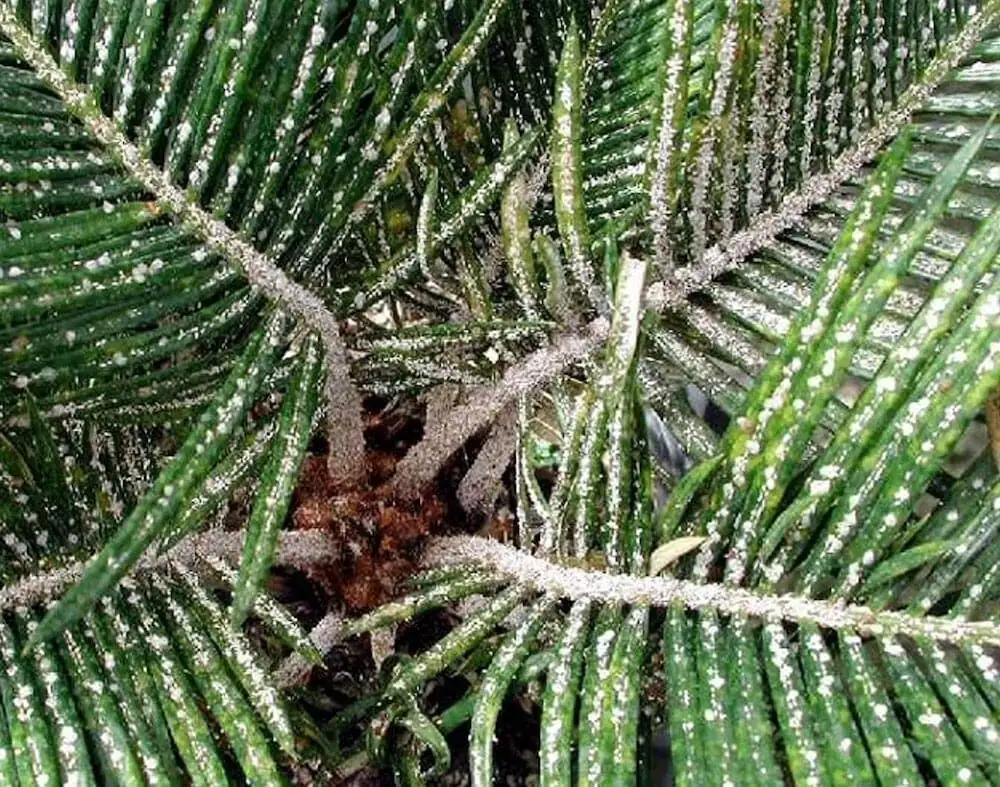
- Scale insects thrive in still air. Improve ventilation, wipe off manually, and treat with horticultural oil or insecticidal soap; repeat as needed.
- Low light during a flush can stretch new fronds. Keep light high when new growth is emerging.
Make it a true focal point: stylistic touches
- Contrast counts: Dark green fronds pop against pale, angular gravel; try a silver-blue agave to echo the cool tones.
- Negative space: Leave a clean gravel “moat” around the caudex—this is your picture frame.
- Night drama: A low, warm uplight aimed through the fronds throws beautiful, prehistoric shadows.
- Edit ruthlessly: Remove spent grass flowers and old fronds to keep the form crisp and the cycad in charge.
Safety first
- All parts are highly toxic if ingested; seeds are especially dangerous. Keep well away from children and pets, and promptly dispose of pruned material.
A quick seasonal calendar
- Spring–summer: Main growth; water more frequently (but let the top dry), raise humidity in warm rooms, ensure bright light and airflow. Best time to repot or divide offsets.
- Late spring–early summer: Seed sowing window if you’re propagating.
- Early summer: Trunk sectioning for propagation is possible in high humidity (advanced growers).
- Autumn: Taper watering and bring containers indoors before cold.
- Winter: Keep brighter and noticeably drier; avoid cold, damp conditions.
Symbolism and the “language of flowers”
Cycas revoluta is often associated with good fortune, freedom, happiness, and longevity—fitting for a plant that can outlast generations. While cycads don’t produce flowers (they make male and female cones on separate plants), the cultural “flower language” around them likely grew from their stoic, enduring form and extraordinary lifespan. In other words, the symbolism isn’t about petals or perfume; it’s about presence—steadfast, resilient, quietly lucky.
If you take only three things with you
- Engineer drainage across the whole root zone—not just a token layer.
- Give your cycad bright light, airflow, and respectful spacing; keep cold, wet soil away.
- Compose with contrasts: bold agaves, graceful grasses, and an aloe or two—then leave negative space so Cycas revoluta looks timeless, not crowded.
With the bones set and the water managed, your sago cycad will command the gravel with effortless authority—ancient, sculptural, and utterly at home among agaves, aloes, and dancing grasses.