

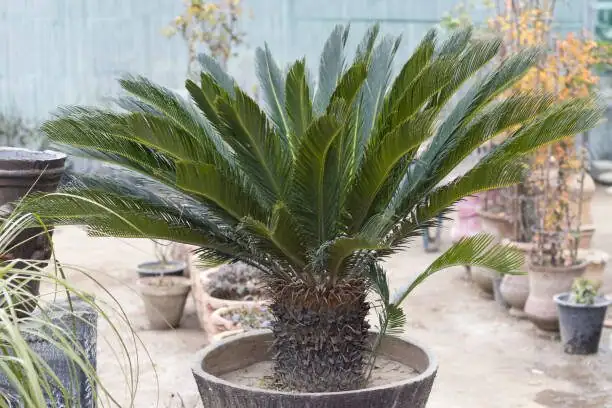
Meet the not-a-palm “palm” that looks like it strolled out of the Jurassic, then decided to behave like the calmest houseplant you’ve ever owned. Cycas revoluta—best known as Sago Palm—is a cycad: ancient, sculptural, and delightfully slow and steady. Here are the bite-sized wow-facts and the practical know-how to make yours thrive.
Not a palm at all—just a living fossil in disguise
- Family: Cycadaceae; genus: Cycas.
- Native range: Southern Japan, including the Ryukyu Islands.
- Look-alike alert: With its crown of feathery fronds and stout trunk, it mimics a palm—but it’s a gymnosperm, more cousin to conifers than coconuts.
- Vibe: Prehistoric elegance. Think dinosaur-era design that still fits a sunny, modern windowsill.
The caudex: your plant’s living battery
- That stout, pet-like “trunk” is a caudex, a storage organ hoarding water and nutrients.
- Why you care: It helps the plant endure droughts and slow times—but it also means the roots hate being waterlogged. Good drainage is non-negotiable.
Cones on a schedule: dioecious drama
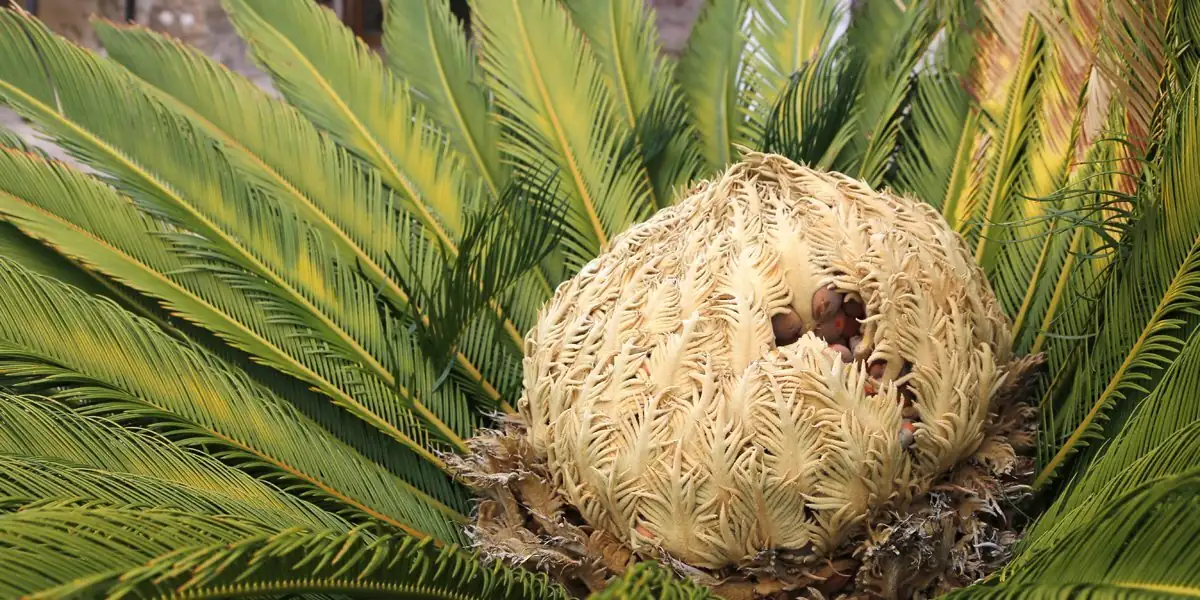
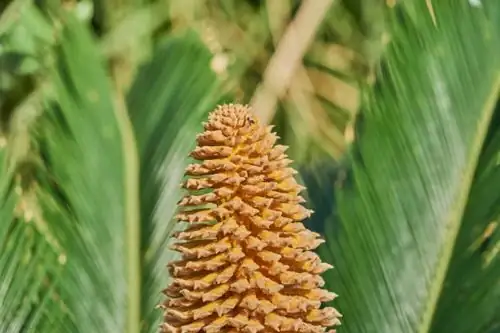
- Male and female cones grow on separate plants (dioecious).
- Season: Summer is cone time.
- After the show: Remove spent male cones when they finish, and remove female structures after seeds mature to redirect energy into new leaf growth.
Growth comes in “flushes”—a synchronized show
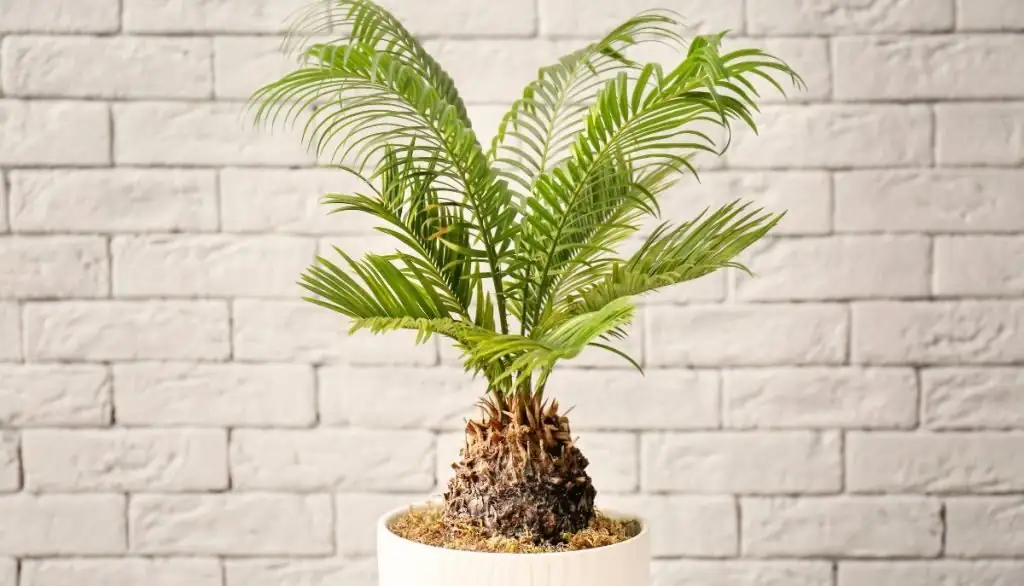
- Instead of a constant trickle of leaves, sago palms push out a ring of new fronds all at once, called a flush.
- Timing: Most often in spring–summer under good light and warmth.
- Grooming: Older outer fronds fade to yellow-green and wither; remove them after fresh fronds harden to keep the rosette tidy and spotlight the next flush.
Why low light makes new fronds look stretched
- During a flush, the plant “decides” what those fronds will be based on the light it senses. If the light is too low, new fronds emerge longer, narrower, and a bit stretched.
- Translation: Keep it bright—especially when you see the fuzzy crosiers unfurling—so your plant builds stout, balanced leaves instead of reaching for the sun.
- Tip: A bright, airy window with good ventilation is ideal. Gradually acclimate to stronger sun to avoid scorch.
Heat-tough, wet-averse
- Comfort zone: 13–27°C (55–81°F).
- Heat tolerance: Up to about 40°C (104°F) if the soil drains sharply and the pot never sits in water.
- Winter: Keep it above 7–10°C (45–50°F). Cold + wet is a fast track to rot; protect from frost and chills.
Slow-and-steady longevity
- Expect decades of companionship in containers; with ideal care, far longer.
- Typical container life: Often happy in 15–50 cm (6–20 in) pots, building a compact caudex with a neat rosette of stiff, glossy green fronds.
- Pace: Very slow-growing—perfect for bonsai-style displays and for people who like their green investments to stick around.
Quick care bites (the essentials)
- Light: Bright light to full sun if acclimated; tolerates shade and lower indoor light but expect slower, lankier flushes in dim conditions.
- Water: Let the top of the mix dry before watering again; never leave the pot in a saucer of water. Drier in winter.
- Soil: Fertile but sharply draining. Think loam or garden soil + peat/coir with added sand or grit. A “drainage layer” doesn’t fix heavy soil—make the whole mix fast-draining.
- Airflow: Loves fresh air; it also helps deter scale insects.
- Temperature: Best at 13–27°C (55–81°F). Above 40°C (104°F) is too much; below 0°C (32°F) can damage fronds.
- Humidity: Moderate is fine. In warm rooms over 18°C (64°F), light daily misting is welcome; keep things drier in winter.
- Feeding: During spring–summer, feed monthly with a balanced fertilizer (e.g., 20-20-20) at a conservative dose or use a well‑rotted organic feed. Skip heavy feeding in winter.
- Hardiness: Not frost-hardy; outdoors year-round mainly in climates around USDA Zone 9–11.
Potting, repotting, and that “don’t overpot me” rule
- Pot choice: Slightly shallow, round containers with excellent drainage complement the shallow root system.
- Repot rhythm: Every 2–3 years for small/medium plants; every 5–6 years for large specimens.
- Avoid overpotting: Too much wet mix around slow roots invites rot. Refresh into a fast-draining mix instead of dramatically sizing up.
Propagation: patient people’s playbook
- Offsets (pups): Best separated in spring during repotting. Let the cut callus, then pot into a 50/50 sand-and-soil mix; keep in bright shade until established.
- Seeds: Sow in late spring to early summer; cover with ~2 cm (0.8 in) of mix. Warmth of 15–29°C (59–84°F) encourages germination, which may begin in about two weeks under ideal warmth.
- Trunk sectioning (advanced): Early summer, slice 2–3 cm (0.8–1.2 in) thick sections, dry, then lay on moist sand with high humidity. Pups may appear in ~3–4 months and can be removed and rooted.
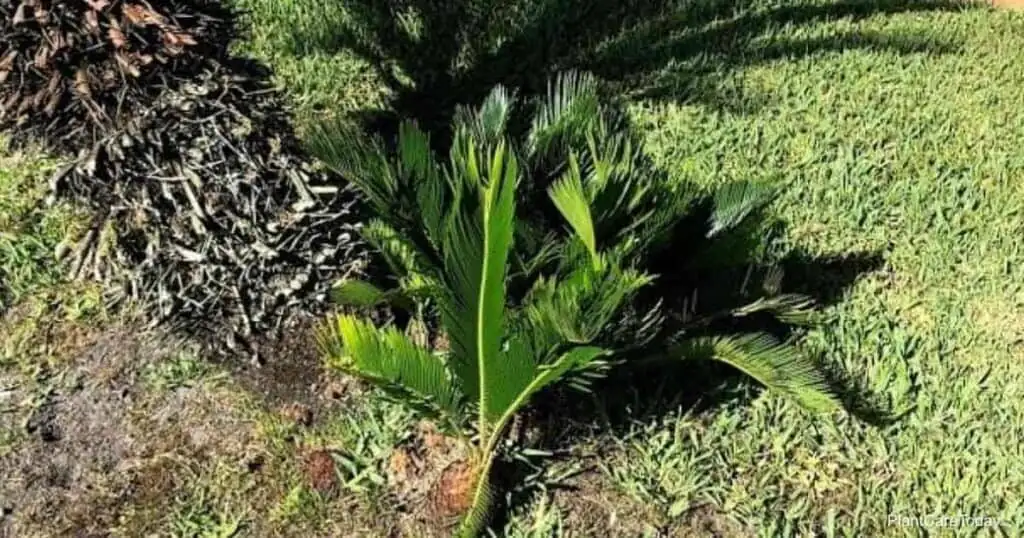
Pest and health notes
- Scale insects love stagnant air. Improve ventilation, wipe them off, and treat with horticultural oil or insecticidal soap; repeat as needed.
- Most common killer: overwatering in cool weather leading to root or crown rot. When in doubt, wait to water.
Safety first
- Highly toxic if ingested by humans or pets. All parts are poisonous; seeds are especially dangerous. Keep out of reach of children and animals.
Flower language and symbolism
- Symbolism: Good fortune, freedom, happiness, and longevity—apt for a plant that can calmly persist for decades.
- Origin of the meaning: In East Asian horticultural tradition, its enduring, slow, ever-renewing form signified steadfastness and long life. Even though it doesn’t produce “flowers” in the usual sense (it makes cones), the cultural “flower language” celebrates its form and longevity rather than literal blooms.
Fast facts to brag about
- Not a true palm—an ancient cycad.
- Dioecious: male and female cones on separate plants.
- Pushes leaves in dramatic flushes rather than one-by-one.
- The caudex stores water and fuels survival.
- Heat-tolerant to around 40°C (104°F) in well-drained conditions.
- Shade-tolerant but brighter light = stockier, better fronds.
- Long-lived, slow-growing, and splendid in containers.
- Sensitive to overwatering; airflow and drainage are your best friends.
Mini‑FAQ
- Leafless “bald” sago palm care?
- Choose a firm caudex with no soft spots or lesions. Pot in a very fast‑draining medium like coarse sand, keep in bright light with good airflow, and mist lightly for humidity. Avoid soaking. Once new roots and fronds appear, begin gentle, diluted feeding.
- How do I pick a healthy mini sago palm?
- Look for a stout, upright caudex; evenly arranged, deep‑green fronds with no spotting or pests; and a clean, healthy growing point. For leafless plants, pick a symmetrical, hard caudex with no mushy areas or rot.
Give your Cycas revoluta a bright, breezy perch and a pot that drains like a dream, and it will reward you with a lifetime of sculptural, prehistoric poise—one mesmerizing flush at a time.