

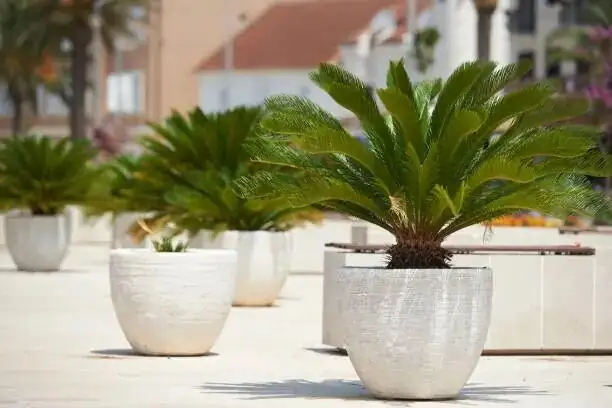
Think of Cycas revoluta—the Sago Palm—as a prehistoric metronome. Most of the year it sits still, storing energy in that sturdy, pet-like trunk (caudex). Then, in one glorious moment, it “flushes”: a perfect crown of tender new fronds unfurls all at once. If you time your light, watering, airflow, and temperature to support that leaf flush, you’ll keep this living fossil thriving for decades.
Here’s your upbeat, season-by-season roadmap.
Meet Cycas revoluta in a nutshell
- Not a true palm, but a cycad—an ancient lineage with a timeless, sculptural look.
- Origin: Southern Japan, including the Ryukyu Islands.
- Growth: Very slow, forming a stout trunk topped with a tight rosette of stiff, glossy green fronds.
- Tough but particular: Tolerates shade and heat, yet dislikes staying wet—especially in cool conditions.
- Dioecious: Male and female cones grow on separate plants (typically in summer).
- Longevity: A long-lived companion when cared for with patience.
- Safety note: Highly toxic if ingested by humans or pets; seeds are especially dangerous. Keep out of reach.
The star of the show: the leaf flush
A “flush” is the big event—new fronds emerge together from the crown, soft and vulnerable at first, then harden and darken over a few weeks.
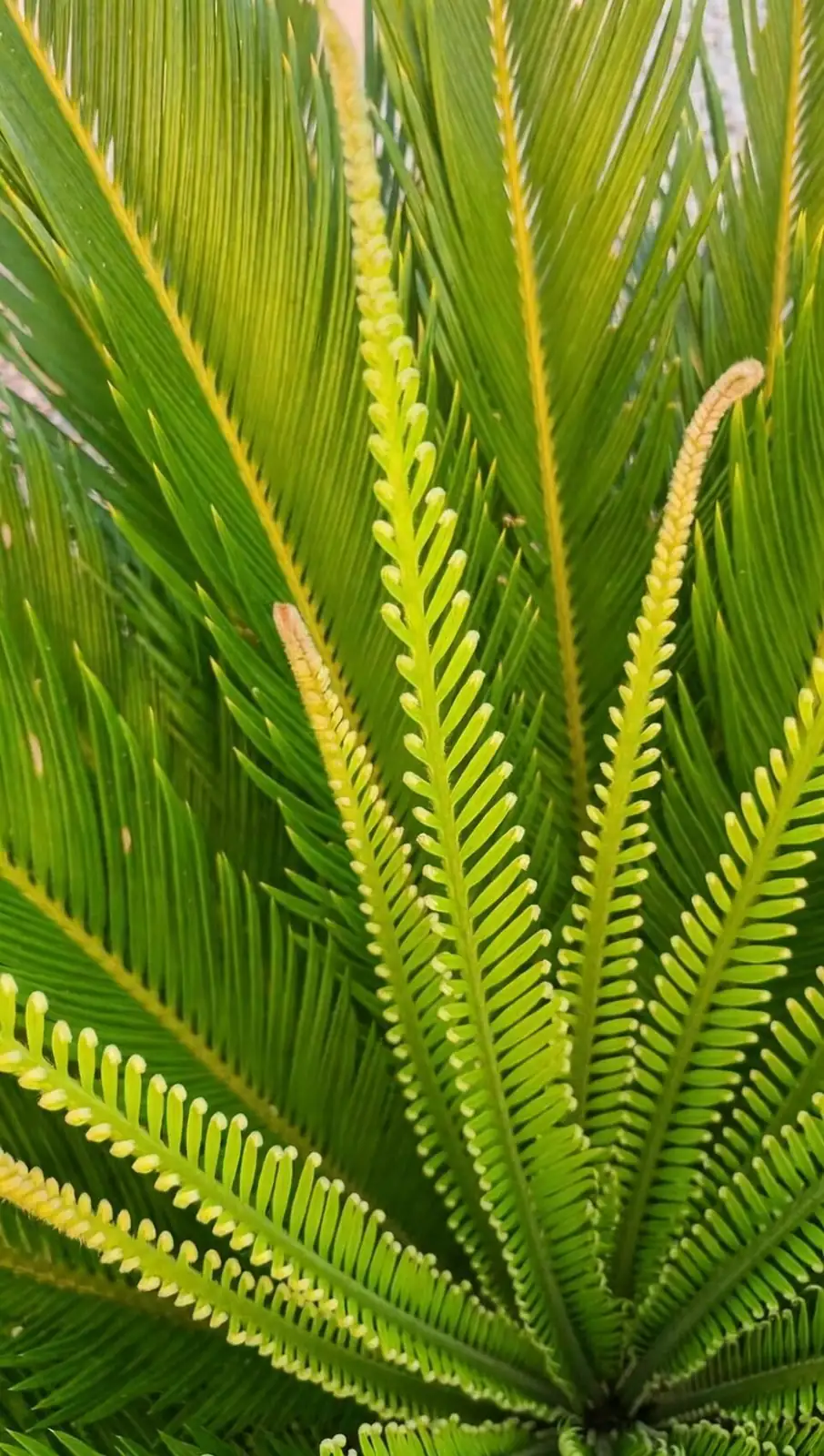
What the plant “asks” for around a flush:
- Before a flush: Bright light and steady, not-soggy moisture to charge its reserves.
- During a flush: Don’t move or rotate the pot; give bright, airy conditions with moderate humidity. Low light at this moment can stretch the new leaves (longer, narrower fronds).
- After a flush: Resume normal rhythms, and groom older outer fronds once the new set fully hardens.
Pro move: During a flush, avoid touching or spraying water directly into the crown; the young fronds are easily damaged.
Light, watering, airflow, and temperature—by season
Spring: Waking up and setting the stage
- Light
- Indoors: Shift to the brightest window you have (south/east is great) with good airflow.
- Outdoors: Gradually acclimate to stronger sun over 1–2 weeks. Cycas can handle strong sun if introduced slowly.
- Water
- Let the top of the mix dry between waterings; never let the pot sit in water.
- As days warm, water a bit more regularly, but keep your soil sharply draining.
- Airflow
- Increase ventilation to deter scale insects and keep foliage clean and dry between light mists.
- Temperature
- Ideal growth range: 13–27°C (55–81°F).
- If nights are still cool, hold off on heavy watering until days reliably warm.
Flush tip: If a flush begins now, do not move or rotate the plant until new fronds harden. Provide bright light so leaves don’t stretch.
Summer: Prime time for growth (and possibly cones)
- Light
- Bright light to full sun is ideal once acclimated. In hot regions, strong midday sun is fine if the plant’s been eased into it.
- Water
- Warm weather + faster growth = more frequent watering, yet always let the top dry first. Fast drainage is non-negotiable.
- Light misting can help humidity in hot indoor conditions—keep the crown mostly dry.
- Airflow
- Prioritize breezy, well-ventilated spots (balcony/patio). Moving air discourages scale and keeps foliage crisp.
- Temperature
- Heat tolerant up to about 40°C (104°F) if the soil drains well and you don’t keep it soggy.
Flush tip: Summer flushes are common. Keep light bright, maintain airflow, and feed lightly once new fronds fully expand.
Autumn: Taper and transition
- Light
- Days shorten; move closer to windows indoors. Outdoors, start planning the move inside before real cold hits.
- Water
- Begin spacing out waterings; growth slows as temperatures drop.
- Airflow
- Maintain ventilation indoors (a small fan on low near, not at, the plant works wonders).
- Temperature
- Bring indoors before cold snaps. Do not let the plant sit cold and wet.
Flush tip: If a late flush occurs, keep light strong and water measured. Don’t overcompensate with water when temps are sliding down.
Winter: Bright, drier, and safe from chill
- Light
- Choose the brightest indoor spot with airflow. Avoid dark corners.
- Low light during any winter flush (less common) will create stretched fronds—prioritize brightness.
- Water
- Keep on the dry side; let the top of the mix dry well. Cold + wet is the fast track to root or crown rot.
- Airflow
- Gentle, steady ventilation reduces scale outbreaks.
- Temperature
- Keep above 7–10°C (45–50°F). Prolonged exposure below 0°C (32°F) can damage fronds.
Watering and humidity: simple rules that save cycads
- Between waterings: Let the top of the mix dry out; never leave the pot in a saucer of water.
- Spring–summer: Water more consistently; you can lightly mist foliage in warm rooms above 18°C (64°F).
- Autumn–winter: Reduce watering; keep humidity moderate but the soil drier.
- Crown care: Avoid repeatedly wetting the crown, especially in cool weather.
- If in doubt, wait a day: Overwatering in cool conditions is the most common cause of rot.
Light that shapes the leaves
- Best results: Bright, airy exposures; full sun if acclimated.
- Tolerant of shade: It stays green, but new flushes in low light may emerge longer and narrower.
- Prevent stretching: Maximize brightness, especially during a flush, and ensure good airflow to keep tissues sturdy.
Airflow: your quiet superpower
- Indoors, a low fan or cracked window prevents stagnant air, discourages scale insects and fungal issues.
- Outdoors, choose open, breezy spots. Shelter from cold drafts in winter, but don’t seal the plant in stale air.
Soil and potting that keep roots happy
- Mix
- Use a fertile but sharply draining blend: loam/garden soil + peat/coir with added coarse sand or grit.
- A “drainage layer” at the bottom won’t fix heavy soil—build true drainage into the mix itself.
- Pots
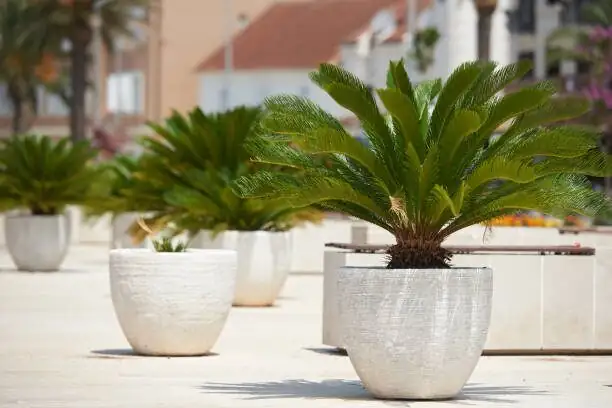
- Slightly shallow, round pots with excellent drainage suit the caudex and slow root system.
- Typical pot sizes: 15–50 cm (6–20 in) across.
- Repotting
- Small/medium plants: every 2–3 years; large specimens: every 5–6 years.
- Avoid overpotting—too much cold, wet mix around slow roots invites rot.
Feeding: steady, not heavy
- Growing season: Feed about once a month with a balanced fertilizer (e.g., 20-20-20) at a conservative dose, or use a well-rotted organic feed.
- Winter: Skip or keep very light.
- After a flush hardens: That’s a great moment to resume modest feeding.
Grooming, cones, and shaping
- Old fronds: Outer fronds naturally yellow and wither with age. Remove them after the newest flush has fully expanded to highlight the crown.
- Cones: Male and female cones form on separate plants, typically in summer. Remove the spent male cone after it finishes; remove the female structure after seeds mature to refocus energy on leaf growth.

Seasonal cheat sheet built around the flush
- Late winter–early spring: Brighten light; water carefully; watch for the first signs of a flush.
- Spring–summer flush: Do not move or rotate; boost brightness and airflow; keep moisture steady but never soggy; feed lightly only after hardening.
- Late summer: Maintain bright light; groom older fronds to neaten shape.
- Autumn: Taper watering; bring indoors before chills.
- Winter: Brightest window, drier soil, gentle airflow; hold above 7–10°C (45–50°F).
Troubleshooting quick hits
- New fronds are long and narrow: The plant flushed in low light—move to a brighter spot for the next cycle.
- Yellowing starts with outer fronds: Often normal aging. Remove once the new flush is firm. If widespread or sudden, reassess watering and light.
- Soft caudex, sour smell, or collapsing center: Root or crown rot from overwatering, especially in cool weather. Unpot, remove rot, improve drainage, and keep warmer and drier.
- Sticky leaves or brown bumps: Likely scale. Improve airflow, wipe with a damp cloth, and treat with horticultural oil or insecticidal soap. Repeat as needed.
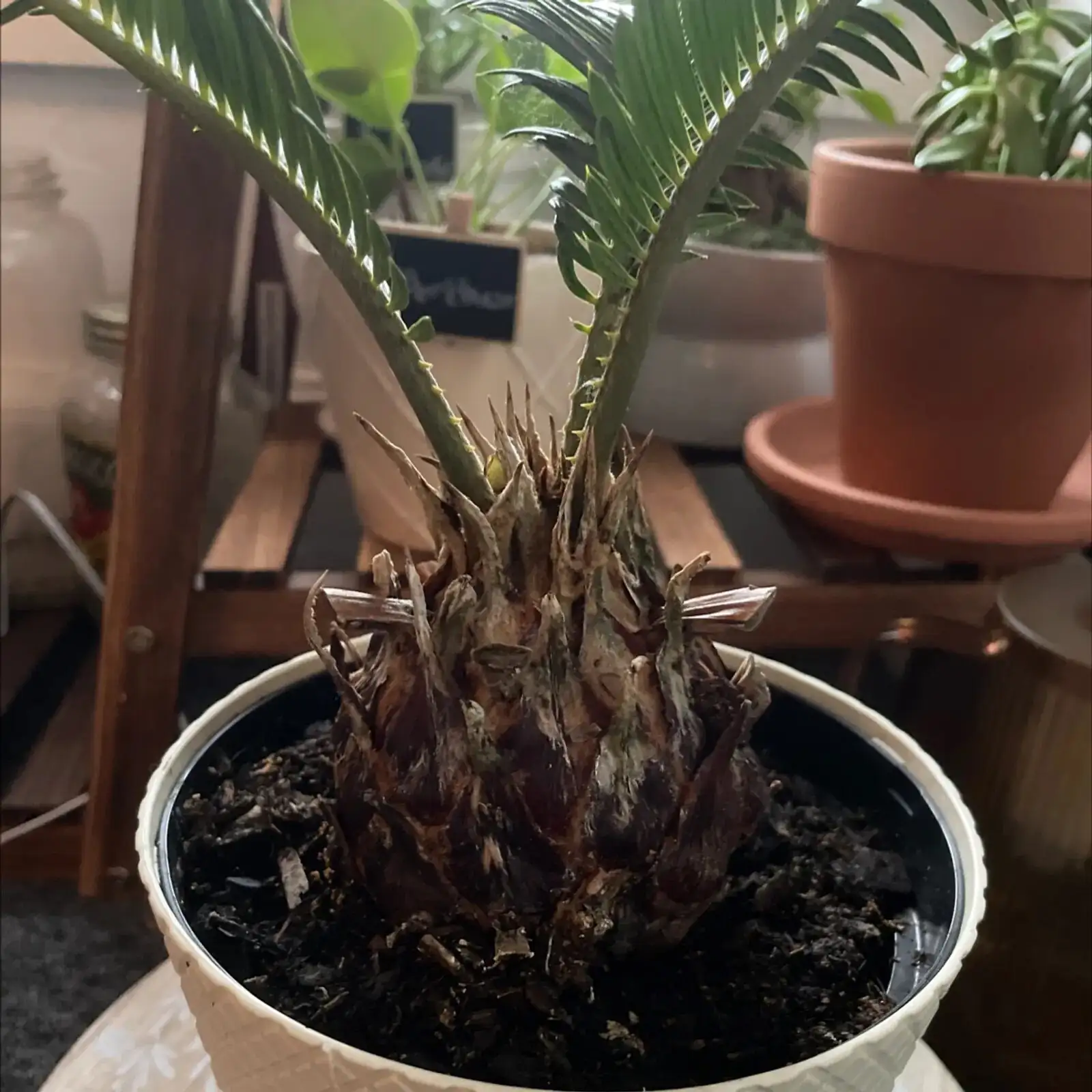
Special case: caring for a leafless “bald” caudex
- Choose a firm, symmetrical caudex with no soft spots or lesions.
- Pot into clean, very fast-draining medium—coarse sand works well for re-rooting.
- Place in bright light with good airflow; lightly mist for humidity, but avoid soaking the medium.
- Once roots and new fronds appear, transition to a fertile, sharply draining mix and begin very gentle feeding.
Propagation (for the patient)
- Offsets (pups): Best divided in spring during repotting. Let cut surfaces callus, then pot into a 50/50 sand-and-soil mix and keep in bright shade until established.
- Seed: Sow late spring–early summer, about 2 cm (0.8 in) deep; 15–29°C (59–84°F) warmth helps germination (which may begin in ~2 weeks under ideal warmth).
- Trunk sectioning (advanced): Early summer; lay 2–3 cm (0.8–1.2 in) slices on moist sand with high humidity. Pups may appear in 3–4 months.
Placement ideas
- Outdoors (warm seasons): A sunny, well-ventilated balcony or patio.
- Indoors (year-round or winter): As close to a bright window as possible, with gentle airflow. Avoid cold drafts, dark corners, and any setup that keeps the pot wet.
- Climate: Not frost-hardy; best outdoors year-round mainly in warm climates around USDA Zones 9–11.
Symbolism: why people gift Sago Palms
Often associated with good fortune, freedom, happiness, and—most fittingly—longevity. These meanings likely trace to its age-old lineage, sculptural poise, and the way it endures with very little, very slowly. It’s a plant that teaches patience and payoff: months of quiet, then a perfect flush of new life. Just remember: it’s ornamental only—every part is toxic if ingested.
Buying checklist
- Look for a firm, upright caudex with an evenly arranged crown of deep-green, unspotted fronds.
- The growing point should look clean and healthy.
- For leafless specimens, choose a hard, symmetrical caudex with no mushy areas or lesions.
Final word
Set the rhythm—bright light, fast drainage, measured water, moving air, and safe temperatures—and let your Cycas revoluta do the rest. When that new rosette unfurls in a single dramatic flush, you’ll know you nailed the timing.