

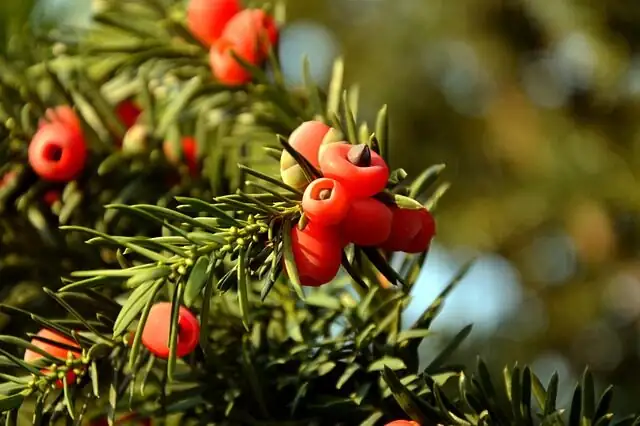
If you’ve ever heard Chinese yew whispered about like a botanical pharmacy, you’re not alone. The genus Taxus is famous for taxanes—the backbone of important anticancer drugs—so it’s easy to imagine that a backyard yew might double as a home apothecary. Here’s the friendly truth: those life-saving compounds belong in the hands of pharmaceutical scientists, not in a teapot. Meanwhile, Taxus chinensis earns its place in gardens on completely different merits—evergreen elegance, shade poise, and that unforgettable splash of red arils in autumn.
Let’s demystify the medicine, celebrate the ornament, and grow this plant wisely and safely.
Meet Chinese yew (Taxus chinensis)
A dignified evergreen conifer from China, Chinese yew carries itself with quiet confidence.
- Habit and size: An upright, woody evergreen that can mature to about 10–20 m (33–66 ft) in landscapes over time, with dense branching that creates a composed, architectural silhouette. In the houseplant trade, it’s usually sold as a young container plant (often 3–4 years old; typical trunk diameters 2–4 cm).
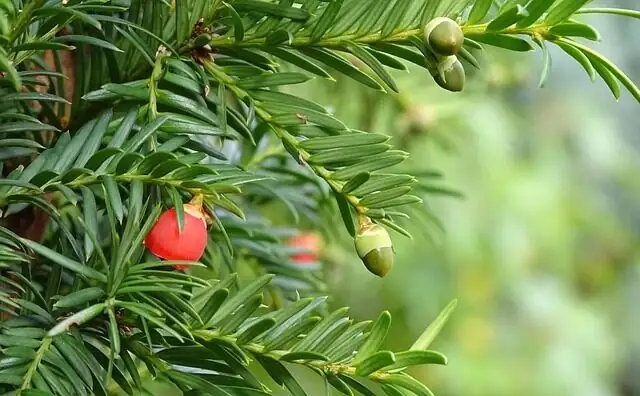
- Foliage: Flat, slightly thick, deep-green needles; new growth flushes yellow-green before settling into a darker tone.
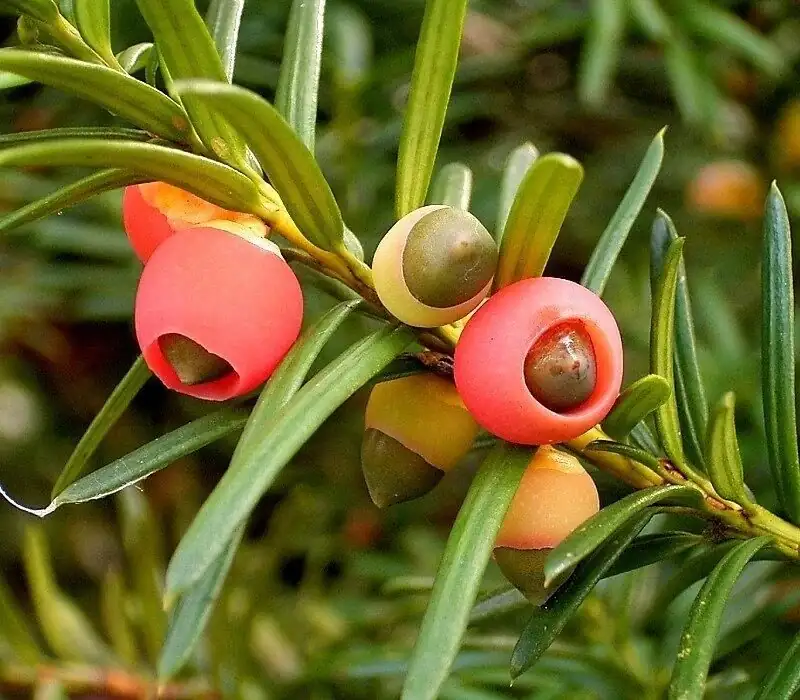
- Seasonal show: Small, inconspicuous spring flowers give way to bright red arils (the fleshy, berry-like seed coverings) in autumn that often linger into winter—an irresistible contrast against the dark foliage.
The taxane mystique—what’s real, what’s not
What are taxanes?
Taxanes are a family of natural compounds produced by yews; they underpin modern anticancer drugs such as paclitaxel and docetaxel. Historically, discoveries began with yew bark and later expanded to other plant parts and advanced production methods.
Why extraction is pharmaceutical, not DIY
The leap from “this plant contains taxanes” to “I can use it at home” is both unsafe and scientifically unrealistic.
- Potent toxicity: Needles, bark, and especially seeds contain powerful toxins. Missteps aren’t “ineffective”—they can be dangerous.
- Trace amounts, complex mixtures: Useful molecules occur in low concentrations among many similar compounds. Separating, purifying, and standardizing them is sophisticated work done with rigorous quality control.
- Modern supply is high-tech: Today, taxanes reach clinics via controlled industrial processes (including semisynthesis and cultivated sources), not kitchen extractions.
Bottom line for gardeners: enjoy Chinese yew as an ornamental. Never self-medicate with any part of a yew, and always treat the plant with respect for its toxicity.
Conservation in context
Chinese yew represents a lineage that has faced both habitat pressure and historic overharvesting in parts of the genus for medicinal sourcing. Thankfully, modern pharmaceutical strategies have reduced pressure on wild stands, and cultivated yews now carry much of the ornamental load. You can help by:
- Choosing nursery-propagated plants—never wild-dug stock.
- Supporting growers who propagate by cuttings or seed.
- Treating your yew as a “living ambassador” for conservation: patient to establish, long-lived, and worth safeguarding.
Smart reasons to grow it ornamentally
- Evergreen architecture: Dense, deep-green foliage provides year-round structure, anchoring borders and courtyards with a calm, refined presence.
- Shade savvy: Thrives in partial shade where many conifers sulk; perfect for bright woodland edges or the north/east sides of buildings.
- Autumn-to-winter drama: Red arils glow like lacquered beads against dark needles.
- Low-drama shaping: The natural form is attractive; only light thinning is usually needed.
- Cool-climate companion: Cold tolerant in the ground to roughly -15°C (5°F); a reliable backbone plant in temperate gardens.
Where it thrives
- Light: Partial shade to bright, indirect light; avoid harsh midday sun. Indoors, place about 1 m (3.3 ft) back from an east- or south-facing window or balcony door so light is filtered.
- Temperature: Best at 16–26°C (61–79°F). Established outdoor plants tolerate winter lows near -15°C (5°F). Protect container plants from severe freezes.
- Humidity: Prefers a cool, slightly moist atmosphere; prolonged hot, dry air can stress it.
- Soil: Humus-rich, well-drained, acidic soil or potting mix. Keep evenly moist—never waterlogged.
- Hardiness note: Container roots are more exposed than in-ground; protect pots during deep cold.
Everyday care, made simple
- Watering: In active growth, water thoroughly to soak the root ball, then keep the mix consistently moist but not soggy or standing in water. In winter, let the surface dry slightly between waterings, without allowing the root ball to desiccate.
- Feeding: During the growing season, feed about once a month with a balanced fertilizer (for example, NPK 20-20-20) or well-rotted organic cake fertilizer, following label directions.
- Pruning: Usually unnecessary—light thinning keeps airflow and the plant’s clean silhouette.
- Repotting: Best in winter through early spring. Refresh part of the old soil with a fertile, acidic mix and disturb the root ball as little as possible.
Calendar cue:
- Growing season: water to maintain even moisture; feed monthly.
- Winter: water less, keeping the mix slightly drier.
- Late winter to early spring: time to repot.
- Spring: prime time to buy and establish new plants.
Safety first: a poisonous beauty
- Toxicity: Highly toxic if ingested. Needles, bark, and especially the seeds are dangerous. The fleshy red aril is less toxic than other parts, but the seed inside is hazardous.
- Family and pets: Keep out of reach of children and pets. Do not plant near play areas where fruiting branches tempt curious hands.
- Garden hygiene:
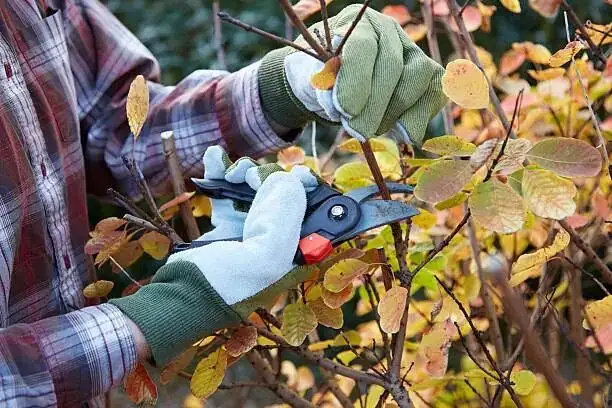
- Wear gloves and long sleeves when pruning.
- Bag and bin all clippings; don’t leave debris where pets or wildlife could access it.
- Never brew teas or remedies from yew.
- If ingestion is suspected: Seek urgent medical or veterinary help immediately.
Troubleshooting and pests
- Yellowing needles in the second year, especially in containers, often signal drifting pH or poor drainage. Repot into a fresh, acidic, humus-rich mix and consider an iron supplement (such as chelated iron) per label directions. Review watering to avoid both drought and waterlogging.
- Scale insects can occasionally appear:
- Monitor regularly; yellow sticky cards help track flying adults.
- Treat with an appropriate scale-control product (often horticultural oil or other labeled insecticide), using it exactly as directed.
Propagation for the patient
- Seeds: Famous for taking their time—many need 1–2 years of cold stratification before they germinate reliably.
- Cuttings: Root more readily from relatively young plants (often under ~10 years old).
- Grafting and layering: Also possible and used in specialty propagation.
- A mindful note: Propagate only from cultivated sources; never collect from the wild.
Cultural notes and “flower language”
Because yews are evergreen and famously long-lived, they’re often associated with longevity, endurance, and resilience. In China, 红豆杉 carries a reputation that blends reverence for age-old evergreens with modern awareness of medicinal research. It’s worth recognizing the duality: a plant symbolizing life and persistence that’s also poisonous and must be handled with respect. That tension—life held in disciplined stillness—is part of the yew’s enduring mystique.
Quick buying checklist
Shop in spring and look for:
- A straight, well-balanced plant with healthy gray-brown to reddish-brown bark.
- Well-spaced main branches with plenty of fine, dense branchlets.
- Deep-green needles with lively yellow-green new growth.
Skip plants that are crooked, missing branchlets, showing yellowing older leaves, or wobbling in loose potting soil.
At-a-glance placement ideas
- A shaded courtyard focal point where red arils can shine in autumn.
- Along a north or east wall to lend evergreen structure without scorching.
- In a bright, cool indoor spot set about 1 m back from an east/south exposure.
- As a calm anchor in mixed plantings with ferns, hellebores, and other shade-lovers.
Final take
Grow Chinese yew for its poise, not its pharmacology. Let the pharmaceutical world handle taxanes; you handle beauty, safety, and stewardship. In return, Taxus chinensis will repay you with year-round elegance, quiet resilience, and a winter show that never gets old.