

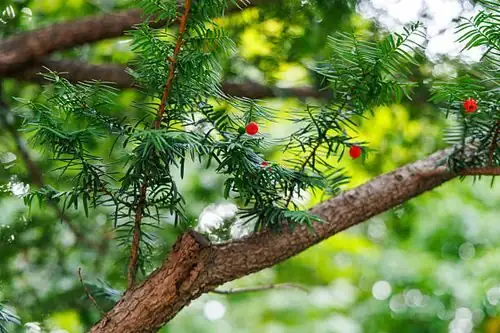
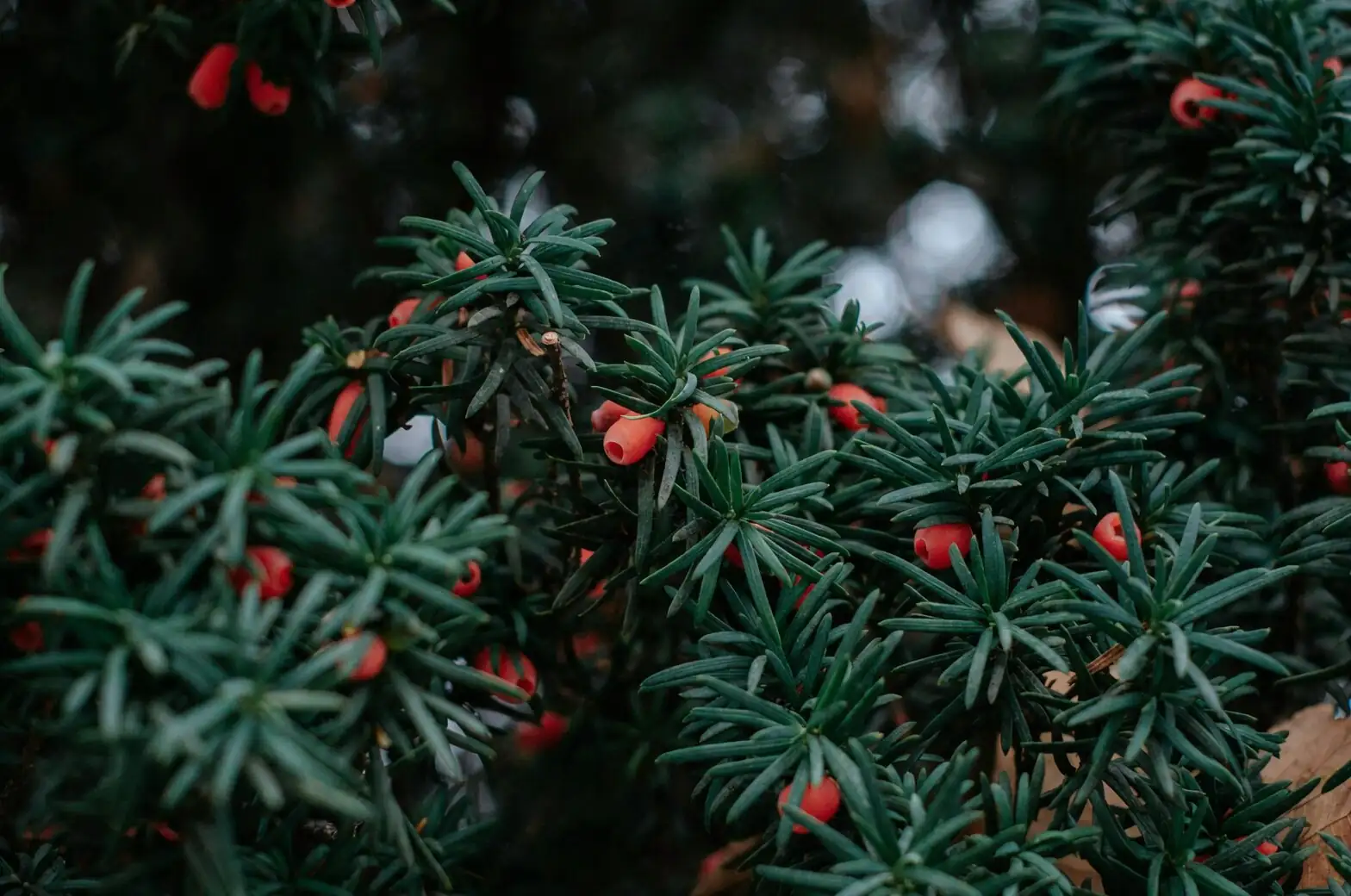
Chinese yew (Taxus chinensis) wears elegance lightly—dense, deep-green needles all year and bright red arils in autumn that linger like ornaments into winter. Yet even this dignified evergreen can sulk in a pot if the soil turns alkaline, the roots sit wet, or scale insects sneak in. Here’s your practical, step-by-step toolkit to diagnose yellowing (chlorosis), sharpen drainage, nail watering timing, beat scale with sticky cards and horticultural oil, and carry your yew safely through winter in containers.
First, know your plant (so you can read its signals)
- What it loves: cool air, bright filtered light or partial shade, humus-rich acidic soil, and steady moisture without waterlogging.
- What it dislikes: scorching midday sun, soggy pots, compacted mix, and hot, dry air.
- Indoors/outdoors: Indoors, set it about 1 m (3.3 ft) back from a bright east or south window for indirect light. Outdoors, choose bright shade with perfect drainage.
- Cold notes: In-ground plants are cold tolerant (roughly to about -15°C / 5°F). Container roots are more exposed—plan winter protection.
The chlorosis detective: Is alkaline soil the culprit?
Yellowing needles aren’t a diagnosis; they’re a clue. Your mission is to figure out why chlorophyll isn’t being made.
What chlorosis from high pH often looks like

- Newer needles paling first, often with a greenish cast along the midrib or between veins.
- Older foliage can stay darker at first, then fade.
- Growth may slow; the plant looks tired rather than crisp.
Other contributors to chlorosis you should rule out:
- Drought stress, poor drainage/waterlogging, and soil compaction are frequent partners in crime.
- Chronic wetness can invite root problems; stressed roots can’t feed foliage well.
Quick tests to confirm alkaline drift in containers
- Age of the mix: Potting media trend less acidic over time—especially with hard (alkaline) tap water.
- Water source: Hard water raises pH in the root zone. If your kettle furs up, suspect alkalinity.
- Simple pH check: Use a soil pH probe or test the leachate. You don’t need lab precision—just confirmation that you’ve drifted out of the acidic range yew prefers.
Fixes that actually work
- Repot into fresh, acidic, well-drained mix.
- A practical recipe: a peat-based potting mix amended with fine pine bark and perlite for structure and air. Avoid heavy garden soil and avoid lime-containing blends.
- Repot in winter to early spring and disturb the root ball as little as possible to reduce shock.
- Switch your water: Use rainwater or filtered water if your tap is hard.
- Feed the foliage back to green:
- Apply a chelated iron product (follow the label) to quickly address iron unavailability in alkaline conditions.
- Resume balanced, label-directed feeding about monthly during active growth; avoid over-liming or high-pH amendments.
- Patience with payoff: Expect noticeable improvement on new growth within weeks; older needles may not fully re-green but should deepen in color overall.
Drainage and root health: Build a pot that breathes
Think of yew roots as marathoners: they need air as much as water.
Pot and mix set-up
- Pot choice: Use a container with generous drainage holes. Unglazed ceramic or fabric pots breathe better than non-porous plastics.
- Lift the pot: Set on feet or spacers so drain holes never seal to the saucer or patio.
- The mix:
- Aim for springy, humus-rich acidity and structure: peat or fine bark for organic matter; perlite or pumice for air spaces.
- Skip water-holding crystals and heavy composts that collapse and compact over time.
- Avoid perched water: Don’t “layer” gravel at the bottom; it can worsen saturation at the root zone.
Repot timing and technique (yew-friendly)
- Best window: winter to early spring.
- Gentle hands: slide out, shave only circling roots if necessary, keep most of the root ball intact, and backfill with fresh mix.
Aftercare
- Water in thoroughly once to knit mix to roots, then let the surface dry slightly before the next watering. Keep evenly moist, never soggy.
Watering with precision, not routine
Watering is timing plus technique.
Growing season (cool to mild weather)
- Trigger: Water when the top 2–3 cm (about an inch) of mix feels slightly dry, or the pot feels “lighter” by heft.
- Method: Water slowly until you see a steady drain from the holes. Pause, then water again to fully soak the root ball. Empty any saucer—no standing water.
- Frequency: There’s no fixed schedule. In cool, filtered light, it may be weekly; in warm, breezy shade, more often. Let the plant and mix dictate the rhythm.
Winter slowdown
- Growth slows; so should water. Let the surface dry a bit more between waterings but do not let the root ball go bone-dry.
- Water on frost-free mornings so foliage and media aren’t cold and saturated overnight.
Pro tip: If your media feels damp but the plant looks wilted or yellowing, suspect poor drainage or root stress—not thirst.
Sticky trouble: scale insect monitoring and treatment
Chinese yew is generally resilient, but scale can appear—often when a plant is under stress.
Spot it early
- Look for tiny, shell-like bumps on stems and needle undersides.
- Honeydew (sticky glaze) and sooty mold are telltale signs.
- Yellow sticky cards hung near the plant help monitor flying male scales and other sap-suckers. They won’t remove settled scales but will warn you trouble is brewing.
Treatment game plan (sticky cards + horticultural oil)
- Isolate the plant if possible.
- Gently scrub accessible infested twigs with a soft brush to dislodge heavy clusters.
- Spray horticultural oil thoroughly—top, underside, stems, nooks. Oil suffocates scales; coverage is everything.
- Best conditions: above freezing but not hot (avoid heat waves and midday sun), no rain for 24 hours, and no hard freeze immediately after. Always follow the label.
- Repeat as directed (often in 7–14 days) to catch crawlers that escaped the first pass.
- Keep sticky cards up for ongoing monitoring and to time any follow-ups.
Sanitation counts:
- Prune and discard heavily infested bits.
- Wipe containers and staging areas free of honeydew and mold.
Container winterization: save the roots, save the plant
Yew foliage can shrug off cold, but container roots are the weak link.
- Choose a protected site: Bright shade out of harsh wind; along a north/east wall is ideal.
- Insulate the root zone:
- Slip the pot into a larger cachepot and stuff the gap with dry leaves or bark.
- Wrap with burlap or frost fabric; add a 5–8 cm mulch over the soil surface (keep mulch off the stems).
- Elevate the pot: Prevent freeze-thaw waterlogging by keeping drain holes clear of ice and debris.
- Water right: Keep the mix slightly moist—never sodden. Check monthly in cold spells; water on milder days.
- Avoid late, lush growth: Stop fertilizing late in the season; resume light, monthly feeding in active growth.
- Deep freeze warning: In severe spells, move containers to a cold, bright, frost-sheltered spot (unheated porch/garage with light). Container plants are less hardy than in-ground specimens.
A fast seasonal checklist
- Spring–early autumn (active growth)
- Light: bright, indirect; partial shade outdoors.
- Water: evenly moist, never waterlogged.
- Feed: about monthly with a balanced fertilizer per label.
- Scout: check for scale; hang yellow sticky cards.
- Winter
- Water less often; keep slightly drier but not dry.
- Protect container roots from deep freezes and wind.
- Repot in winter to early spring with fresh, acidic, well-drained mix if needed.
Safety first (this beauty is toxic)
All parts except the fleshy red aril are highly toxic; the seed inside the aril is especially dangerous. Keep away from children and pets. Wear gloves when pruning or spraying and wash up after handling. If ingestion is suspected, seek urgent medical or veterinary help.
Symbolism without the myths
Chinese yew has long been associated with longevity, endurance, and resilience—apt for an evergreen that keeps its composure year-round and can live for generations. The “flower language” often assigned to yews draws from that enduring, stoic presence rather than blossoms (its flowers are inconspicuous). It’s a living emblem of steadiness: set the right conditions, and it will quietly thrive, season after season.
—
With this toolkit—acidic, airy soil; smart watering; vigilant scale control; and winter root protection—your Taxus chinensis will return the favor with year-round poise and those unforgettable red arils glowing against deep green.