

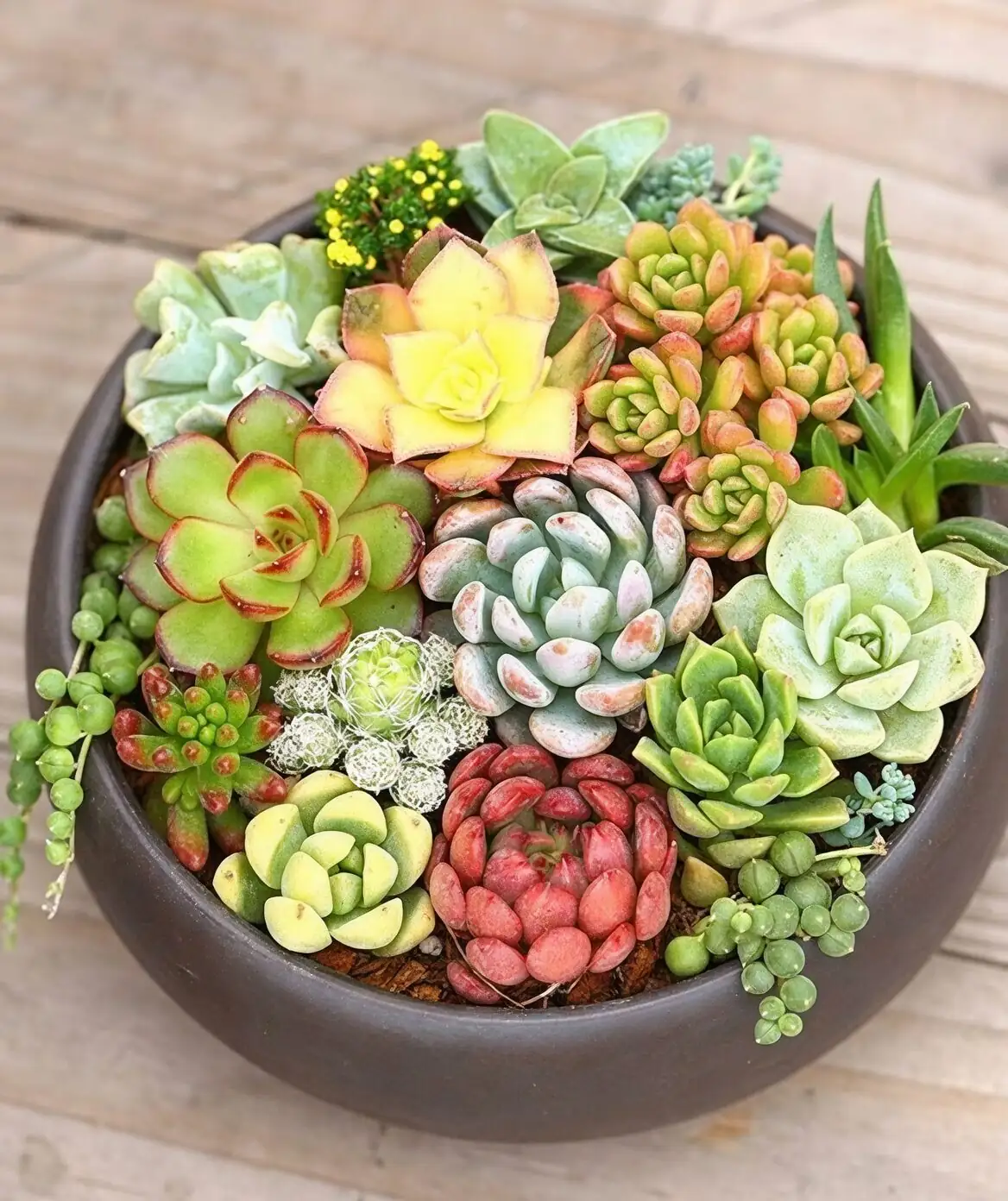
Step into a room where the plants do the styling for you: rosettes that blush wine-red in late fall, silvery blues deepening to charcoal in winter light, lime-green spires edged in coral. Succulents can wear an ever-changing palette—if you nudge the conditions they already evolved to love. The trick is using design elements (light angles, pot textures, species pairings) to create gentle, reversible “stress” that coaxes color without pushing your plants over the edge.
Below is your color-smart, plant-safe guide to turning everyday succulents into seasonal showpieces.
The physiology behind the blush: a color story you can design with
Succulents are not one clan but a lifestyle—water-storing plants spread across many families (think Crassulaceae, Cactaceae, Euphorbiaceae, Asphodelaceae, Asparagaceae, and more). Their thick leaves, stems, or roots are reservoirs built for arid habitats. Many also use CAM photosynthesis, opening stomata at night to save water by day.
That desert toolkit responds visibly to its environment:
- Bright light and cool (but frost-free) nights spur protective pigments—anthocyanins (reds/purples) and carotenoids (yellows/oranges).
- Mild drought keeps growth compact and concentrates color.
- Good airflow and low humidity reduce rot risk, letting plants safely experience stronger light.
Design translation: use light as your paintbrush, pots as microclimate tools, and species combos as your color palette.
Light: your most powerful “paintbrush”
Strong light is the top driver of compact growth and saturated hues.
How much and from where
- Indoors, aim for 4–6 hours of bright light daily. A sunny south or west window is ideal; bright east works for gentler types.
- Add a grow light if your window is shy: a full-spectrum LED bar placed 15–30 cm (6–12 in) above the canopy for 12–14 hours can keep colors in play.
- Rotate pots weekly for even color and shape.
Safe acclimation (prevent sunburn)
- Increase light gradually over 2–3 weeks.
- Start with bright indirect light, then introduce soft direct morning sun, then longer sun windows.
- Watch for bleaching or crispy patches—dial back if you see either.
Styling move
Angle a spotlight or grow bar to rake across rosettes from the side. Raking light exaggerates texture and can intensify margins and leaf tips—instant drama on a shelf vignette.
Cool nights, warm days: temperature as a color dial
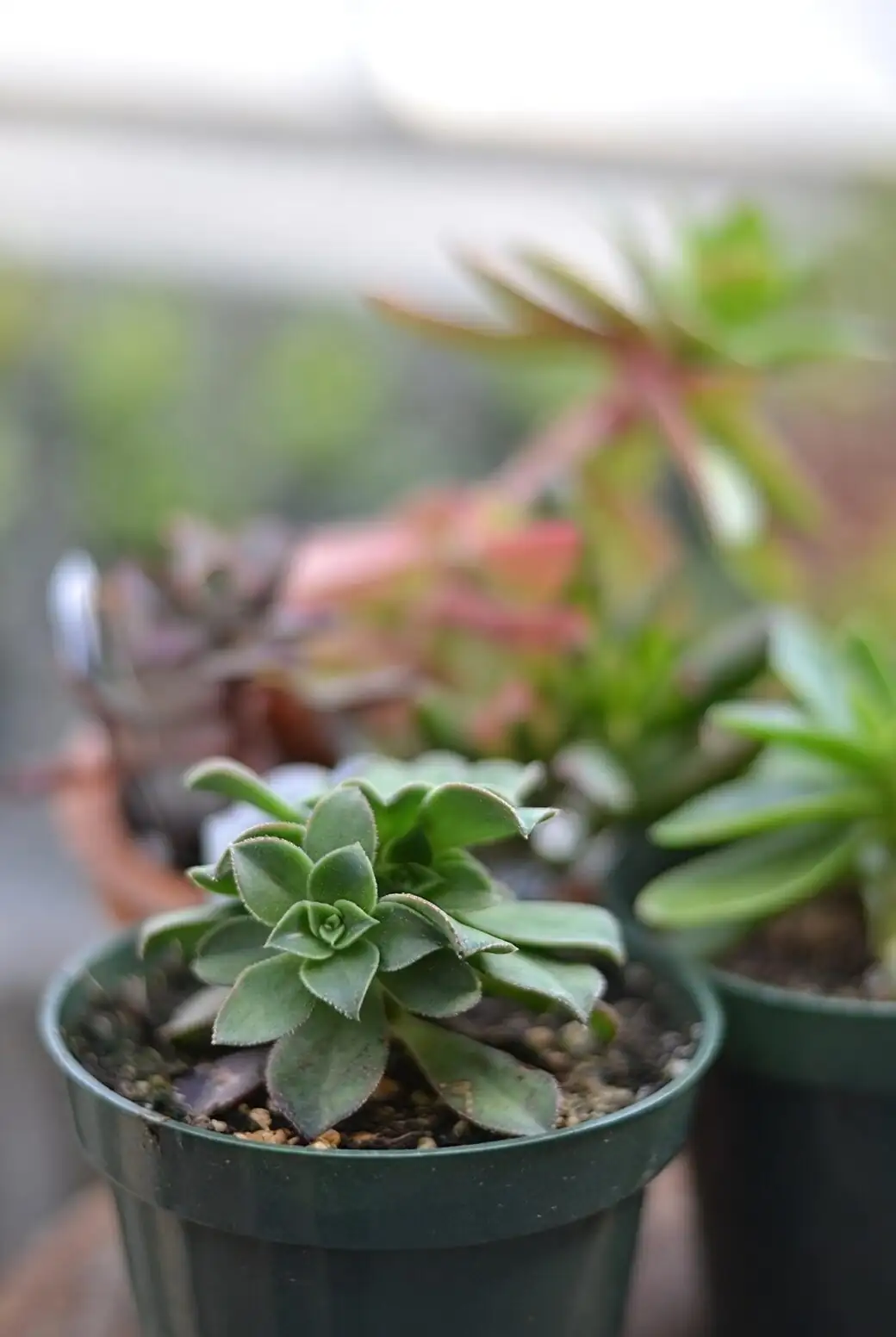
Daytime warmth with cooler nights mimics arid highlands where many succulents originate and often leads to richer color.
- Happy range for many: about 15–27°C (59–81°F) by day.
- Encourage blush with night temps a few degrees cooler than daytime—think an open window in fall (as long as temps stay safely above frost).
- In extreme heat above ~35°C (95°F), ease midday sun and increase airflow to avoid bleaching and stress stacking.
Designer tip: Place your “color collection” near a well-lit window you crack at night in fall/early spring. The gentle day–night swing often deepens reds and purples without risk.

Pots, textures, and top-dressings: microclimates you can hold in one hand
Container choices change evaporation, root-zone temperature, and ultimately color.
- Terra-cotta: porous, wicks moisture, subtly cools roots—great for compact, colorful growth. Perfect for echeverias, crassulas, sedums.
- Glazed ceramic: holds moisture longer—use for thirstier or shade-tolerant types (Haworthia, Gasteria) that color less but add sleek texture.
- Pot color and thickness: dark, thin pots warm quickly (concentrates color but watch summer heat); pale or thick-walled pots buffer extremes.
- Size and shape: choose just 2.5–5 cm (1–2 in) wider than the root mass. Oversized pots keep soil wet too long—color fades and rot risk rises.
- Top-dressing: a mineral mulch (pumice, pea gravel, crushed lava) reflects light back into rosettes and keeps necks dry—clean lines, better color, less rot.
Soil, water, and nutrients: fuel the show, don’t drown it
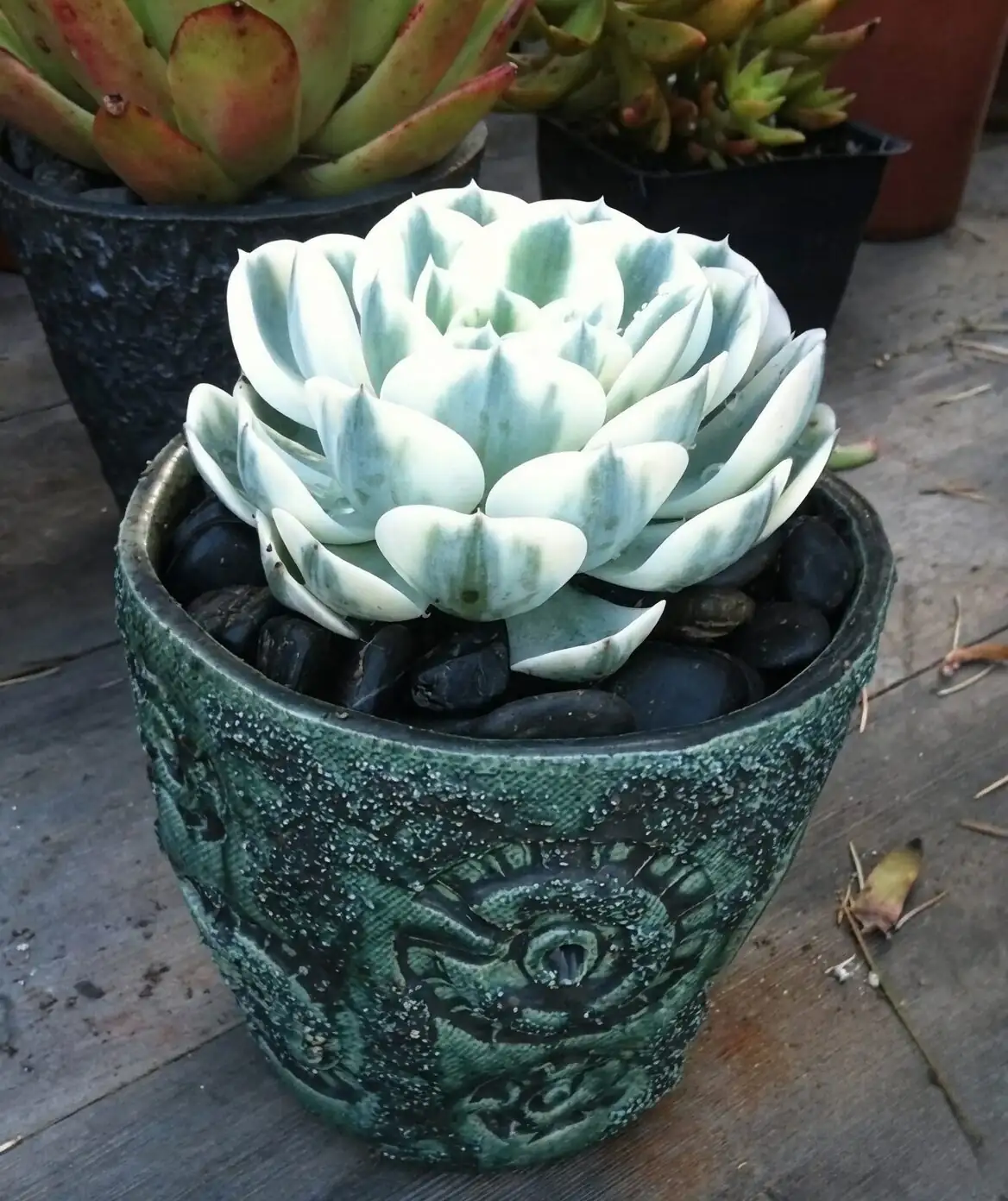
Color fades fast when roots stay wet. Keep it gritty, airy, and rhythmic.
- Soil mix: fast-draining and mineral-rich. A solid starting point:
- 10–20% peat or other organic matter
- ~20% coarse sand
- 60–80% inorganic grit (pumice, perlite, volcanic rock, diatomaceous earth, akadama)
- Watering: soak and dry. Water thoroughly, then wait until the mix is bone-dry before watering again.
- Spring/fall (active growth for many): regular soak-and-dry.
- Hot summer: some slow down—reduce water and screen harsh midday sun.
- Winter: reduce sharply; many do best almost dry between sips in bright, cool rooms.
- When unsure, wait—most can skip an extra week far better than they can sit wet.
- Feeding: light touch—balanced, water‑soluble fertilizer at half strength about monthly during active growth; pause in winter.
Color note: Slightly lean watering and bright light lead to punchier pigments. Constant moisture often pushes plants back toward green.
Species that reward you with seasonal color (and great indoor form)
Many succulents blush beautifully under bright light and cool nights:
- Echeveria, Graptopetalum, and hybrids (Crassulaceae): rosettes that turn pink, red, or lavender.
- Sedum and Crassula: edges glow red, foliage tightens in strong light.
- Kalanchoe (select species): bronzes and crimsons in cool light.
- Aloe and related Asphodelaceae: speckles and margins intensify; some turn coppery.
- Aeonium: variegates deepen and leaf edges redden in cool seasons.
- Sempervivum (best outdoors in cold climates): jewel tones in cool weather.
- Haworthia: more texture than color—great contrast in lower light.
- Euphorbia (succulent species): architectural forms; some color at tips—mind the irritating latex sap.
Note: Some groups, like many agaves, tend to hold steady in blue-green rather than blushing red; they bring sculptural calm to balance your scene.
Design recipes: palettes that pop (and share similar care)
Build combos that want the same light and water rhythms.
Sunset Mantel (bright window, cool nights)
- Terra-cotta bowl with mineral top-dress
- Echeveria ‘Lola’ (center)
- Sedum nussbaumerianum (amber tones)
- Crassula ovata ‘Hummel’s Sunset’ (gold with red margins)
- Accent: a small black lava rock for moody contrast
Care rhythm: strong light, full dry-downs, slightly cooler nights to deepen pinks and reds.
Monochrome Modern (bright indirect to gentle direct)
- Matte white glazed cylinder
- Haworthia cooperi clump (glass-green, translucent tips)
- Gasteria ‘Little Warty’ (texture)
- Silver top-dress to bounce light
Care rhythm: bright indirect, modest watering; trades hot color for sculptural sheen.
Desert Jewels Shelf (south window)
- Shallow terra-cotta tray
- Aloe nobilis (spiky, copper blush)
- Crassula capitella ‘Campfire’ (neon red with light)
- Aeonium ‘Sunburst’ (variegated focal)
- Pumice mulch to reflect light into rosettes
Care rhythm: bright light, good airflow, soak-and-dry; watch summer midday heat.
Soft + Spiky (visual tension)
- Charcoal concrete bowl
- Echeveria ‘Perle von Nürnberg’ (lavender)
- Euphorbia mammillaris variegata (architectural, handle with care)
- Senecio radicans (stringing edge, blue-green)
Care rhythm: bright light; careful watering; inform housemates about Euphorbia sap.
An 8‑week, plant‑safe color‑coaxing plan (indoors)
Week 1–2: Assess and prep
- Repot into gritty mix with drainage if needed. Choose terra-cotta for color-forward species.
- Place near your brightest window; start with bright indirect light.
Week 3–4: Light ramp-up
- Add 30–60 minutes of direct morning sun every 2–3 days.
- Rotate weekly; keep airflow steady.
Week 5–6: Night cool-down
- If weather allows, crack the window at night for a few degrees of cooling (staying well above frost).
- Maintain soak-and-dry watering; skip one watering if growth is very fast and pale.
Week 7–8: Fine-tune
- Increase light or grow‑light duration slightly if rosettes remain loose.
- Feed once at half strength.
- Photograph weekly—color shifts are subtle day-to-day but striking month-to-month.
How to know you’ve pushed too far (and how to fix it)
- Bleached patches or crispy margins: light is too intense or heat is excessive. Move to bright indirect light, increase airflow.
- Mushy leaves or a sour smell: overwatering/poor drainage. Unpot, trim rot, dry 24–48 hours, repot in gritty mix.
- Extreme wrinkling + no recovery after watering: too dry for too long—soak thoroughly, then return to normal rhythm.
- Stalled growth for months in prime season: check light levels, root health, and pot size.
Everyday care that keeps the color coming
- Pest patrol: mealybugs and scale love indoor succulents. Isolate, dab with alcohol, improve airflow.
- Safety note: many Euphorbia bleed an irritating milky latex—wear gloves, keep away from pets and kids; when in doubt, treat unknown plants as potentially irritating.
- Repot smart: size up gradually (2.5–5 cm / 1–2 in). Keep dry for a few days after repotting.
- Group by needs: bright-light blushers together; shade‑tolerant textures (Haworthia, some Gasteria) in their own vignette.
Seasonal color calendar (at a glance)
- Spring: many wake up—normal soak-and-dry, light feeding. Excellent time to prune, style, and propagate.
- Summer: monitor heat; some slow down—reduce water a notch, provide midday shade if temperatures soar.
- Fall: prime for color—bright light + cool nights deepen reds and purples.
- Winter: go easy on water, pause fertilizer, protect from cold—maintain light for compact form.
Quick answers to common styling questions
- Why is my succulent getting tall and stretchy? It wants more light. Move it brighter (gradually), rotate, and consider trimming/re-rooting a leggy top.
- How often should I water? There’s no fixed schedule. Wait until the mix is completely dry, then soak thoroughly. Less in winter, a bit more in active growth.
- Can succulents live indoors? Absolutely—give them your brightest window or a grow light. Shade‑tolerant kinds (like many Haworthia) excel in lower light.
- Why did my plant change color? Light levels and temperature swings. Brighter light and cooler nights often pull out reds, purples, and bronze tones—especially from fall through early spring.
A note on symbolism (and why it resonates on your shelf)
Succulents are often seen as emblems of resilience and perseverance—living sculptures that thrive on scarcity. You’ll also see them linked with protection and good fortune in feng‑shui‑style traditions. While “flower language” lore is a cultural construct rather than botany, it reflects what our eyes confirm: these plants hold their beauty through tough conditions. Designing with gentle stress honors that story—inviting color not by forcing the plant, but by echoing the environments it evolved to love.
—
Style boldly, stress gently, and let the seasons do some of the painting. With bright light, cool nights, gritty soil, and the right pot textures, your succulents will reward you with color shifts that make the room feel curated and alive—no drama, just drama-worthy plants.