

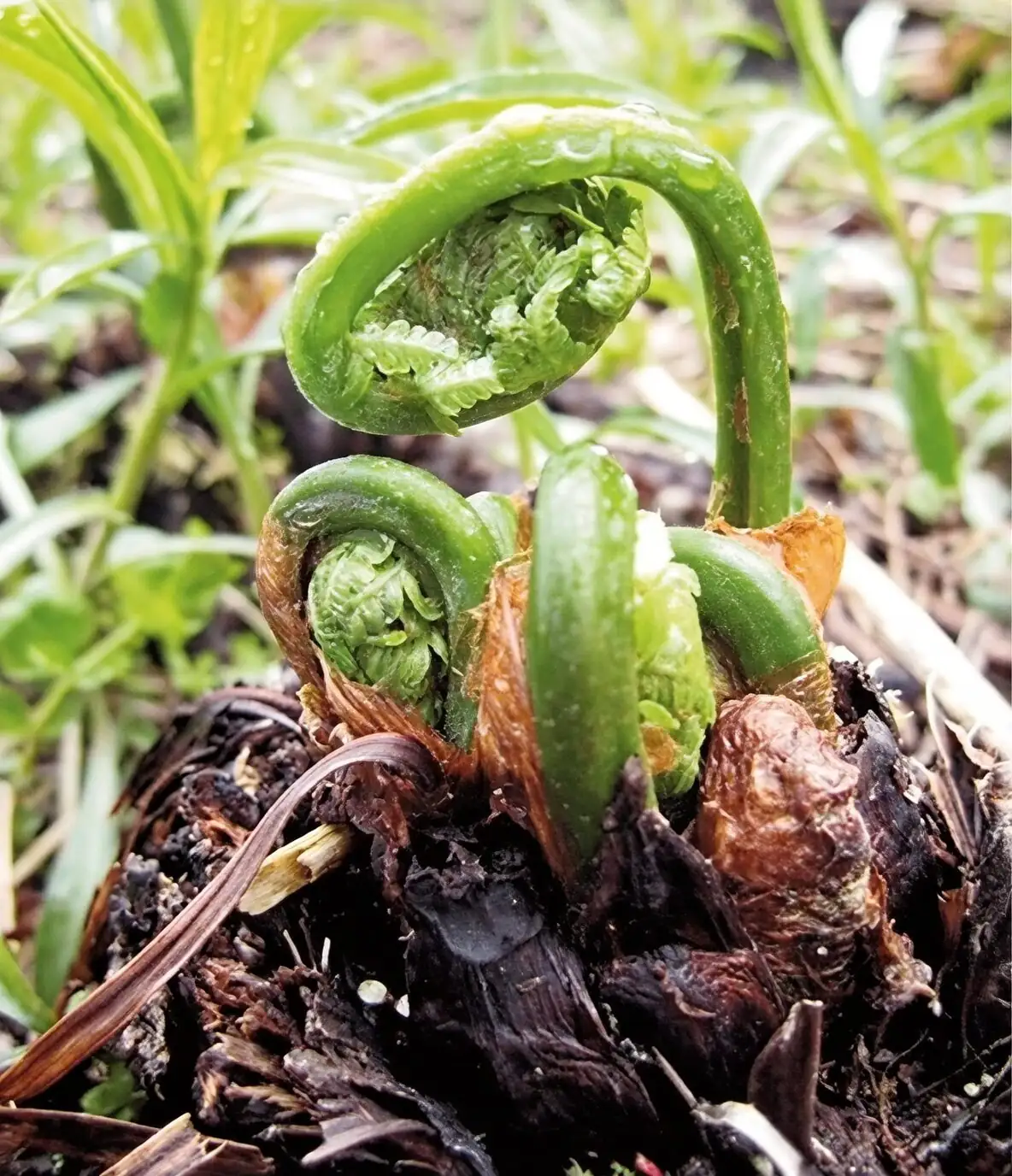
Spring’s first green curls unfurl like tiny violin scrolls along streambanks and shady woods. They’re called fiddleheads—the tender, tightly coiled young fronds of ferns—and they can be a wonderful seasonal vegetable when identified and prepared correctly. This guide keeps safety front and center: how to positively ID the edible ostrich fern and avoid dangerous lookalikes, what to know about bracken toxicity, exactly how to prep and cook fiddleheads, and how to forage ethically and legally.
Meet the plant family: ferns at a glance
- Ferns (class Polypodiopsida) are ancient, spore-bearing plants with feathery fronds. No flowers, no seeds—just elegant fronds that unfurl from curled fiddleheads.
- They thrive in shade and moisture, with the richest diversity in tropical and subtropical regions—but the classic edible fiddlehead season arrives each spring in temperate woodlands.
- Edibility is limited to select species and stages. Only certain young fiddleheads are eaten, and always after proper cooking.
Safety-first: the edible gold standard is ostrich fern
If you plan to eat fiddleheads, focus on one species: ostrich fern (Matteuccia struthiopteris). It’s the most widely accepted edible fiddlehead in North America and parts of Europe.
How to positively identify ostrich fern in the field
Use several traits together—never just one.
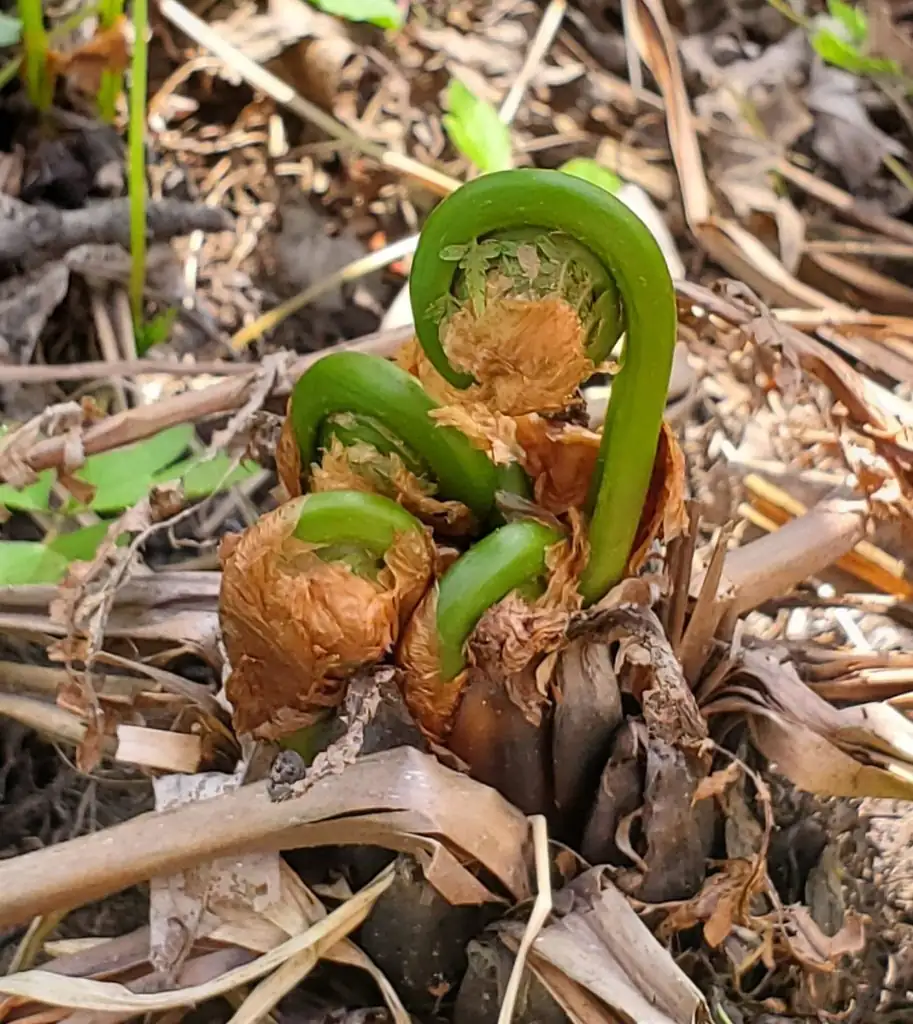
- Stem groove: A distinct, deep U-shaped groove on the inside of the smooth green stem (think “celery-like” channel).
- Texture: Smooth stem with no fuzz; often covered in a papery, tan-brown sheath that rubs off easily.
- Color and coil: Bright to deep green coils, tightly wound and about 1–1.5 inches across when prime.
- Growth pattern: Fiddleheads emerge in a tight cluster from a crown; mature fronds form a tall, vase-shaped “ostrich plume.”
- Habitat: Moist, rich soils—often along rivers, creeks, and floodplains in hardwood forests. Look for large, healthy colonies in partial shade.
Quick field test:
1) Is the stem smooth with a pronounced U-groove?
2) Is there papery tan sheath material on the coils or stem?
3) Are the coils tightly furled (still truly a fiddlehead)?
4) Is the patch in a moist, rich, shaded site typical of riparian woods?
5) Do nearby mature fronds resemble tall, arching ostrich plumes?
If you can’t confidently answer yes to these, don’t harvest.
Lookalikes and why they’re risky
Not all ferns make safe or tasty fiddleheads. Misidentification can lead to illness.
Bracken fern (Pteridium aquilinum) — avoid
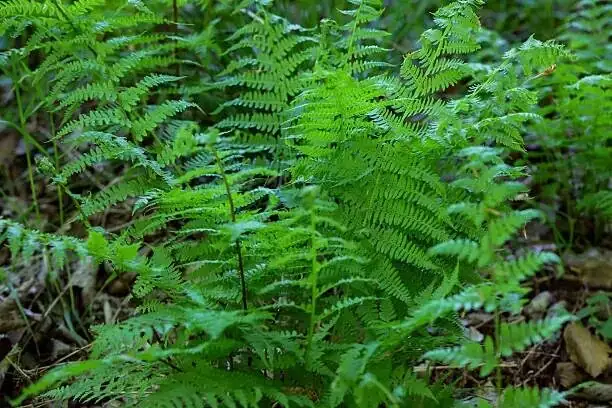
- Risk: Contains ptaquiloside, a toxin associated with serious health risks; outbreaks of foodborne illness have been linked to eating undercooked bracken. Cooking or traditional processing may not reliably make it safe.
- Traits: Often lacks the deep U-shaped groove; may have a fuzzy/hairy texture. Mature fronds form a broad, triangular outline and commonly grow in open areas and forest edges rather than deep, moist shade.
- Bottom line: Do not harvest bracken for food.
Lady fern (Athyrium filix-femina) — proceed with caution
- Some foragers eat it, but stems can be slightly hairy and lack the pronounced U-groove of ostrich fern, leading to confusion.
- Safety-first advice: Until you’re expert at fern ID and local species, stick to ostrich fern only.
Cinnamon fern (Osmundastrum cinnamomeum) — not for the pan
- Fiddleheads are woolly with cinnamon-colored fuzz and are considered unpalatable.
- Grows in very wet, swampy habitats; leave it be.
When in doubt, do not eat the plant. Photograph, compare multiple traits, and consult a trusted local expert or field guide.
Ethical and legal foraging basics
A delicious spring treat should never come at the ecosystem’s expense.
- Know the law: Check local regulations. Harvesting may be banned or limited in parks, preserves, and other public lands. On private land, always get explicit permission.
- Harvest lightly:
- Take only tightly coiled heads—never unfurled fronds.
- From any one ostrich fern crown, harvest no more than 1–2 fiddleheads, and leave at least half (many foragers leave two-thirds) to power the plant’s season.
- Cut rather than yank to avoid damaging the crown.
- Protect the patch: Stay on durable surfaces where possible, watch your footing, and avoid trampling emerging fronds.
- Choose clean sites: Avoid areas near roadsides, industrial runoff, or contaminated soils. Rinse your harvest when you get home.
- Be a good neighbor: Leave enough for wildlife and for the plant to thrive; share locations judiciously to prevent overharvest.
Prep and cooking: how to make fiddleheads safe and delicious
Never eat raw fiddleheads. Proper cooking is non-negotiable.
Cleaning
- Remove any remaining papery sheath by rubbing gently.
- Rinse in several changes of cold water to remove soil and debris.
Cook thoroughly
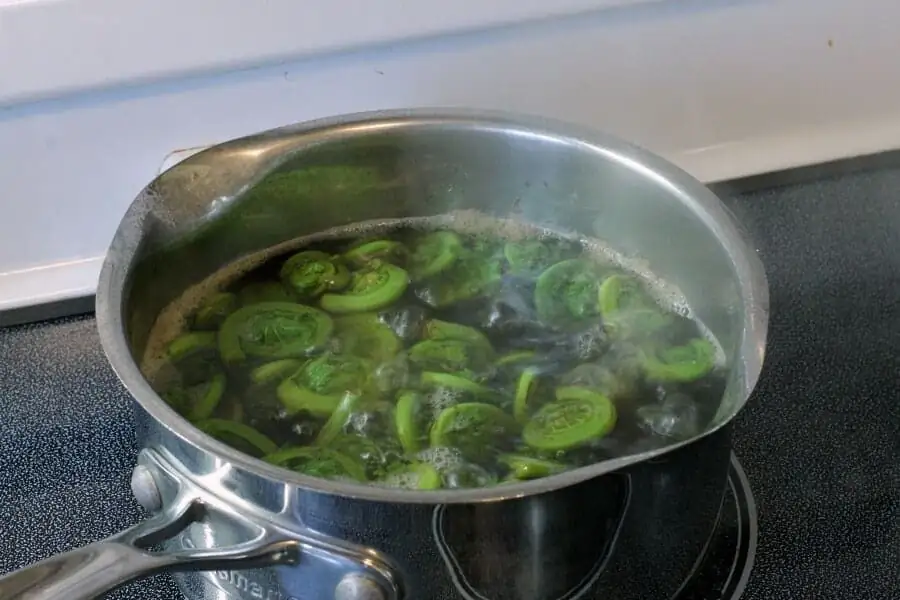
- Boil ostrich fern fiddleheads in plenty of water for 10–15 minutes, then drain. Discard the cooking water.
- Alternative: Steam for 10–12 minutes until fully tender.
- After this initial cook, you can:
- Sauté with butter or olive oil, garlic, and lemon zest.
- Toss with spring pasta, risotto, or grains.
- Finish with miso-butter, sesame, and a splash of rice vinegar.
- Add to omelets or frittatas with herbs.
- Flavor notes: Bright, green, and slightly nutty—often compared to asparagus or artichokes.
Food-safety reminders:
- Keep hot foods hot and cold foods cold. Refrigerate leftovers promptly and reheat thoroughly.
- If you experience gastrointestinal upset after eating fiddleheads, discontinue use and seek medical advice.
Storing and preserving
- Short-term storage: Keep unwashed fiddleheads wrapped in a clean towel or paper in a breathable container in the refrigerator. Use within 1–2 days for best quality.
- Freezing: Blanch in boiling water for 2 minutes, chill in ice water, drain well, then freeze on a tray before packing into containers. Cook thoroughly after thawing.
- Pickling: Always blanch first; then pickle in a vinegar brine. Treat pickled fiddleheads as a condiment, and still cook them before adding to hot dishes if using in larger quantities.
Grow your own ostrich fern patch (the most ethical harvest of all)
Ostrich ferns make handsome, shade-loving ornamentals and can provide a small, sustainable home harvest once established.

- Site: Partial to full shade with consistently moist, rich, slightly acidic, well-drained soil. They’re happiest along the north or east side of a building or near a water feature.
- Planting and care:
- Space crowns so mature fronds can form their vase-like clumps.
- Mulch with leaf mold or compost to keep roots cool and moist.
- Water during dry spells; avoid waterlogging.
- Harvest: Wait until plants are well established (often 2–3 years). Follow light-harvest rules—1–2 fiddleheads per crown, and leave the rest to grow.
Quick-reference: safe ostrich fern ID checklist
- Deep U-shaped groove along the smooth stem
- Papery, tan-brown sheath on the coils or stem
- Tight, bright-to-deep green coils; still firmly curled
- Clustered growth from a crown in moist, shaded, rich soils
- Mature fronds form tall, vase-like plumes
If any of these aren’t present, pass.
A final word on fern safety
Ferns are timeless plants with a fascinating life cycle: spores tucked beneath elegant fronds, unfurling each spring into the iconic fiddlehead. But “fern” is a vast group, and only select species at a very young stage are good to eat—and only when properly cooked. Choose ostrich fern, identify it with multiple traits, harvest with restraint and respect, and cook it thoroughly. Do that, and you’ll have a seasonal delicacy that tastes like spring itself—without risking your health or the health of the forest.