

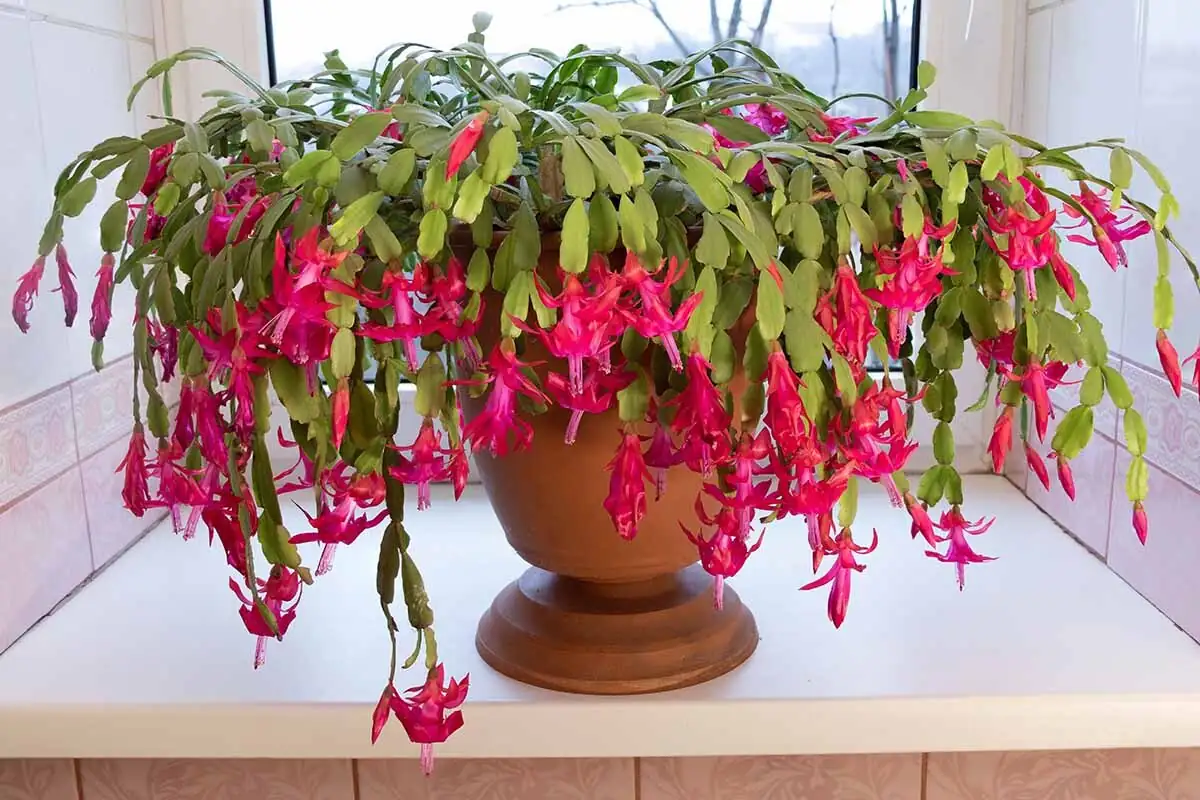
If you’ve ever wished your Easter Cactus would bloom like clockwork and look plump and glossy year-round, think less “desert windowsill” and more “little rainforest nook.” Hatiora gaertneri (syn. Rhipsalidopsis gaertneri, Schlumbergera gaertneri) is a tropical, epiphytic cactus from the coastal mountains of southeastern Brazil. It thrives when you craft a gentle, humid microclimate—exactly what bathrooms, pebble trays, light misting, and smart spacing can deliver. Here’s how to build that perfect pocket climate for healthier growth and more spring blooms.
Meet your rainforest cactus (not a desert one)
- Family: Cactaceae; Genus: Hatiora
- Habit: Bushy, semi-trailing epiphyte with flat, scalloped stem segments
- Size: About 6–12 in tall and 1–2 ft wide over time
- Flowers: Star-shaped in red, pink, orange, purple, or white; open by day, close at night
- Season: Spring (often right around Easter)
In the wild, it perches on trees or rocks, sipping moisture from mist and rain while its roots sit in leaf litter—translation: it loves bright, filtered light, steady but not soggy moisture, and a touch of humidity.

Why microclimate matters
Indoors, heated or air-conditioned air often dips well below what rainforest epiphytes prefer. Your target:
- Light: Bright, indirect light (a little gentle morning sun is fine if acclimated)
- Temperature: 60–75°F (15–24°C) for growth; cooler nights 50–60°F (10–15°C) help initiate buds
- Humidity: Aim for 50%+ around the plant
- Air: Fresh, gentle airflow—enough to dry leaves after a mist, not enough to draft or chill
When you dial these in, segments stay firm, edges blush prettily in good light, and buds are far less likely to drop.
Bathroom brilliance: Make humidity your ally
Bathrooms are often the easiest way to give Easter Cactus what it craves—moist air without overwatering.
- Best spot: A bright bathroom with filtered light. East-facing frosted windows or a sill with a sheer curtain are ideal.
- Keep it safe: Place the pot away from direct shower spray and not pressed against a cold window in winter.
- Post-shower advantage: That warm steam gently lifts humidity. Run the exhaust fan briefly afterward to prevent lingering saturation and to keep airflow healthy.
- Avoid extremes: No harsh midday sun through bare glass; no blasts from heaters or AC vents.
No bright bathroom? A kitchen counter near a bright, shaded window works too.
Pebble trays done right
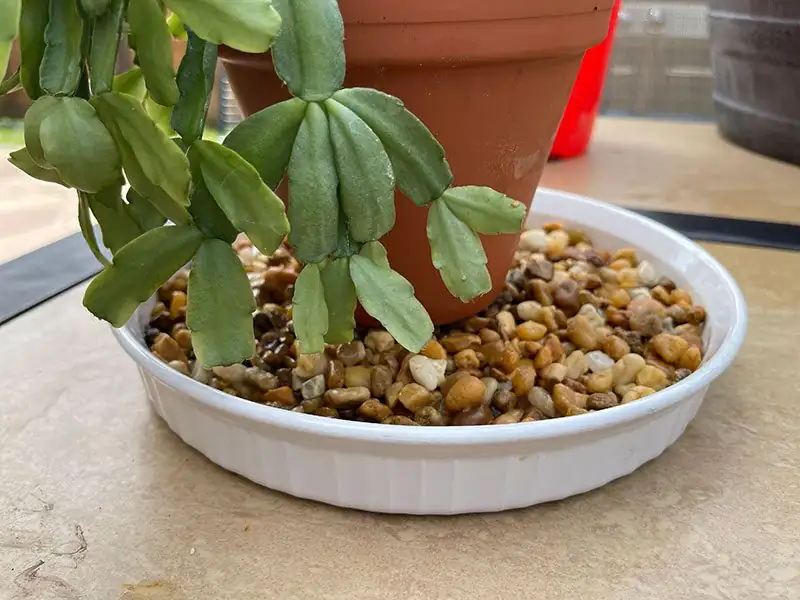
A pebble tray is the simplest “humidity halo” you can build under any windowsill.
- Use a shallow tray (about 2 in deep).
- Add a 1 in layer of pebbles or gravel.
- Fill with water to just below the top of the pebbles.
- Set the pot on the pebbles—never in standing water.
- Refresh and rinse the tray regularly to avoid mineral buildup and algae.
Tip: Place a small group of compatible plants on a shared tray for an extra bump in local humidity, then pair it with gentle airflow so leaves dry between mists.
Gentle misting, without the mess
Misting is a quick humidity nudge—not a substitute for proper watering.
- Use a fine sprayer with room‑temperature, low‑mineral water.
- Mist lightly in the morning so leaves dry by night.
- Aim around and over the plant rather than drenching it; avoid soaking open flowers.
- Combine with pebble trays or a humid room for consistent results.

Spacing and plant groupings for healthier growth
Grouping plants can lift local humidity noticeably, but crowding invites issues.
- Give each plant a finger’s width or more of space so segments aren’t touching.
- Rotate the pot every couple of weeks for even growth.
- Maintain gentle airflow around the cluster—open a door, crack a window briefly, or run a low, indirect fan.
Light, temperature, and water: the balancing act
- Light: Bright, indirect is the sweet spot. A little soft morning sun is fine; avoid harsh midday rays that scorch segments.
- Temperature: 60–75°F (15–24°C) for growth. For blooming, cooler nights (50–55°F/10–13°C) paired with long, uninterrupted darkness kick-start buds.
- Watering:
- Water thoroughly, then let excess drain—never let the pot sit in water.
- Let the top portion of the mix dry before watering again; don’t allow it to stay bone-dry for long.
- During active growth and bloom, keep it lightly and evenly moist.
- After flowering, give a 2–3 week rest with reduced water.
- Late fall to early winter: reduce watering to help set buds.
Microclimate tip: Low humidity tempts overwatering. Use humidity tools first, then fine-tune watering. Aim for plump, springy segments—not flaccid, not mushy.
Potting mix, pot choice, and drainage
Easter Cactus wants air around its roots like an orchid, with faster drainage than typical houseplant mixes.
- Mix: Cactus/succulent mix + extra perlite + medium orchid bark; slightly acidic (pH ~6.0–6.5).
- Pot: Use drainage holes. Slightly pot‑bound is fine; repot every 2–3 years in spring after bloom.
- Material: Terracotta/clay can help airflow and prevent waterlogging.
- Rule: Drainage is non‑negotiable—root rot is the enemy of blooms.
Bloom-boosting routine: a simple timeline
- Late fall to mid‑winter (about 6–8 weeks before your target bloom window):
- Nights: 50–55°F (10–13°C)
- Darkness: About 12 hours uninterrupted
- Water: On the lighter side, but don’t let it crisp
- Humidity: Keep that 50%+ microclimate humming
- When buds appear:
- Avoid moving the plant; changes in light, temp, or humidity can cause bud drop.
- Keep moisture steady and light bright but filtered.
Bathroom microclimate playbook (two easy setups)
- Bright window setup:
- East window + sheer curtain
- Pebble tray under the pot
- Light morning mist
- Fan or door cracked after showers
- No-window bath, good ambient light:
- Position just outside the bathroom door to catch steam drift
- Add a small humidifier on a low setting nearby
- Supplement with a full-spectrum grow light on a timer (avoid late-night light during bud set)
Troubleshooting your pocket rainforest
- Wrinkled, thin segments:
- Often low humidity or underwatering; check the mix. If dry, water thoroughly. If soggy, improve drainage and airflow.
- Yellowing, bleached, or scorched patches:
- Too much direct sun. Pull back from the window or add a sheer.
- Bud drop:
- Common after moves or sudden changes. Keep nights cool (not cold), ensure long darkness, keep humidity steady, and don’t let the mix swing from bone-dry to sopping.
- Fungus gnats or sour smell:
- Mix is staying too wet. Let the top layer dry more between waterings, improve aeration, and empty any cachepots or trays of standing water.
- Pests:
- Mealybugs, scale, spider mites—wipe segments, use gentle horticultural soap, and boost airflow. Overly wet mixes invite fungus gnats.
Quick care cheat sheet
- Light: Bright, indirect; a touch of soft morning sun is okay.
- Temp: 60–75°F for growth; 50–55°F nights + long dark for bud set.
- Humidity: 50%+ via bathroom placement, pebble trays, and light misting.
- Water: Thorough soaks with full drainage; let the top mix dry lightly between.
- Feeding: During active growth, balanced fertilizer monthly (or half strength every 2–4 weeks). Start 4–6 weeks after flowering ends. Pause in fall/winter.
- Pruning: After bloom, twist or cut at joints to shape and encourage branching.
- Propagation: 2–3 segment cuttings after bloom; let callus 1–2 days, then pot in airy mix.
- Safety: Generally non‑toxic to people, cats, and dogs.
Symbolism and a small note on “flower language”
Easter Cactus has long been a symbol of spring’s renewal and hope—its timely starry flowers feel like a celebration of brighter days. While Victorian-style “flower language” tried to pin moral meanings to blooms, the modern resonance here is seasonal and emotional: a reliable, life-affirming display at winter’s end.
Fun to know
- This rainforest cactus uses CAM photosynthesis—taking in CO₂ at night.
- Flowers open by day and close at night, and a happy, mature plant can carry dozens at once.
- You may see it sold under different scientific names due to reclassification over the years.
Crafting a tiny rainforest around Hatiora gaertneri is less about gadgets and more about intention: choose a bright, humid perch (bathrooms are perfect), float it on a pebble‑tray cloud, mist lightly in the mornings, and give it just enough room to breathe. Nail that microclimate, and your Easter Cactus will repay you with firm, glossy segments and a spring fireworks show of star‑shaped blooms.