

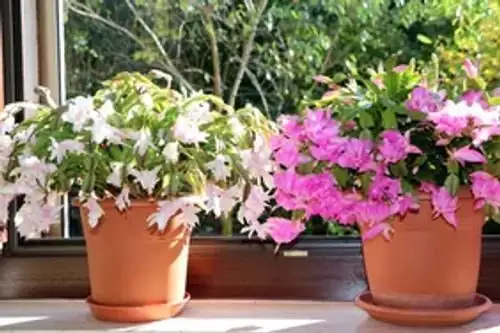
Ever puzzled by “holiday cacti” that look alike but bloom at different times? You’re not alone. Meet the springtime headliner—Hatiora gaertneri, the Easter Cactus—then learn the fast, visual tells that separate it from its Thanksgiving and Christmas cousins so you’ll never mix them up again.
Meet the star of spring: Hatiora gaertneri
Also seen as Rhipsalidopsis gaertneri or Schlumbergera gaertneri, Easter Cactus is a rainforest epiphyte from the coastal mountains of southeastern Brazil—not a desert dweller. Think airy tree canopies, filtered light, and soft humidity.
- Habit and size: Bushy, semi-trailing mound, about 6–12 in tall and 1–2 ft wide.
- Segments (those “leafy” pads): Flat, oblong pieces with gently scalloped edges; small areoles carry short bristles. New tips can blush purplish-red, turning green with a reddish edging in good light.
- Flowers: Star-shaped, many-petaled faces with a short floral tube, often red, pink, orange, purple, or white; pale yellow stamens show when open. They open by day and close at night—gorgeous and very on-brand for spring.
- Bloom season: Spring (March–May), often right on cue for Easter.
The fast ID game: Easter vs. Thanksgiving vs. Christmas
Three plants, three personalities. Check these features—in this order—for a confident ID.
1) Segment edges (the quickest “no-flowers” test)
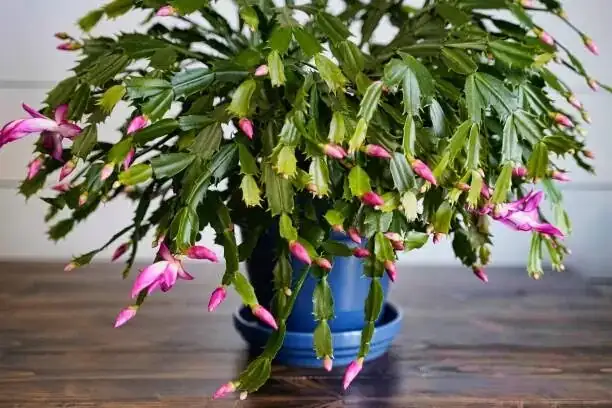
- Easter Cactus (Hatiora gaertneri): Smoothly scalloped, rounded edges. Pads look “softly crenate,” not spiky. Tiny bristles at areoles.
- Thanksgiving Cactus (Schlumbergera truncata): Distinct, pointed “claws” or hooks on the sides—crabby and spiky.
- Christmas Cactus (Schlumbergera bridgesii and hybrids): Edges are more rounded than Thanksgiving, with gentler, less pronounced “teeth.”
Tip: If the pads look like they could pinch you, it’s likely Thanksgiving Cactus. If they look politely scalloped, think Easter. If they’re in-between, probably Christmas.
2) Flower form and posture
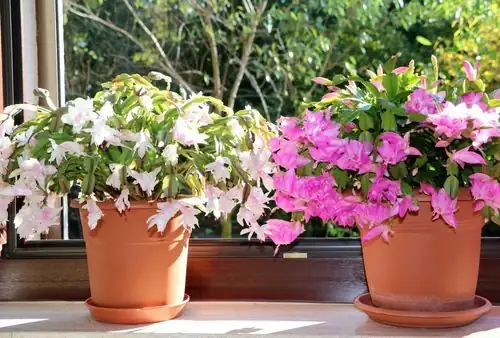
- Easter Cactus: Star-shaped, radially symmetrical blooms that sit like open pinwheels; short tube. They open during the day and close at night.
- Thanksgiving Cactus: More tubular, zygomorphic (asymmetrical) flowers that project outward horizontally.
- Christmas Cactus: Tubular, zygomorphic blooms that tend to droop or hang more vertically.
3) Bloom season windows
- Easter Cactus: Spring (March–May).
- Thanksgiving Cactus: Late October to November.
- Christmas Cactus: Late November to January.
Note: Growers can manipulate day length to shift timing, so season alone isn’t foolproof—use it together with segment and flower checks.
4) Pollen and stamens (a supporting clue)
- Easter Cactus: Pale yellow stamens are easily seen when the flower is fully open.
- Thanksgiving Cactus: Often shows yellow pollen.
- Christmas Cactus: Often shows pinkish pollen.
Use pollen color as a bonus clue; lighting and cultivar differences can make this less reliable than segment shape and flower form.
5) Growth habit
- Easter Cactus: Bushy, semi-trailing; lovely spilling slightly over a pot rim or in a hanging basket.
- Thanksgiving Cactus: More upright overall when young.
- Christmas Cactus: Arching, draping stems give a cascading look.
In-hand checklist (30 seconds to certainty)
- Smooth scallops on pads? Check.
- Day-opening, star-shaped flowers? Check.
- Spring bloom window? Check.
- Bushy to semi-trailing stance? Check.
- Pale yellow stamens visible? Nice extra confirmation.
If you’re hitting most of these, it’s Hatiora gaertneri.
Visual mnemonics you’ll remember
- Easter = Easy Edges: smooth, scalloped pads and easy-breezy star blooms.
- Thanksgiving = Turkey Claws: sharp, hooked “claws” on the pad edges.
- Christmas = Caroler’s Cascade: rounded teeth and draping, tubular flowers that hang like holiday bells.
Care overlaps—but here’s the Easter Cactus twist
All three are tropical, epiphytic cacti that like bright, filtered light and moderate moisture. Treat them like rainforest plants, not desert cacti.
- Light: Bright, indirect or partial shade. Gentle morning sun is fine if acclimated.
- Temperature: Best at 60–75°F (15–24°C). Keep above 41°F (5°C).
- Humidity: Aim for ~50%+; pebble trays or a humidifier help in dry homes.
- Soil: Airy, fast-draining, slightly acidic (pH ~6.0–6.5). A cactus mix cut with perlite plus orchid bark is ideal.
- Watering: Soak thoroughly, drain well, and let the top portion of mix dry before watering again. Keep lightly, evenly moist in active growth and during bloom; do not let it sit soggy.
- Feeding: During active growth, feed monthly (or every 2–4 weeks at half strength) with a balanced fertilizer (e.g., 10-10-10 or 15-15-15). Pause feeding in fall/winter dormancy.
The Easter Cactus pre-bloom routine (“cool + dark”)
To set buds, give about 6–8 weeks of:
- Cooler nights: 50–55°F (10–13°C) and a noticeable day–night temperature drop.
- Long, uninterrupted darkness: roughly 12 hours nightly.
- Lighter watering: slightly drier than summer, never bone-dry for long.
Blooming pro tip: After the flower show, give a 2–3 week rest with reduced watering, then resume regular care.
Shop smart and skip the mix-ups
- Read the leaves, not the label: Segment edges and flower shape beat sales tags every time.
- Pick for vigor: Look for firm, plump segments with no mushy spots or widespread discoloration. A faint reddish edging can signal strong light and good health.
- Bud caution: Moving a budding plant from store to home often triggers bud drop (new light, temp, and humidity). A plant that set buds at your place will typically open more reliably.
Quick answers to common questions
- Why isn’t my Easter Cactus blooming? Usually not enough light, no cool-night period, insufficient uninterrupted darkness, or a too-warm winter. Follow the “cool + dark” routine above.
- Can it go outdoors? Yes—in warm weather and sheltered shade. In USDA Zones 10–12 it can stay out year-round in protection; elsewhere, bring it in well before temps near 41°F (5°C).
- Is it pet-safe? Generally considered non-toxic to humans, cats, and dogs (though any nibbling can cause mild tummy upset).
Symbolism and a short backstory
Easter Cactus is a gentle emblem of spring renewal and hope—the starburst blooms arriving just as days lengthen and colors return. It entered homes in the early 1900s when collectors fell for Brazil’s canopy-dwelling cacti. Its name has wandered (Hatiora, Rhipsalidopsis, even Schlumbergera in older texts) as botanists reshuffled the family tree, but the plant’s meaning stayed rooted: a promise of brighter days.
Fun facts to finish
- The flowers open by day and close at night—nature’s own curtain call.
- It’s an epiphyte: in the wild it perches on trees or rocks, sipping rain and catching leaf litter.
- A mature, happy plant can carry dozens of blooms at once for weeks.
- Like many succulents, it uses CAM photosynthesis—taking in CO₂ at night for water-wise efficiency.
With these quick visuals—soft scallops, daytime starbursts, spring timing—you’re set to ID Hatiora gaertneri at a glance and enjoy its Easter encore year after year.