

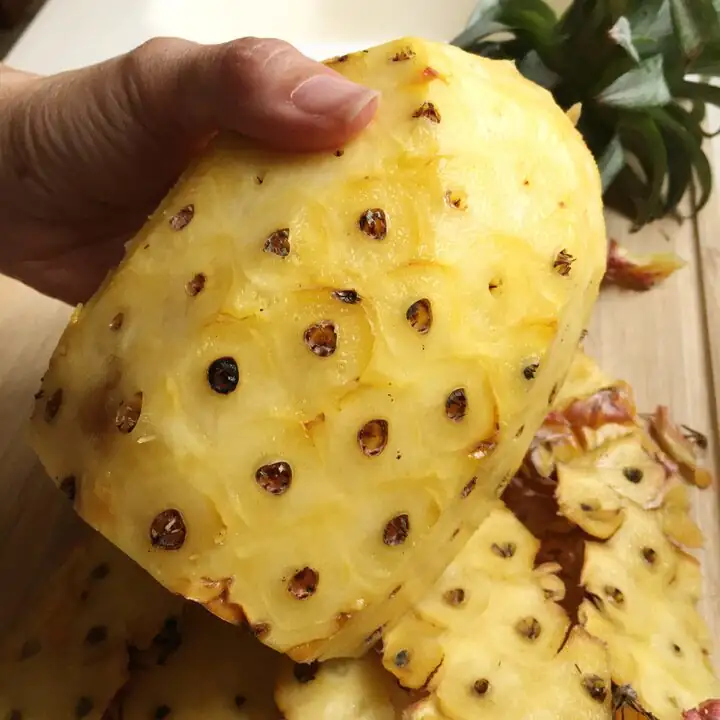
Imagine holding a pineapple like a tiny planet covered in hexagonal “tiles.” Now tilt it and—aha!—those tiles line up into beautiful spirals that wrap both left and right. With nothing more than a toothpick and a sharp eye, you can turn this tropical fruit into a hands-on math-and-botany investigation of Fibonacci patterns in nature.
Meet Ananas comosus, the spiral-studded bromeliad
- Scientific name: Ananas comosus, a sun-loving bromeliad in the family Bromeliaceae.
- Origin: Native to the Paraná–Paraguay River drainages between southern Brazil and Paraguay in South America.
- Growth habit: A herbaceous perennial that makes a tough rosette of waxy, sword-like leaves around a short stem. After 12–20 months of leafy growth, it sends up a dense spike of dozens to hundreds of purple-to-red flowers.
- How the fruit forms: Each flower matures into a berry; all the berries fuse into a single “multiple fruit” we call a pineapple—topped by a leafy crown. The fused flower parts become the pineapple’s tile-like “eyes,” which trace out spirals across the surface.
- Fun bonus: Pineapple uses CAM photosynthesis, sipping CO₂ mostly at night to conserve water—clever engineering for a plant that thrives in sun and warmth.
Materials for your Spiral Safari
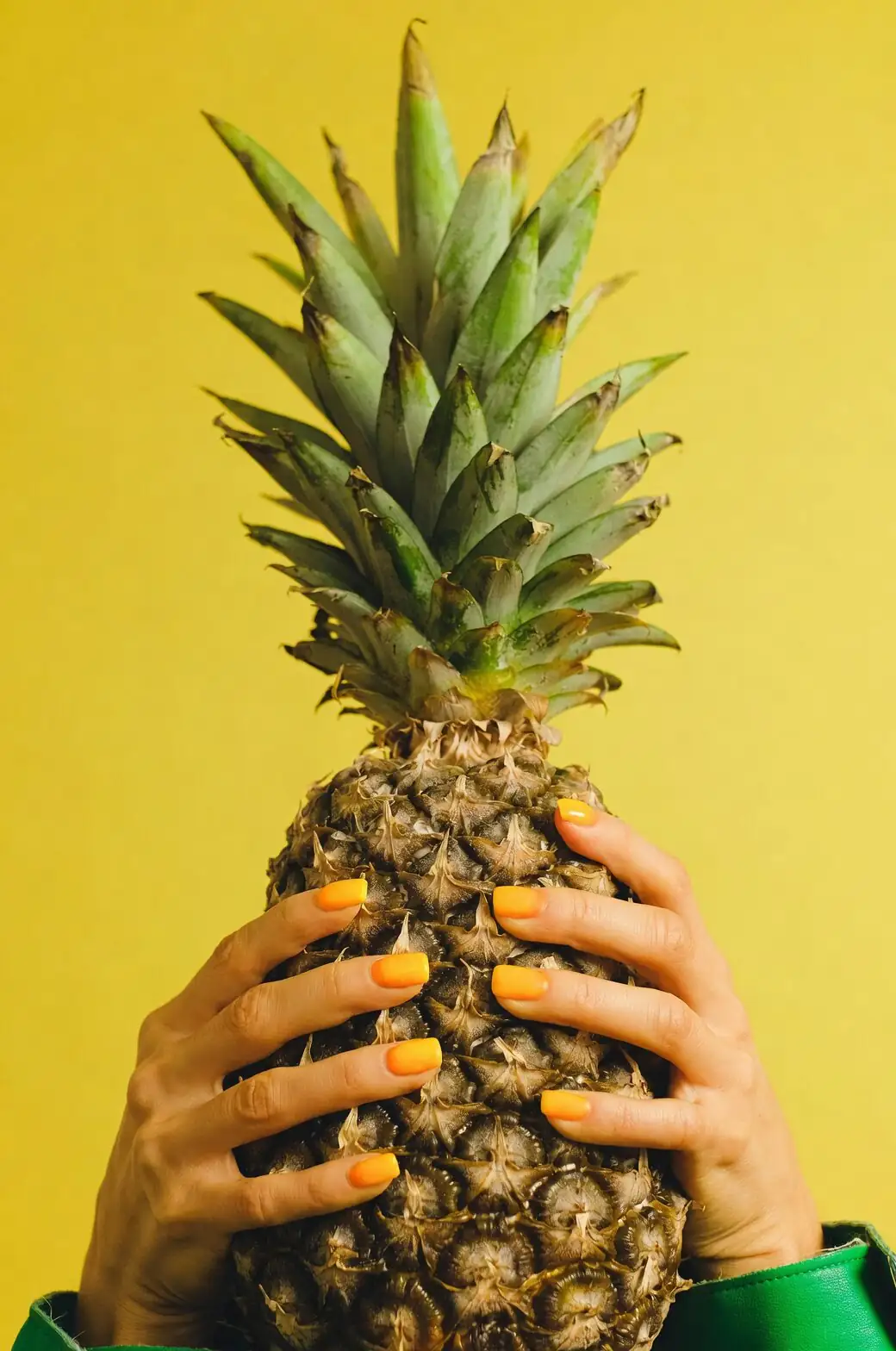
- A pineapple with well-defined eyes (the hexagonal scales on the rind)
- Toothpicks or small stickers to mark a starting eye
- A washable fine-tip marker (optional)
- A rubber band or string (to help trace a spiral path)
- Paper and pencil for data
- Optional: smartphone or tablet to snap a photo and draw lines digitally
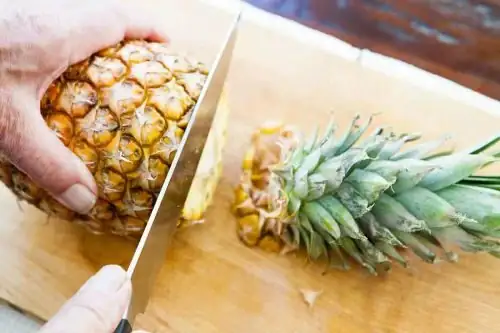
Tip: Choose a firm pineapple with prominent, evenly sized eyes. The patterns are easier to spot on fruits with distinct, “shingled” scales.
Step-by-step: Count the pineapple’s opposing spirals
1) Get oriented
- Place a toothpick in one eye near the middle of the fruit as your starting point.
- Notice how the eyes arrange in diagonal bands. These bands form spiral “families,” called parastichies.
2) Count one spiral family (say, left-leaning)
- From your start eye, follow the diagonal that slopes up-left (or up-right—choose one).
- Use a rubber band or your marker to lightly trace the path across each eye until you circle back to the toothpick.
- Count how many eyes you touched. Write this number down.
3) Count the opposing family (right-leaning)
- Now trace the diagonal sloping the other way.
- Again, circle around until you return to your starting eye.
- Record that count.
4) Optional: See if there’s a third, steeper set
- Many pineapples also show a third family of spirals with a noticeably different pitch. If you spot it, trace and tally that set too.
- If it’s hard to see, take a photo and sketch lines digitally—it often pops into view.
5) Compare your counts
- You’ll often find consecutive Fibonacci numbers. Common pairings on pineapples include 8 and 13; sometimes you’ll see 5 and 8 on smaller fruits or 13 and 21 on large, well-developed fruits.
- Jot your results as a pair (or trio, if found).
What to expect (and what it teaches)
- Classic outcome: Two opposing spiral families that commonly tally 8 in one direction and 13 in the other—numbers that sit side by side in the Fibonacci sequence (… 5, 8, 13, 21 …).
- Why spirals appear: As many small flowers fuse into the fruit, new units squeeze into the most space-efficient arrangement. That packing naturally leads to spiral families whose counts tend to be consecutive Fibonacci numbers.
- Quick golden-ratio check: Divide the larger count by the smaller (e.g., 13 ÷ 8 ≈ 1.625). With larger Fibonacci neighbors, this ratio hovers near the golden ratio (~1.618).
If your counts don’t land on Fibonacci neighbors, try another fruit or double-check your tracing. Nature is efficient but not always perfect; growth variations can blur patterns.
Troubleshooting and pro tips
- Pick your path carefully: If one “diagonal” jumps irregularly, you may have switched spiral families mid-count. Reset and trace the most consistent path of touching eyes.
- Mark as you go: A tiny dot in each counted eye reduces double-counting.
- Photograph and annotate: Drawing lines on a photo makes the families obvious, especially the third set.
- Try a second specimen: Patterns are “often” Fibonacci; some fruits show them more clearly than others.
Extend the inquiry (great for classrooms and families)
- Class data dive: Count spirals on 10–20 pineapples. Make a tally chart of pairings you observe (e.g., 5–8, 8–13, 13–21). Which pairing is most common?
- Ratio exploration: For each fruit, compute larger/smaller spiral counts and plot them. How close are they to ~1.618?
- Cross-specimen safari: Compare with a pine cone or a sunflower head—other champions of opposing spiral families.
- Grow your own “lab model”: Start a plant from the crown.
- Twist off the crown, remove stray fruit flesh, and let it dry for 1–2 days.
- Root in water or a moist, well-draining mix; roots often appear in 2–8 weeks.
- Give full sun and warmth (ideally 24–27°C / 75–80°F) in a fast-draining, slightly acidic mix.
- Expect about 18–24 months from crown to ripe fruit. After harvest, the mother plant declines but makes offsets (suckers/slips) you can replant.
Safety, care, and respectful use of your pineapple
- Handle the crown carefully: Many varieties have saw-toothed, spiny leaf edges.
- Bromelain in fresh pineapple can tingle on lips and tongue; cooking reduces the effect.
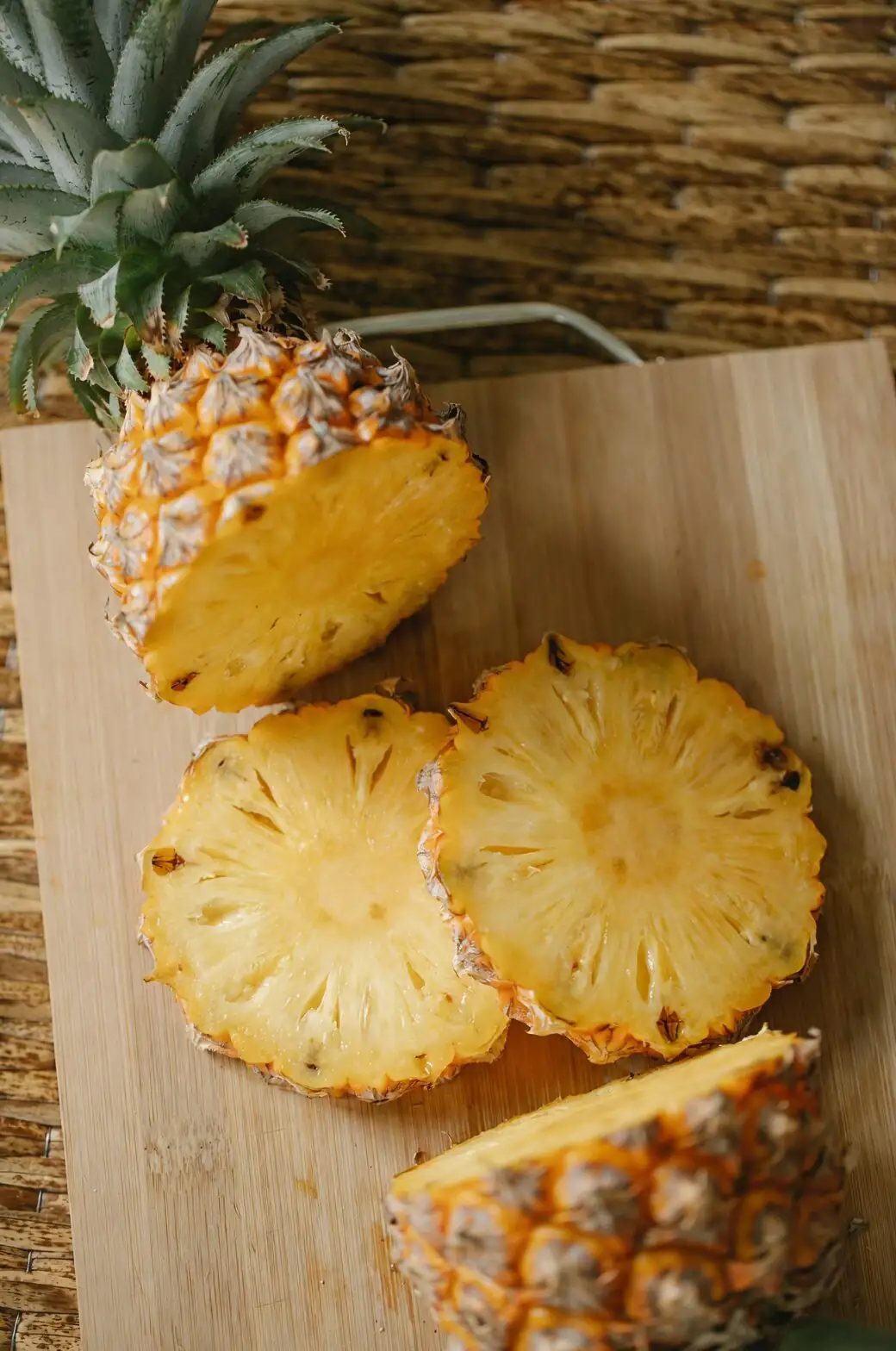
- When you’re done counting, rinse off any marker, slice, and enjoy—or plant the crown for a long-term STEM project.
Why pineapple makes a perfect STEM ambassador
- It’s a multiple fruit made from many flowers—so you’re literally counting a history of development, one eye at a time.
- Its spiral families vividly connect living form to elegant number patterns.
- Culturally, pineapple symbolizes hospitality and welcome—apt for a fruit that warmly invites learners into math-and-botany discovery.
Quick facts to drop while you count
- The fruit often shows Fibonacci spirals—commonly 8 in one direction and 13 in the other.
- A single pineapple can form from up to around 200 flowers fusing together.
- Pineapple thrives in full sun, warmth (generally above 18°C / 65°F), and well-drained, slightly acidic soil (pH ~4.5–6.5).
- Typical plant size: 1.0–1.5 m tall with leaves up to about 0.9 m long; fruits often up to 30 cm and, in large cultivars, can weigh around 6.4 kg.
- Non-toxic to people and pets; just mind that mouth-tingle enzyme, bromelain.
Closing prompt
Ready to test your eye? Grab a pineapple, pick a starting eye, and trace those left- and right-handed spiral families. Will yours be an 8–13 classic—or will you uncover a 5–8 or 13–21 surprise? Either way, you’ll hold a sweet proof that nature counts cleverly.