

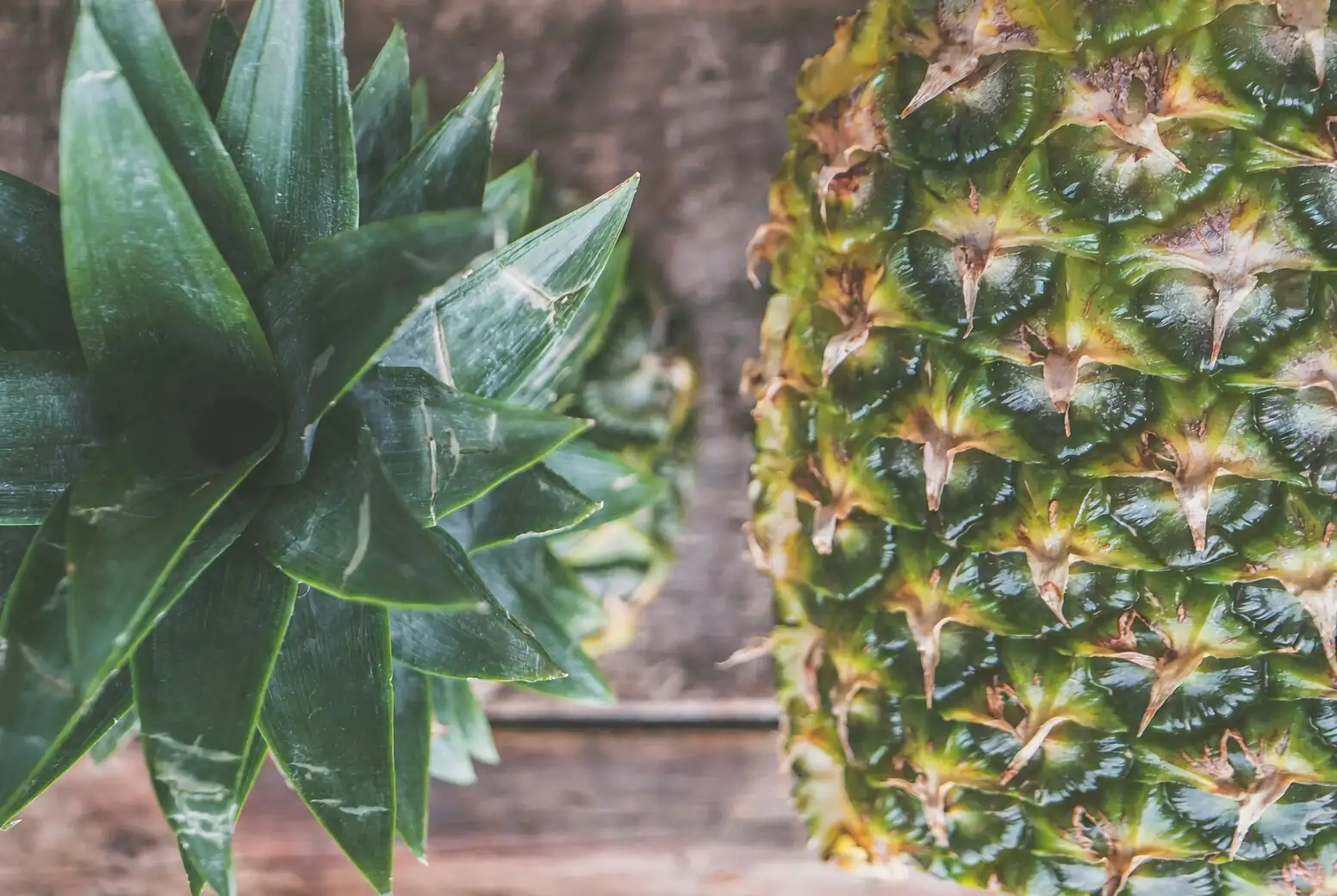
Pineapple is the rare fruit that greets you with sunny sweetness—and then nips back. That faint tingle or sting from fresh Ananas comosus isn’t your imagination; it’s kitchen chemistry at work. The culprit is bromelain, a protein-cutting enzyme that makes fresh pineapple both a brilliant meat tenderizer and a saboteur of gelatin desserts. Here’s how it works, how heat tames it, and how to use it like a pro.
Meet Ananas comosus: the bromeliad that bites back
- Scientific name: Ananas comosus, a sun-loving bromeliad native to the Paraná–Paraguay river drainages between southern Brazil and Paraguay.
- What makes it special in the kitchen: bromelain, a protease enzyme concentrated in the stem and core but present throughout the fresh fruit and juice.
- Double personality: It turns tough steaks supple—but it can also “digest” the proteins in your mouth and in gelatin.
What is bromelain, exactly?
Bromelain is a cysteine protease—an enzyme that snips long protein chains at specific spots. Think of proteins as tangled necklaces; bromelain is the deft pair of scissors.
What it does in your mouth
- It cleaves proteins in the protective mucous layer and surface cells of the tongue and cheeks, creating that tingling or mild burning sensation.
- Pineapple’s natural acidity amplifies the sensation. Acid by itself doesn’t “eat” tissue, but it can make the bromelain sting feel more intense.
Where it lives in the pineapple
- Highest in the stem and core, which is why the woody core makes an extra-potent tenderizing pulp.
- Present in fresh flesh and juice—enough to soften meat and to prevent gelatin from setting.
- Commercial meat tenderizers labeled “bromelain” are typically derived from pineapple stems.

Heat: the off-switch for bromelain
Enzymes are proteins with delicate three-dimensional shapes. Heat reshapes (denatures) them so they can’t latch onto their targets.
- Practical kitchen rule: once fresh pineapple or its juice is heated thoroughly—roughly to hot-steam temperatures and above (around 60–70°C / 140–160°F, held for a few minutes)—bromelain activity dives and then dies.
- That’s why:
- Canned pineapple doesn’t sting and won’t tenderize meat (canning heat deactivates the enzyme).
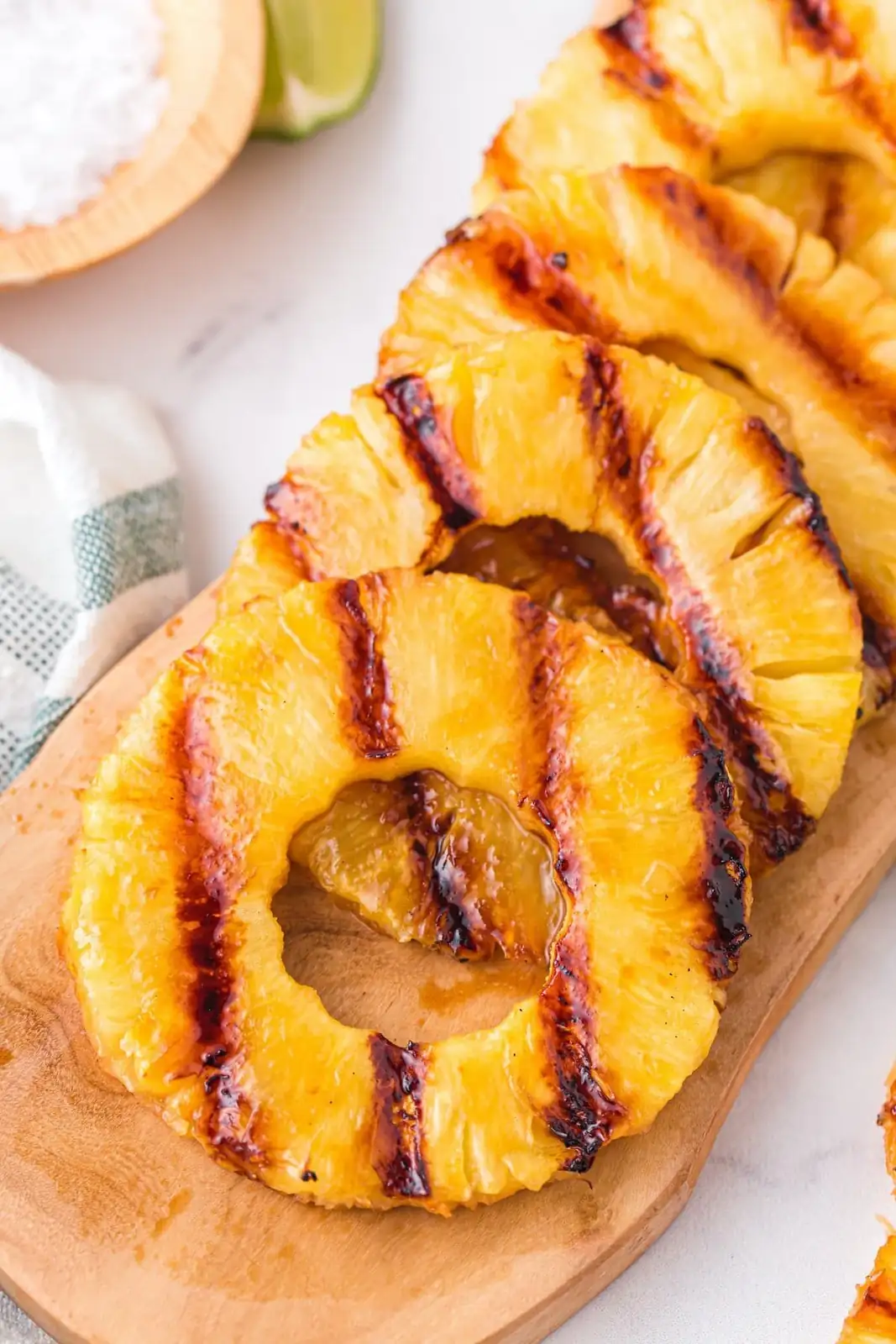
- Grilling or roasting fresh pineapple mellows the tingle.
- Briefly simmered juice loses tenderizing power.
Quick checks
- Tongue test: freshly cut fruit tingles; the same fruit grilled until hot usually doesn’t.
- Jell-O test: fresh pineapple bits keep gelatin liquid; canned or cooked pineapple sets just fine.
Tenderizing meat with pineapple: dos and don’ts
The science in a bite
Collagen and muscle proteins make meat tough. Bromelain cuts those proteins—fast on the surface, slowly as it diffuses inward. Great power, limited penetration. Overdo it and you’ll trade chewiness for mush.
Do this
- Use fresh, not canned: for active enzyme action.
- Consider the core: mince or blitz the core with a splash of water for a potent tenderizing paste.
- Keep it short:
- Thin steaks, pork chops, boneless chicken: 15–30 minutes.
- Thick steaks: 30–60 minutes max, understanding tenderizing remains mostly superficial.
- Kebabs or thinly sliced stir-fry cuts: 10–20 minutes.
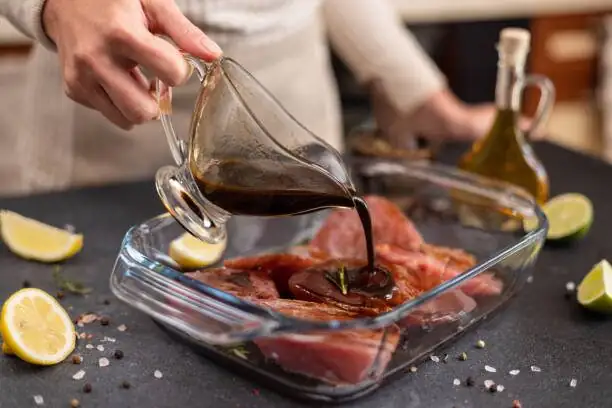
- Dilute and balance: mix 1 part fresh pineapple juice or pulp with 2–3 parts other marinade (soy sauce, aromatics, oil, a little sugar) to moderate the enzyme and improve flavor.
- Chill while marinating: enzyme action continues in the fridge; keep it safe and even.
- Rinse and dry before cooking: remove pulp to avoid mushy, patchy surfaces and to encourage good browning.
- Sear hot, finish gently: high heat for crust, then finish to target doneness.
Don’t do this
- Don’t marinate for hours: prolonged exposure can turn the exterior pasty while the center stays unchanged.
- Don’t use with delicate seafood: fish and shrimp go mushy in minutes—skip bromelain here.
- Don’t count on it for braise cuts: for chuck, brisket, or shanks, enzymatic marinades act only at the surface; low-and-slow cooking is the real tenderizer.
- Don’t heat the marinade first: hot juice has inactivated enzyme. If you want flavor without tenderizing, do heat it—just know the trade-off.
- Don’t use fresh pineapple in gelatin-glazed meat dishes or aspics: it will break the gel on contact.
Pro tip
- Salt early, pineapple late. Salting 30–60 minutes before marinating helps season throughout. Add pineapple for the final, short window so you control texture.
- Acid won’t “turn off” bromelain reliably. Heat and time are your true controls.
The great gelatin gotcha (and how to dodge it)
Gelatin is made from collagen, the very protein network bromelain loves to chop up. Add fresh pineapple to gelatin, and the enzyme snips the strands so they can’t set.
What goes wrong
- Fresh pineapple (and a few other fresh fruits with proteases) keeps gelatin liquid or causes it to weep.
Easy fixes
- Use canned pineapple: the canning step deactivates bromelain.
- Cook it: briefly simmer pineapple pieces or juice for a few minutes, chill, then fold into gelatin.
- Barrier tactics: let a plain gelatin layer fully set, then spoon a cooled, cooked-pineapple compote on top rather than suspending raw fruit inside.
- Switch the gelling agent: agar or pectin are carbohydrate gels and are not targets for proteases. Note that very acidic mixtures can still soften some gels—test ratios before the big reveal.
Kitchen experiment
- Make two gelatin cups: one with fresh pineapple, one with canned. The fresh stays syrupy; the canned sets—textbook enzyme deactivation.
Why grilled pineapple tastes “sweeter” and gentler
- Heat shuts down bromelain, removing the sting.
- Caramelization and Maillard browning on the fruit’s surface add roasty, toffee-like notes, accentuating perceived sweetness.
- The result: juicy, aromatic slices without the enzyme’s bite.
Quick myth-buster
- “Only the core has bromelain.” False. The core has more, but the flesh and fresh juice have plenty for both tingling and tenderizing.
- “If it tingles, I must be allergic.” Not necessarily. The common tingle is enzyme action plus acidity. True allergies exist but are distinct and can include hives or swelling—consult a professional if concerned.
- “Acid marinades tenderize like enzymes.” Not the same. Acids mostly change surface protein structure and add flavor; proteases actually cut proteins.
Two fun, fast experiments to master bromelain
- Tingle vs. toast: taste a tiny bite of fresh pineapple, then a bite that’s been briefly broiled. Notice how the tingle vanishes with heat.
- Steak split-test: marinate two identical steak strips—one in fresh pineapple pulp for 20 minutes, one in the same marinade made with canned pineapple. Cook side by side. The fresh-treated strip will be noticeably softer.
A quick botanical wink
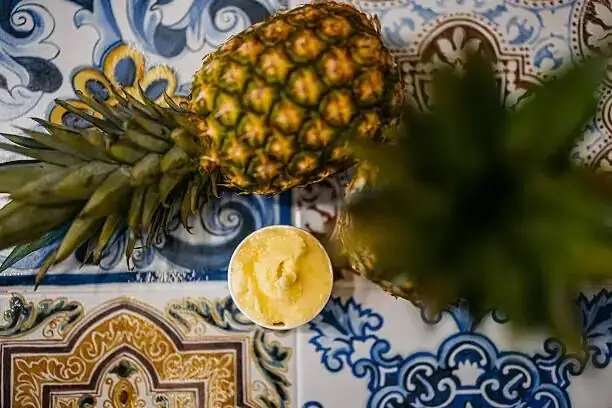
Pineapple is a tropical bromeliad that forms a rosette of sword-like leaves and fuses many flowers into one “multiple fruit” topped with a leafy crown. Beyond dessert and salsa, its enzyme makes it one of the kitchen’s most intriguing science tools—equal parts sweet, spiky, and smart.
Use fresh pineapple confidently: heat it when you want pure flavor, keep it raw for controlled tenderizing, and never invite it to your gelatin party unless it’s been cooked first. That’s bromelain, tamed.